


ZED-F9P-01B-01 RTK GNSS Receiver Board, USB-C, UART2 RTCM3, SMA & U.FL Antenna, Pixhawk GH1.25-6P
ZED-F9P-01B-01 RTK GNSS Receiver Board, USB-C, UART2 RTCM3, SMA & U.FL Antenna, Pixhawk GH1.25-6P
RCDrone
Couldn't load pickup availability


Overview
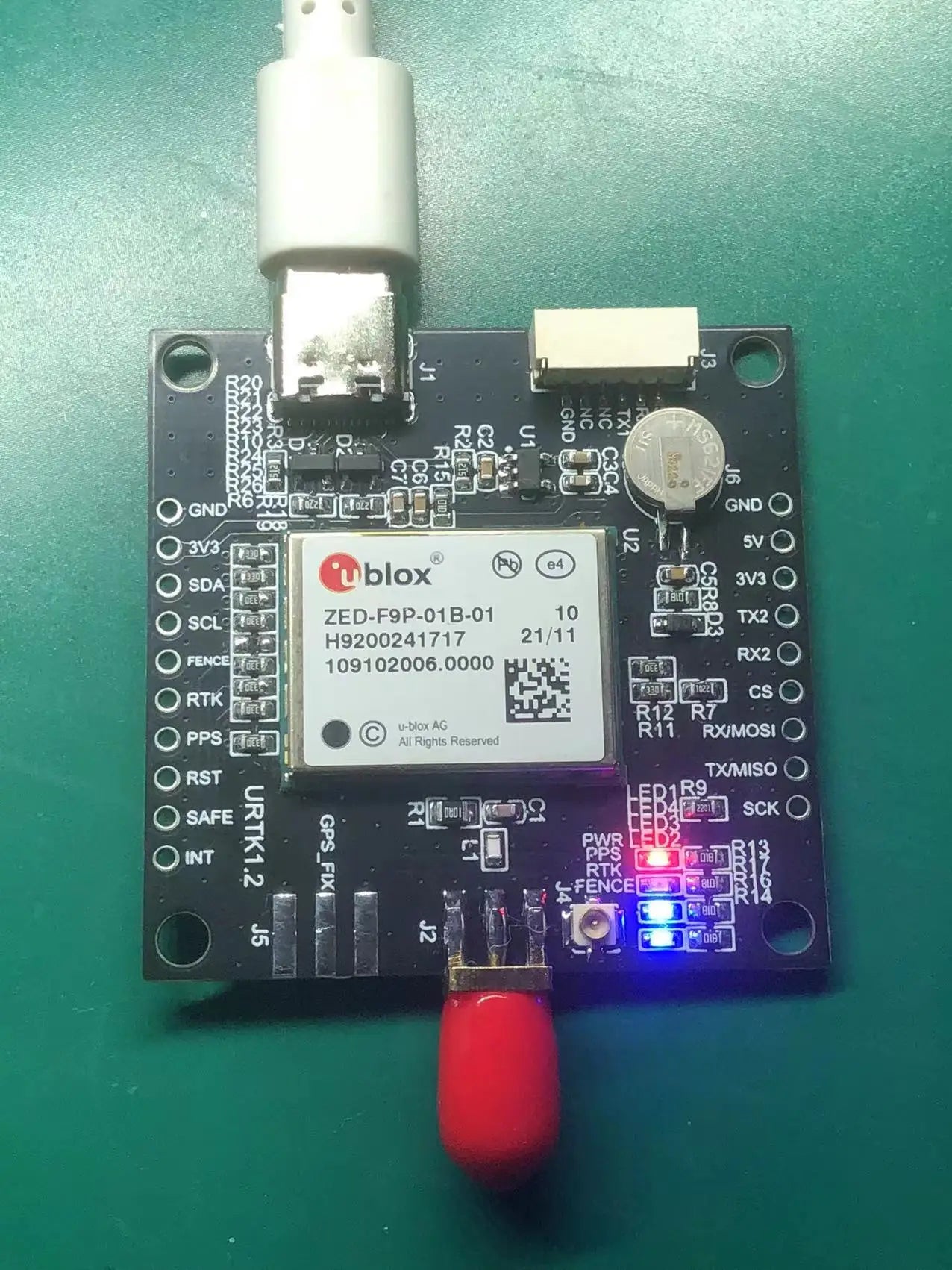
This GNSS receiver board is based on the u-blox ZED-F9P-01B-01 module and provides RTK differential positioning support with USB-C, UART/SPI pins, and dual antenna connector options for integration into robotics, autopilot, and navigation systems.
Key Features
- USB interface: USB Type-C connection for configuration with u-center and quick viewing of NMEA sentences; enumerates as a serial COM port independent of the UART interface.
- Power options: Onboard 3.3V regulator converts 5V USB to 3.3V required by the module; supports external 5V input or direct 3.3V feed.
- Low-noise 3.3V recommendation: When supplying 3.3V directly, a clean supply with minimal noise is recommended (less than 50mV PVP ripple is stated as ideal for precise positioning).
- UART/SPI sharing: Classic serial pins are available but shared with SPI pins; by default UART pins are enabled. DSEL jumper on the back of the board should be open.
- RTCM3 handling on UART2: A second serial port (UART2) is mainly used for RTCM3 correction data; by default it automatically receives and parses incoming RTCM3 to enable RTK mode. In base station mode, UART2 outputs RTCM3 correction data.
- Autopilot connector: GH1.25-6P (Pixhawk JST-GH standard) for connecting to a Pixhawk autopilot and/or powering the board.
- Antenna connectors: Two antenna interfaces are provided: SMA (external screw, internal hole) and U.FL (IPEX); either can be used.
- Status LEDs: Four status LEDs (Power, PPS, RTK, FENCE) for system/RTK/geofencing indication.
Specifications
| GNSS module (module label) | u-blox ZED-F9P-01B-01 |
| Board marking (visible on board photo) | ZED-F9P-01B-00 |
| USB | USB Type-C; enumerates as serial COM port (independent of UART) |
| Serial / SPI | UART pins shared with SPI pins; UART enabled by default; DSEL jumper on back should be open |
| UART pin direction (shared with SPI) | TX/MISO = output from ZED-F9P; RX/MOSI = RX into ZED-F9P |
| Second serial port | UART2 (mainly for RTCM3 correction data; can output RTCM3 in base station mode) |
| Power regulation | 3.3V regulator provided to regulate 5V USB to 3.3V required by the module |
| Power input options (stated) | USB 5V, external 5V, or direct 3.3V feed |
| 3.3V supply noise note (stated) | Less than 50mV PVP ripple is stated as ideal when supplying 3.3V directly |
| 3.3V regulator capability (stated) | 600mA from 5V input |
| USB-C power capability (stated) | Capable of delivering 2A |
| J3 port | GH1.25-6P (Pixhawk JST-GH standard) |
| J3 pinout (Pixhawk standard) | 1: 5V_IN; 2: ZED-F9P UART1 receiving (3.3V level); 3: ZED-F9P UART1 TX (3.3V level); 4,5: Not connected; 6: Ground |
| LED indicators (described) | Power (red when 3.3V active via USB or Qwiic bus); PPS (yellow, once per second after position lock); RTK (blue: on after power, flashes after receiving RTCM data, turns off after RTK fix); FENCE (configurable for geofencing applications) |
| Antenna interfaces | SMA and U.FL (IPEX); either interface is acceptable |
| Header labels (silkscreen, left side) | GND, 3V3, SDA, SCL, FENCE, RTK, PPS, RST, SAFE, INT |
| Header labels (silkscreen, right side) | GND, 5V, 3V3, TX2, RX2, CS, RX/MOSI, TX/MISO, SCK |
Applications
- RTK GNSS positioning for drones, UGVs, robotics, and navigation prototypes
- Pixhawk/autopilot GNSS integration via JST-GH (GH1.25-6P) serial connection
- RTCM3-based RTK setups using UART2 for correction data links (radio or wired)
For compatibility questions (UART/SPI selection, RTCM3 wiring, antennas, or integration), contact support at https://rcdrone.top/ or email [email protected].
Details
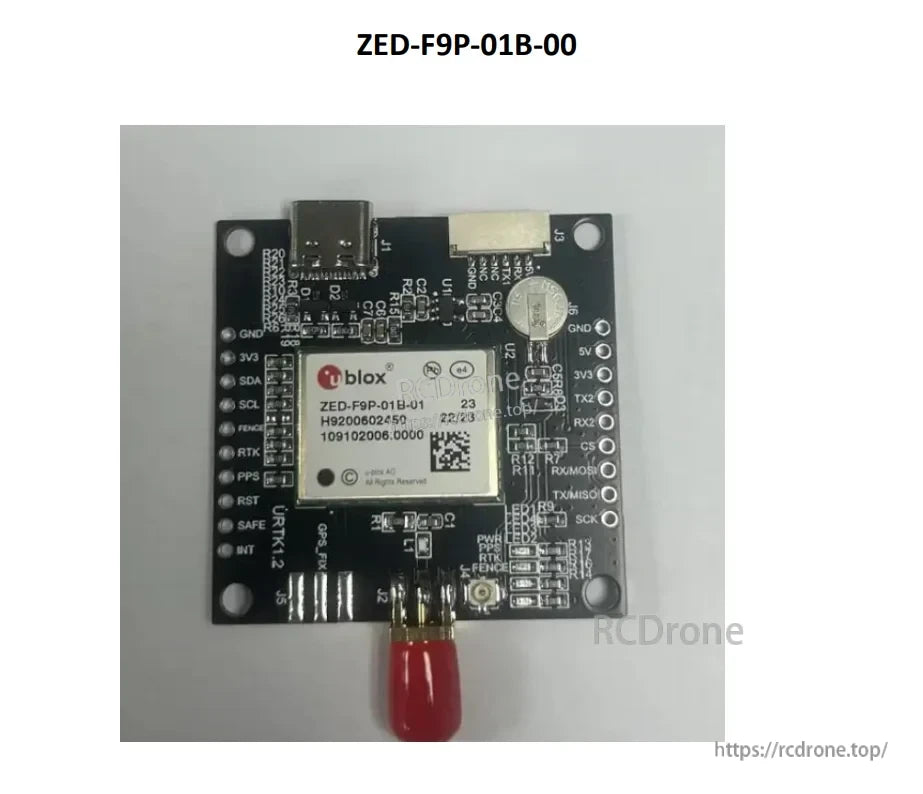
The ZED-F9P receiver board combines a USB-C connection with clearly labeled I/O pins and a U.FL antenna connector for straightforward integration.
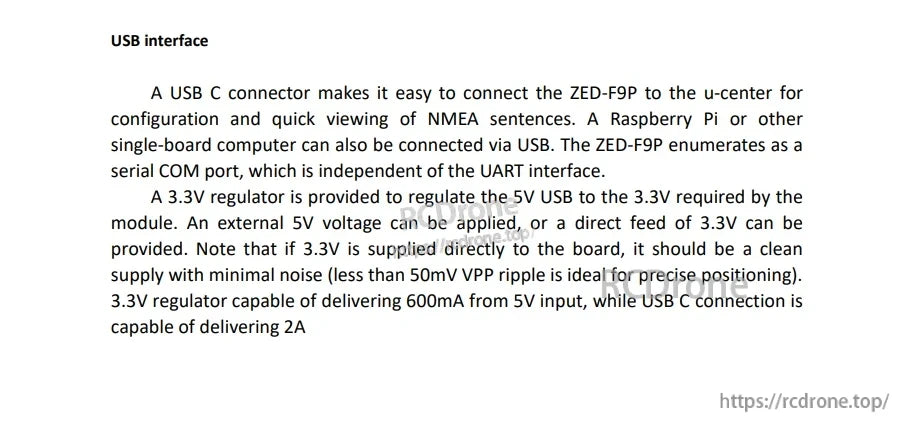
The USB‑C interface connects the ZED‑F9P to u‑center or a Raspberry Pi as an independent serial COM port, with onboard 3.3V regulation from 5V USB power.
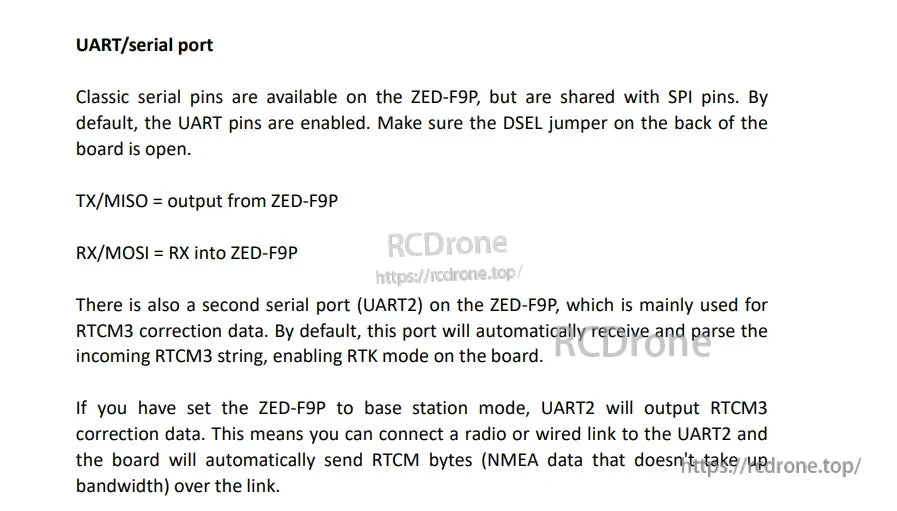
The ZED-F9P board uses shared UART/SPI pins and a second serial port (UART2) that’s commonly used for RTCM3 correction data to enable RTK mode.
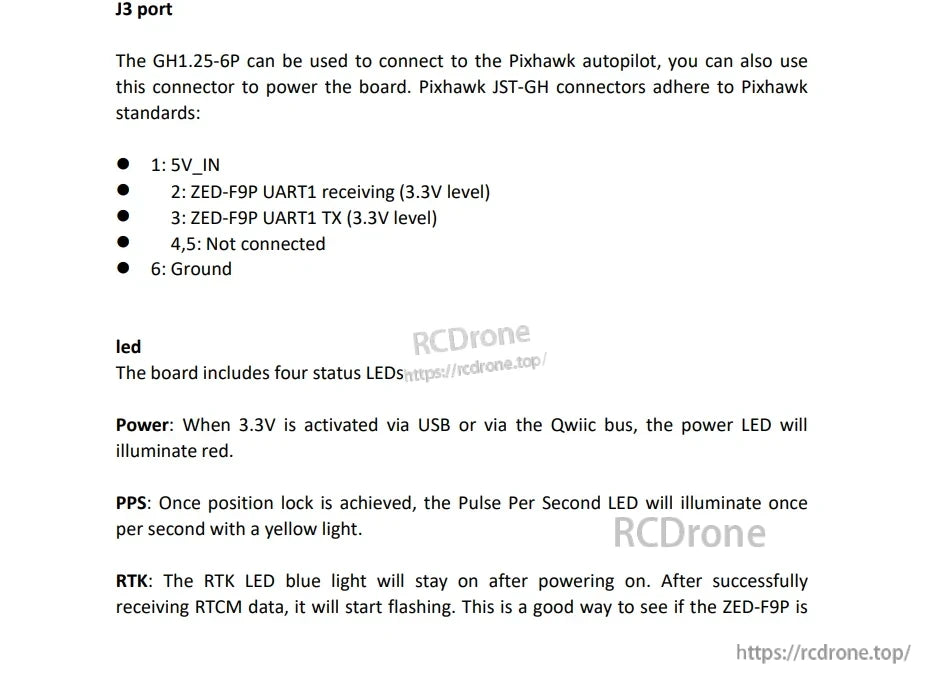
The J3 GH1.25-6P Pixhawk connector pinout lists 5V_IN, UART1 RX/TX (3.3V level), and ground, and the board uses four status LEDs for power, PPS lock, and RTK/RTCM activity.
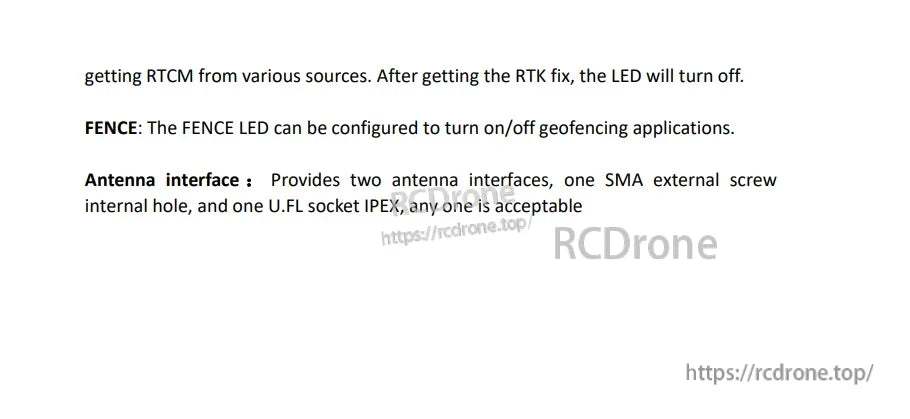
The ZED-F9P RTK GNSS receiver board provides two antenna interface options—SMA and U.FL (IPEX)—for flexible installation.