


Feetech FE-URT-2 Servo Debug Programmer, USB Type-C to TTL/RS485 Bus Adapter with CH343P
Feetech FE-URT-2 Servo Debug Programmer, USB Type-C to TTL/RS485 Bus Adapter with CH343P
Feetech
Couldn't load pickup availability


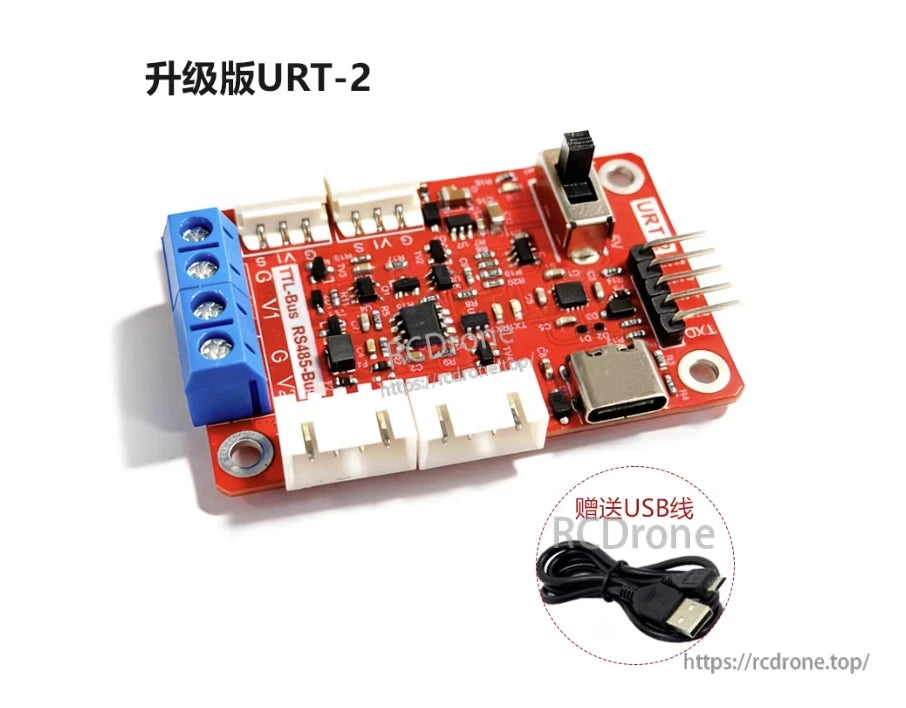
Overview
Feetech FE-URT-2 is a servo debug programmer / USB bus adapter designed for FEETECH serial servos, providing USB Type-C to TTL and RS485 bus communication for parameter tuning and debugging.
Key Features
- Upgraded URT-2 hardware for improved compatibility and operational convenience.
- Updated USB interface: traditional USB port upgraded to a Type-C interface for broad cable compatibility.
- Optimized terminal specification: 5264 4-pin terminal replaced with XH 4-pin terminal; the XH terminal is backward compatible with 5264 terminals.
- Upgraded power supply logic:
- TTL signal servos: compatible with 4.8V–12V power supply.
- RS485 signal servos: compatible with 12V–24V power supply.
- Power supply voltage must follow the typical voltage specified in the servo datasheet.
- Enhanced power connection: supports direct 5V USB connection to the servo interface, enabling parameter adjustment without an external power supply.
- USB chip updated to CH343P for improved communication speed, system compatibility, and stability.
- Board functions/labels shown: Type-C interface, UART interface, serial signal level selection switch, CH343 chip, XH4 pin terminal, SCS series servo interface, and power terminal polarity marking (positive/negative power poles).
Specifications
| Model | URT-2 |
| Weight | 12.5 g |
| Dimensions | 55.8*36.6*11.5 mm |
| USB Interface | TYPE-C interface |
| UART Interface | 2.54 pitch pin header |
| Power Interface | 5.08 terminal block |
| SCS Servo interface | 3IN 5264-3AW |
| SMS Servo interface | XH4pin Terminal |
| Mounting Dimensions | 48.8 mm x 28.8 mm |
Dimensions diagram notes (mm)
- 55.8 mm
- 39 mm
- 37.6 mm
- 48.5 mm
- 28.7 mm
- Mounting hole diameter: 3 mm
Connections & Notes
URT-2 to TTL Connection
- Choose one mode only.
- Connect Type-C to PC (controlled via FD tuning software).
- External power supply: 4.8–12V DC (for TTL series, external power required).
- Notes:
- If MCU is already connected to PC, do not reconnect the URT-2 USB port.
- Wiring for Arduino / STM32: TX-TX, RX-RX, V-V, G-G-G.
- Interface definition: G (1), V (2), S (3).
URT-2 to RS485 Connection
- Choose one mode only.
- Connect Type-C to PC (controlled via FD tuning software).
- External power supply: 12–24V DC (must not exceed 25V; for RS485 series, external power required).
- Notes:
- If MCU is already connected to PC, do not reconnect the URT-2 USB port.
- Wiring for Arduino / STM32: TX-TX, RX-RX, V-V, G-G-G.
- Interface definition: G (1), V (2), B (3), A (4).
Instructions & Cautions for FEETECH Servo Series
1. PWM Servos
Standard R/C servos with simple functions. Available in 180°/300°/360° controllable, continuous rotation, analog voltage feedback, and protection versions.
2. SCS Serial Servo Series
Supports feedback and protection for position, speed, temperature, voltage, current (selected models), load ratio, etc. Also includes angle limit, open-loop motor mode, etc.
3. STS / SMS Series
SMS series includes SMCL and SMBL models. Based on SCS functions, added: speed startup control, 360° controllable angle, closed-loop motor mode, step mode, one-touch median setting. Most models feature high-precision CNC housing, steel gears, and brushless motors for longer lifespan, higher precision, and more stable operation.
4. Communication Protocol & Level
SCS / STS: TTL level, FEETECH protocol. SMS: RS485 level, supports FEETECH protocol and Modbus-RTU. Modbus-RTU is widely used in industrial PLC applications. Refer to “Getting Started – MB Protocol Version” for tutorials.
5. MCU Control Guidelines
Use FEETECH protocol with URT-2 adapter. Assign unique ID and set the same baud rate before series connection. STS and SMS can be mixed in series. SCS is not recommended to connect in series with STS/SMS.
6. TTL Servo Wiring Rules
TTL servos use single-bus full-duplex communication. Must connect via URT-1 adapter: MCU TX → Adapter TX, RX → RX, V → V, G → G.
7. Default Baud Rate & Power
SCS / STS: Default 1000000 bps. SMS: Default 115200 bps. When using URT-1 with PC, power must be supplied on the same side as the terminal, following the servo datasheet voltage.
8. Power Supply Selection
Calculate power based on stall current and voltage from the datasheet, multiplied by the number of serially connected servos. If under normal load, use rated current × voltage for power estimation.
9. URT-2 Debug Board Instructions
URT-2 is a universal adapter for FEETECH serial servos. Some 12V STS servos must use DC 6V–9V input, not 8V–24V. Remove servo brackets before debugging to avoid pinching or stalling damage.
Applications
- FEETECH serial servo parameter tuning and debugging (TTL and RS485).
- PC-to-servo communication via USB Type-C.
- MCU integration examples referenced for Arduino / STM32 wiring.
For pre-sales and technical support, contact https://rcdrone.top/ or email [email protected].
Details
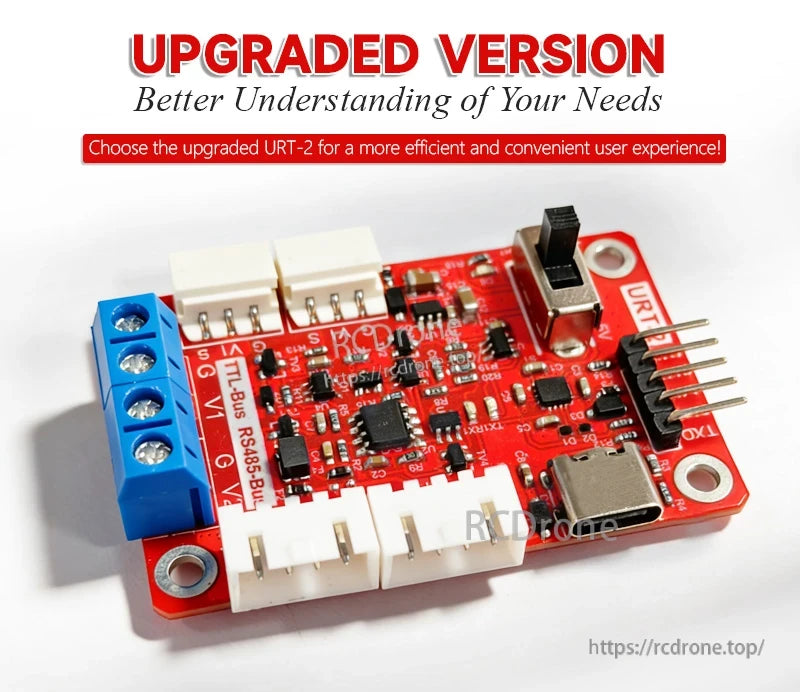
The Feetech FE-URT-2 interface board combines a USB-C connection with TTL/RS485 bus terminals and plug headers for straightforward servo wiring.
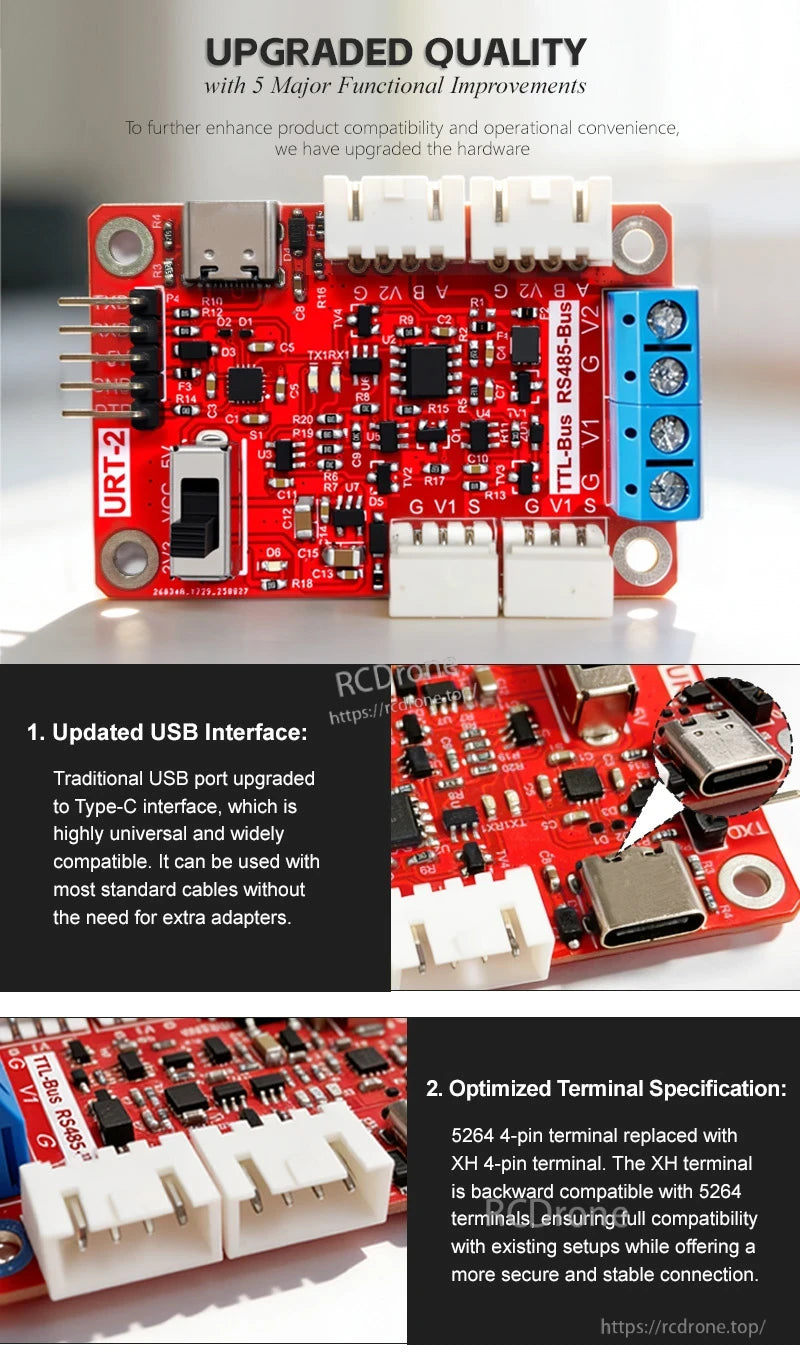
The Feetech FE-URT-2 adapter board uses a USB-C port with TTL-BUS and RS485-BUS connectors for straightforward servo communication wiring.
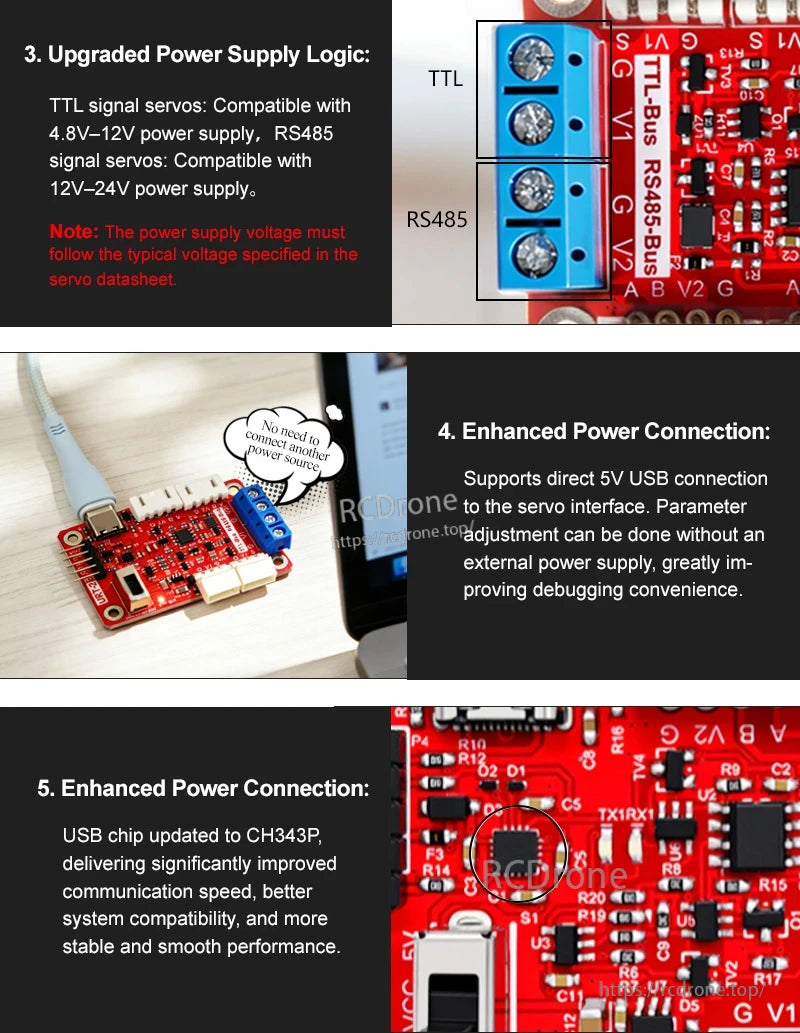
The FE-URT-2 servo adapter provides separate TTL and RS485 screw terminals and can power the servo interface directly from 5V USB for convenient parameter adjustment.
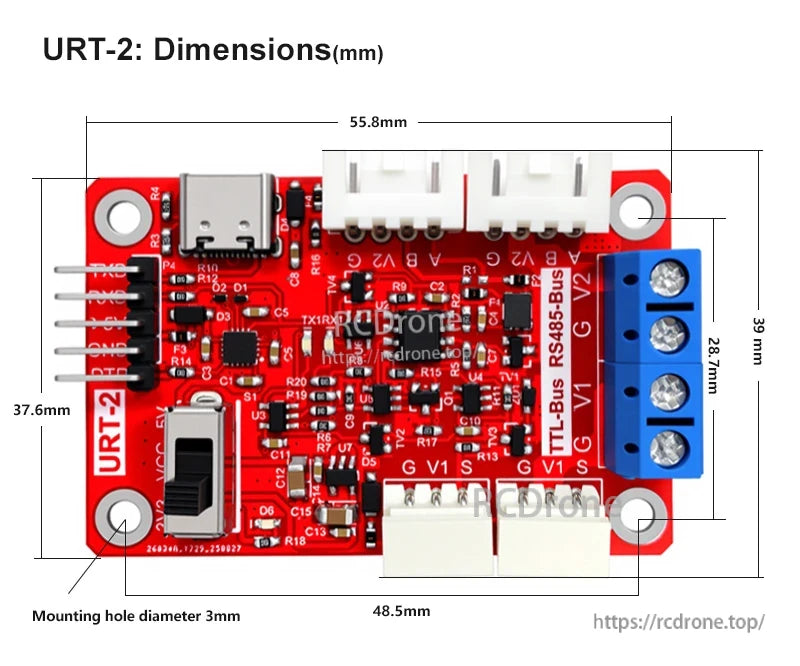
The Feetech URT-2 interface board includes a USB port, pin header, and labeled TTL-BUS/RS485-BUS screw terminals for straightforward servo bus wiring.
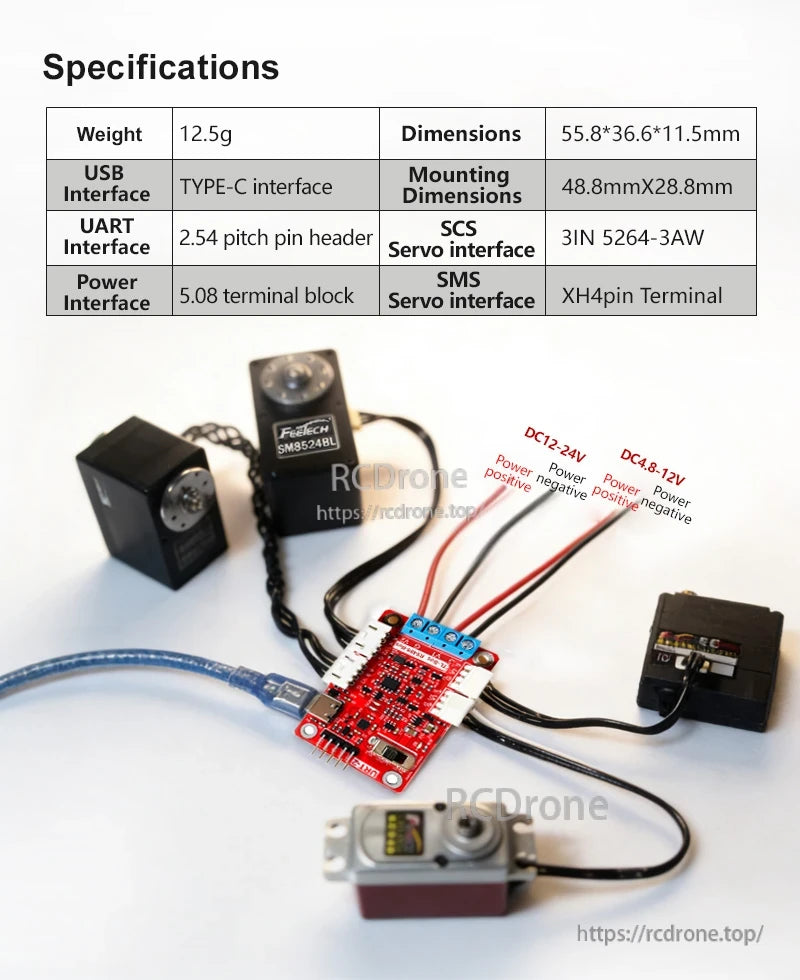
The Feetech FE-URT-2 uses a USB-C connection plus UART and terminal-block power inputs to simplify servo wiring and setup.
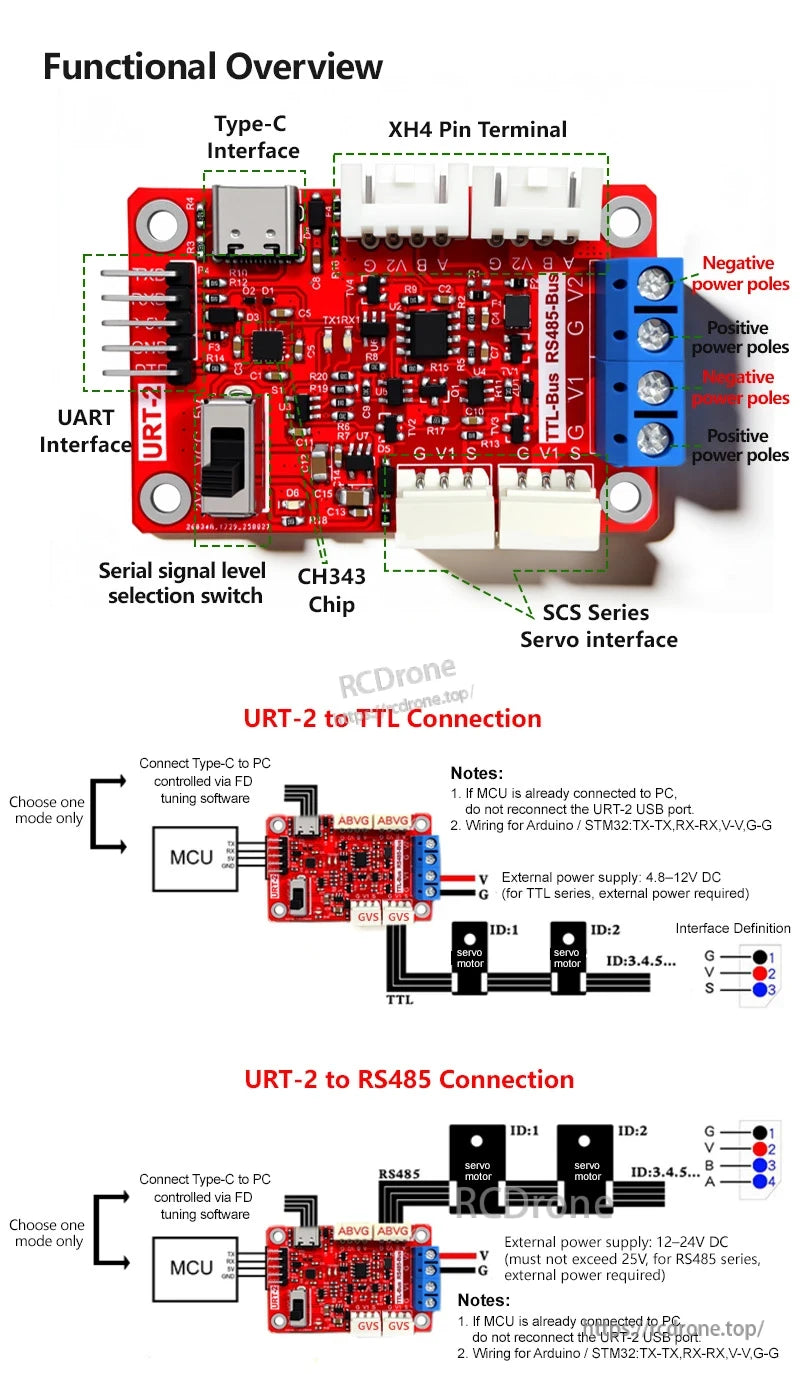
The FE-URT-2 board provides USB Type‑C and UART connectivity with terminals for TTL and RS485 servo wiring and power connections.
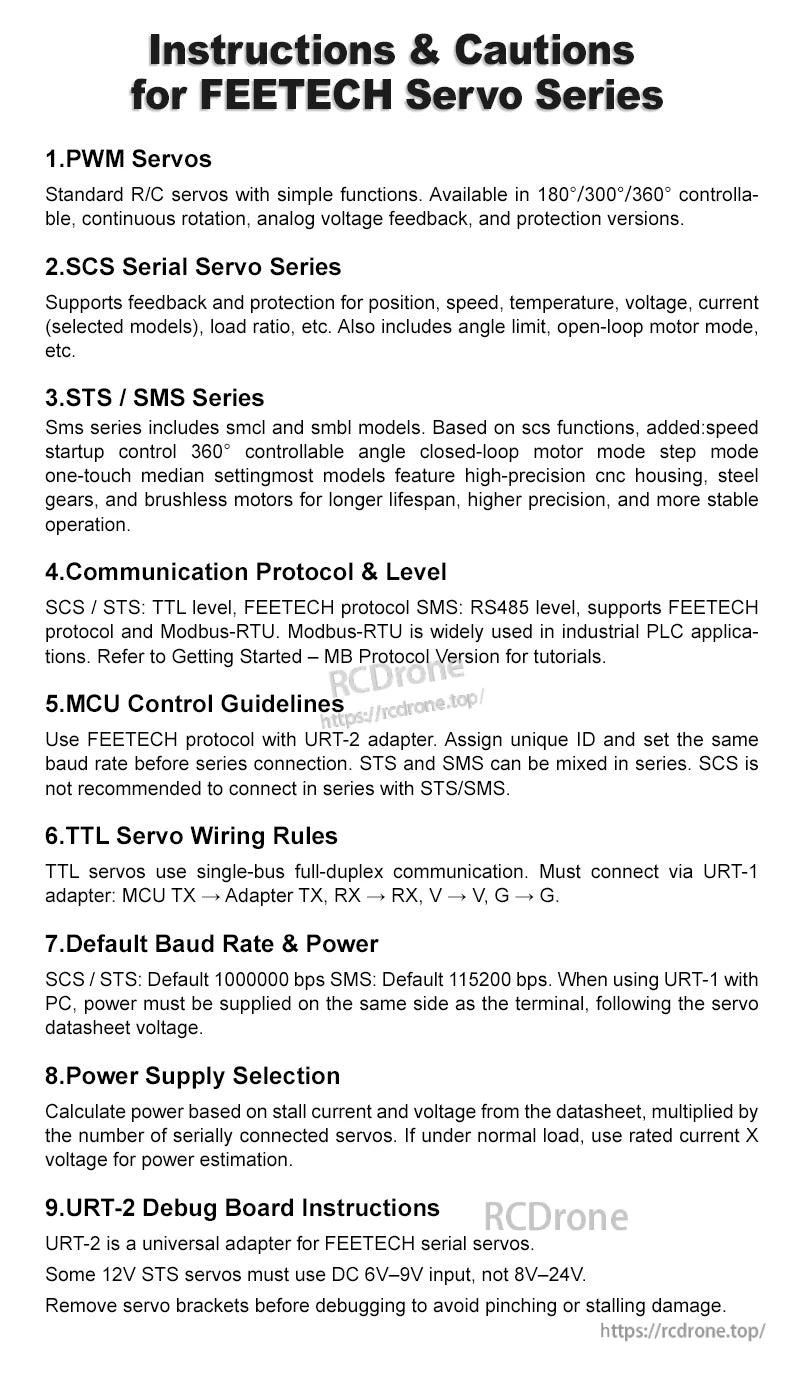
FEETECH servo setup notes cover PWM and serial servo series, communication levels, default baud rates, wiring rules, and URT-2 debug guidance.