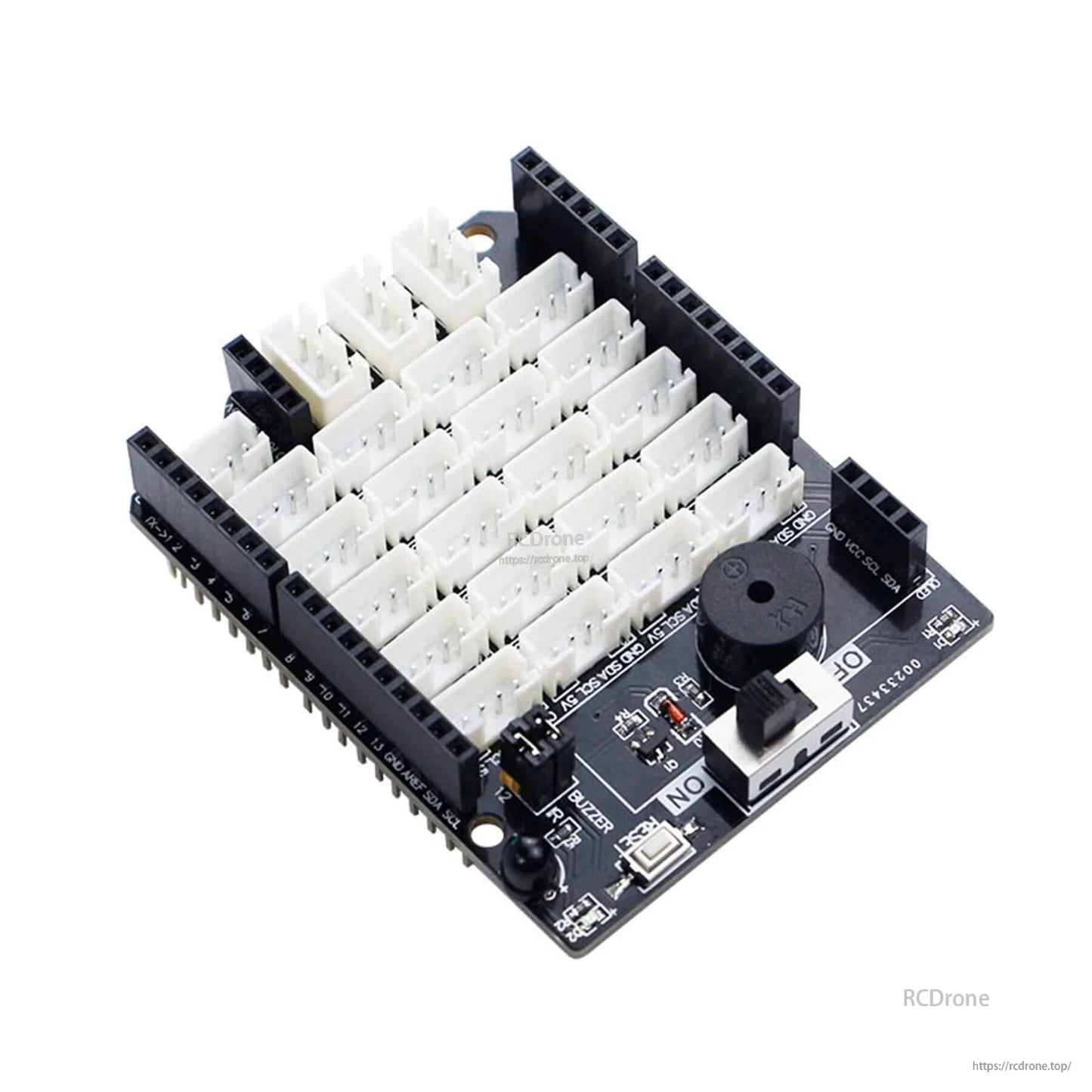
Yahboom वर्ल्ड ऑफ मॉड्यूल सीरीज़ सेंसर एक्सपेंशन बोर्ड PH2.0 पोर्ट माइक्रो:बिट, Arduino UNO, Pico 2/Pico के लिए
Yahboom वर्ल्ड ऑफ मॉड्यूल सीरीज़ सेंसर एक्सपेंशन बोर्ड PH2.0 पोर्ट माइक्रो:बिट, Arduino UNO, Pico 2/Pico के लिए
Yahboom
पिकअप उपलब्धता लोड नहीं की जा सकी
समीक्षा
यह Yahboom सेंसर विस्तार बोर्ड समर्थित नियंत्रक बोर्ड के पिन्स को कई 4-पिन PH2.0 पोर्ट्स में परिवर्तित करता है, जिससे सेंसर वायरिंग तेज और सुव्यवस्थित हो जाती है। यह Micro:bit / Raspberry Pi Pico 2 / Raspberry Pi Pico / Arduino UNO बोर्ड के सभी पिन्स का विस्तार करता है, जिसमें प्रत्येक समीपवर्ती सिग्नल पिन VCC और GND के साथ जोड़ा जाता है ताकि PH2.0 केबल के माध्यम से सेंसर को जोड़ने के लिए 4 पिन PH2.0 इंटरफेस बन सके। सर्वो पिन्स भी सर्वो को जोड़ने के लिए प्रदान किए गए हैं।
यह Yahboom वर्ल्ड ऑफ मॉड्यूल सीरीज सेंसर इकोसिस्टम के लिए डिज़ाइन किया गया है और यह Yahboom सामान्य सेंसर मॉड्यूल्स और अन्य सेंसर मॉड्यूल्स को भी समर्थन देने के लिए कहा गया है जो एक सामान्य PH2.0 इंटरफेस का उपयोग करते हैं। पूर्व-बिक्री और संगतता प्रश्नों के लिए, संपर्क करें [email protected].
मुख्य विशेषताएँ
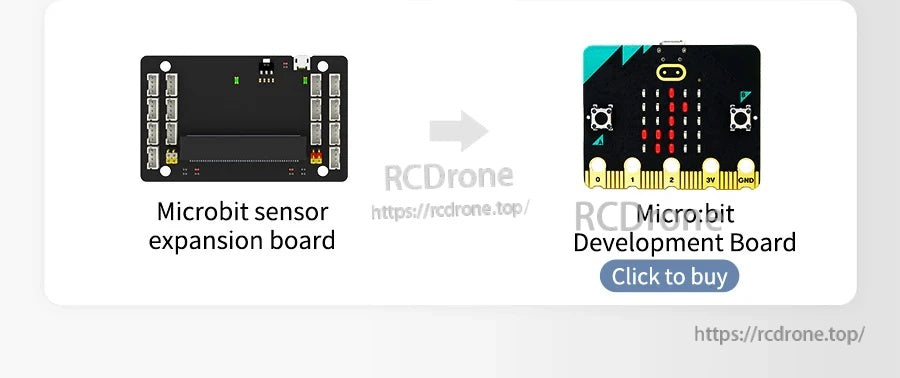
- Micro:bit को आसानी से इस विस्तार बोर्ड में प्लग किया जा सकता है।
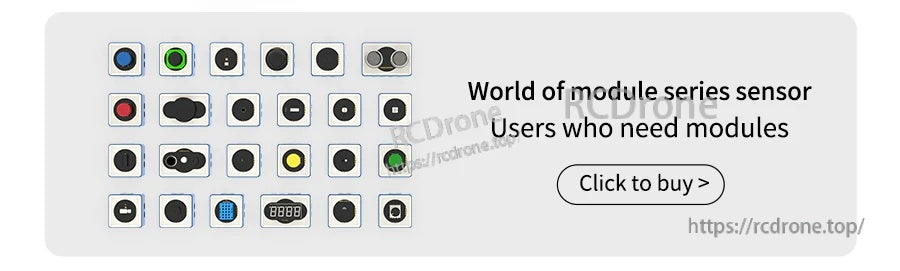
- वर्ल्ड ऑफ मॉड्यूल सीरीज सेंसर का समर्थन करता है; PH2.0 केबल तेज़ कनेक्शन।
- PH2.0 इंटरफेस को प्रभावी रूप से रिवर्स कनेक्शन को रोकने के लिए अपनाया गया है (एंटी-रिवर्स इंटरफेस)।
- डिजिटल/एनालॉग इंटरफेस समर्थन।
- IIC समर्थन।
- PWM समर्थन।
- सर्वो पिन विभिन्न प्रकार के सर्वोस को ड्राइव करने का समर्थन करते हैं (उदाहरण दिखाए गए: 9G सर्वो, 9G मेटल डिजिटल सर्वो, बिल्डिंग ब्लॉक सर्वो)।
- कोई जम्पर और सोल्डरिंग की आवश्यकता नहीं; प्लग और प्ले, गंदे वायरिंग को कम करने और रिवर्स कनेक्शन और क्षति की संभावना को कम करने के लिए डिज़ाइन किया गया।
- याहबूम वर्ल्ड ऑफ मॉड्यूल सीरीज और 3 इन 1 सीरीज सेंसर मॉड्यूल के साथ संगत।
- ईंट छेद आरक्षित हैं और विभिन्न आकारों को बनाने के लिए ईंटों के साथ संयोजित किया जा सकता है।
- तीन सेंसर विस्तार बोर्ड तीन अलग-अलग बोर्डों का समर्थन करते हैं (रास्पबेरी पाई पिको 2/पिको, Arduino UNO, और Micro:bit के लिए संस्करण)।
विशेषताएँ
| उत्पाद प्रकार | सेंसर विस्तार बोर्ड |
| समर्थित नियंत्रक बोर्ड | माइक्रो:बिट; रास्पबेरी पाई पिको 2; रास्पबेरी पाई पिको; Arduino UNO |
| सेंसर कनेक्टर प्रारूप | 4 पिन PH2.0 इंटरफ़ेस (सन्निहित पिन VCC और GND के साथ संयुक्त) |
| समर्थित इंटरफेस (उल्लिखित) | डिजिटल/एनालॉग; IIC; PWM |
| सर्वो कनेक्शन | सर्वो पिन प्रदान किए गए (सर्वो को जोड़ने के लिए) |
| एंटी-रिवर्स कनेक्शन | हाँ (PH2.0 एंटी-रिवर्स कनेक्शन डिज़ाइन दोनों मॉड्यूल और विस्तार बोर्ड के लिए निर्दिष्ट |
| यांत्रिक एकीकरण | ईंट छेद आरक्षित |
| प्रोग्रामिंग नोट (Pico 2 छवि पाठ) | माइक्रो पाइथन और C/C++ प्रोग्रामिंग |
अनुप्रयोग
- PH2.0 प्लग-एंड-प्ले वायरिंग के साथ त्वरित सेंसर प्रोटोटाइप और प्रयोग।
- उदाहरण परियोजनाएं दिखाईं गईं: चमकदार छोटी टेबल लैंप (UNO बोर्ड + UNO विस्तार बोर्ड + बटन मॉड्यूल + प्रकाश-संवेदनशील मॉड्यूल); हैंडहेल्ड रेंजफाइंडर (Micro:bit बोर्ड + Micro:bit विस्तार बोर्ड + अल्ट्रासोनिक मॉड्यूल + डिजिटल ट्यूब मॉड्यूल); स्मार्ट वाइब्रेटिंग अलार्म क्लॉक (Raspberry Pi Pico सेंसर विस्तार बोर्ड + Raspberry Pi Pico 2 + प्रकाश-संवेदनशील मॉड्यूल + वाइब्रेशन मोटर मॉड्यूल + टकराव सीमक मॉड्यूल)।
मैनुअल
विवरण
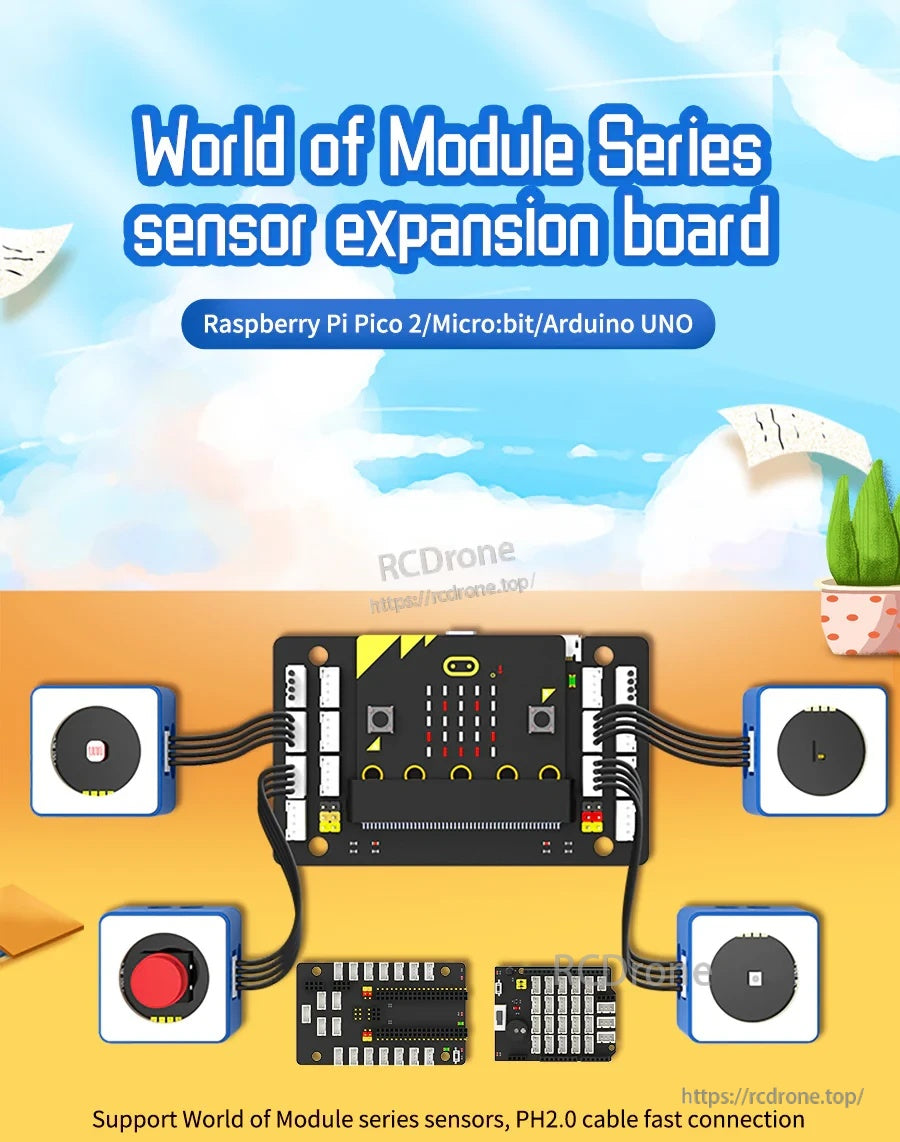
अपने कंट्रोलर बोर्ड पिन्स को साफ-सुथरे 4-पिन PH2.0 पोर्ट्स में बदलें ताकि सेंसर वायरिंग को जल्दी से प्लग-एंड-प्ले किया जा सके।

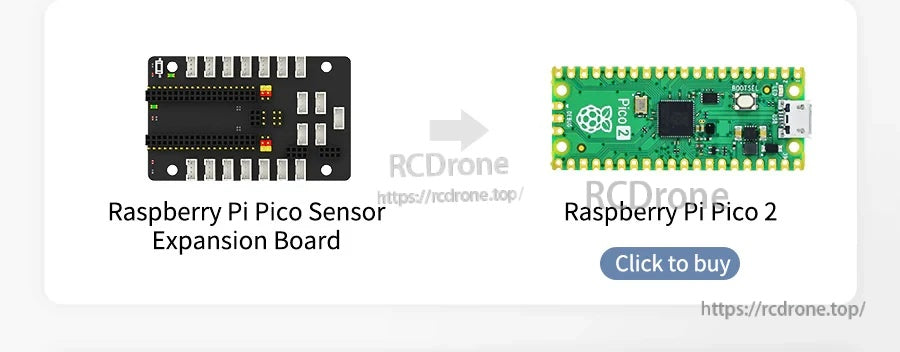
वह संस्करण चुनें जो आपके कंट्रोलर बोर्ड से मेल खाता हो—Pico 2/Pico, Arduino UNO, और Micro:bit के लिए अलग-अलग विकल्प उपलब्ध हैं।
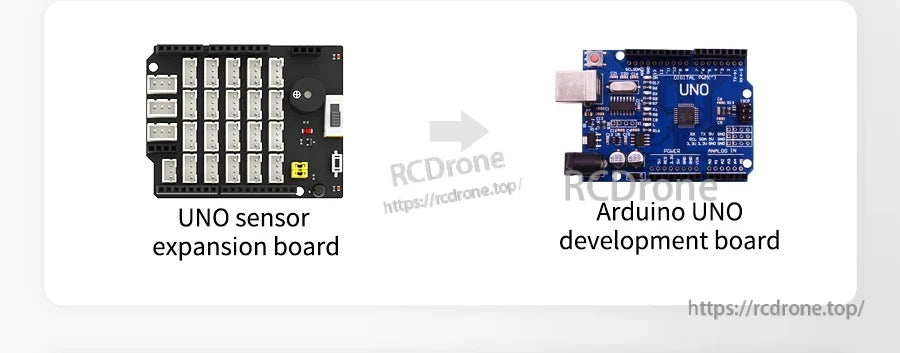
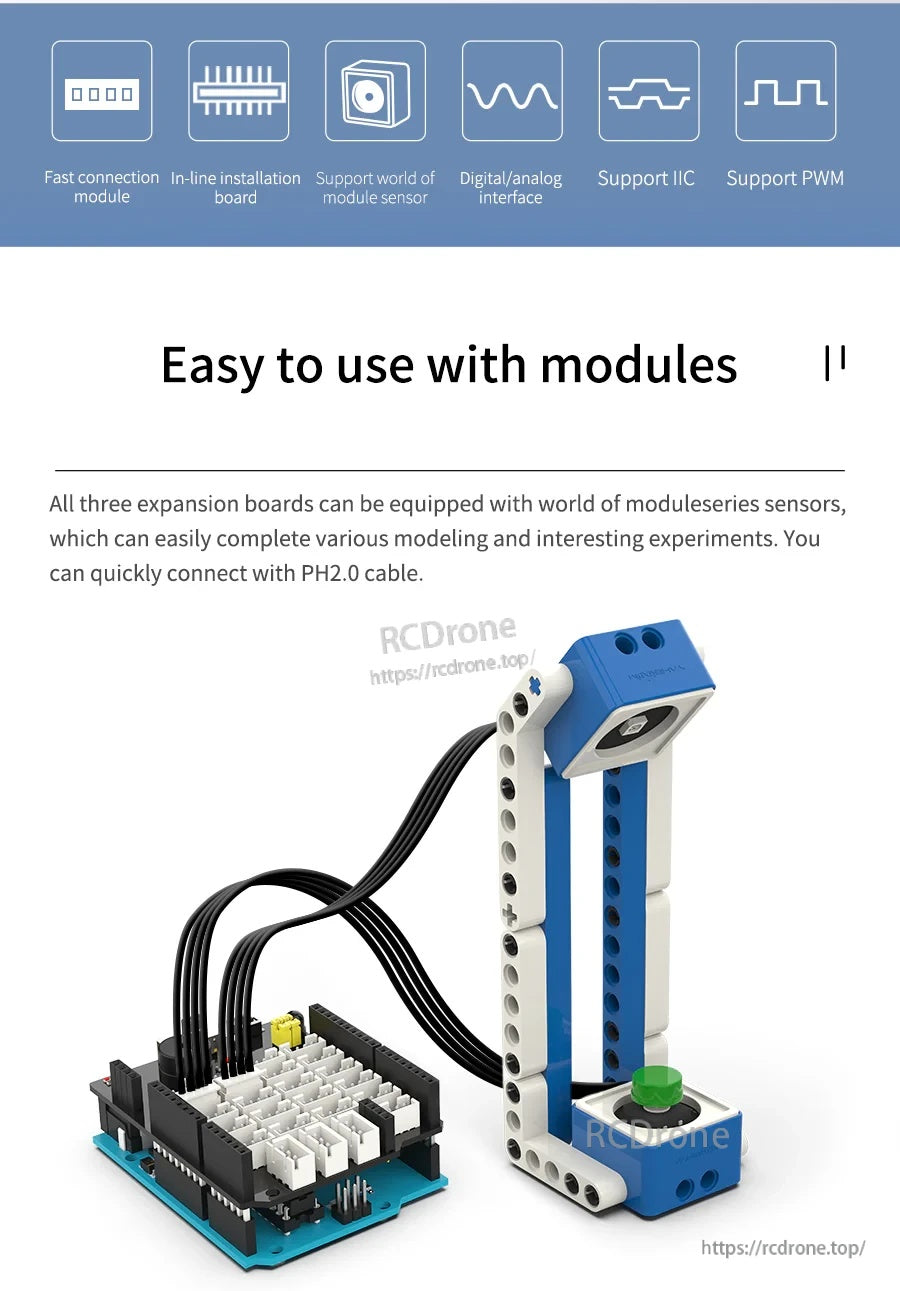
PH2.0 केबलिंग बिल्ड्स को साफ-सुथरा रखता है जबकि डिजिटल/एनालॉग, IIC, और PWM जैसे सामान्य इंटरफेस का समर्थन करता है।
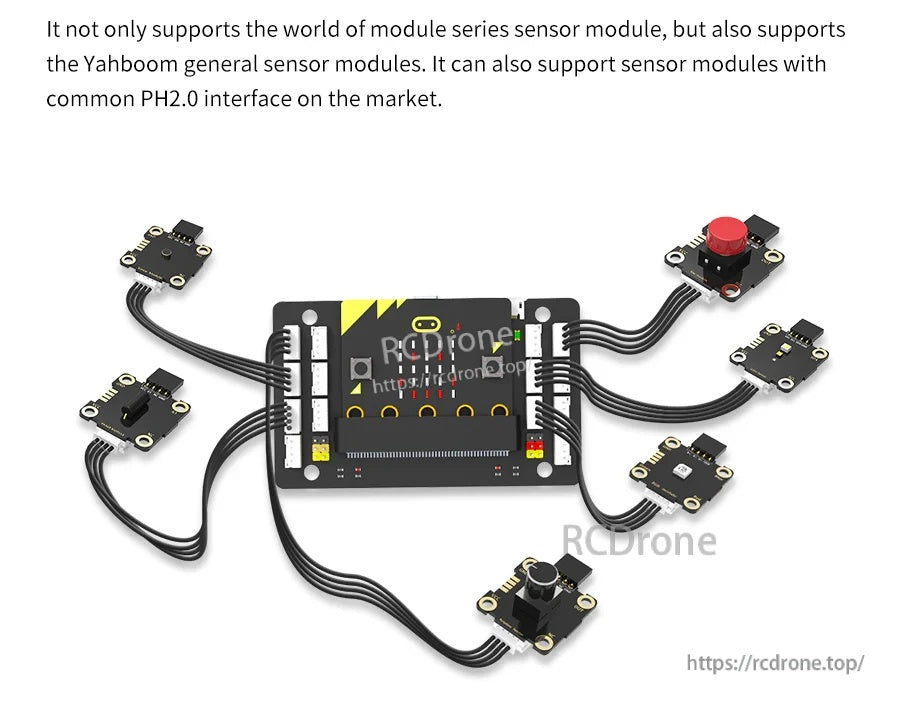
मानक 4-पिन PH2.0 लीड्स का उपयोग करके एक साथ कई सेंसर कनेक्ट करें, जो रिवर्स कनेक्शन्स को रोकने में मदद करने के लिए डिज़ाइन किए गए हैं।
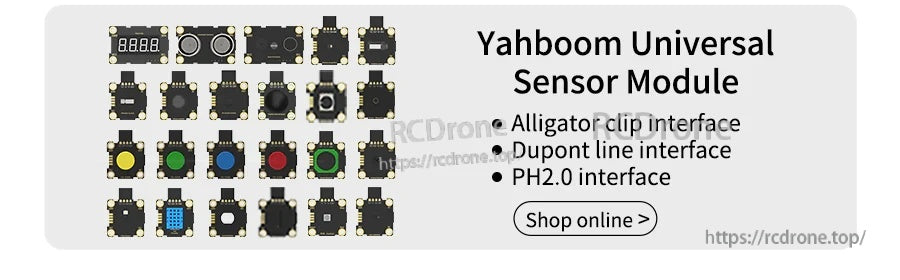
Yahboom मॉड्यूल इकोसिस्टम में काम करता है, जिसमें मॉड्यूल शामिल हैं जो एलीगेटर क्लिप या ड्यूपॉन्ट वायरिंग विकल्प भी प्रदान करते हैं।
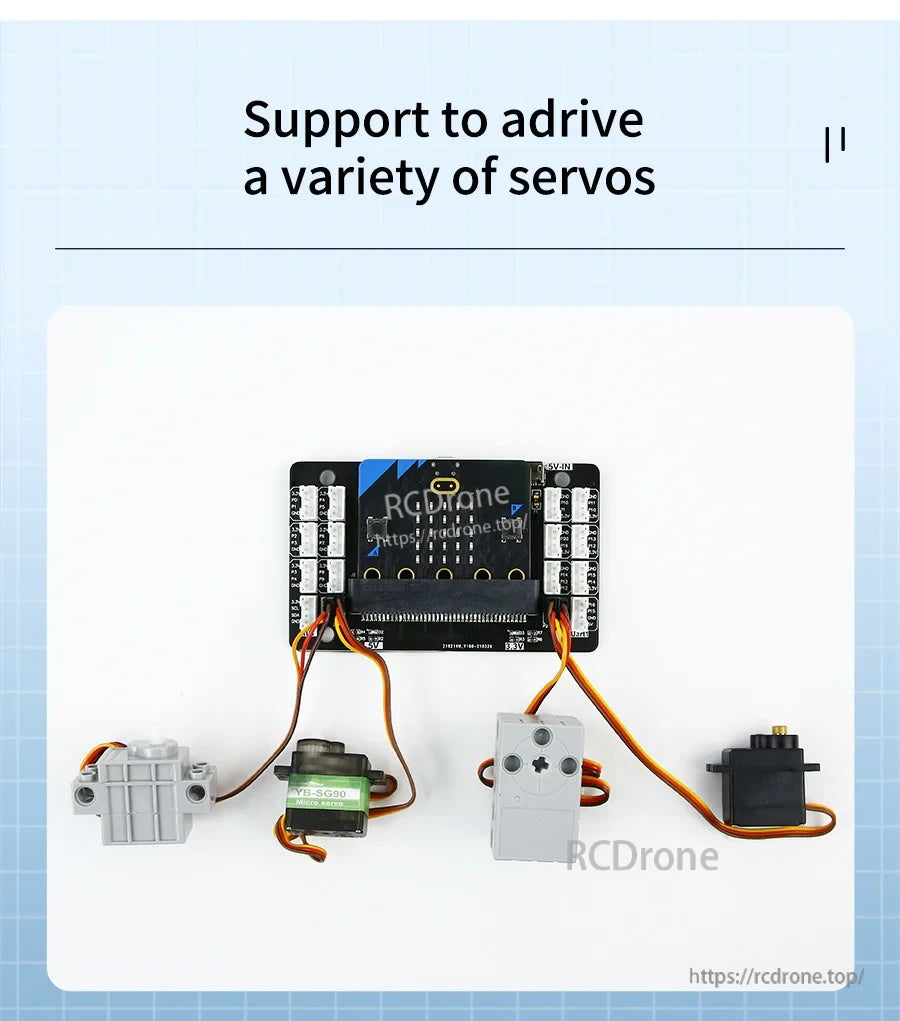
समर्पित सर्वो हेडर इसे आसान बनाते हैं कि एक ही विस्तार बोर्ड से सामान्य सर्वोस को पावर और नियंत्रित किया जा सके।

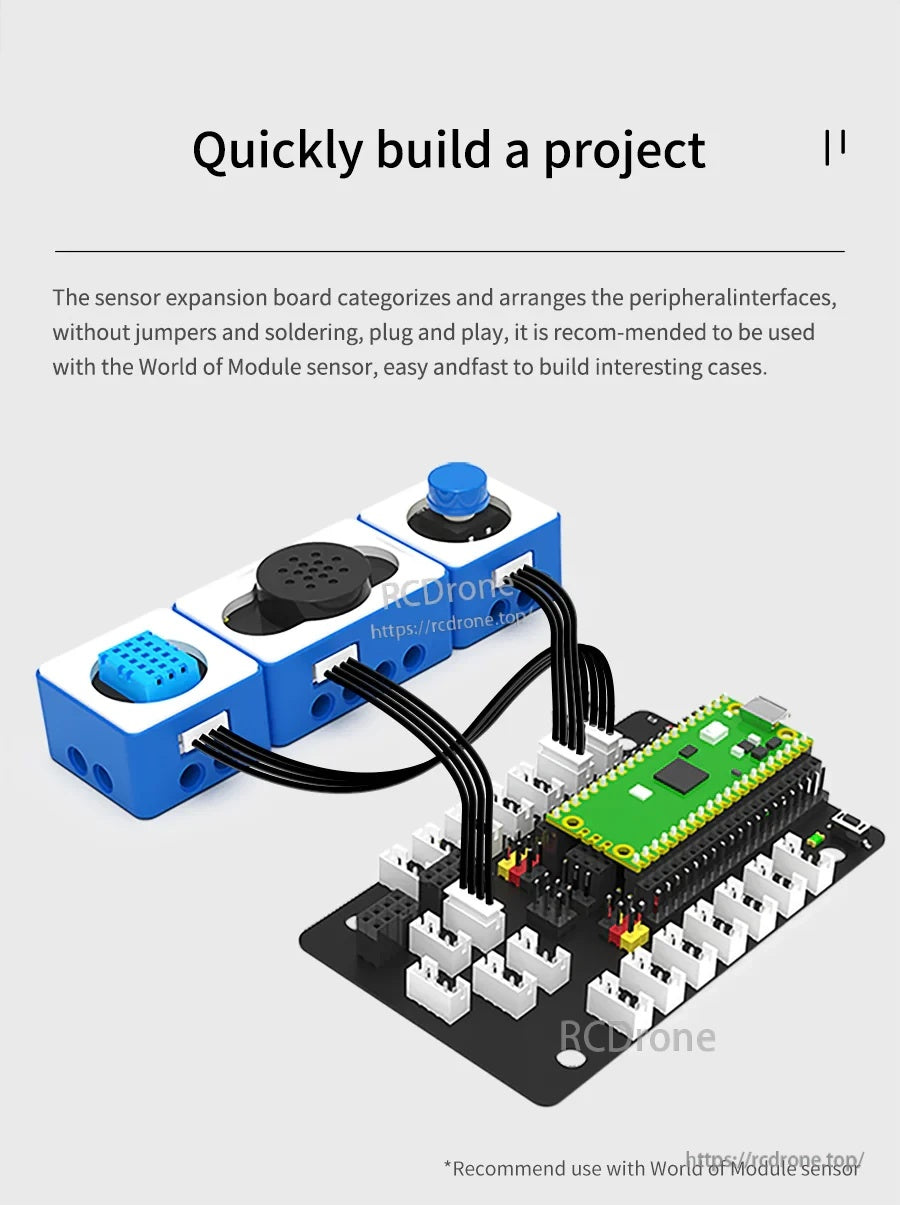
कोई जम्पर या सोल्डरिंग की आवश्यकता नहीं है—मॉड्यूल सीधे प्लग इन होते हैं जिससे प्रोटोटाइप तेजी से तैयार होते हैं।
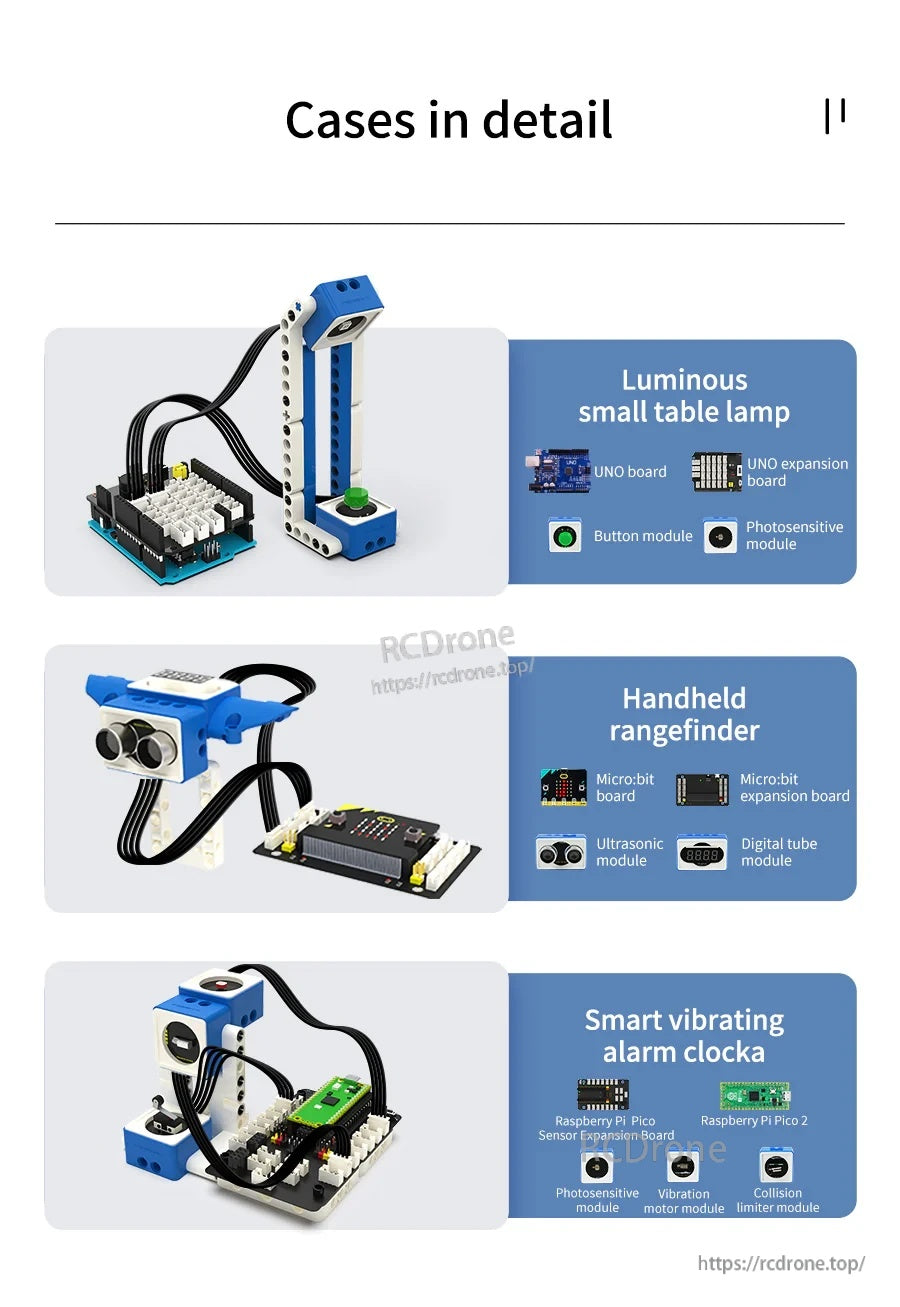
प्रोजेक्ट विचारों में विभिन्न नियंत्रक बोर्ड और मॉड्यूल का उपयोग करके लाइटिंग, दूरी माप, और अलर्ट निर्माण शामिल हैं।
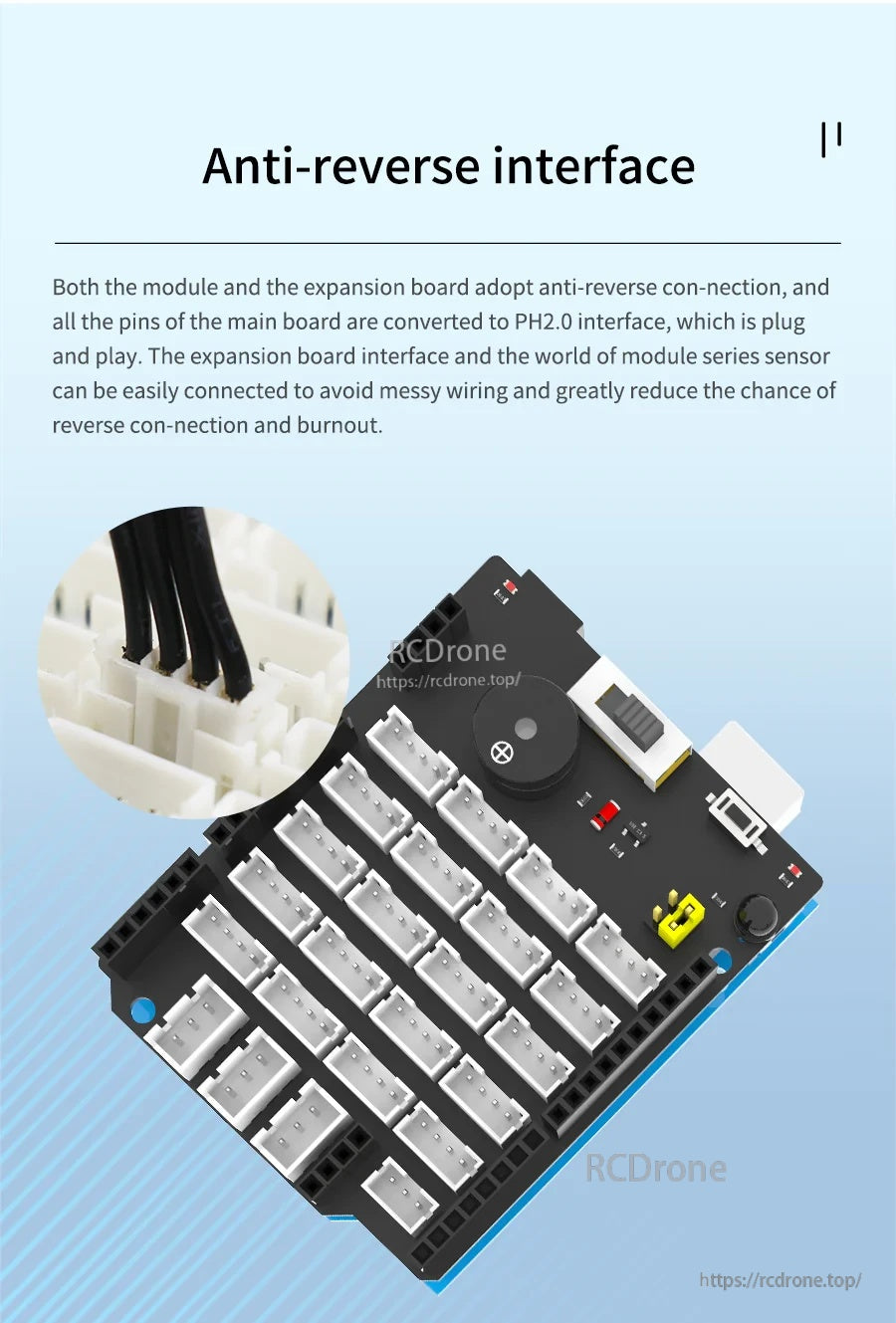
कीड PH2.0 कनेक्टर्स वायरिंग गलतियों को कम करने और बार-बार कक्षा या लैब उपयोग के दौरान घटकों की सुरक्षा में मदद करते हैं।
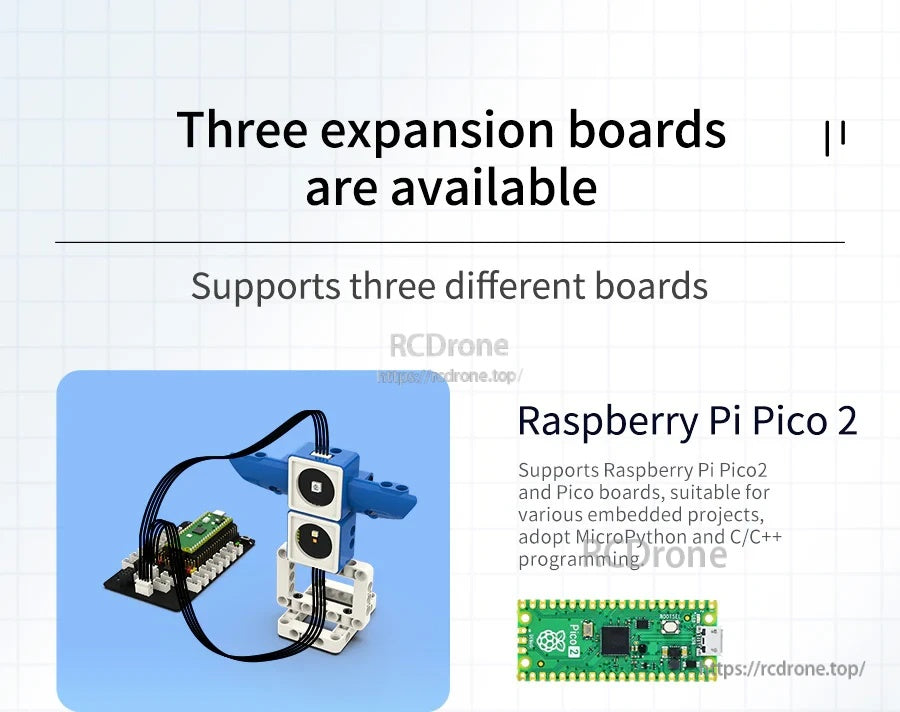
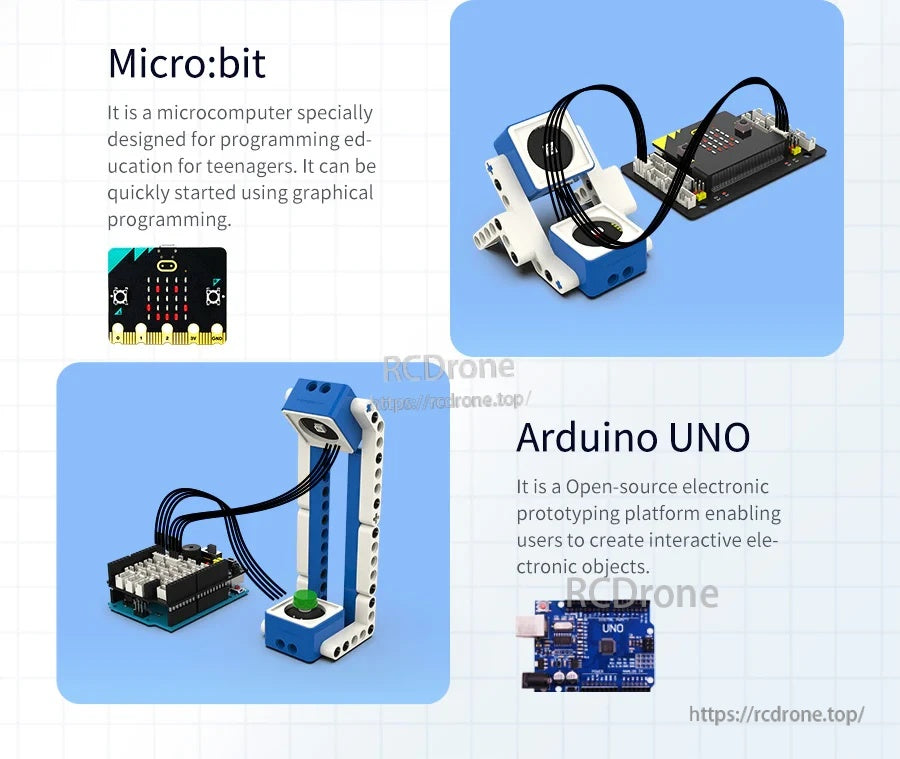
वही PH2.0 मॉड्यूल दृष्टिकोण शुरुआती-अनुकूल Micro:bit प्रोजेक्ट्स से Arduino UNO प्रोटोटाइपिंग तक स्केल करता है।
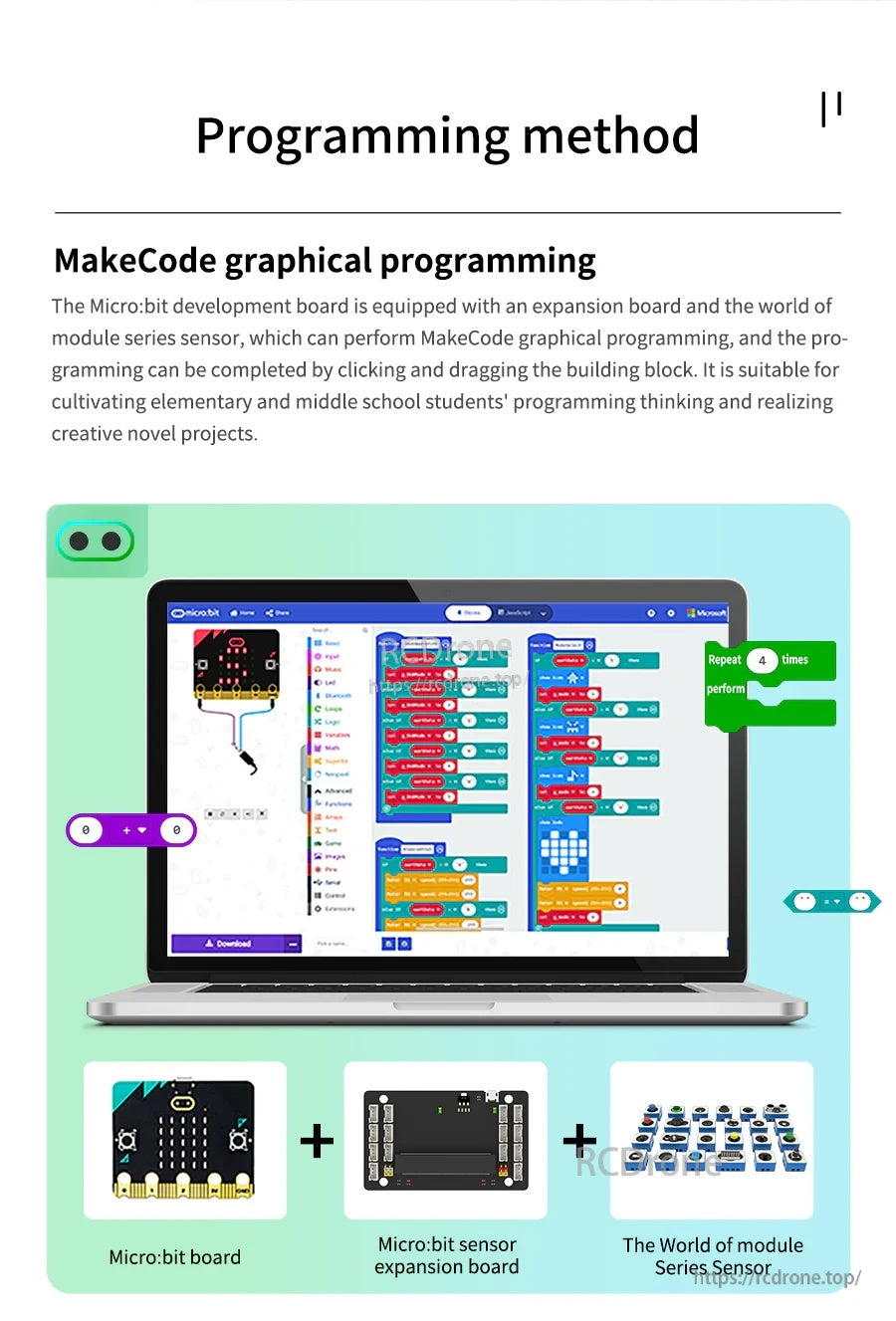
Micro:bit प्रोजेक्ट्स को MakeCode में सरल ब्लॉक प्रोग्रामिंग और त्वरित PH2.0 हुकअप्स के साथ बनाया जा सकता है।
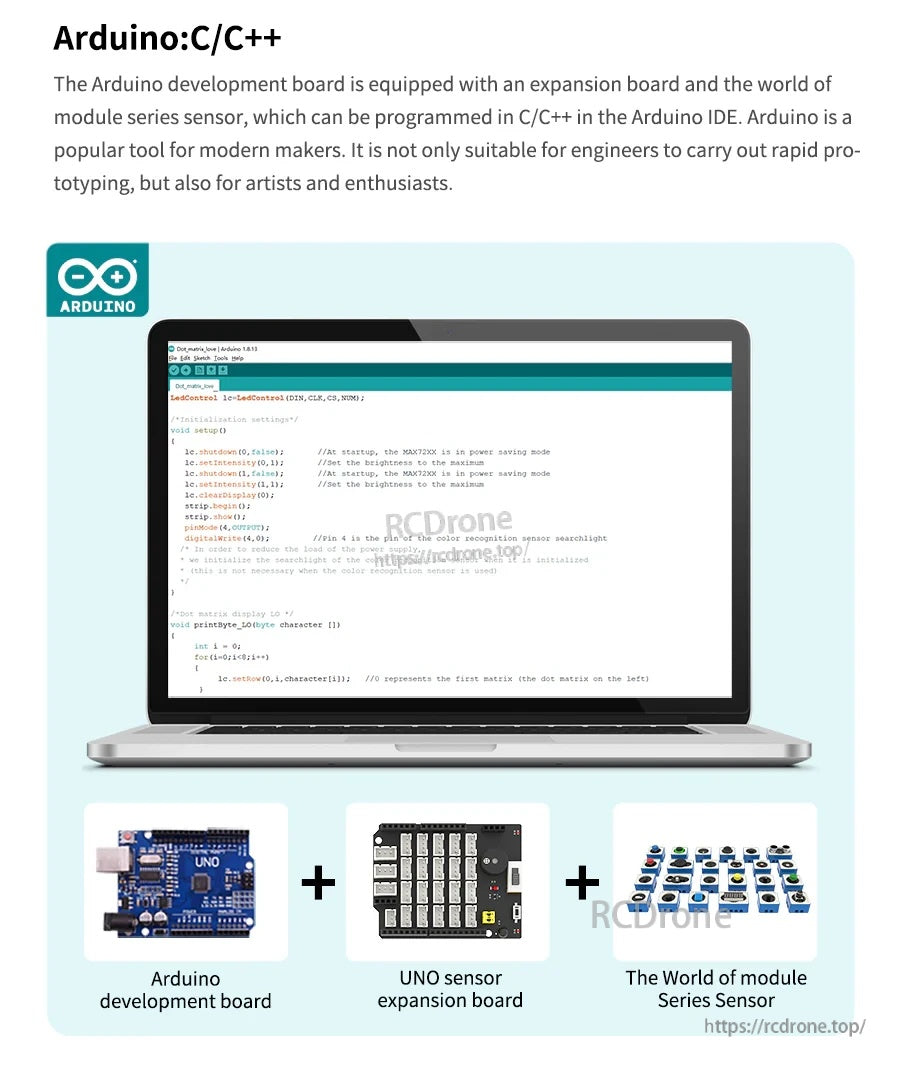
Arduino UNO सेटअप्स को C/C++ में प्रोग्राम किया जा सकता है जबकि सेंसर कनेक्शन्स को PH2.0 पोर्ट्स के माध्यम से संगत रखा जाता है।
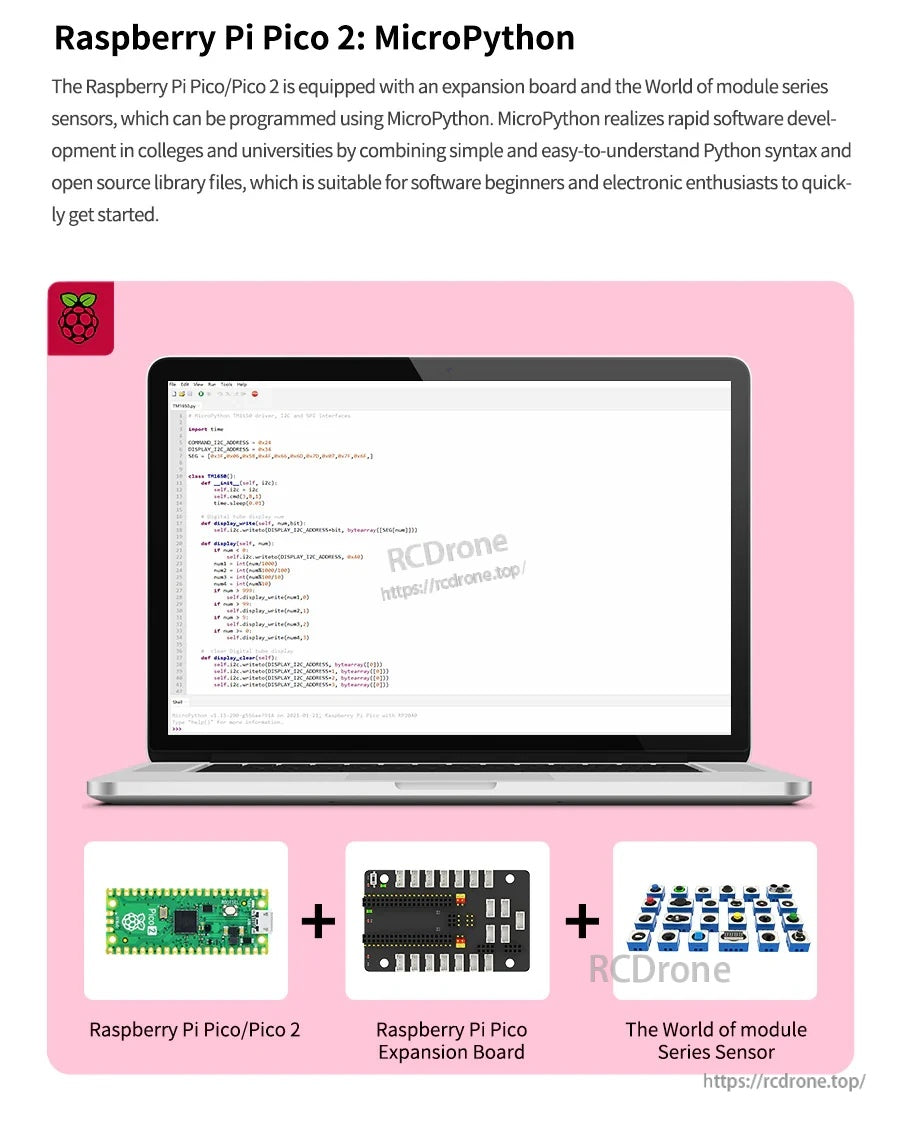
Raspberry Pi Pico/Pico 2 एक सेंसर विस्तार बोर्ड और World of Module श्रृंखला सेंसर के साथ MicroPython-आधारित प्रयोगों के लिए जोड़ा जाता है।
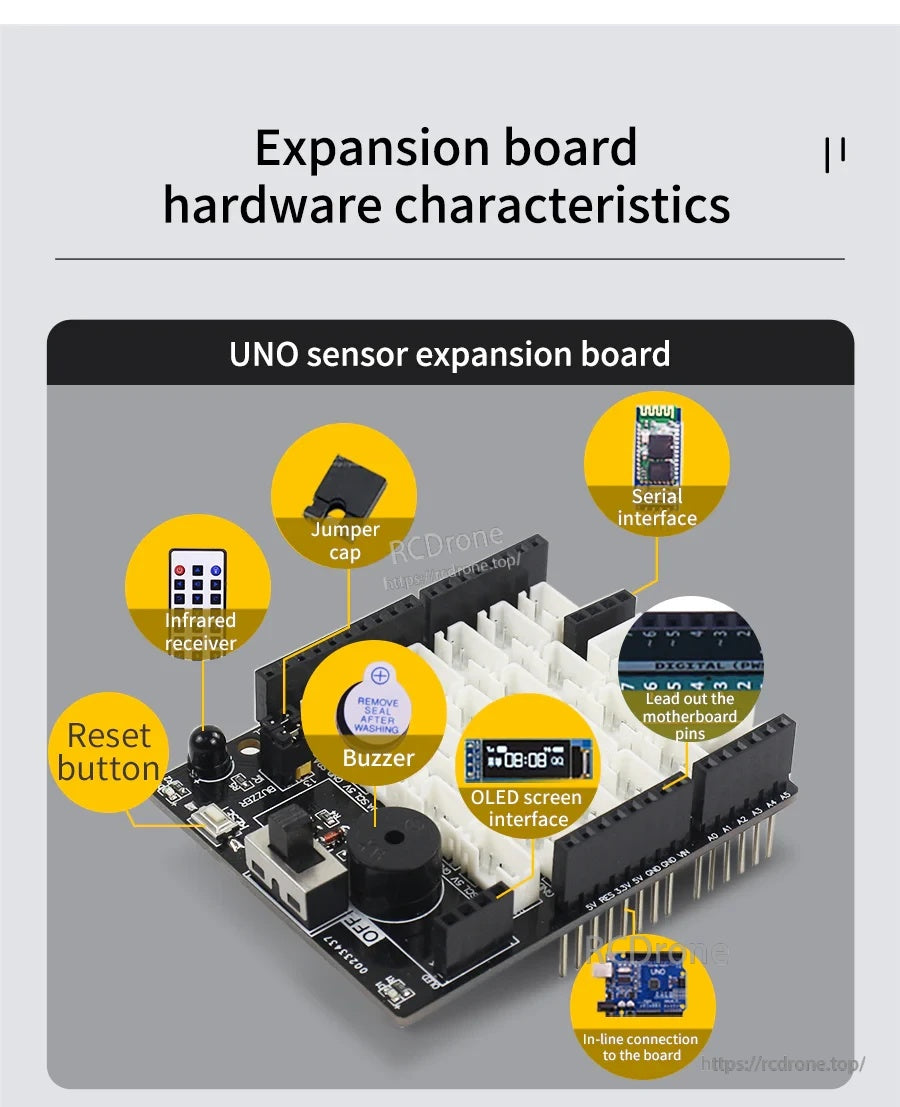
UNO सेंसर विस्तार बोर्ड एक रीसेट बटन, बजर, और इन्फ्रारेड रिसीवर के साथ आसान सेंसर कनेक्शन जोड़ता है।
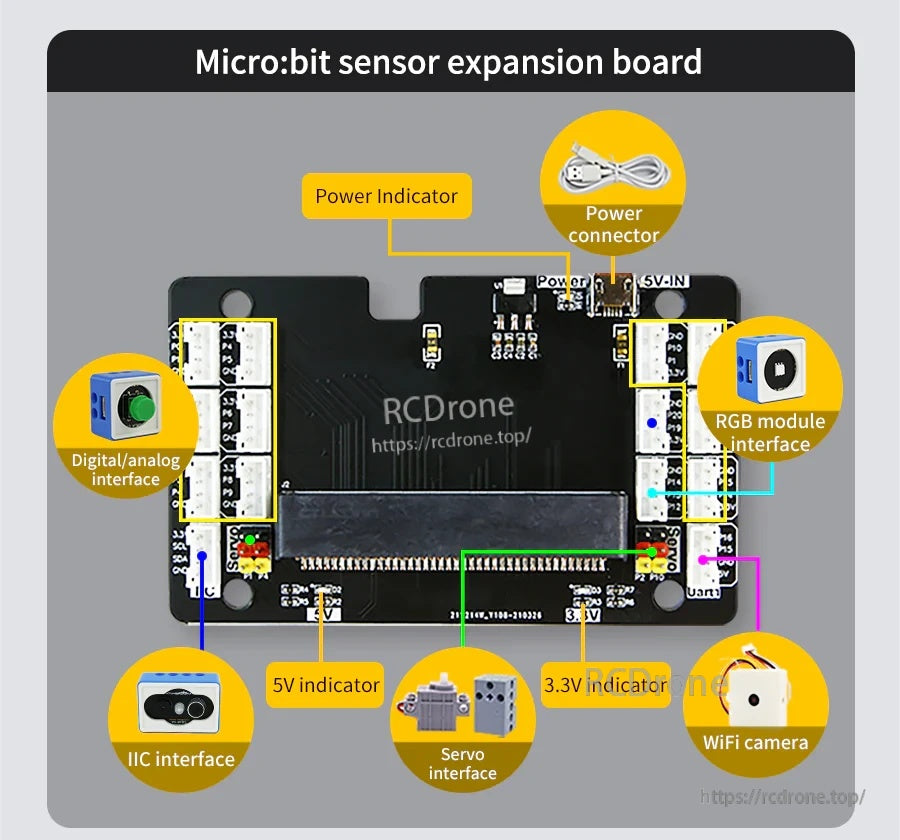
Micro:bit सेंसर विस्तार बोर्ड IIC, सर्वो, RGB मॉड्यूल के लिए स्पष्ट रूप से लेबल किए गए इंटरफेस प्रदान करता है, साथ ही 3.3V/5V संकेतक और एक पावर कनेक्टर।
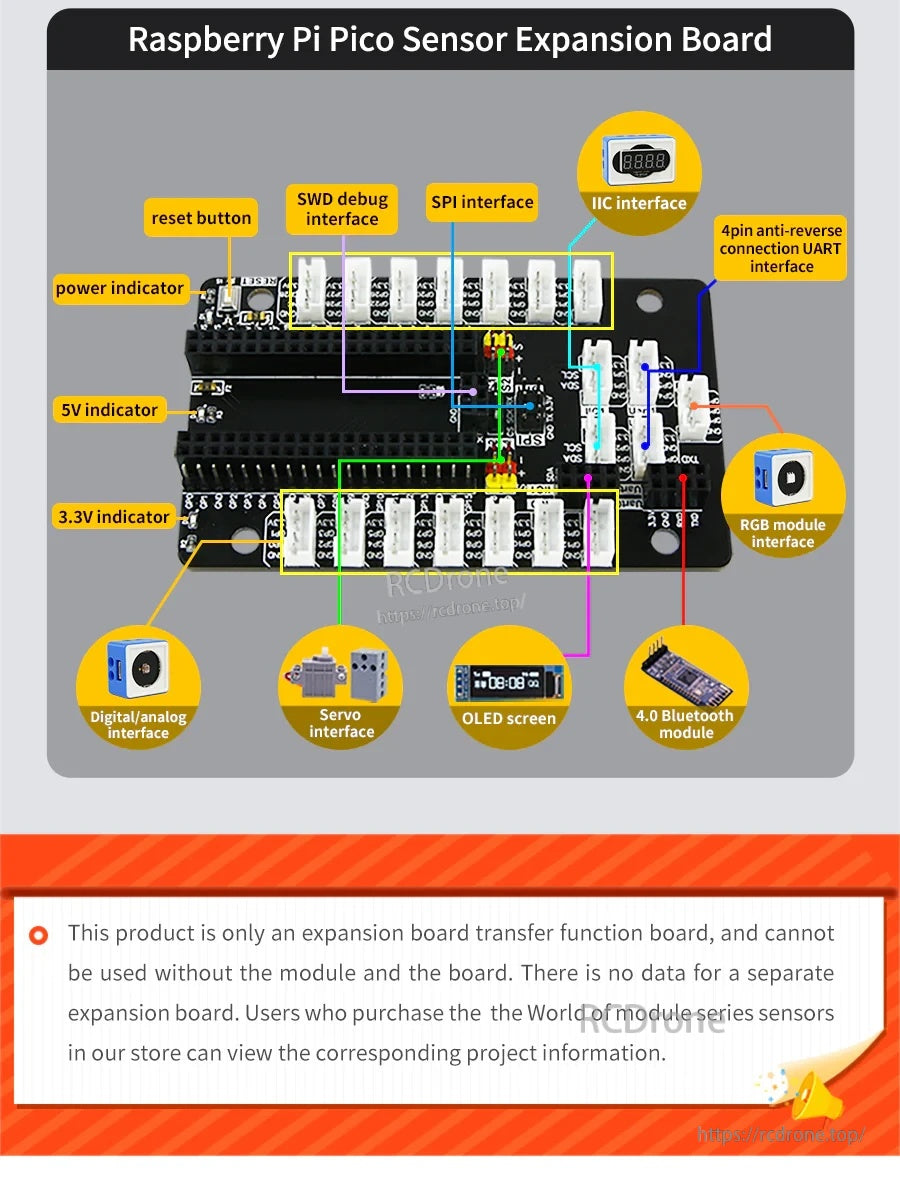
यह Raspberry Pi Pico सेंसर विस्तार बोर्ड IIC, SPI, UART और कई सेंसर/सर्वो पोर्ट्स को तोड़ता है, जिससे OLED, RGB और ब्लूटूथ जैसे मॉड्यूल की वायरिंग सरल हो जाती है।
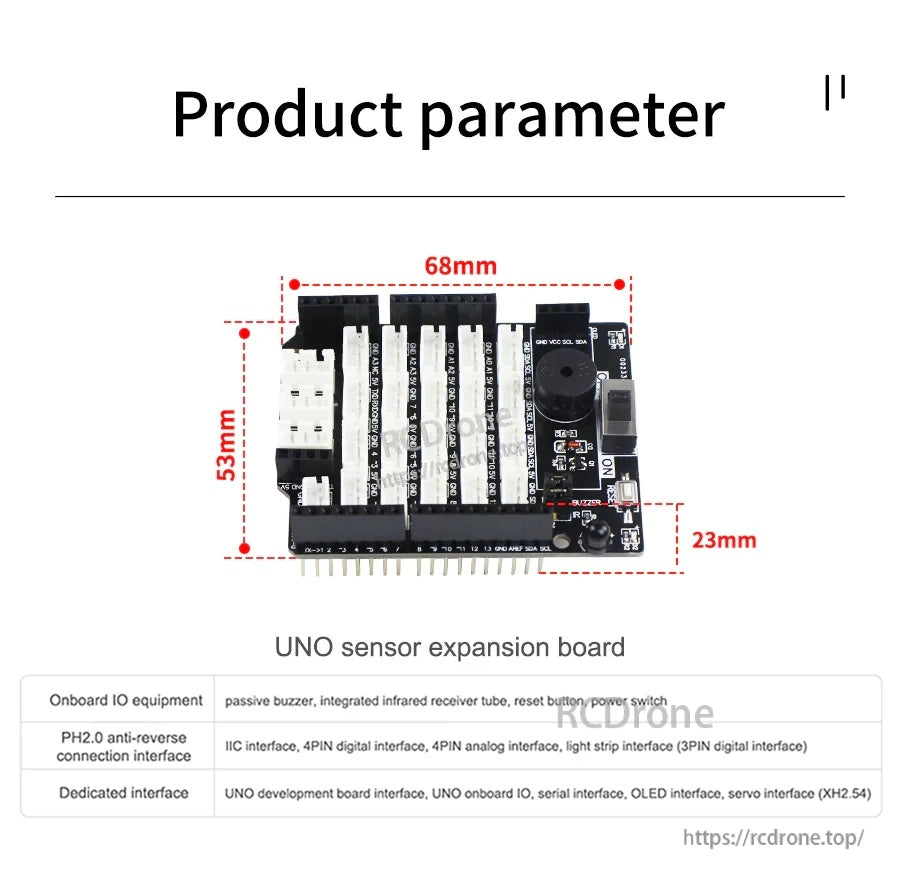
UNO सेंसर विस्तार बोर्ड PH2.0 एंटी-रिवर्स पोर्ट्स और समर्पित IIC, डिजिटल/एनालॉग, OLED, और सर्वो इंटरफेस जोड़ता है, जिससे मॉड्यूल वायरिंग साफ-सुथरी होती है।
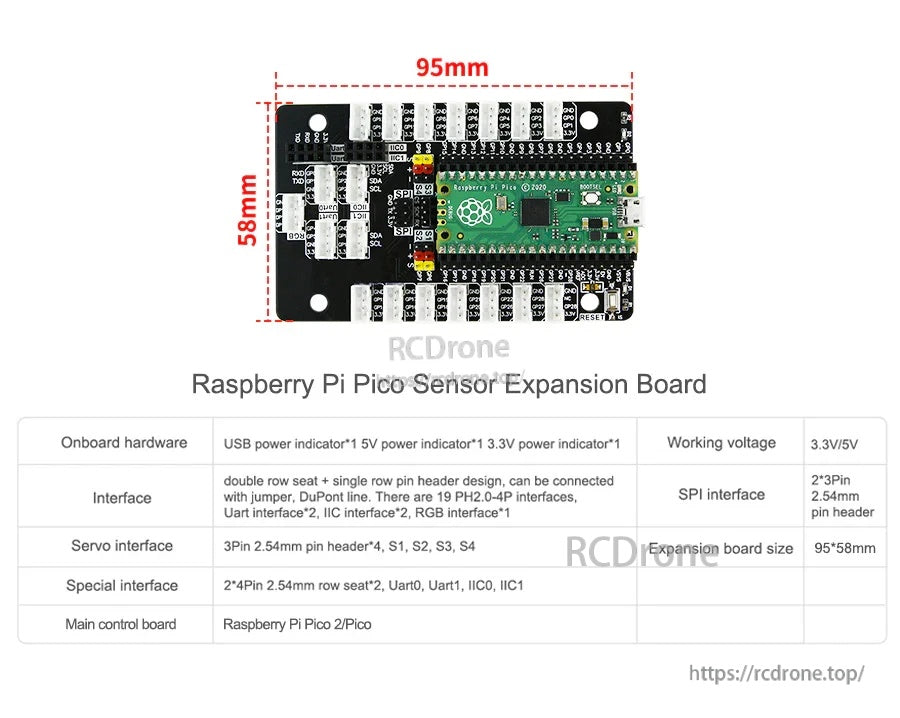
सेंसर विस्तार बोर्ड Raspberry Pi Pico के चारों ओर कई PH2.0 4-पिन पोर्ट जोड़ता है, जिससे सेंसर और मॉड्यूल वायरिंग सरल हो जाती है।
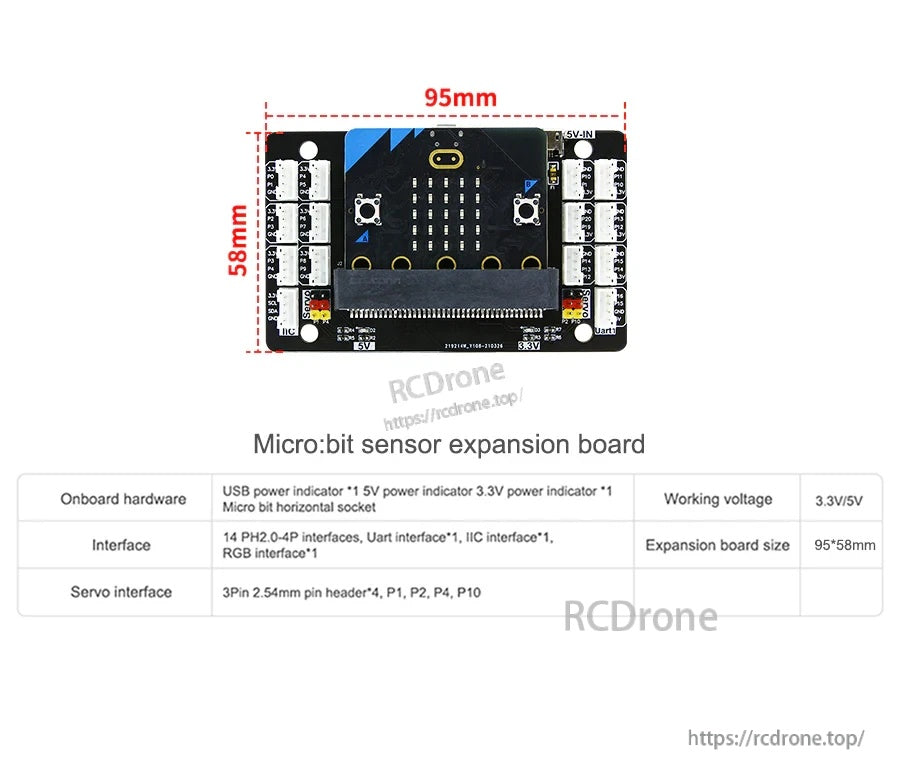
यह Micro:bit सेंसर विस्तार बोर्ड 14 PH2.0-4P पोर्ट्स के साथ UART और IIC कनेक्शन जोड़ता है, 3.3V/5V स्थिति संकेतकों के साथ आसान वायरिंग के लिए।
Related Collections