Hobbywing XRotor Pro H200A 14S ESC BLDC/FOC - 100A Continuous, 200A Peak for Heavy Lift Drone, VTOL & Industrial UAV
Hobbywing XRotor Pro H200A 14S ESC BLDC/FOC - 100A Continuous, 200A Peak for Heavy Lift Drone, VTOL & Industrial UAV
Hobbywing
Couldn't load pickup availability
Overview
The Hobbywing XRotor Pro H200A 14S ESC (available in both BLDC and FOC versions) is a high-performance electronic speed controller designed for professional UAVs. Supporting 6–14S LiPo input (18–65V) and delivering 100A continuous / 200A peak current, it integrates CAN and PWM throttle modes, IP55/IP67 protection, and advanced intelligent propeller control for VTOL and drone docking use. With its dual throttle redundancy, wide temperature range (-40°C to 65°C), and robust fault storage, it's ideal for harsh environments and industrial drone applications.
Key Features
-
BLDC & FOC Versions: Choose between BLDC for wider motor compatibility or FOC for quiet, efficient, and precise control.
-
High TG Materials: Withstands up to 170°C, offering superior heat resistance.
-
3OZ Copper PCB: Thick copper base ensures better current handling and thermal dissipation.
-
Full Copper Filling Process: Increases electrical efficiency and reliability.
-
Double-sided Heat Dissipation: Provides 30% more current resistance compared to traditional ESCs (vs. Platinum 200A).
-
CAN & PWM Dual Throttle: Supports dual signal redundancy with communication isolation for safer flights.
-
Intelligent Propeller Control (IPC): Customizable parameters for VTOL, docks, and prop protection.
Specifications
Mechanical Specifications
| Parameter | Value |
|---|---|
| Input Voltage | 6–14S (18–65V) |
| Continuous Current | 100A |
| Peak Current | 200A (3S) |
| Operating Temperature | -40°C ~ 65°C |
| Waterproof Rating | IP55 (Custom IP67 optional) |
| Weight (Without Cable) | 270g |
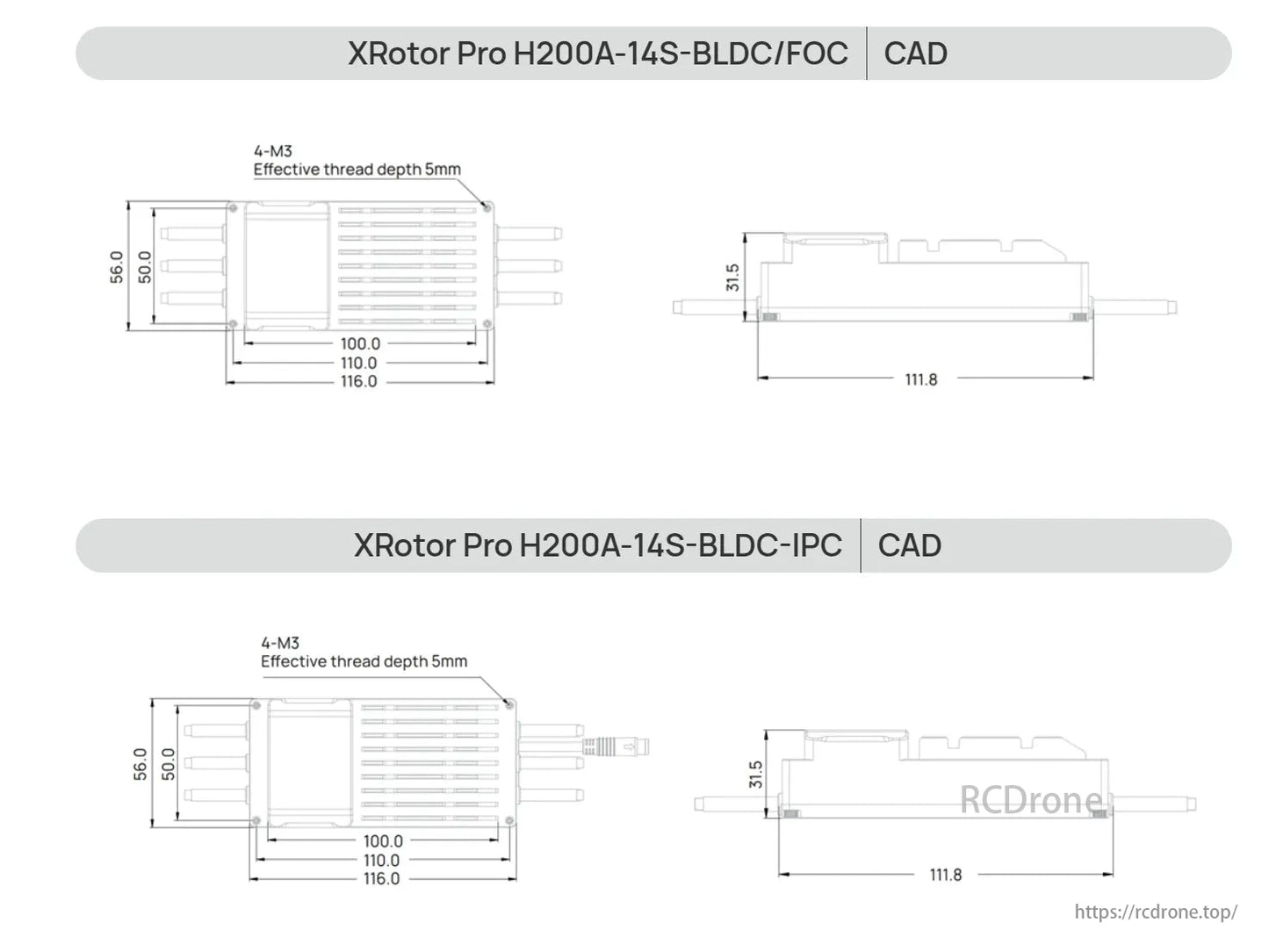
| Size | 116×56×31.5mm |
Electrical Characteristics
| Parameter | Value |
|---|---|
| Throttle Signal Level | 5V / 3.3V |
| Signal Frequency | 50–500Hz |
| Operating Pulse Width | 1100–1940μs |
| Digital Throttle | Supported (CAN) |
| Throttle Calibration | Not required |
| Double Throttle Support | Yes (CAN + PWM) |
Operating Features
| Feature | Description |
|---|---|
| Communication Protocol | CAN (Custom Serial Port) |
| Isolation Mode | Throttle/Communication isolation supported |
| Firmware Update | Supported |
| Fault Storage | 2–48 hours of fault code/data logging |
| Propeller Positioning | Optional; adjustable max working current |
Key Features
Intelligent Protection
-
Power-on Self-Test
-
Low Voltage Protection
-
Over Voltage Protection
-
Over Current Protection
-
Throttle Signal Loss Protection
-
Automatic fault code logging for fast diagnostics
Cable Specifications
-
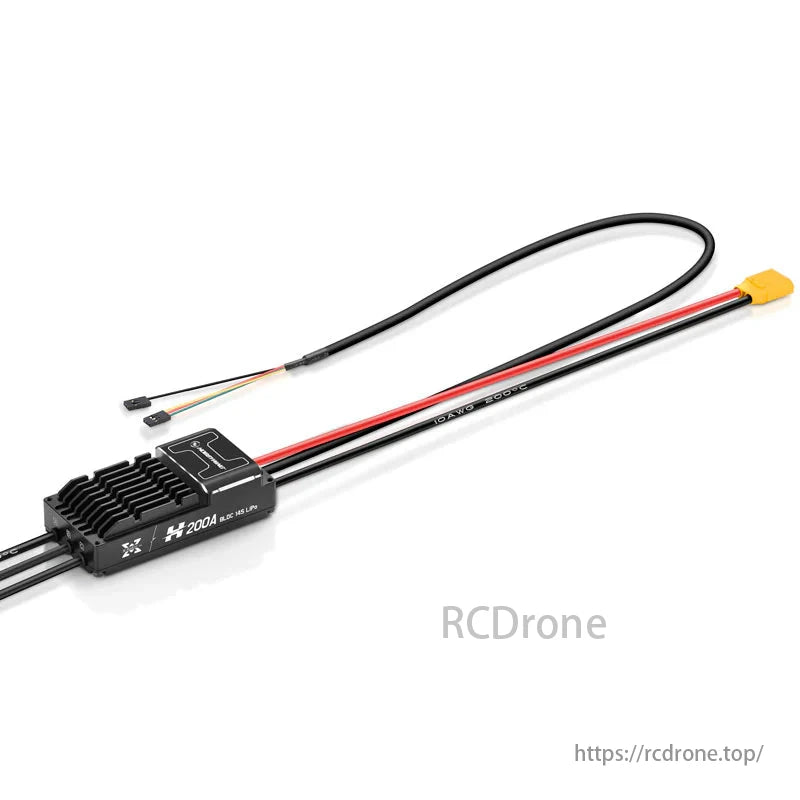
Input: 2× 10AWG 260mm silicone cable
-
Output: 3× 10AWG 200mm silicone cable
-
Signal: Shielded 5-pin cable, 450mm, JR-3Pin male connector ×2
Applications
Ideal for:
-
VTOL aircraft
-
Drone dock systems
-
Industrial drones requiring CAN/PWM control
-
Harsh-environment UAVs with high heat and current demands
Details

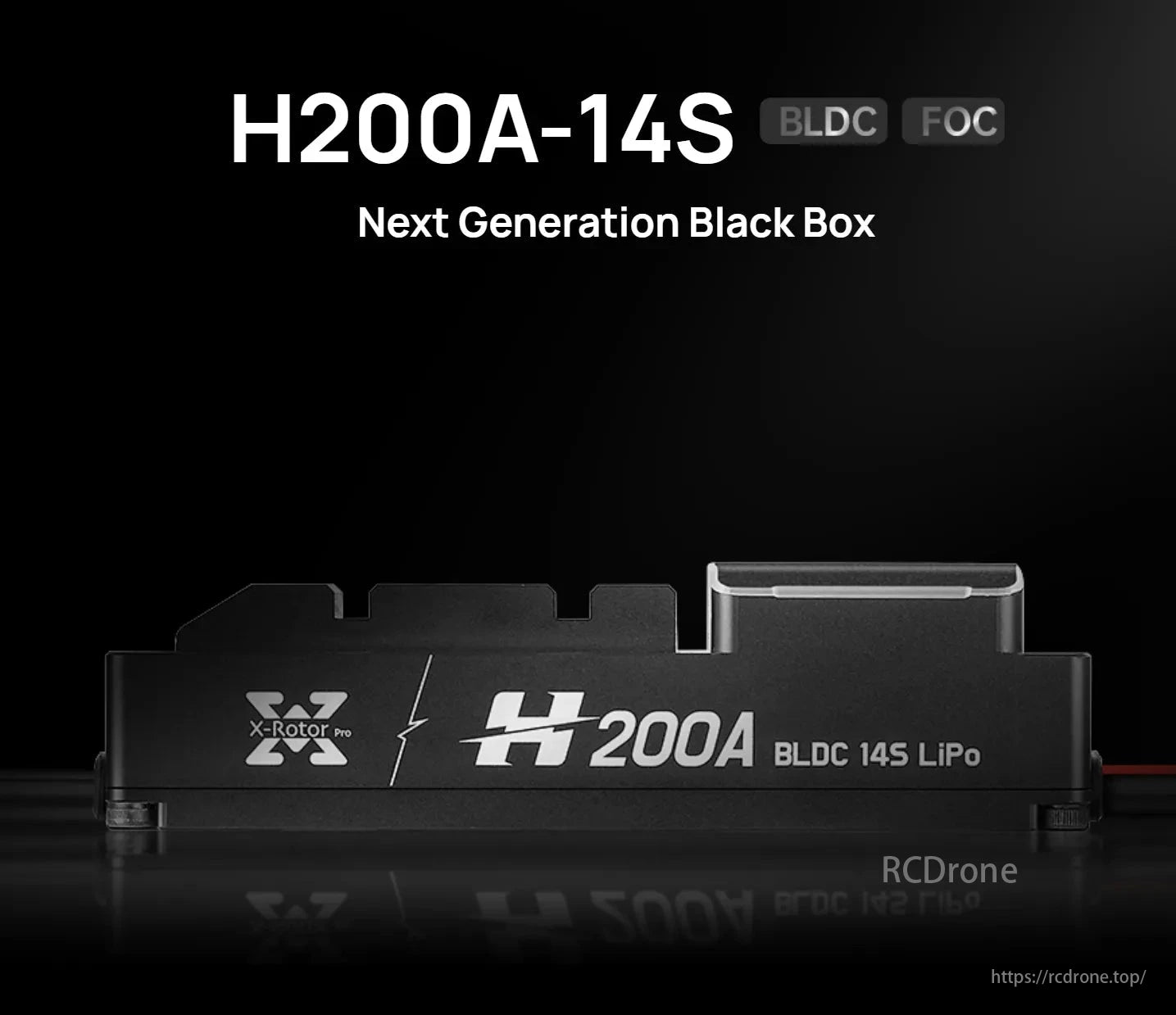
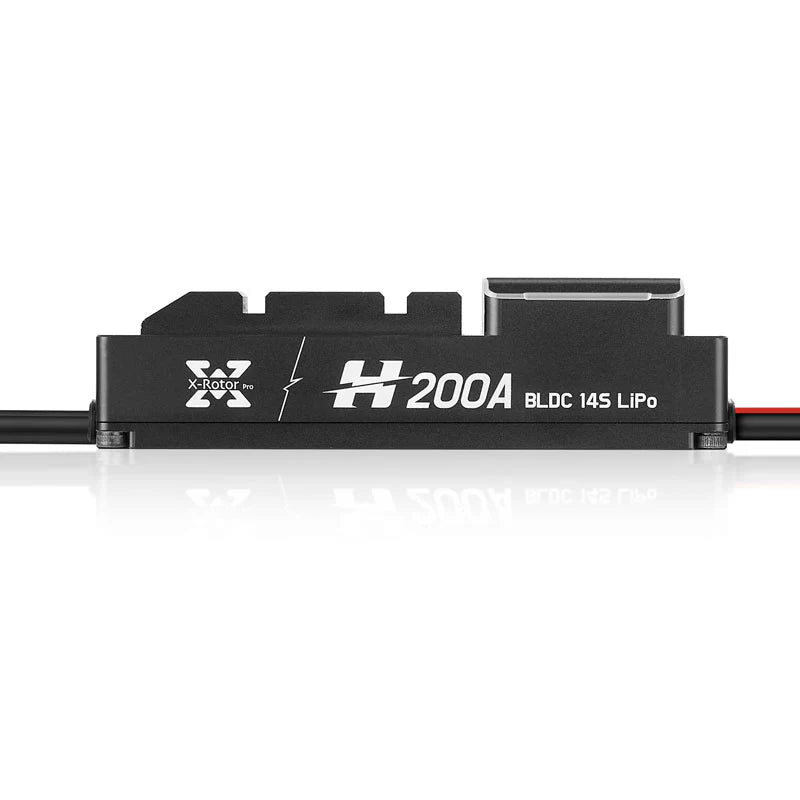
H200A-14S BLDC FOC Next Generation Black Box. X-Rotor Pro H200A BLDC 14S LiPo electronic device showcased.
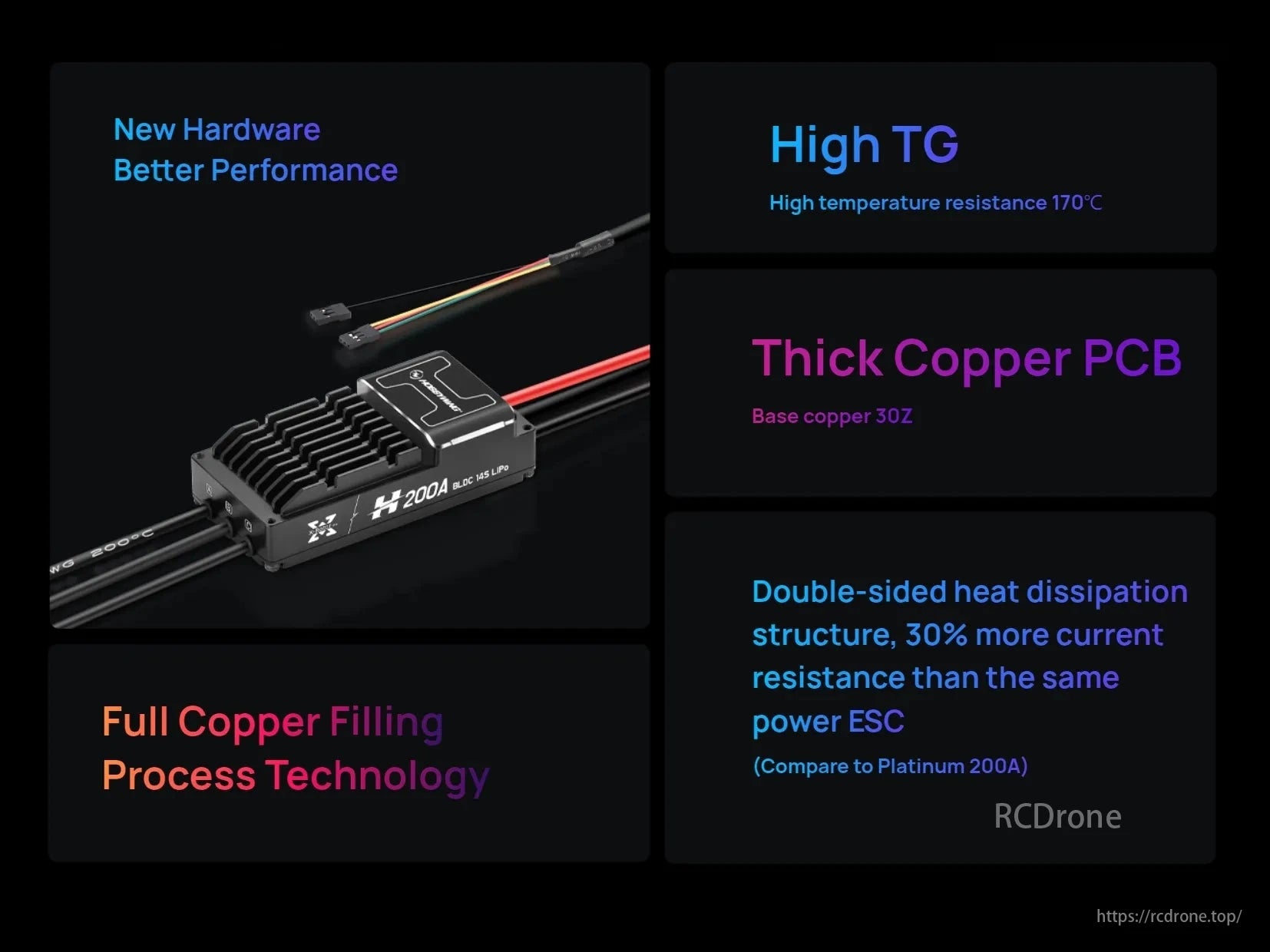
New hardware offers better performance with high TG, thick copper PCB, full copper filling technology, and double-sided heat dissipation for 30% more current resistance.
FOC Vector Control: Precise, fast, efficient, low noise. Reliable sensorless algorithm.
BLDC compatible with more motors, offering intelligent timing, DEO, and algorithm upgrades for high KV UAVs.
Intelligent Propeller Control (H200A-BLDC-IPC) for VTOL and drone dock. Compatible with various motors, adjustable parameters prevent motor overheating.
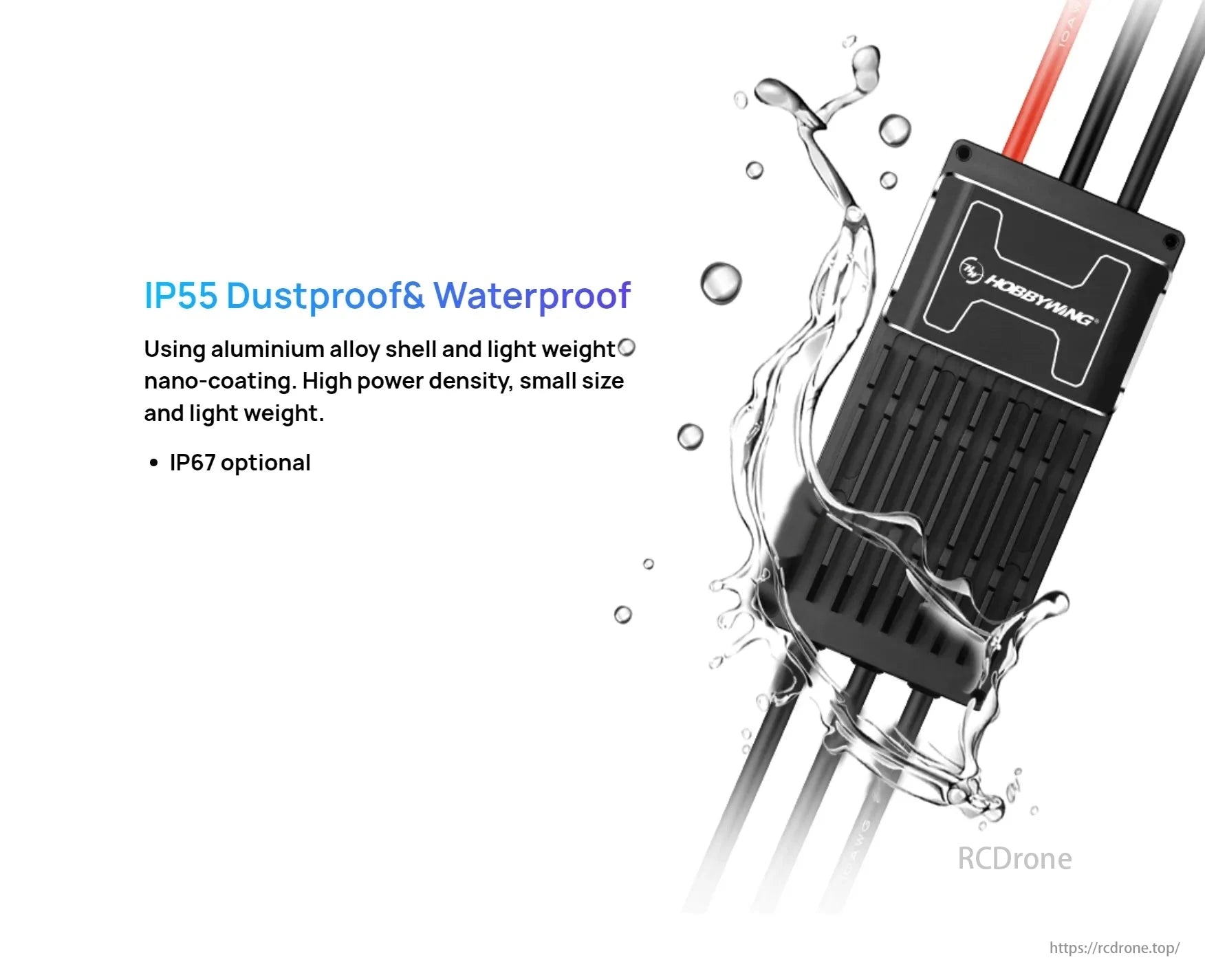
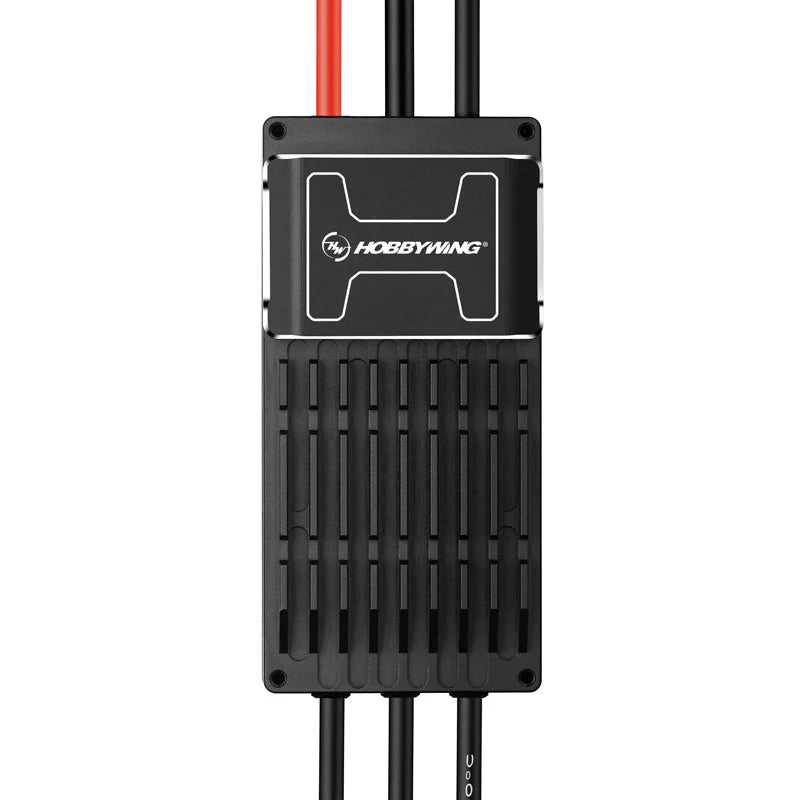
IP55 dustproof and waterproof, aluminum alloy shell, nano-coating, high power density.
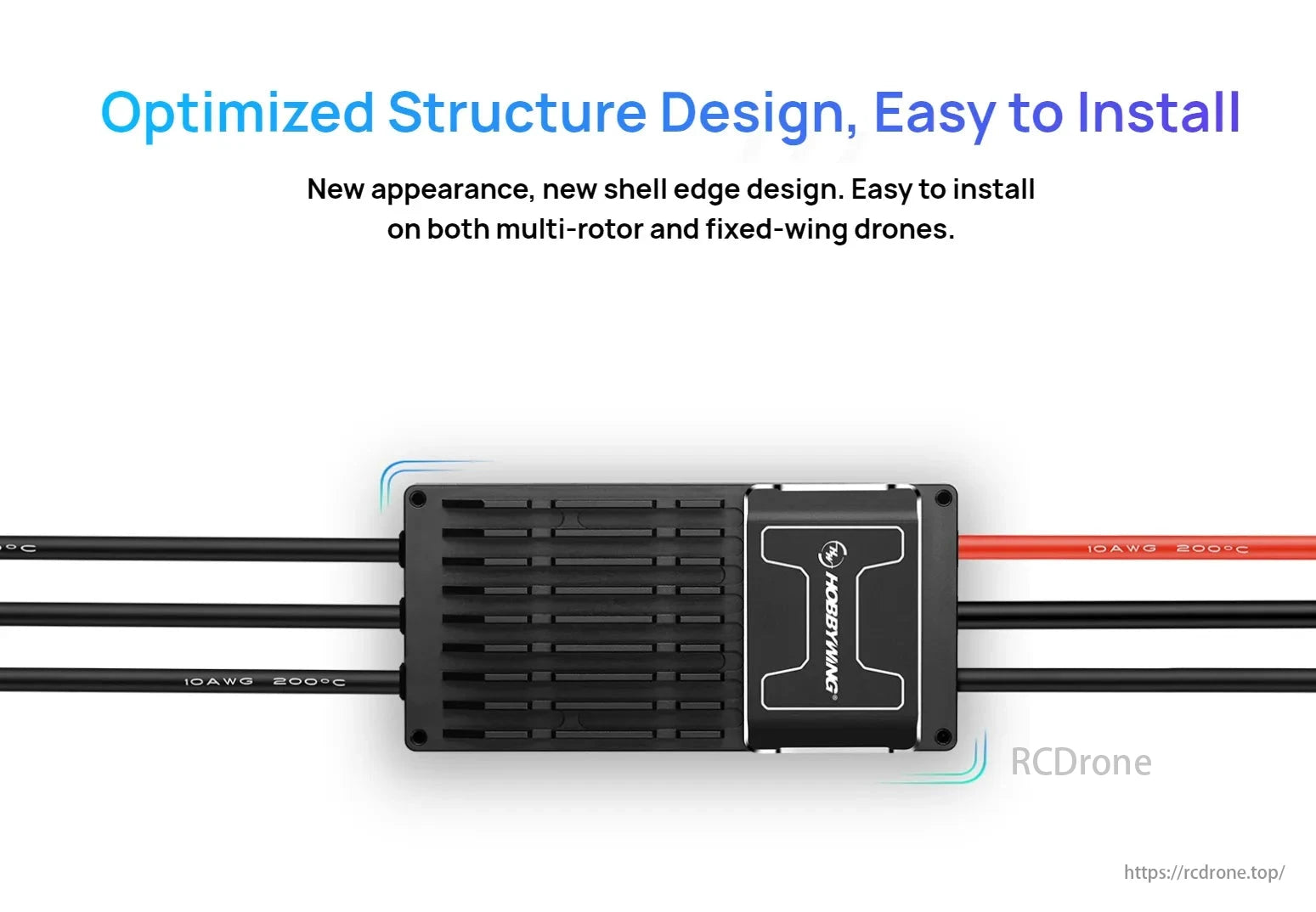
Optimized structure design, easy to install. New appearance, shell edge design. Suitable for multi-rotor and fixed-wing drones.
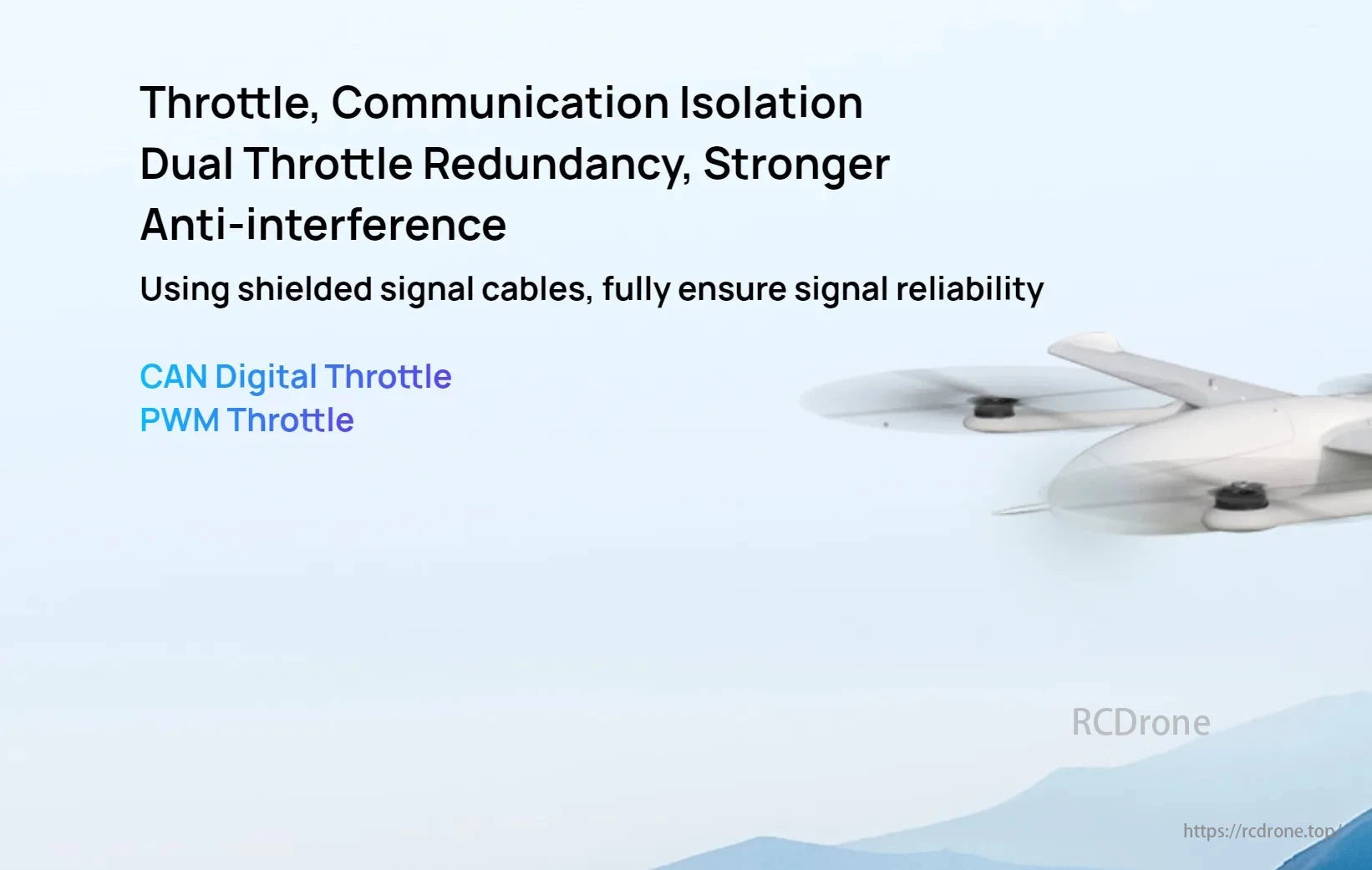
Throttle, communication isolation. Dual throttle redundancy, stronger anti-interference. Shielded cables ensure signal reliability. CAN Digital Throttle, PWM Throttle.
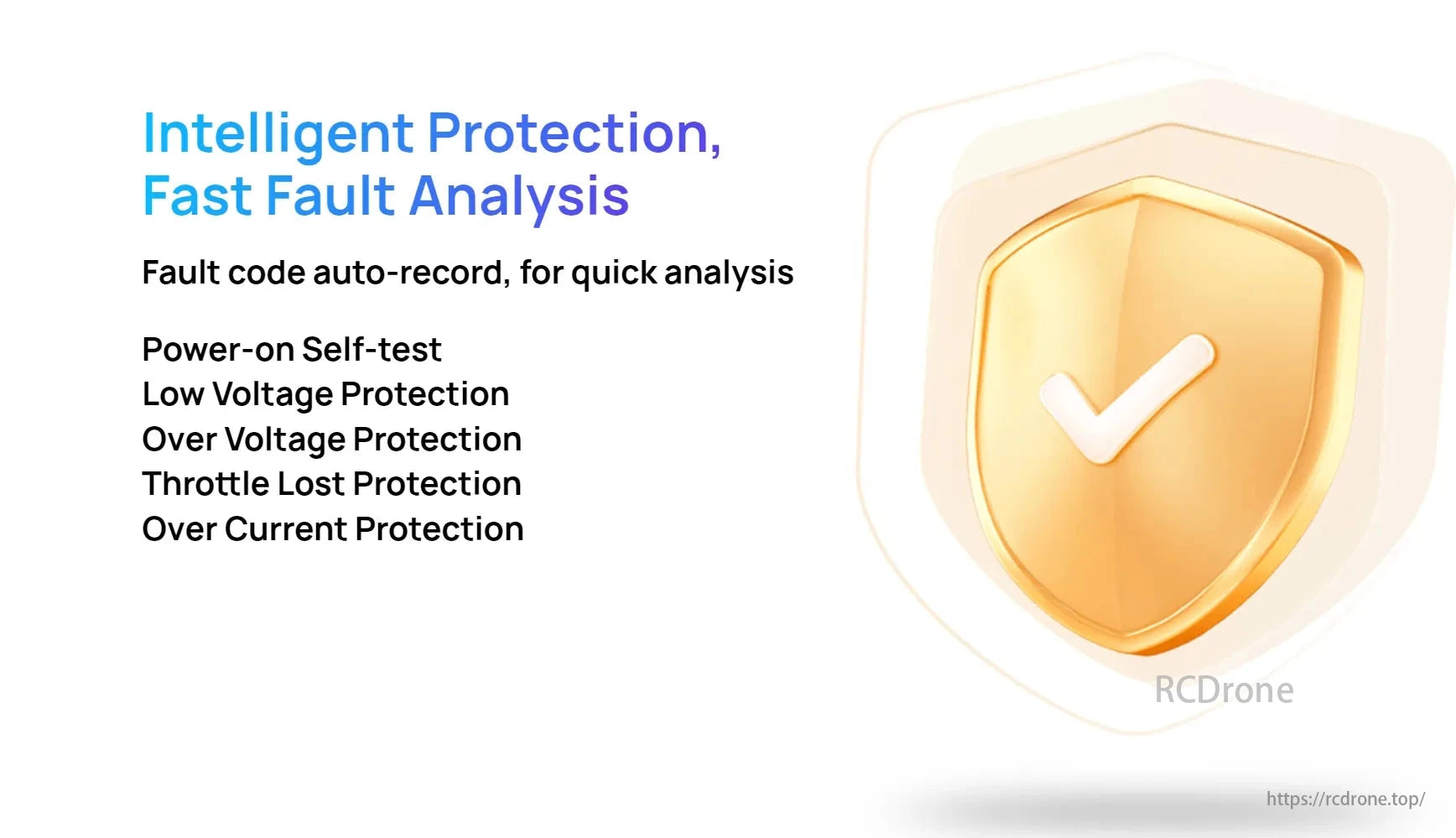
Intelligent protection, fast fault analysis. Auto-record codes, self-test, low/high voltage, throttle lost, overcurrent protection.
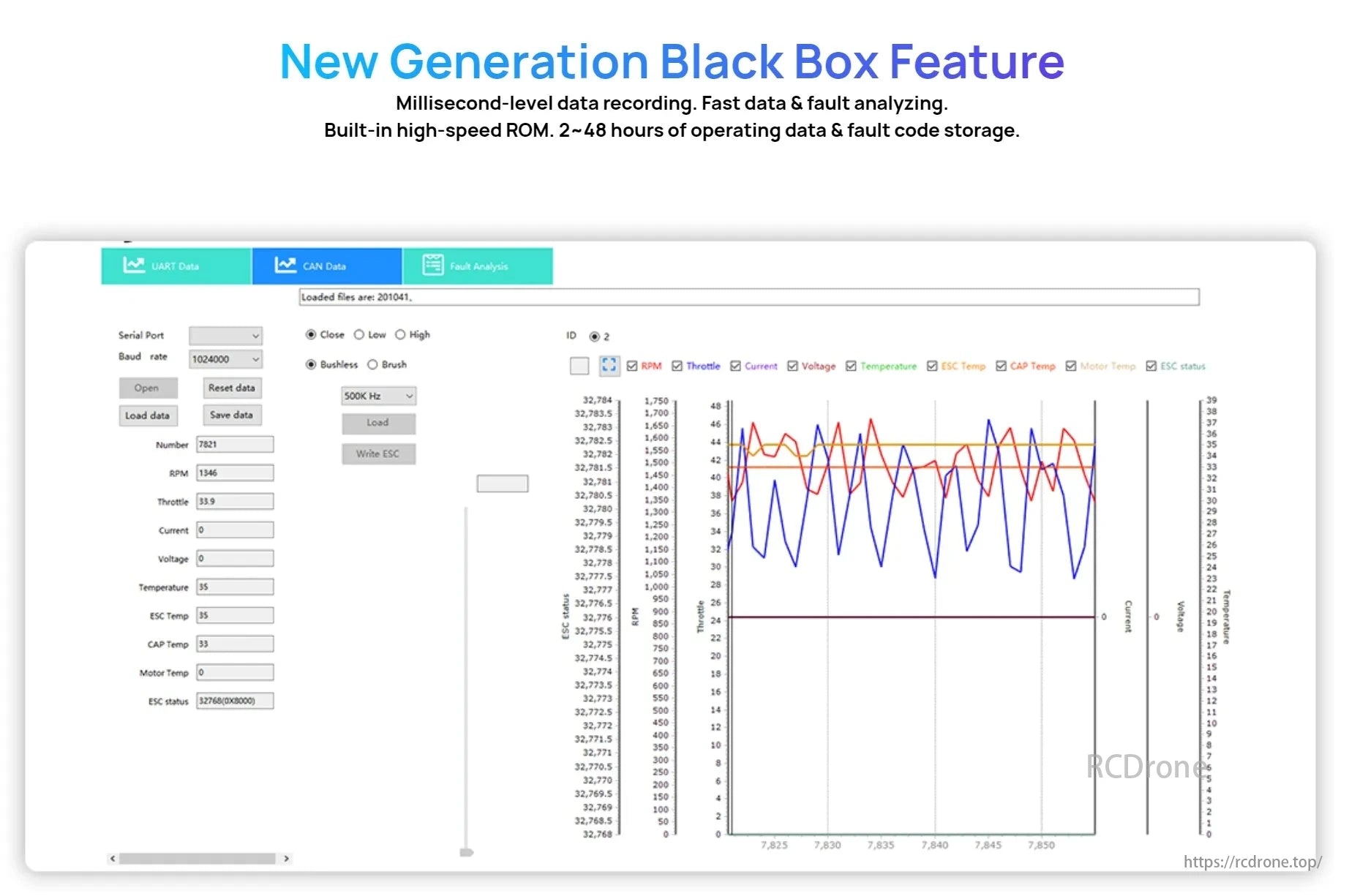
New Generation Black Box Feature offers millisecond-level data recording and fast analysis. It includes built-in high-speed ROM for 2-48 hours of operating data and fault code storage. The interface displays UART, CAN data, and fault analysis with various metrics like RPM, throttle, current, voltage, and temperature.
Related Collections