


Raspberry Pi Zero 2 W Development Computer, Pre‑Soldered 40‑Pin Header, Quad‑Core 1GHz Cortex‑A53, Wi‑Fi 2.4GHz, BT 4.2 BLE
Raspberry Pi Zero 2 W Development Computer, Pre‑Soldered 40‑Pin Header, Quad‑Core 1GHz Cortex‑A53, Wi‑Fi 2.4GHz, BT 4.2 BLE
Raspberry Pi
Regular price
$135.00 USD
Regular price
Sale price
$135.00 USD
Unit price
per
Taxes included.
Shipping calculated at checkout.
Couldn't load pickup availability


Overview
Raspberry Pi Zero 2 W with Header is a compact Development Computer in the Raspberry Pi Zero series. Built around the RP3A0 System‑in‑Package integrating a Broadcom BCM2710A1 die and 512MB LPDDR2 SDRAM, it features a quad‑core 64‑bit Arm Cortex‑A53 CPU clocked at 1GHz. Wireless connectivity includes 2.4GHz 802.11 b/g/n Wi‑Fi and Bluetooth 4.2 with BLE support. This version includes a pre‑soldered 40‑pin GPIO header for convenient access to GPIO and power pins. Compared with the original single‑core Raspberry Pi Zero, single‑thread performance is up to 40% higher and multi‑thread performance up to five times higher.
Key Features
- Mounted with headers and ready for use
- 2.4GHz 802.11 b/g/n wireless LAN
- Bluetooth 4.2 / Bluetooth Low Energy (BLE)
- Small form factor, suitable for various DIY projects
- Expansion – 40‑pin HAT‑compatible I/O header (this version is pre‑soldered; earlier unpopulated variants also supported)
- Footprint‑compatible with earlier members of the Raspberry Pi Zero family
- Available in RP3A0 System‑in‑Package
- Composite video and reset pins via solder test points
- Quad‑core 64‑bit ARM Cortex‑A53 processor clocked at 1GHz
- 512MB LPDDR2 SDRAM
- Built‑in Wi‑Fi capability, ideal for IoT and robotics projects
- Modular compliance certification
Specifications
| Form factor | 65mm × 30mm |
| Processor | Broadcom BCM2710A1, quad‑core 64‑bit SoC (Arm Cortex‑A53 @ 1GHz) |
| Memory | 512MB LPDDR2 SDRAM |
| Wireless | 2.4GHz 802.11 b/g/n Wi‑Fi; Bluetooth 4.2; BLE support |
| Video interfaces | mini HDMI; Composite video via solder test points |
| Multimedia | H.264, MPEG‑4 decode (1080p30); H.264 encode (1080p30); OpenGL ES 1.1, 2.0 graphics |
| Storage | 1x microSD card slot |
| Camera | 1x CSI‑2 camera connector |
| USB | 1x USB On‑The‑Go (OTG) port; 1x micro‑USB power port |
| GPIO | 1x HAT‑compatible 40‑pin GPIO header (pre‑soldered on this version) |
| Input power | 5V DC 2.5A |
| Operating temperature | -20°C to +70°C |
| Production lifetime | Remain in production until at least January 2028 |
ECCN/HTS
| HSCODE | 8471504090 |
| USHSCODE | 8517180050 |
| EUHSCODE | 8471800000 |
| COO | Japan |
| UPC |
What’s Included
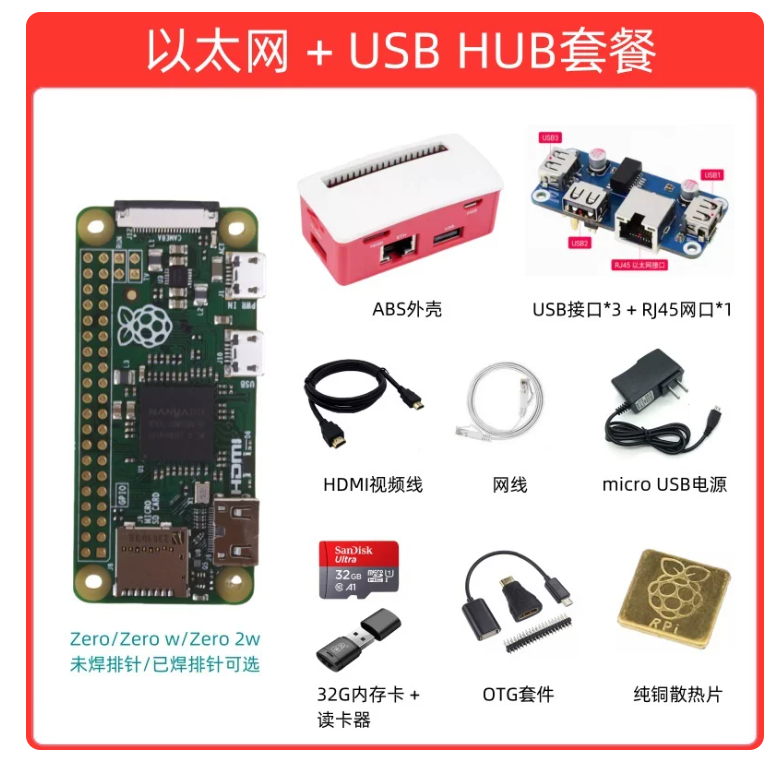
- Raspberry Pi Zero 2 W with Header ×1
Applications
- Intelligent environmental monitoring
- Security monitoring systems
- IoT and robotics projects
Attention
- Any external power supply used with Raspberry Pi Zero 2 W shall comply with relevant regulations and standards applicable in the country of intended use.
- This product should be operated in a well‑ventilated environment, and if used inside a case, the case should not be covered.
- Whilst in use, this product should be placed on a stable, flat, non‑conductive surface, and should not be contacted by conductive items.
- The connection of incompatible devices to Raspberry Pi Zero 2 W may affect compliance, result in damage to the unit, and invalidate the warranty.
- All peripherals used with this product should comply with relevant standards for the country of use and be marked accordingly to ensure that safety and performance requirements are met. These include but are not limited to keyboards, monitors, and mice when used in conjunction with Raspberry Pi Zero 2 W.
- The cables and connectors of all peripherals used with this product must have adequate insulation so that relevant safety requirements are met.
Safety Instructions
- Do not expose to water or moisture, or place on a conductive surface whilst in operation.
- Do not expose to heat from any source; Raspberry Pi Zero 2 W is designed for reliable operation at normal ambient temperatures.
- Take care whilst handling to avoid mechanical or electrical damage to the printed circuit board and connectors.
- Whilst it is powered, avoid handling the printed circuit board, or only handle it by the edges to minimize the risk of electrostatic discharge damage.