


GEPRC ELRS DUAL 2.4G Diversity Receiver (ExpressLRS) True Dual-Antenna RX, TCXO, IPEX1, 5V
GEPRC ELRS DUAL 2.4G Diversity Receiver (ExpressLRS) True Dual-Antenna RX, TCXO, IPEX1, 5V
GEPRC
Couldn't load pickup availability


Overview
GEPRC ELRS DUAL 2.4G Diversity Receiver is a receiver (product type: receiver) based on the ExpressLRS open source project, featuring low latency and up to 1000Hz refresh rate. It uses a true dual-antenna diversity design with two independent RF receiving links for wider signal reception and a more stable connection than single-antenna receiver systems. A TCXO (temperature compensated crystal oscillator) is used to reduce frequency shift caused by temperature changes, and telemetry power supports up to 100mW (20 dBm).
Key Features
- True diversity receiver: dual RF chips support true diversity receiver (two independent RF receiving links)
- Dual-antenna reception for wider signal reception and more stable connection
- Chips: ESP32-PICO-D4 master control + SX1281 RF
- Integrated TCXO crystal oscillator
- Built-in PA + LNA; telemetry power up to 100mW (20 dBm)
- WiFi firmware upgrade support (WiFi antenna shown in diagram)
- RGB indicator light
- Antenna connector: IPEX1
Specifications
| Size | 20 x 14 mm |
| Weight | 1.2 g (RX only) |
| Chips | ESP32-PICO-D4, SX1281 |
| Crystal Oscillator | TCXO |
| Frequency Band | 2.4GHz ISM |
| Refresh Rate | 25Hz-1000Hz |
| Input Voltage | 5V |
| Antenna Connector | IPEX1 |
| Indicator Light | RGB light |
| TLM Power | 20 dBm |
Wiring & Betaflight Setup
Flight Controller (FC) connection
- RX pad on receiver to TX pad on FC
- TX pad on receiver to RX pad on FC
- 5V to 5V
- GND to GND
Betaflight Configurator
- Open Betaflight Configurator, go to the Ports tab and enable the corresponding UART as Serial Rx. Save and restart.
- On the Configuration tab, select Serial-based receiver in the Receiver panel and set the protocol to CRSF.
RGB LED Status & Packet Rate Indication
LED status indication
| RGB Color | Status | Description |
|---|---|---|
| Rainbow | Fade effect | Power on |
| Green | Quick flash | WiFi upgrading mode |
| Red | Quick flash | No RF chip detected |
| Orange | Double flash | Binding mode |
| Orange | Triple flash | Connected, but mismatched model-match configuration |
| Orange | Slow flash | Waiting for connection |
| (Color indicates packet rate) | Solid on | Connected and color indicates packet rate |
Packet rate color mapping (when solid on)
F1000, F500, D500, D250, 500Hz, 333Hz, 250Hz, 150Hz, 100Hz, 50Hz.
F1000 and F500 are packet rates in FLRC mode, providing faster modulation and lower latency, but with shorter reception distance than normal LoRa mode.
D500 and D250 are packet rates in DVDA (Deja Vu Diversity Aid) mode. This mode works at the F1000 data packet rate of FLRC mode to improve link connection under complex interference by sending the same data packet multiple times. D500 and D250 indicate that the same data packet is sent twice and four times respectively.
Binding
The factory firmware version of ELRS DUAL 2.4G Diversity Receiver is above 3.x. ExpressLRS 3.x and 2.x firmware are not compatible, so the TX module firmware needs to be upgraded to above 3.x before binding.
- Power on and off the diversity receiver three times continuously with 1 second between each interval to enter Binding Mode.
- The RGB indicator flashes twice quickly, indicating the receiver is in Binding Mode.
- Bind from the radio/transmitter module. If the receiver RGB indicator is solid on, binding is successful.
What’s Included
- 1 x ELRS DUAL 2.4G Diversity Receiver
- 2 x antenna
- 2 x heat shrink tube
- 4 x silicone cable
- 1 x pin (4pin)
- 1 x instruction manual
For compatibility and setup questions, contact [email protected] or visit https://rcdrone.top/.
Details
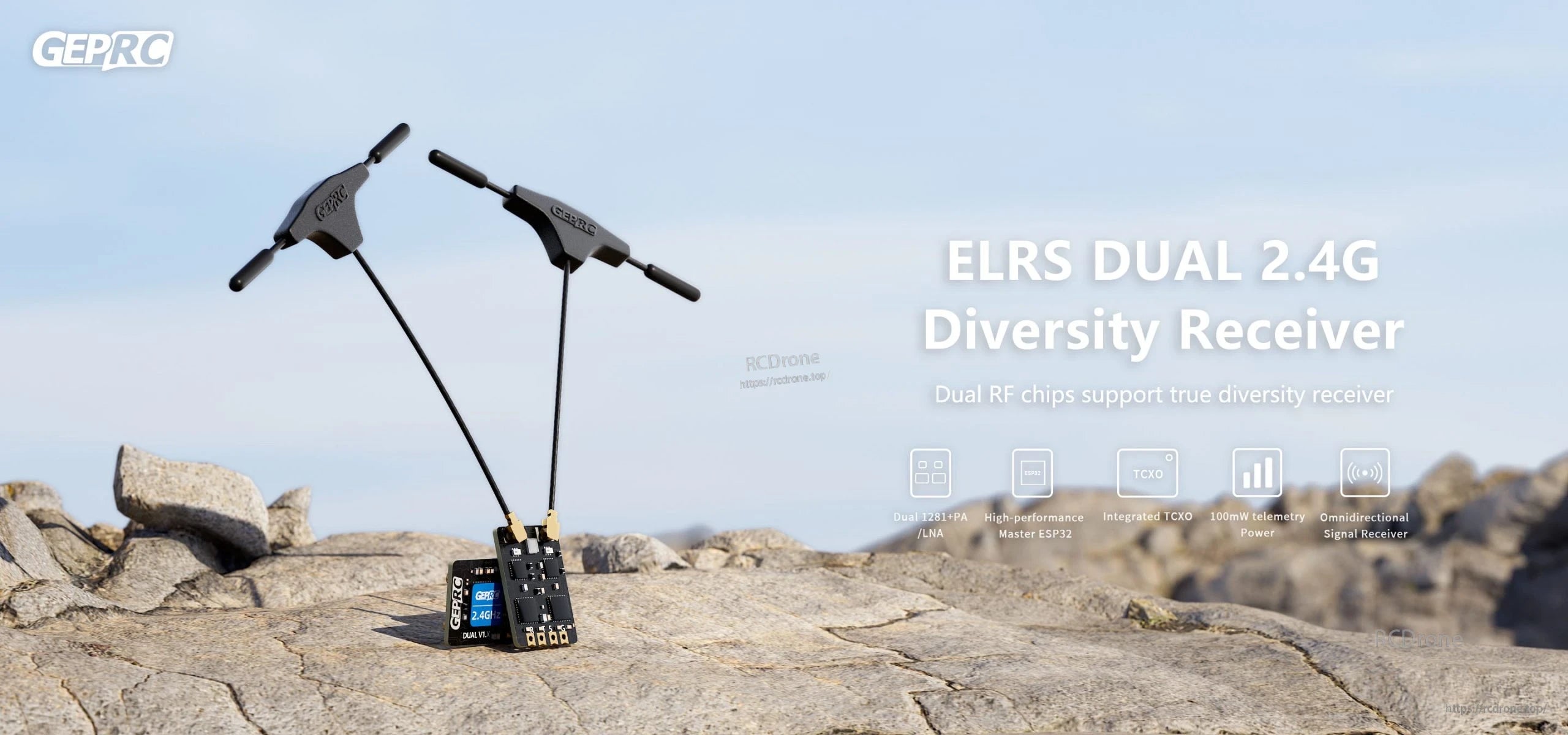
The GEPRC ELRS Dual 2.4G diversity receiver uses dual RF chips and includes two antennas for flexible installation.
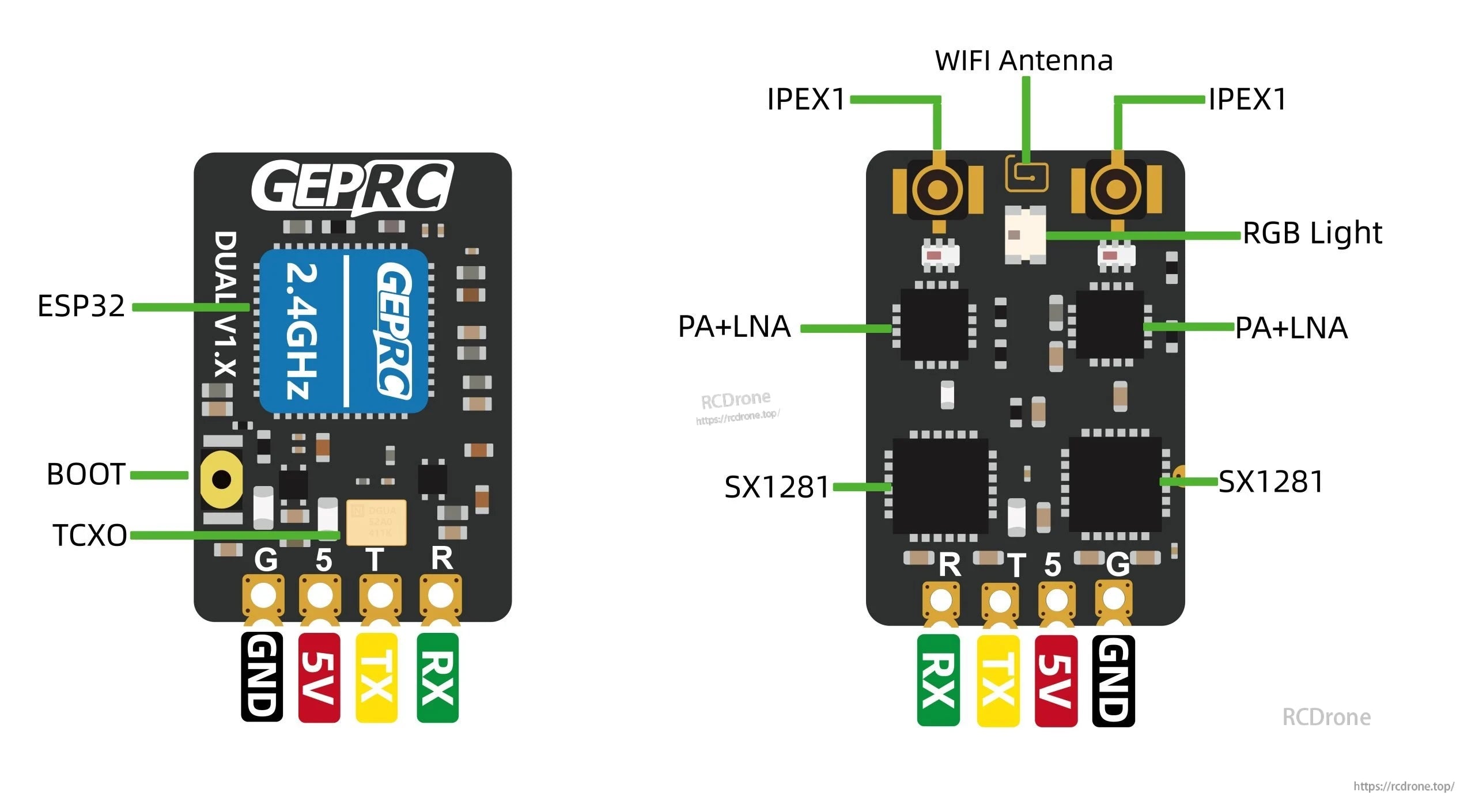
The GEPRC ELRS Dual 2.4GHz diversity receiver provides clearly labeled RX/TX/5V/GND pads and dual IPEX1 antenna connections for clean wiring.

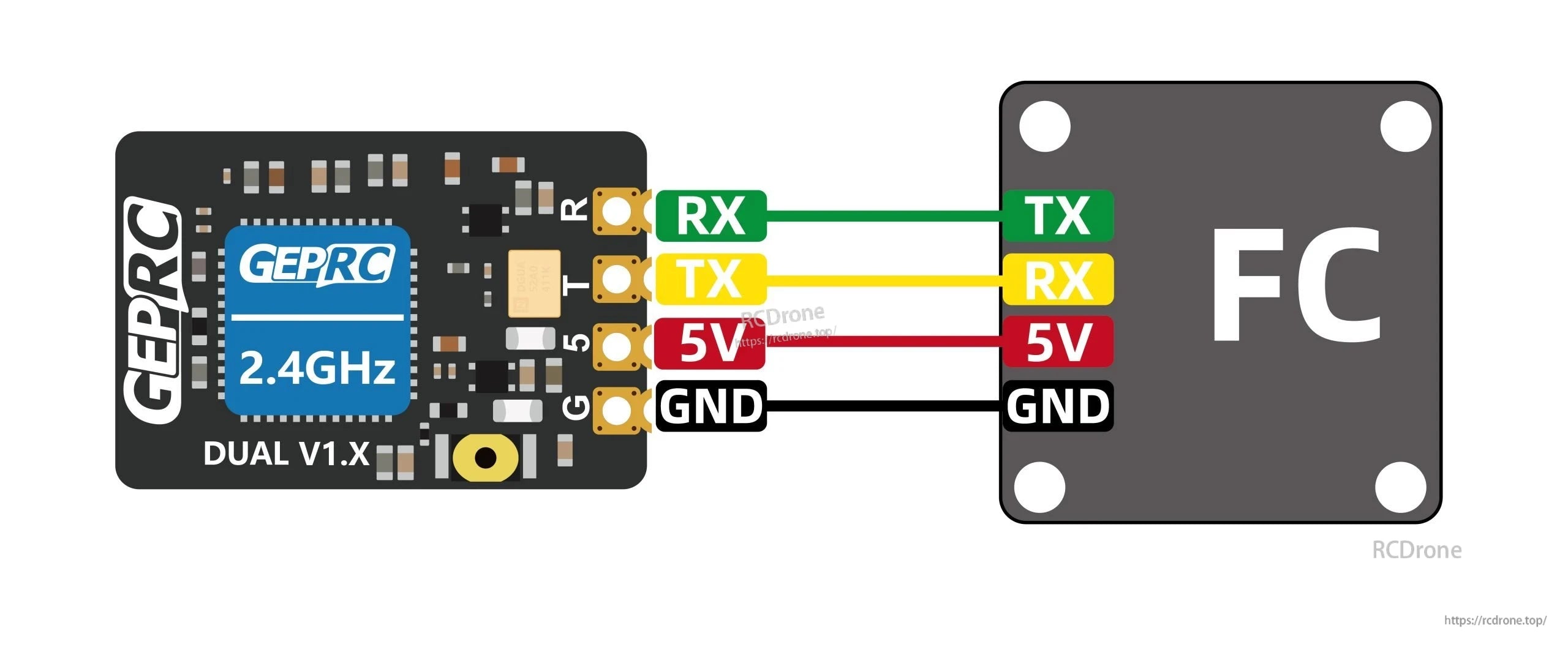
GEPRC ELRS dual 2.4GHz receiver wiring uses crossed RX/TX plus 5V and GND connections to the flight controller.
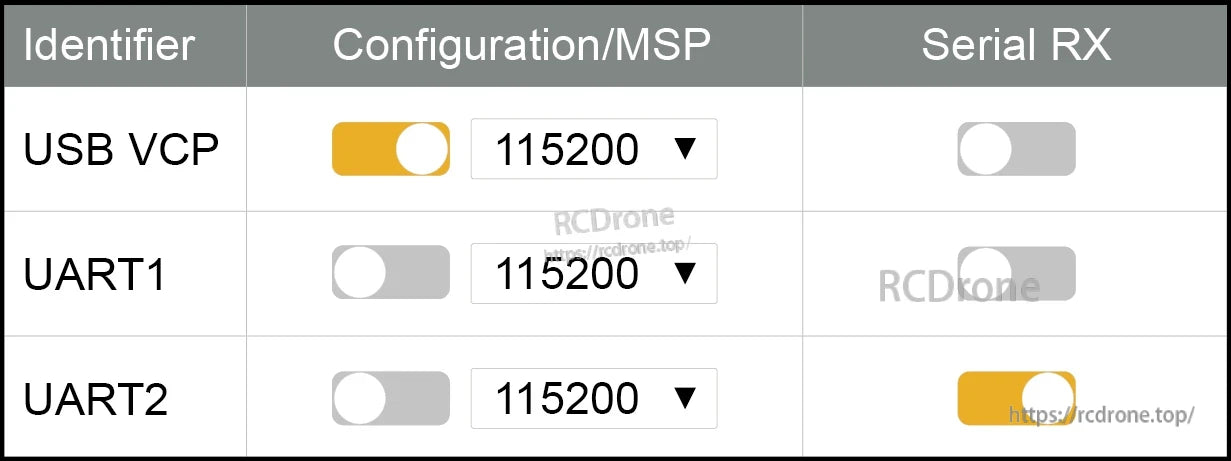
Set the receiver UART with Serial RX enabled (UART2) and leave USB VCP available for MSP at 115200 baud for configuration.
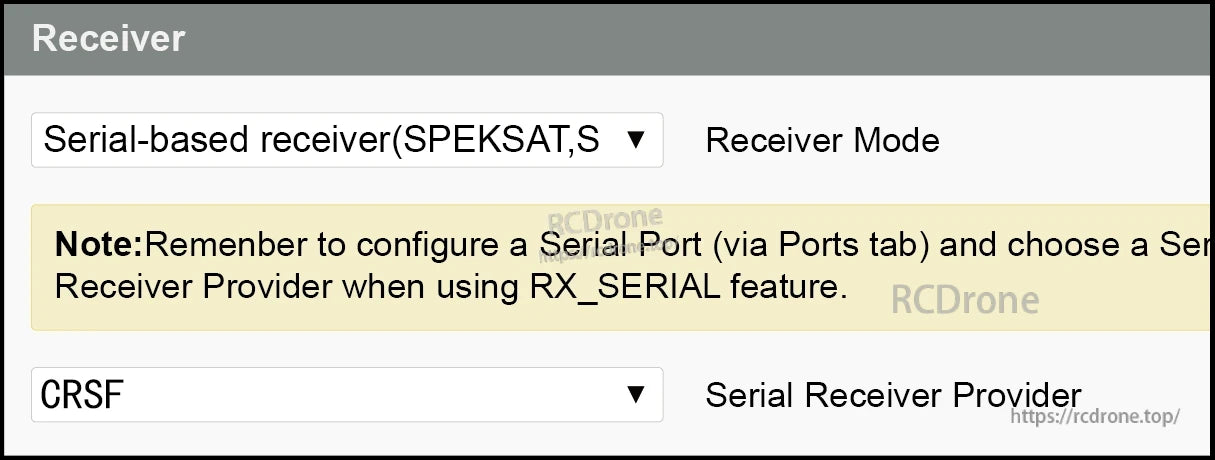
Serial-based receiver mode with CRSF selected helps set up an ELRS receiver through the flight controller UART.

GEPRC’s ELRS Dual 2.4G diversity receiver uses dual antennas and a compact module layout for flexible mounting and wiring.
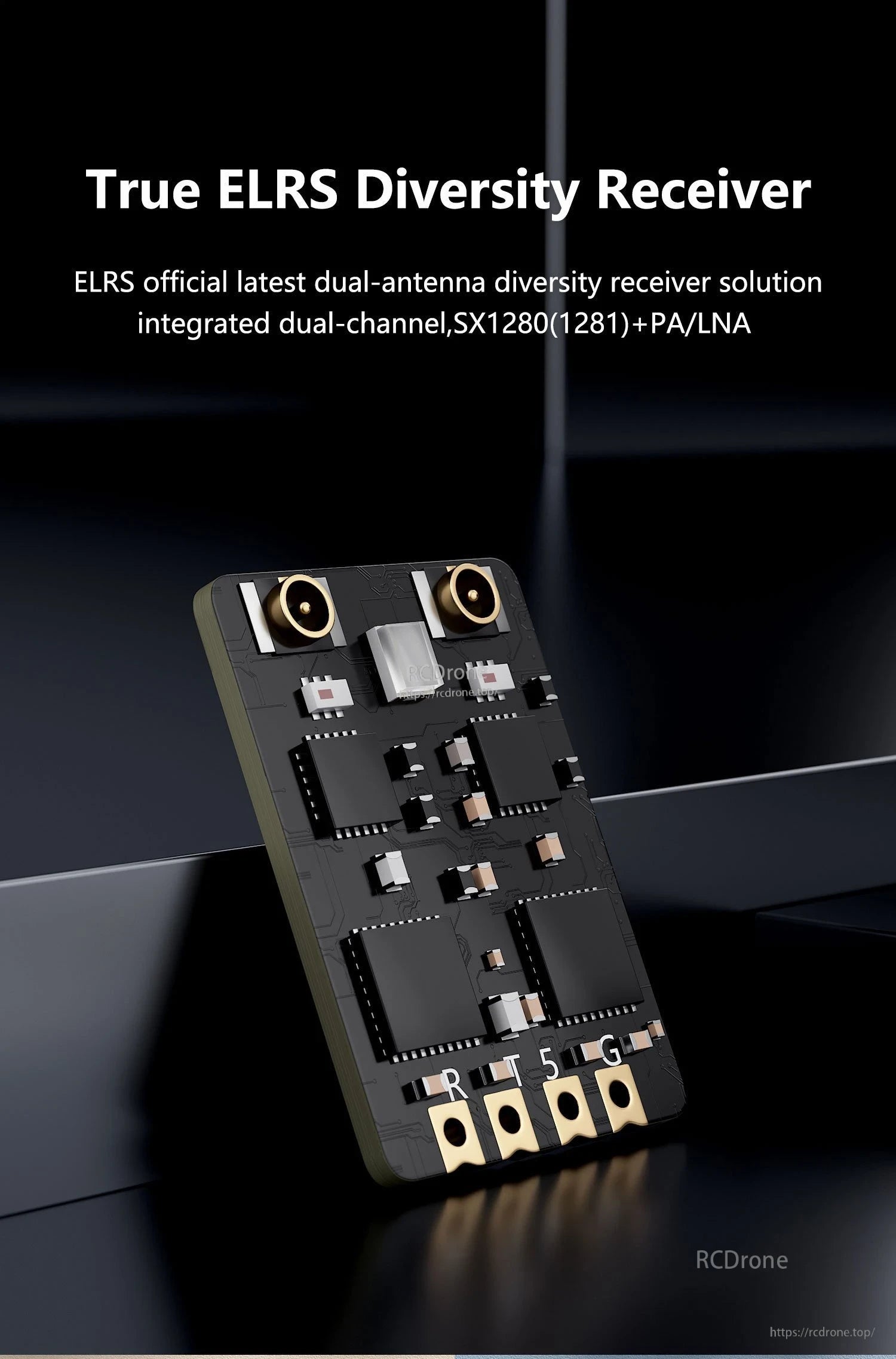
The GEPRC ELRS diversity receiver uses dual antenna connectors and clearly labeled R/T/5V/G pads for straightforward wiring.

The GEPRC ELRS dual 2.4G diversity receiver uses two antennas to support more consistent signal reception in your build.
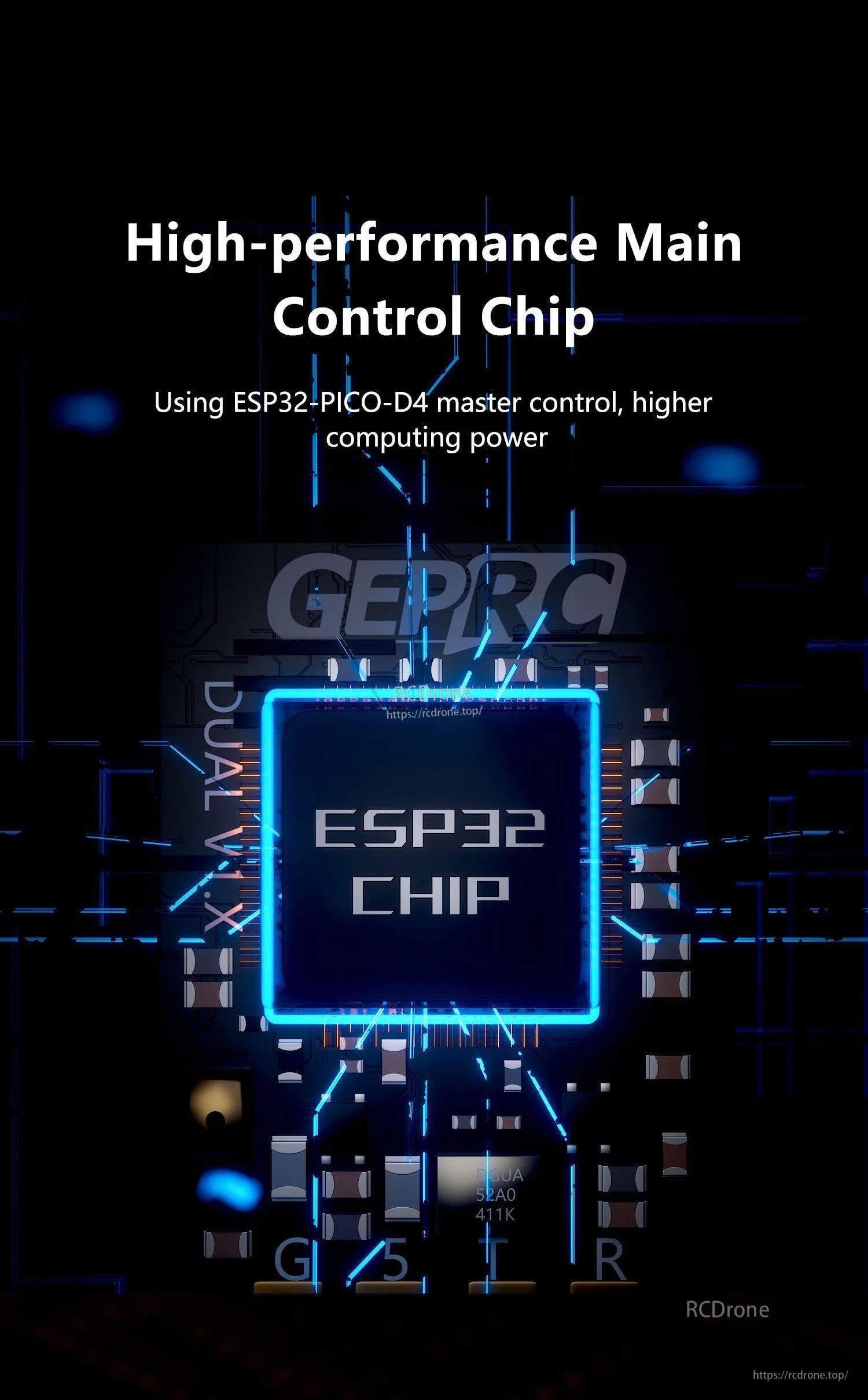
The GEPRC ELRS DUAL receiver uses an ESP32-PICO-D4 main control chip for its onboard processing.
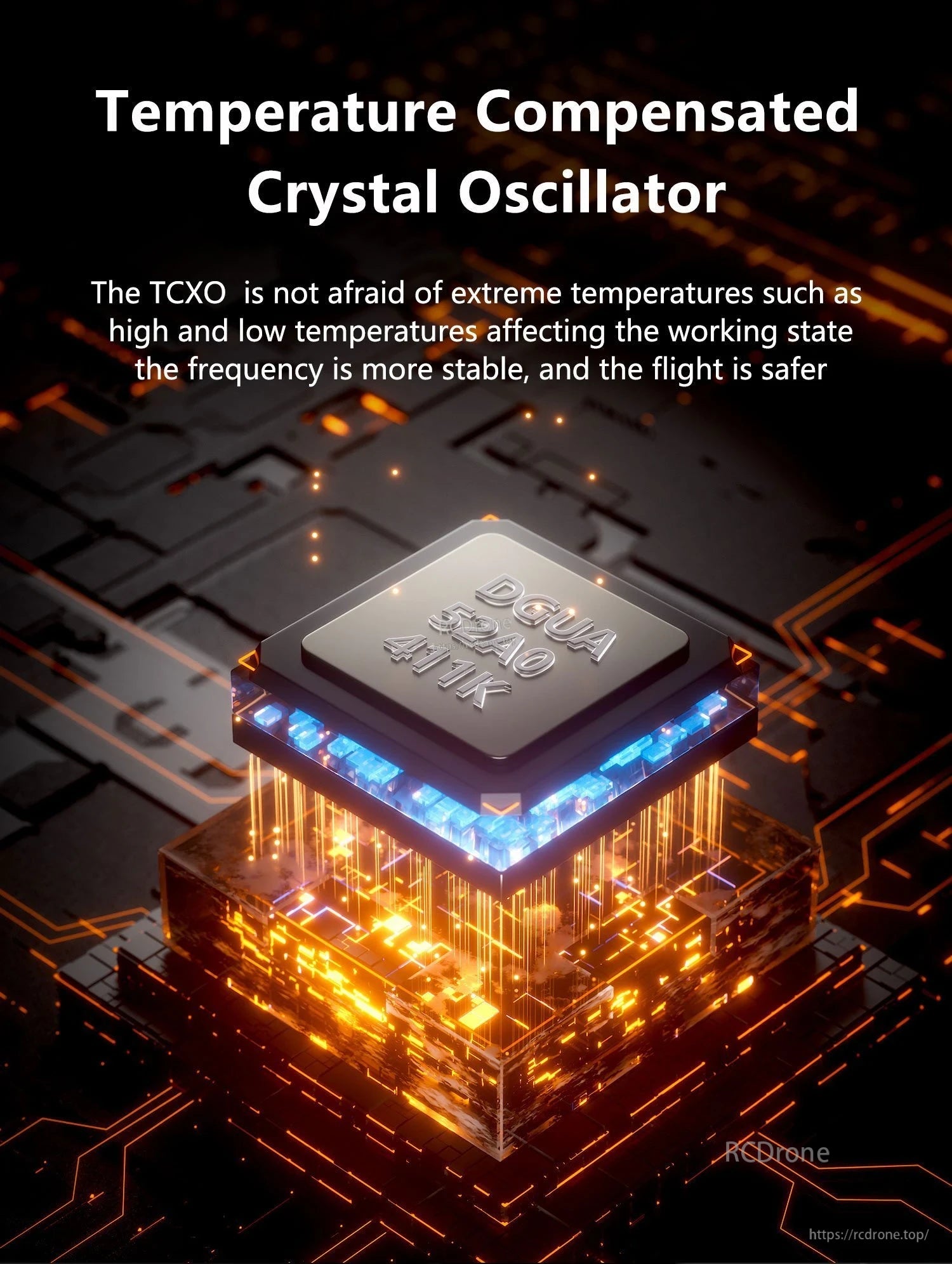
A temperature-compensated crystal oscillator (TCXO) helps keep the receiver’s frequency more stable across changing temperatures.
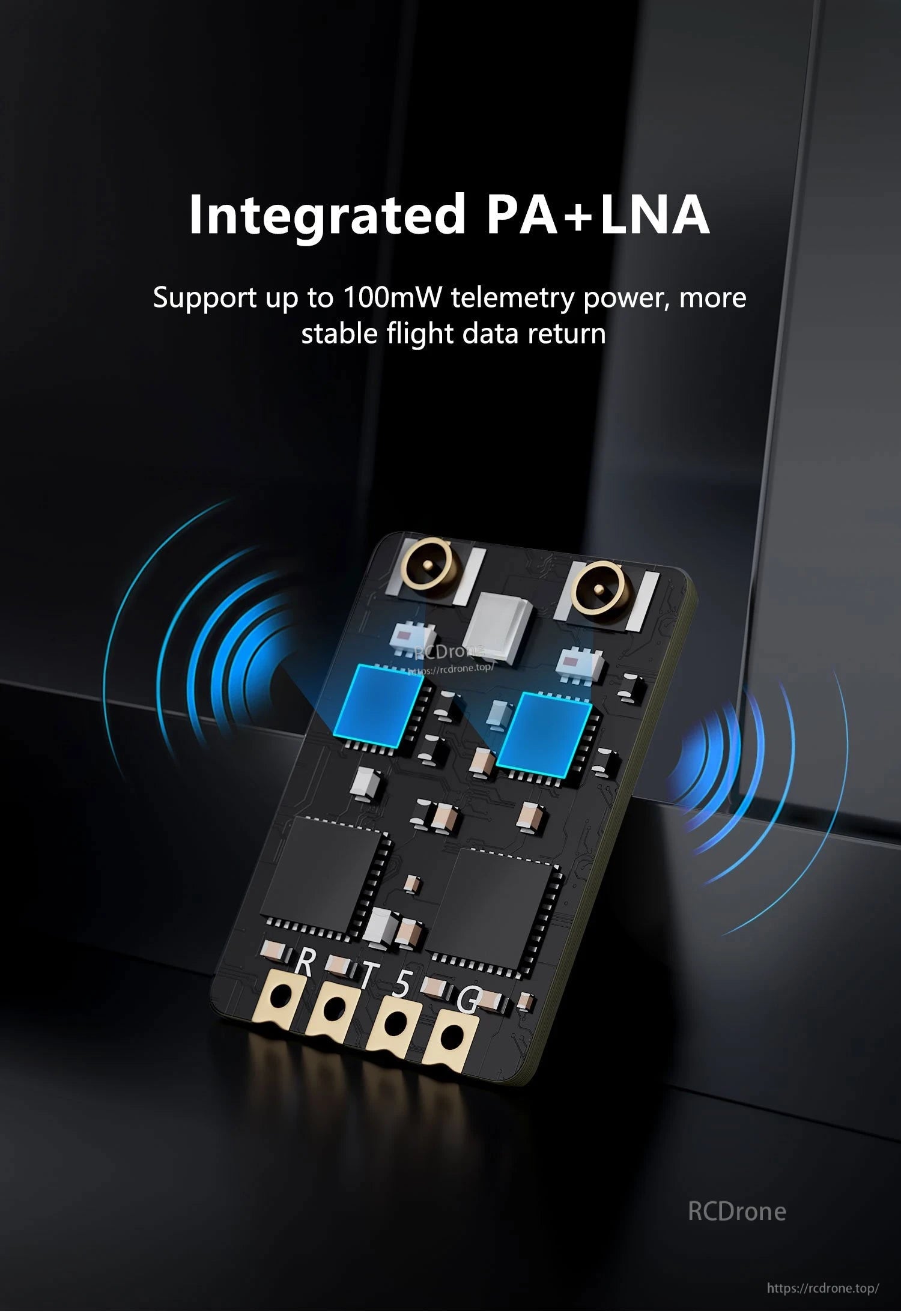
Integrated PA+LNA design supports up to 100mW telemetry power for more stable flight data return.

The receiver’s RGB LED uses different colors and flash patterns to indicate power on, WiFi upgrade, binding mode, and connection status.

The receiver’s RGB status LED color indicates the selected ELRS packet rate, from F1000/500 down to 50Hz.
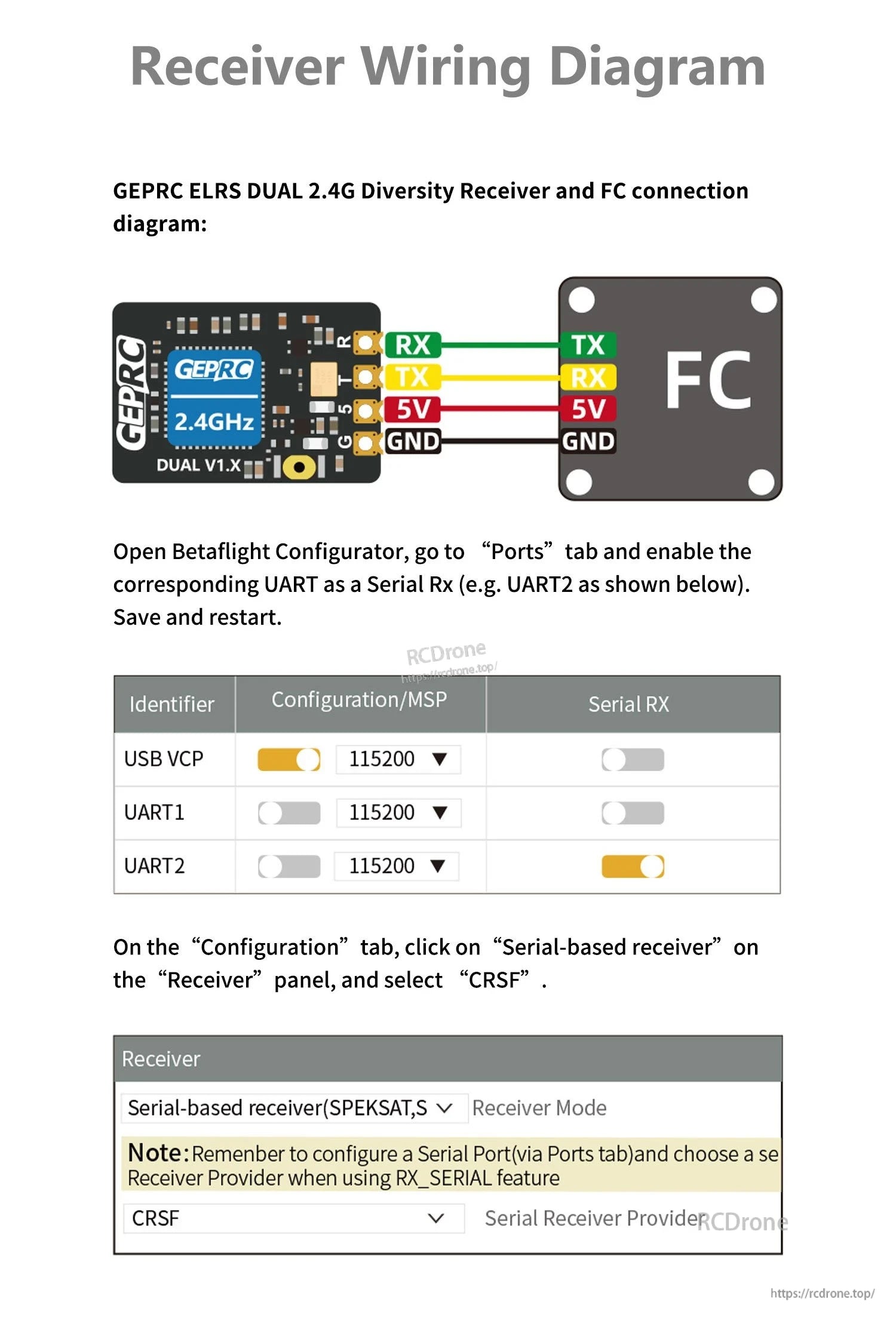
Connect the GEPRC ELRS Dual 2.4G diversity receiver to your flight controller using RX/TX plus 5V and GND, then enable Serial RX on a UART and select CRSF in Betaflight.
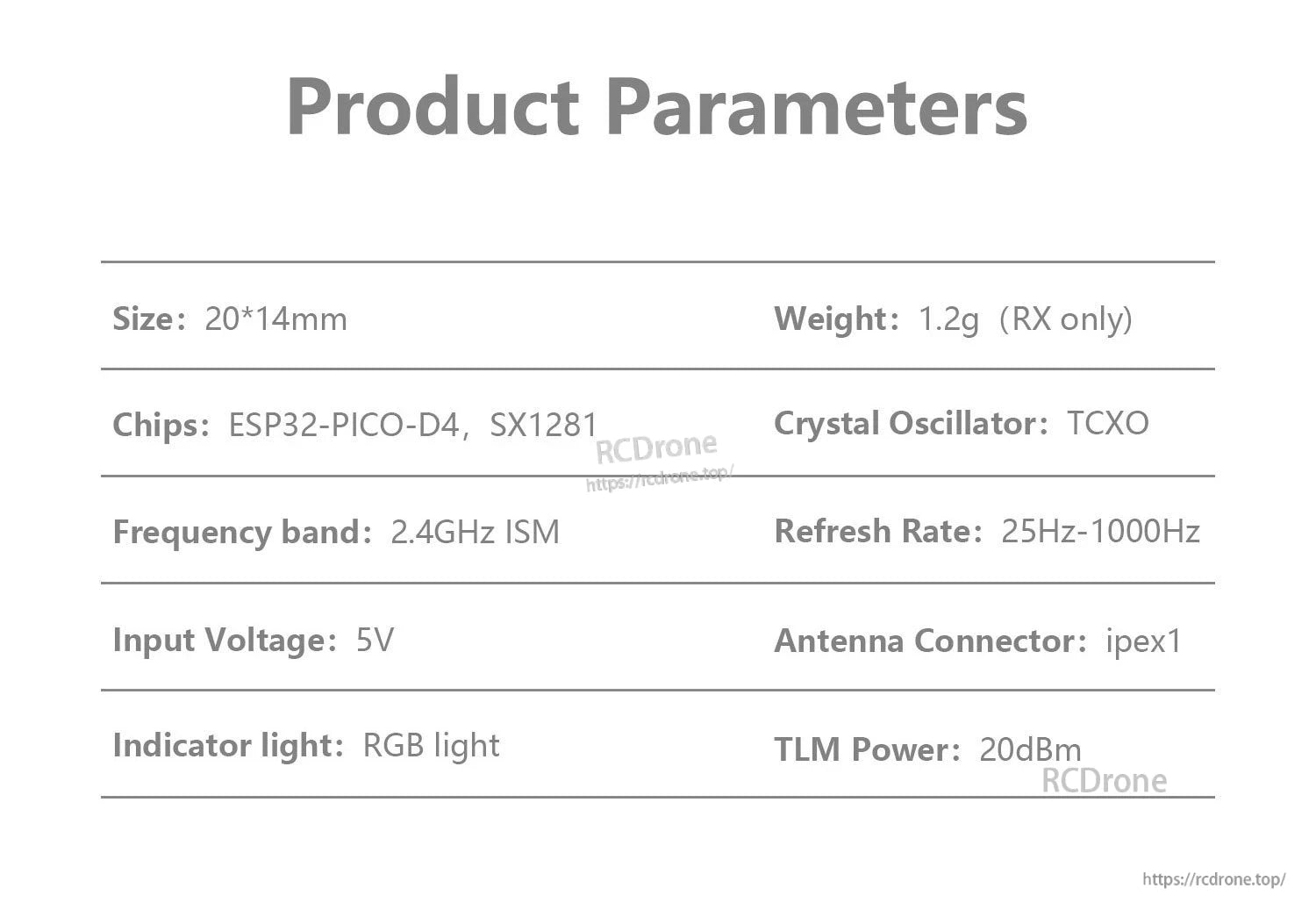
GEPRC ELRS Dual 2.4G diversity receiver specs list a 20×14mm board, 1.2g weight, 5V input, and ipex1 antenna connector.