


MAD 7x10-II Coaxial Drone Arm Set 135KV Propulsion System | 12S 48V, 13.0kg/rotor, DroneCAN ESC
MAD 7x10-II Coaxial Drone Arm Set 135KV Propulsion System | 12S 48V, 13.0kg/rotor, DroneCAN ESC
MAD
Couldn't load pickup availability


Overview
MAD 7x10-II coaxial drone arm set 135KV is a tuned propulsion system for industrial multirotor applications. It supports 12S LiPo and is specified at 48 V (sea level) with 13,029 g max thrust per rotor, designed for aerial photography, mapping, and inspection.
Key Features
- Tuned propulsion system with integrated motor, FOC ESC, and propellers for simplified installation
- High efficiency disc motor (M7C10 135KV) with iron core design
- Intelligent sine-wave electric modulation (Circular 60A FOC ESC)
- Red/green LED heading light integrated at the bottom
- Carbon fiber propeller: FLUXER PRO 26x7.8 (26 in class)
- CAN communication: DroneCAN; compatibility: Ardupilot
Specifications
| Model | 7X10-II KV135 |
| Max thrust | 13029 g / rotor @48V (sea level) |
| Recommended take-off weight | 6000 g to 7500 g / rotor @48V (sea level) |
| Recommended voltage | 12S LiPo |
| Operating temperature | -20~50°C |
| Unit combo weight | 1077±10 g |
| Extension wire length | 710 mm / 780 mm (Input/Signal Wires) |
| Compatible carbon tube | 30 mm |
| Propeller size (diameter/pitch) | 26x7.8 inch (660x198 mm) |
| Propeller unit weight | 66 g/pc |
| Motor stator size | 72*10 mm |
| Motor unit weight | 266 g |
| ESC model name | Circular 60A FOC |
| ESC max input voltage | 60.9 V |
| ESC maximum allowable current | 60A (10S) |
| ESC maximum continuous current | 30A |
| Max throttle signal frequency | 450 Hz |
| ESC recommended voltage | 12S |
| Compatibility | Ardupilot |
| CAN communication | DroneCAN |
Performance Data (12S)
- TOP: Circular FOC 60A (6-14S), max 75°C
- BOTTOM: Circular FOC 60A (6-14S), max 62°C
Test table columns (as provided): Throttle (%), Voltage (V), Current (A), Input Power (W), Output Power (W), Torque (N×m), RPM, Thrust (gf), Efficiency (%), Efficiency (gf/W).
Troubleshooting (ESC Indicator/Audible Alerts)
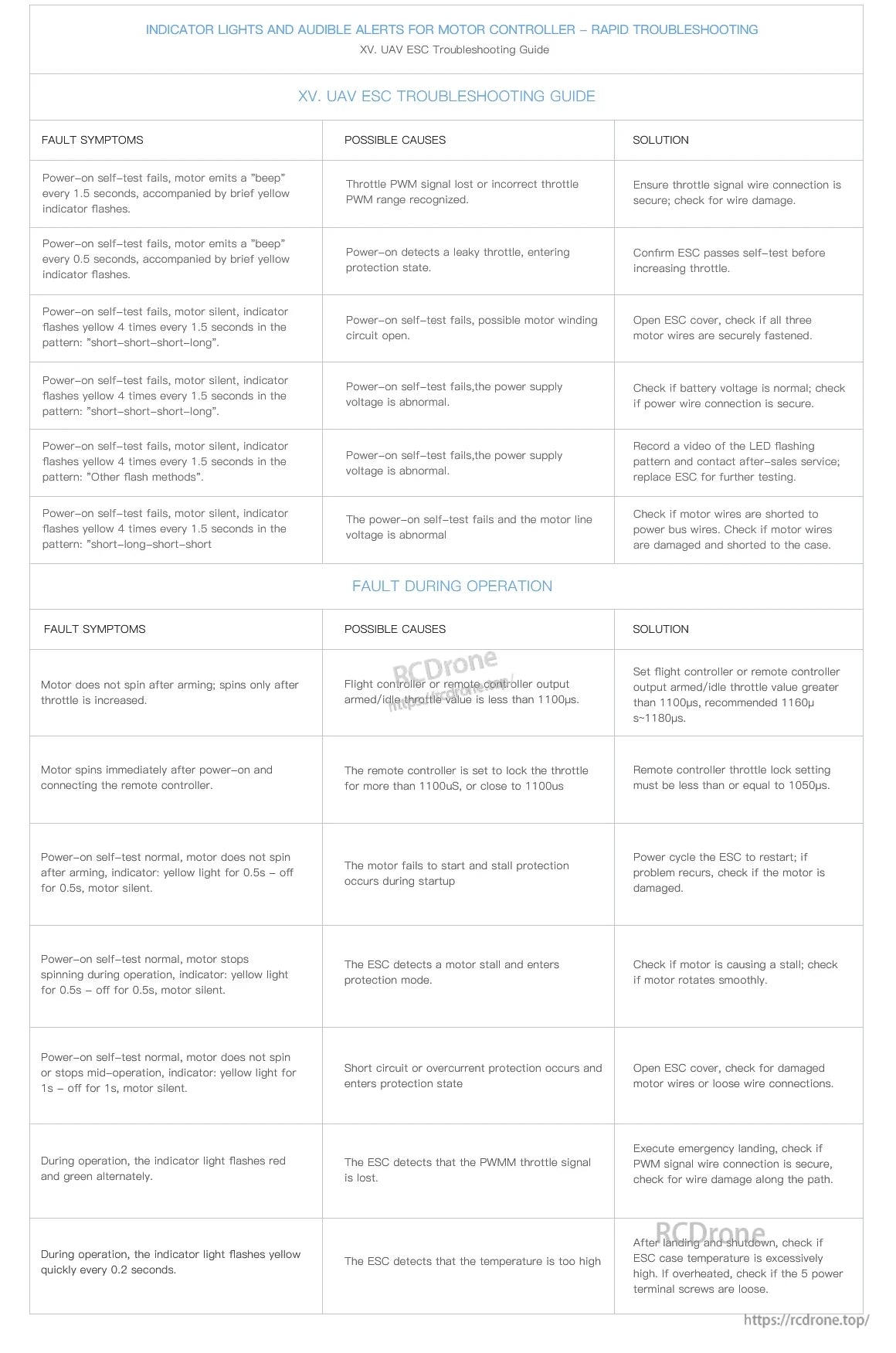
For rapid troubleshooting, ESC alerts include power-on self-test fault patterns and operation faults such as throttle PWM signal loss, abnormal power supply voltage, motor winding circuit open, motor stall protection, short circuit/overcurrent protection, and over-temperature indication.
Applications
- Industrial multirotor platforms for aerial photography, mapping, and inspection
For pre-sales fitment checks or integration support (12S wiring, DroneCAN/Ardupilot setup, and cable length selection), contact [email protected] or visit https://rcdrone.top/.
Details
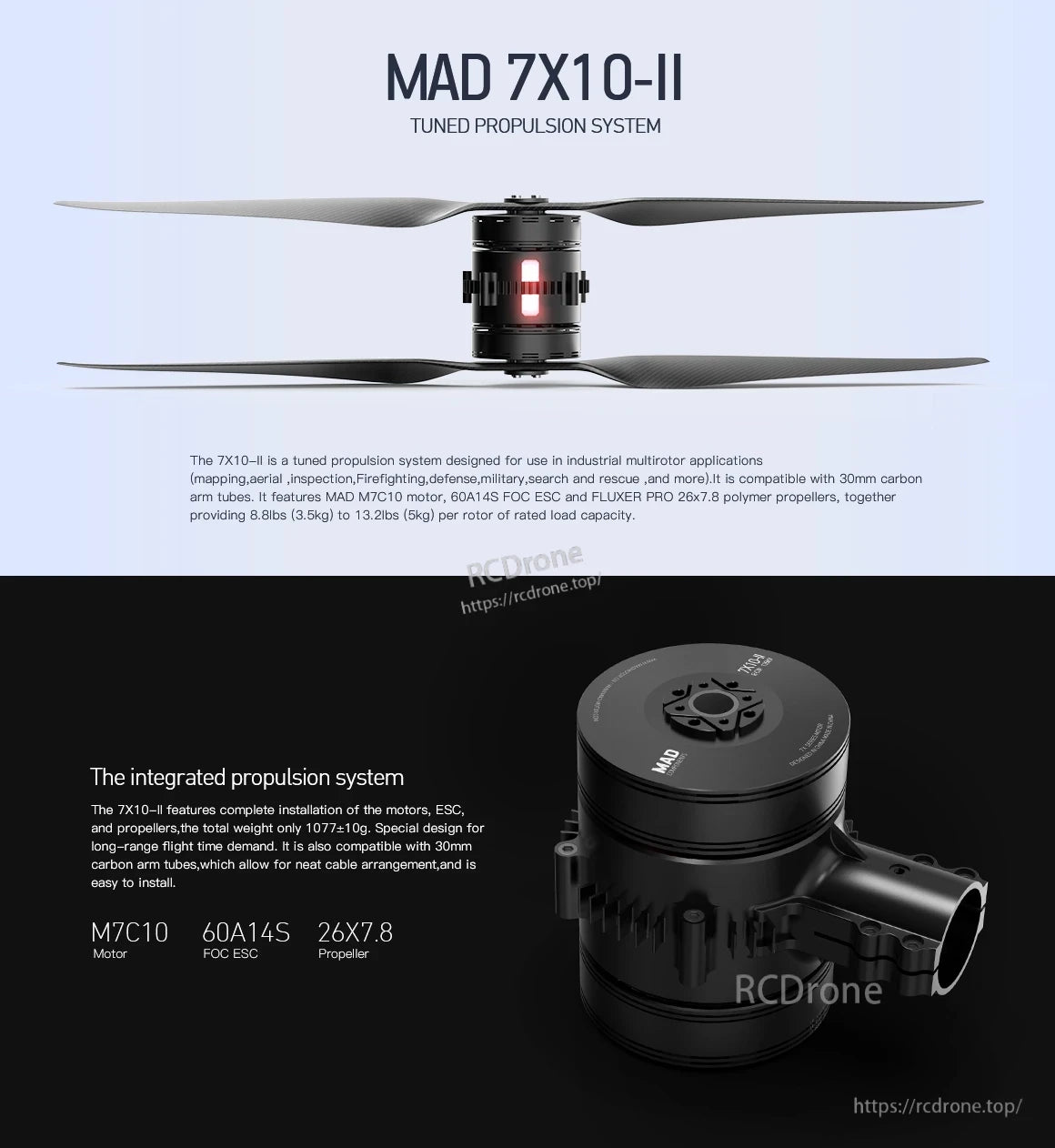
The MAD 7X10-II integrated propulsion system pairs an M7C10 motor with a 60A14S FOC ESC and 26x7.8 propeller set for coaxial builds.
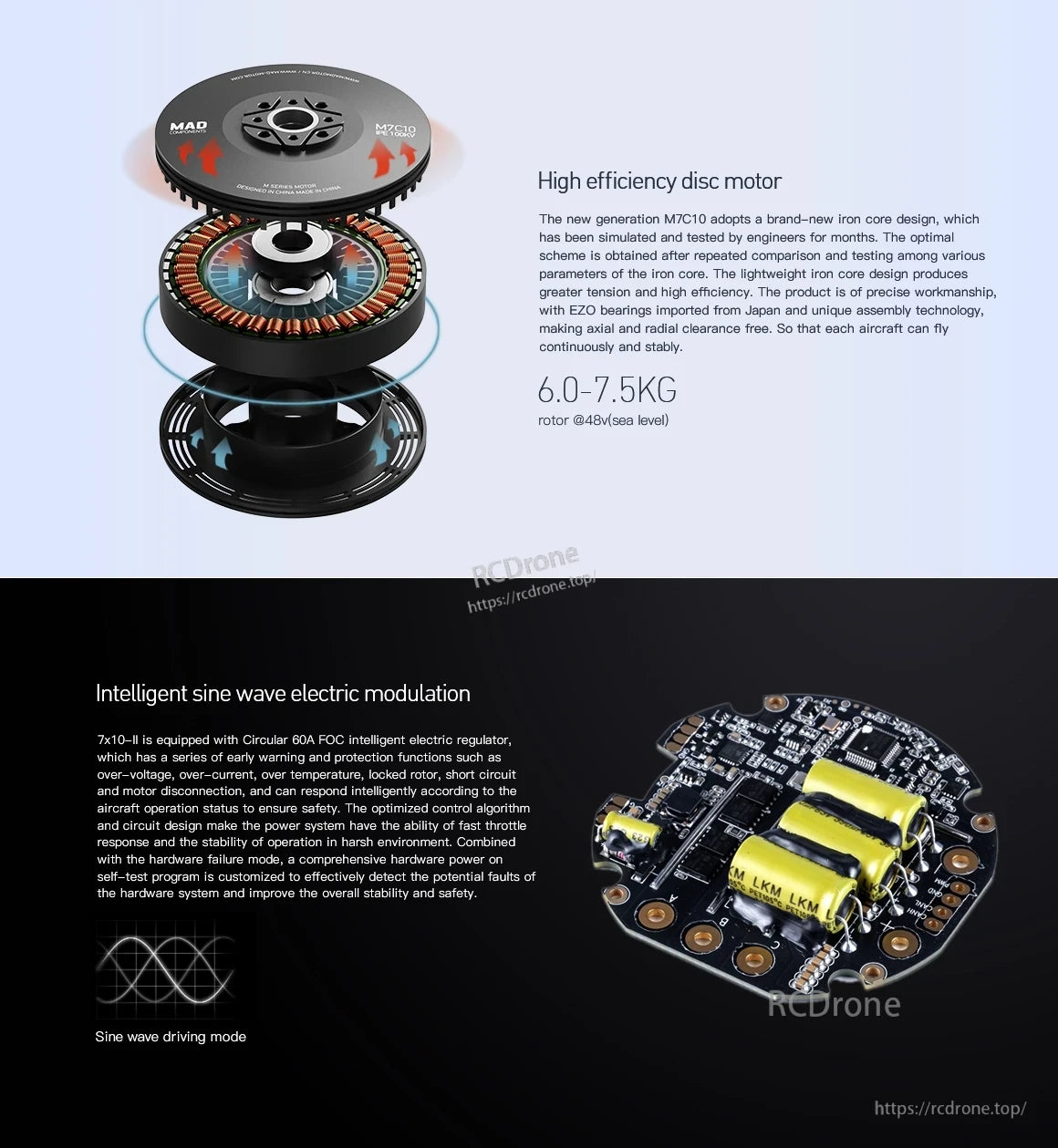
The high-efficiency disc motor pairs with a sine-wave ESC design, with text noting 6.0–7.5 kg rotor thrust at 48V.
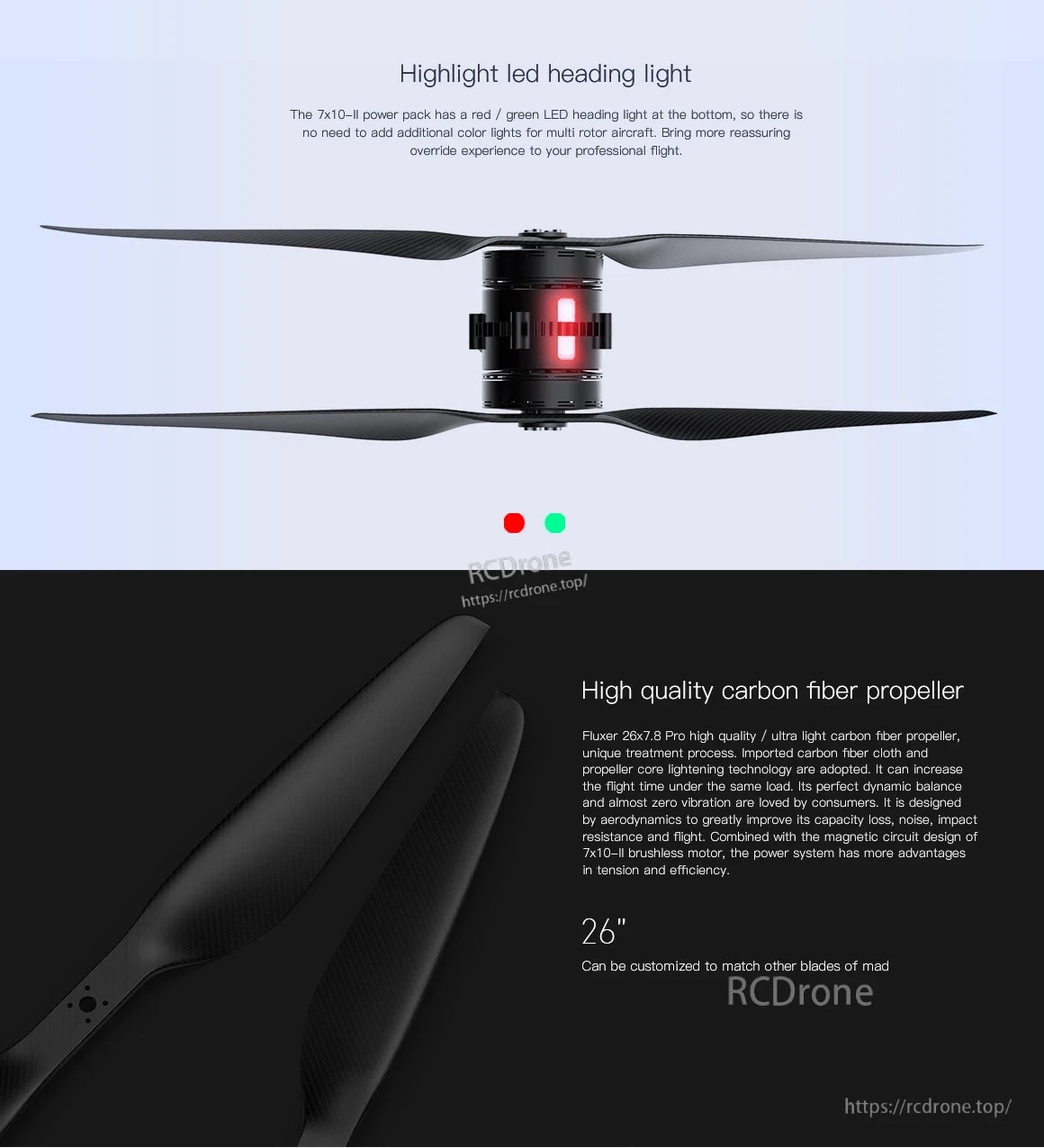
The 7x10-II coaxial propulsion unit pairs 26-inch carbon fiber propellers with a red/green LED heading light for clear orientation.
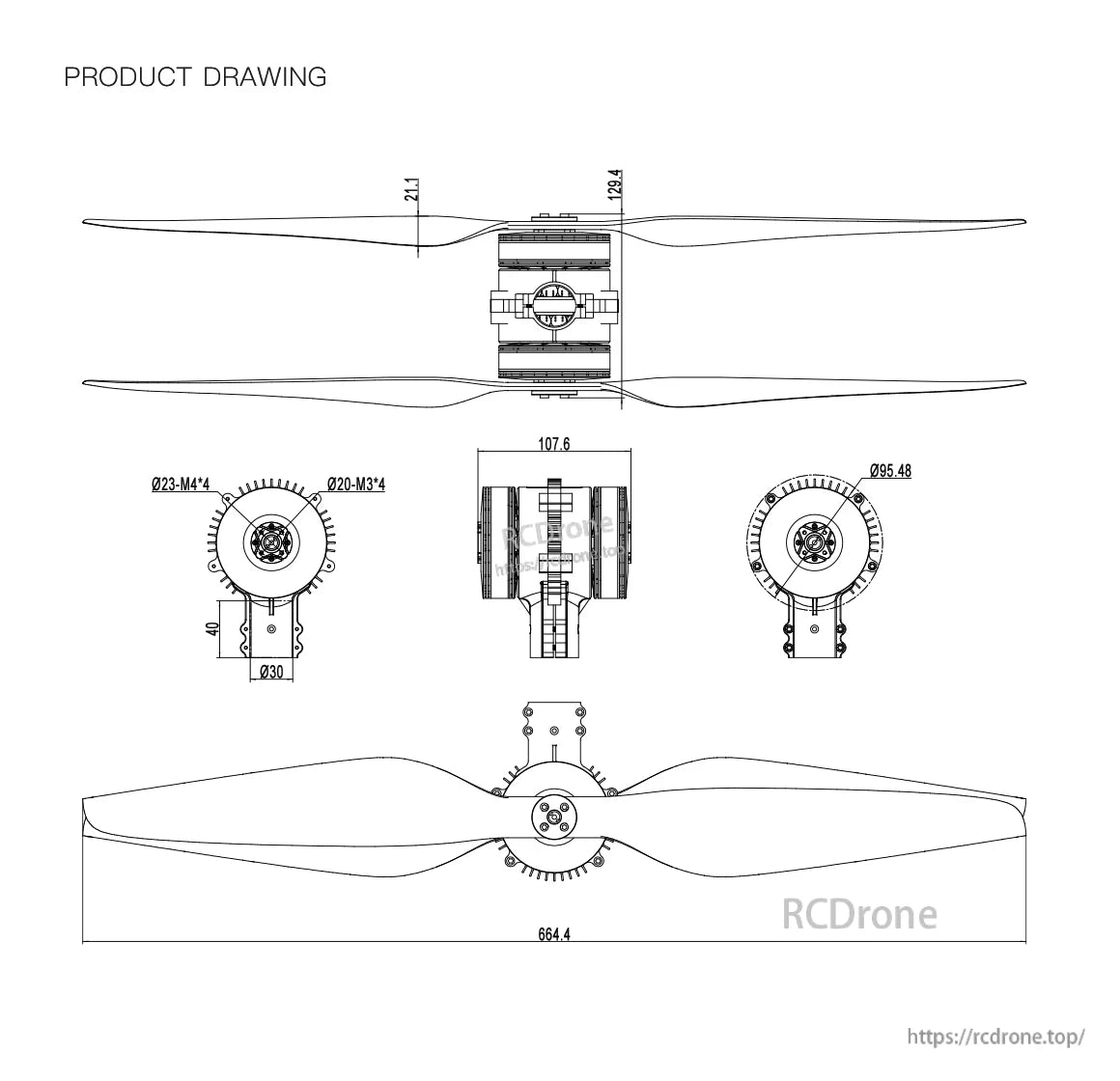
The MAD 7x10-II coaxial arm set uses a dual-prop layout and includes detailed mounting dimensions such as Ø23 M4×4 and Ø20 M3×4 bolt patterns.
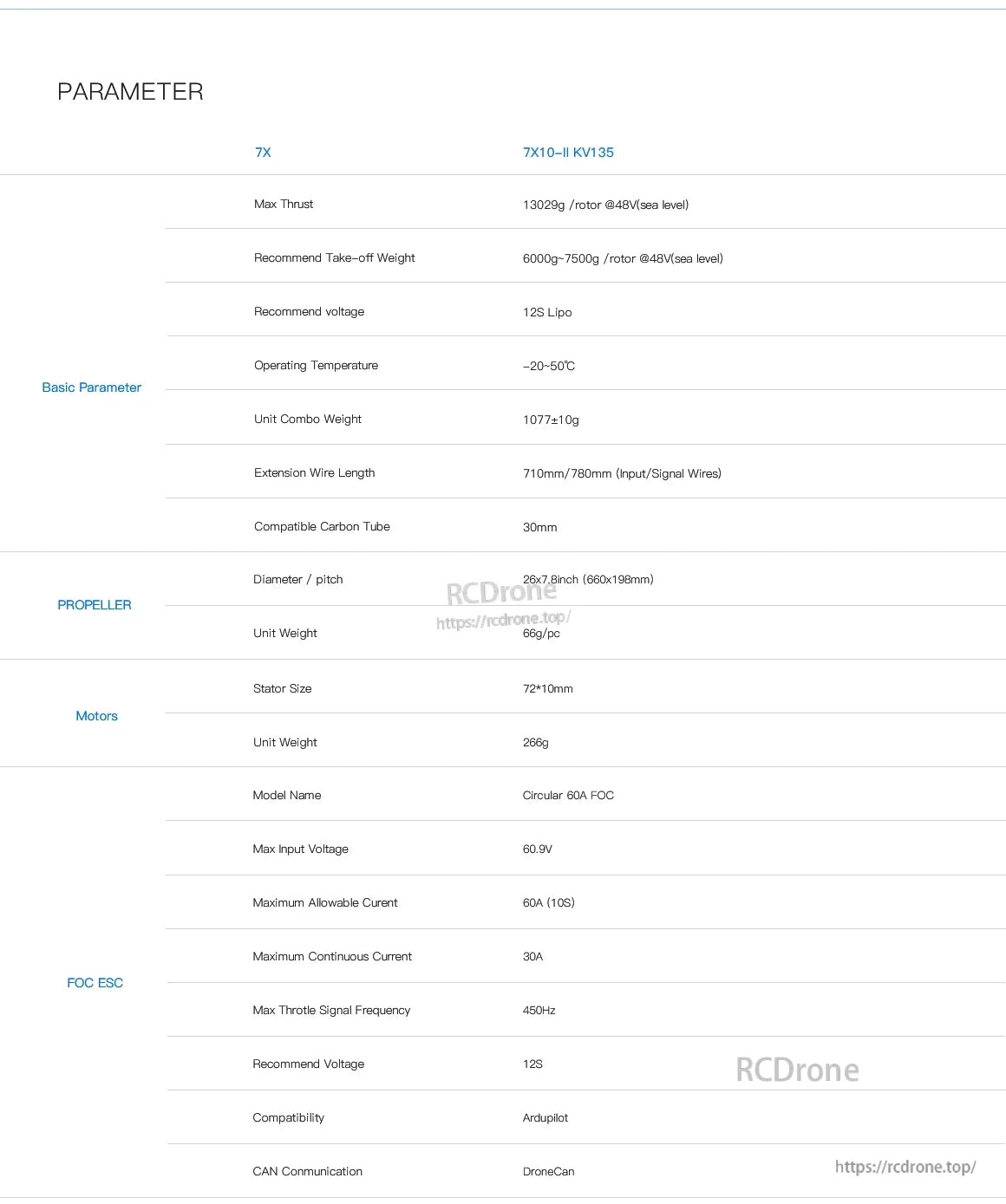
The MAD 7X X10-II KV135 propulsion system is rated up to 13,029g thrust per rotor at 48V (12S) and supports DroneCAN communication on the FOC ESC.
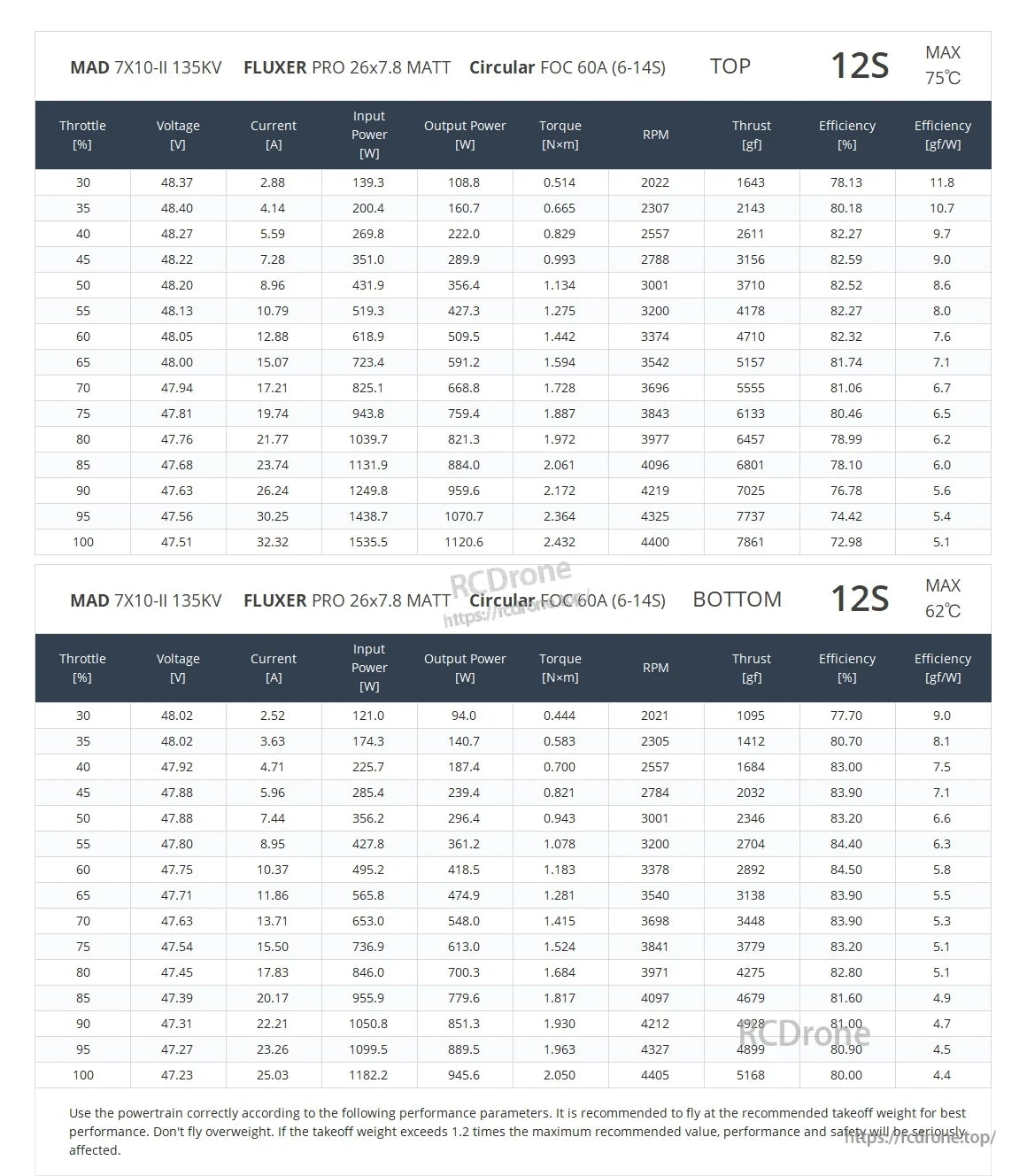
The MAD 7x10-II 135KV 12S test data lists throttle steps with voltage, current, input/output power, RPM, thrust, and efficiency for top and bottom motor positions.
Details

The MAD 7X10-II integrated propulsion system pairs an M7C10 motor with a 60A14S FOC ESC and 26×7.8 propeller set for coaxial builds.
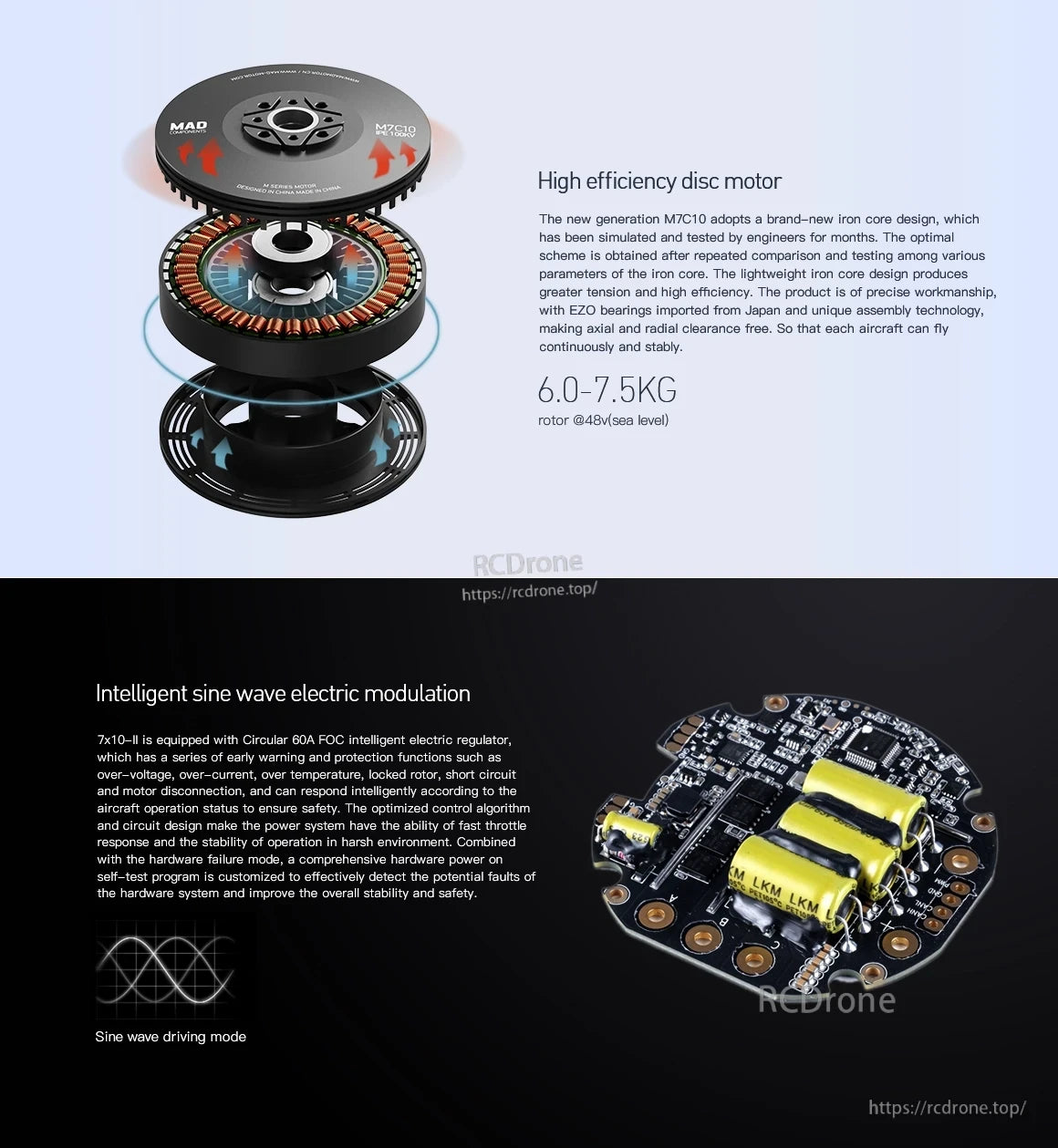
The MAD disc motor pairs with an intelligent sine‑wave ESC for smooth drive control and a stated 6.0–7.5 kg thrust rating at 48V (sea level).
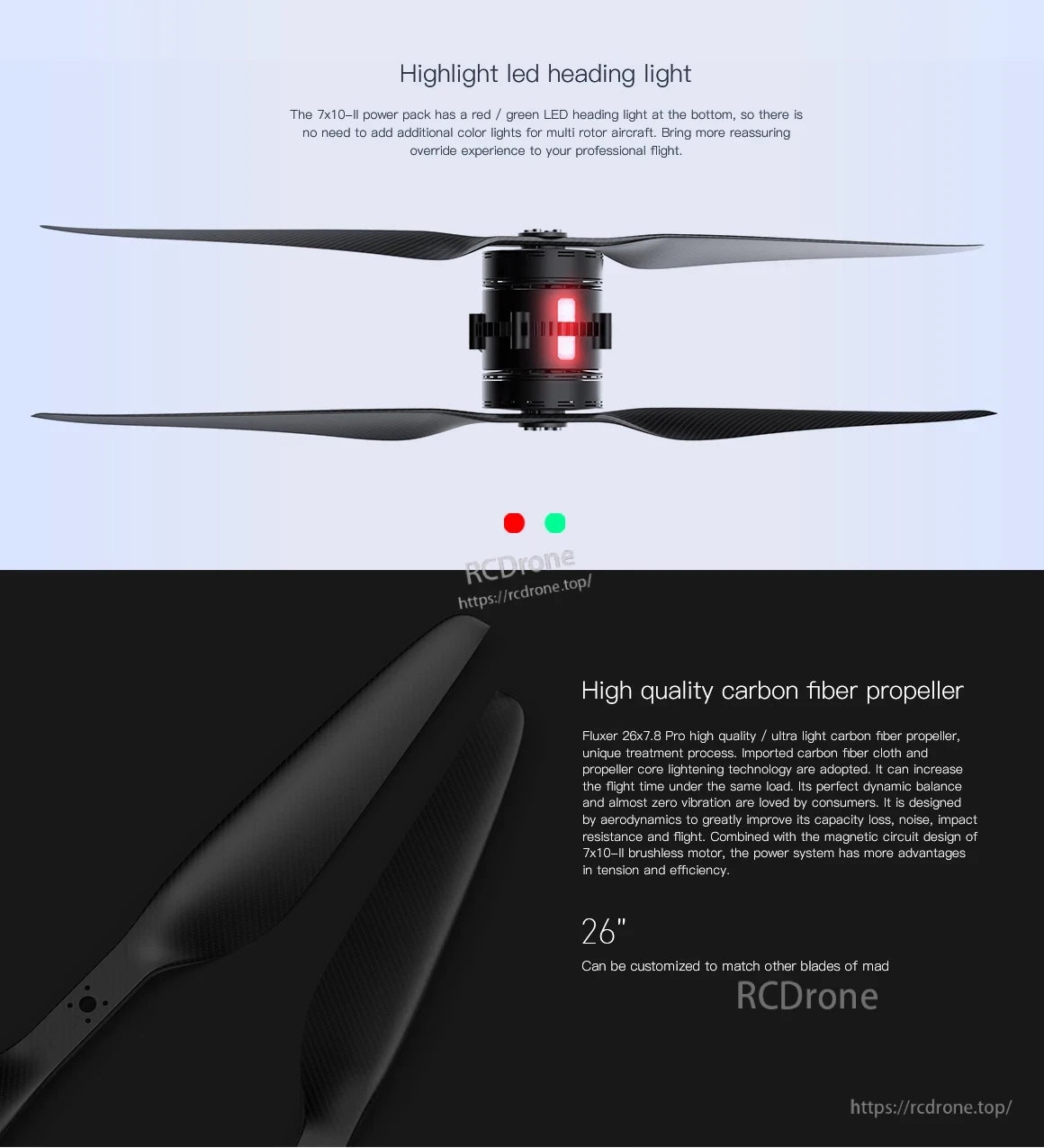
Red/green LED headlights and stacked carbon fiber propellers support clearer visibility and efficient coaxial thrust.
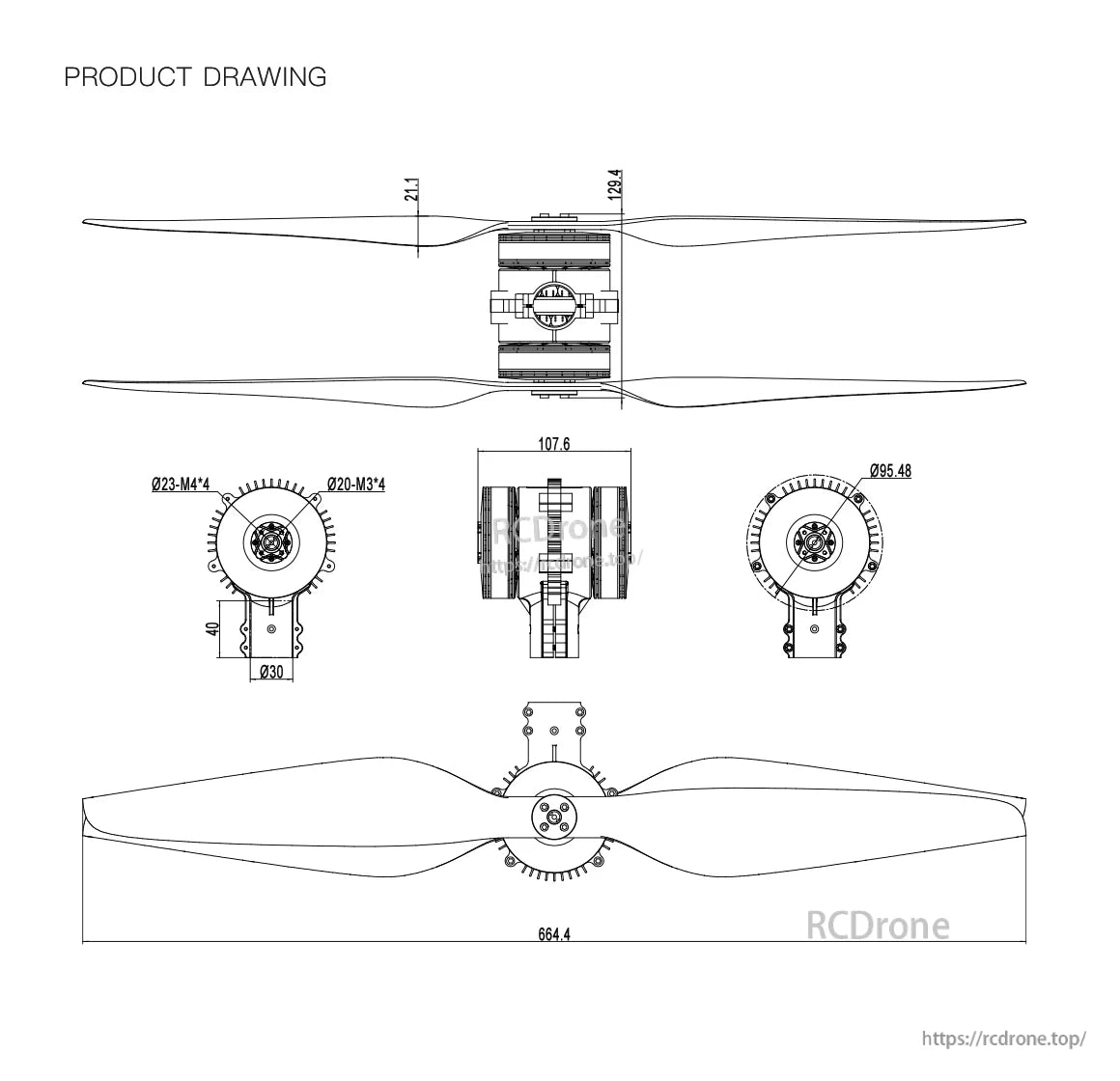
The MAD 7x10-II coaxial arm propulsion layout includes a dual-prop assembly with labeled mounting and overall dimension callouts for fit checks.
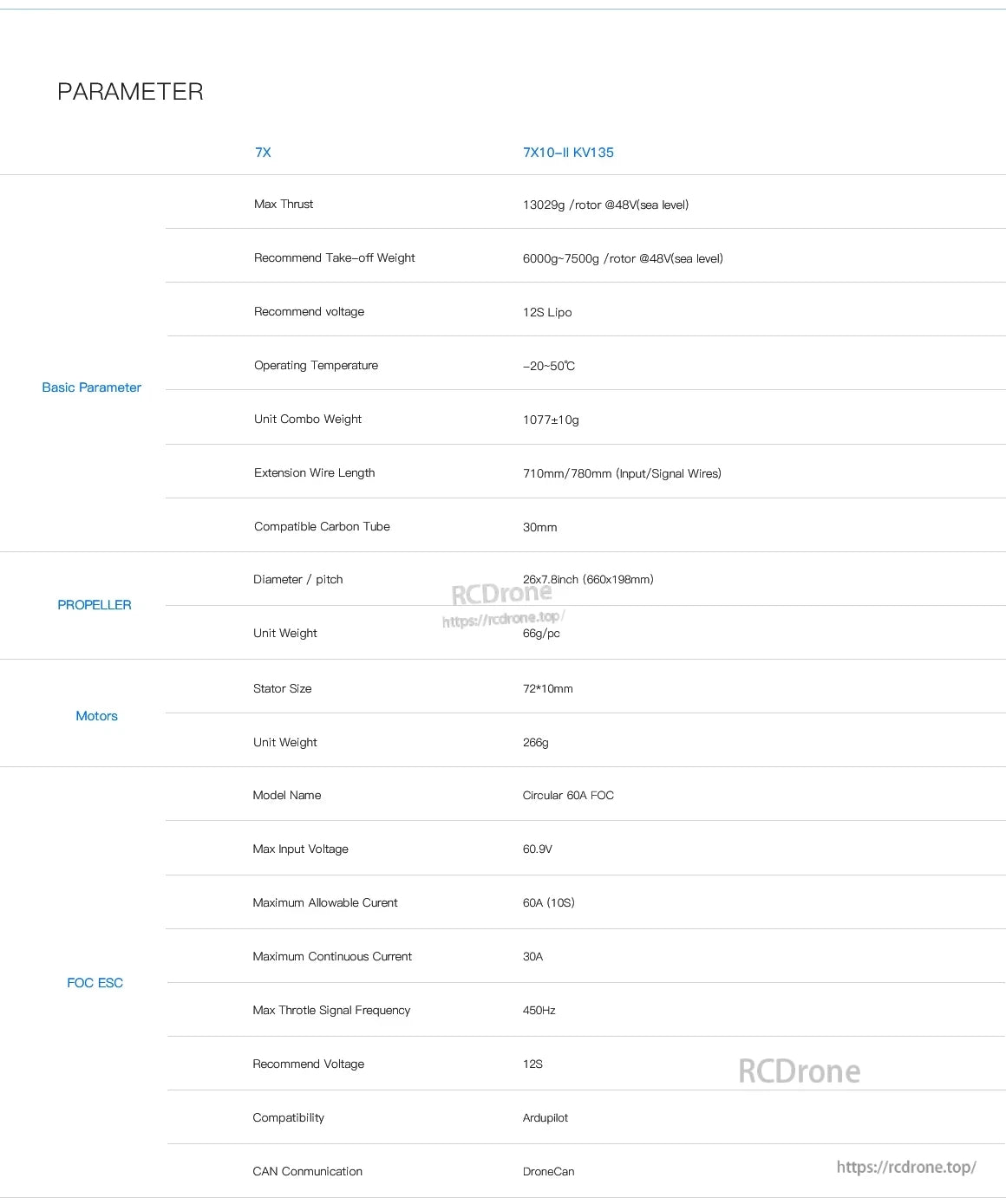
The MAD 7x10-II KV135 propulsion system pairs a 12S LiPo setup with a DroneCAN FOC ESC and a listed max thrust of 13,020 g per rotor at 48 V.

MAD 7x10-II 135KV 12S test data lists throttle-by-throttle voltage, current, input/output power, RPM, thrust (gf), and efficiency for top and bottom motors.
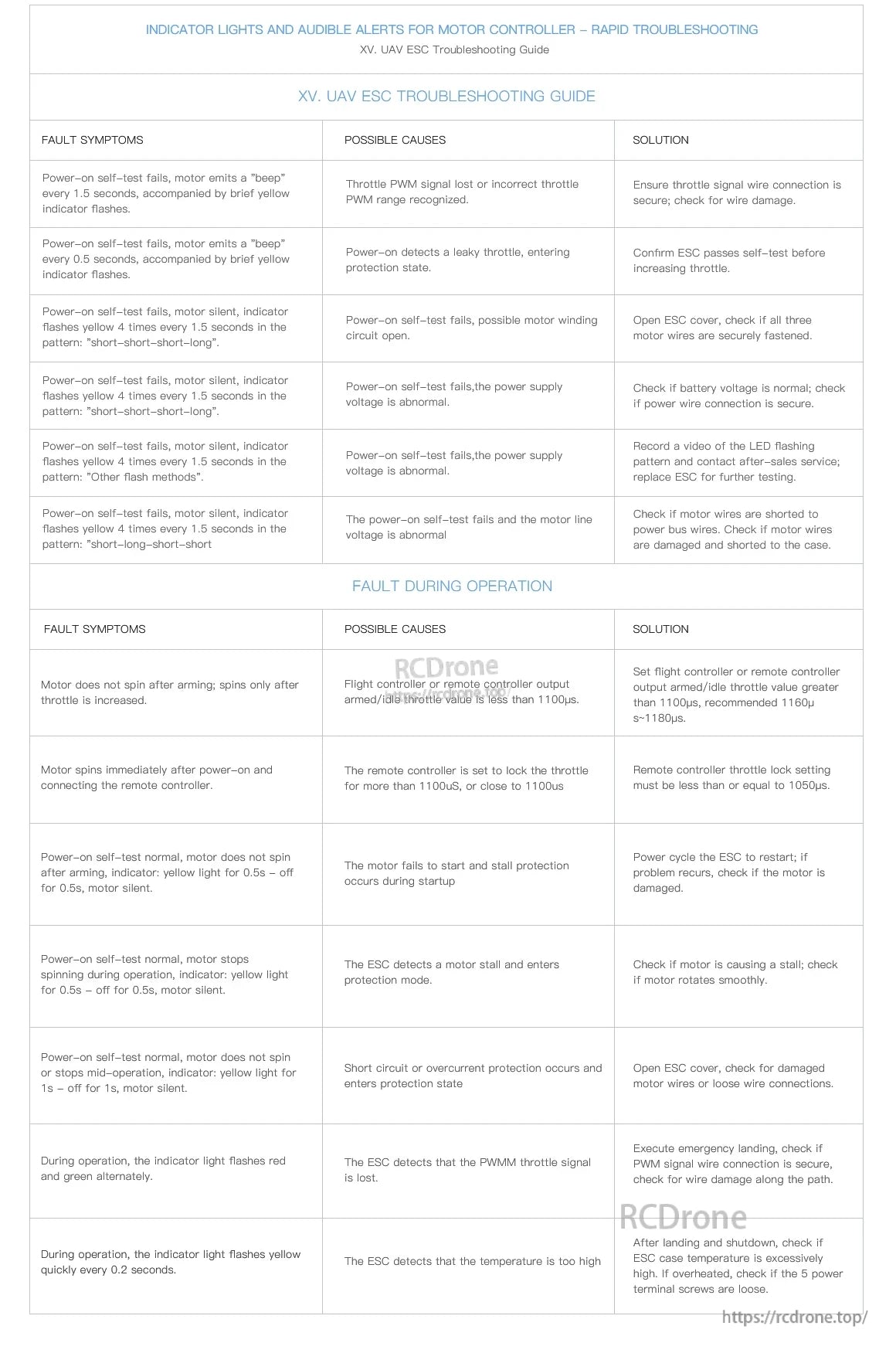
The X7 UAV ESC troubleshooting guide lists common fault symptoms with possible causes and recommended fixes for faster diagnosis.