


HGLRC C1 Fernsteuerung mit integriertem ELRS 2.4GHZ 500mw, 250Hz, Bluetooth 4.2, optionaler Dongle
HGLRC C1 Fernsteuerung mit integriertem ELRS 2.4GHZ 500mw, 250Hz, Bluetooth 4.2, optionaler Dongle
HGLRC
Verfügbarkeit für Abholungen konnte nicht geladen werden


Übersicht
Der HGLRC C1 Fernbedienung ist eine Einsteiger-Fernbedienung im Handstil, die für eine vereinfachte Bedienung konzipiert ist, mit einem integrierten ELRS 2.4GHZ 500mw TX-Modul und integrierter Antenne. Häufige Funktionen wie Frequenzpaarung, Leistungsanpassung und Joystick-Kalibrierung werden ohne Bildschirm unterstützt, um eine schnellere Einrichtung zu ermöglichen.
Hauptmerkmale
- Integriertes ELRS: ELRS 2.4GHZ
- 500mw TX-Modul / integrierte Antenne
- Integrierte ELRS-Aktualisierungsrate: 250Hz
- Fernbedienungskanal: 8 Kanäle
- Fernbedienungssensortyp: Potentiometersensor
- Mix-and-Match-Schalterdesign: Drei-Stufen-Schalter und Zwei-Stufen-Schalter
- Bluetooth: Bluetooth 4.2 (Griffmodus)
- 18650 Akku betrieben; hält 6 Stunden Akkulaufzeit (tatsächliche Akkulaufzeit hängt von der TX-Leistung ab; Batterien müssen separat gekauft werden)
- Unterstützt mehrere Simulatoren: FPV LOGIC - DCL Liftoff; DRL-TRYP FPV-Uncrashed; DRL-TRYP FPV-Uncrashed; Launcher (TBS Simulator) usw.
- Optionaler drahtloser Dongle für Simulator-Übungen (vermeidet die Verbindung über USB-Datenkabel); Dongle unterstützt USB TYPE-C + USB TYPE-A Doppelstecker
- Kann extern mit NANO TX-Modul erweitert werden; nach externer Verbindung schaltet sich das integrierte TX-Modul automatisch aus
- Drahtloses Firmware-Upgrade: ELRS-Firmware für Fernbedienung und Dongle unterstützen alle drahtloses Upgrade
- Unterstützt die Installation von Drittanbieter-Empfängern und Tunern
Technische Daten
Parameter der Fernbedienung
| Integriertes ELRS | ELRS 2.4GHZ |
| Integrierte ELRS-Aktualisierungsrate | 250Hz |
| Fernbedienungssensortyp | Potentiometersensor |
| Antenne | Integrierte ipex1 Generation Kupferrohrantenne |
| Arbeitsspannung | 6-8.4v DC |
| Fernbedienungsreichweite | größer als 500m |
| Ausgangsschnittstelle | TX-Modul NANO bin (crsf-Protokoll) |
| Ports | TYPE-C (nur zum Laden und Firmware-Flashen); 3,5MM analoger Trainerport |
| Batterie | 18650 Flachkopf-Batterie x2 (muss selbst installiert werden) |
| Laden | TYPE-C Ladestrom 1.2A; Ladezeit etwa 3-4 Stunden |
| Fernbedienungskanal | 8 Kanäle |
| Bluetooth | Bluetooth 4.2 |
| ELRS-Firmware-Upgrade-Methode | WIFI oder TYPE-C (kabelgebunden) |
| ELRS-Firmware-Version | ELRS 3.0 |
| ELRS-Firmware-Name | DIY-Geräte 2,4 GHz DIY ESP32+ E28 2.4GHz TX |
| Gewicht | 195g (ohne Batterie) |
| Größe | 160mm x 130mm x 50mm (ohne Fernbedienung) |
Dongle-Parameter (Optional)
| Maximal unterstützte Frequenz des integrierten ELRS | 250hz |
| Empfangsreichweite | mehr als 200m |
| Bindemethode | Schnell dreimal ein- und ausschalten, um in den Bindemodus zu gelangen |
| Schnittstelle | USB TYPE-C + USB TYPE-A Doppelstecker |
| Arbeitsspannung | 5v |
| ELRS-Firmware-Upgrade-Methode | WIFI oder USB-Stecker |
| ELRS-Firmware-Version | ELRS 3.0 |
| ELRS-Firmware-Name | HGLRC 2.4 Ghz HGLRC Hermes 2.4Ghz RX |
| Unterstütztes Protokoll für externen Empfänger | unterstützt nur das CRSF-Protokoll |
| Gewicht | 9,5g |
| Größe | 74mm x 21mm x 12,5mm |
Was ist enthalten
- 1x Fernbedienung
- 1x Tragegurt für die Fernbedienung
- 1x USB-C Datenkabel
- 1x Wireless Dongle (Option)
Für Bestellhilfe oder After-Sales-Support kontaktieren Sie [email protected] or besuchen Sie https://rcdrone.top/.
Anwendungen
- FPV-Simulator-Übung (verkabelt über TYPE-C oder drahtlos über optionalen Dongle)
- ELRS/CRSF-basierte RC-Setups, die einen Griffstil-Fernbedienung erfordern
Handbücher / Links
- CRSFJoystick Projektlink: https://github.com/mikeneiderhauser/CRSFJoystick
Details
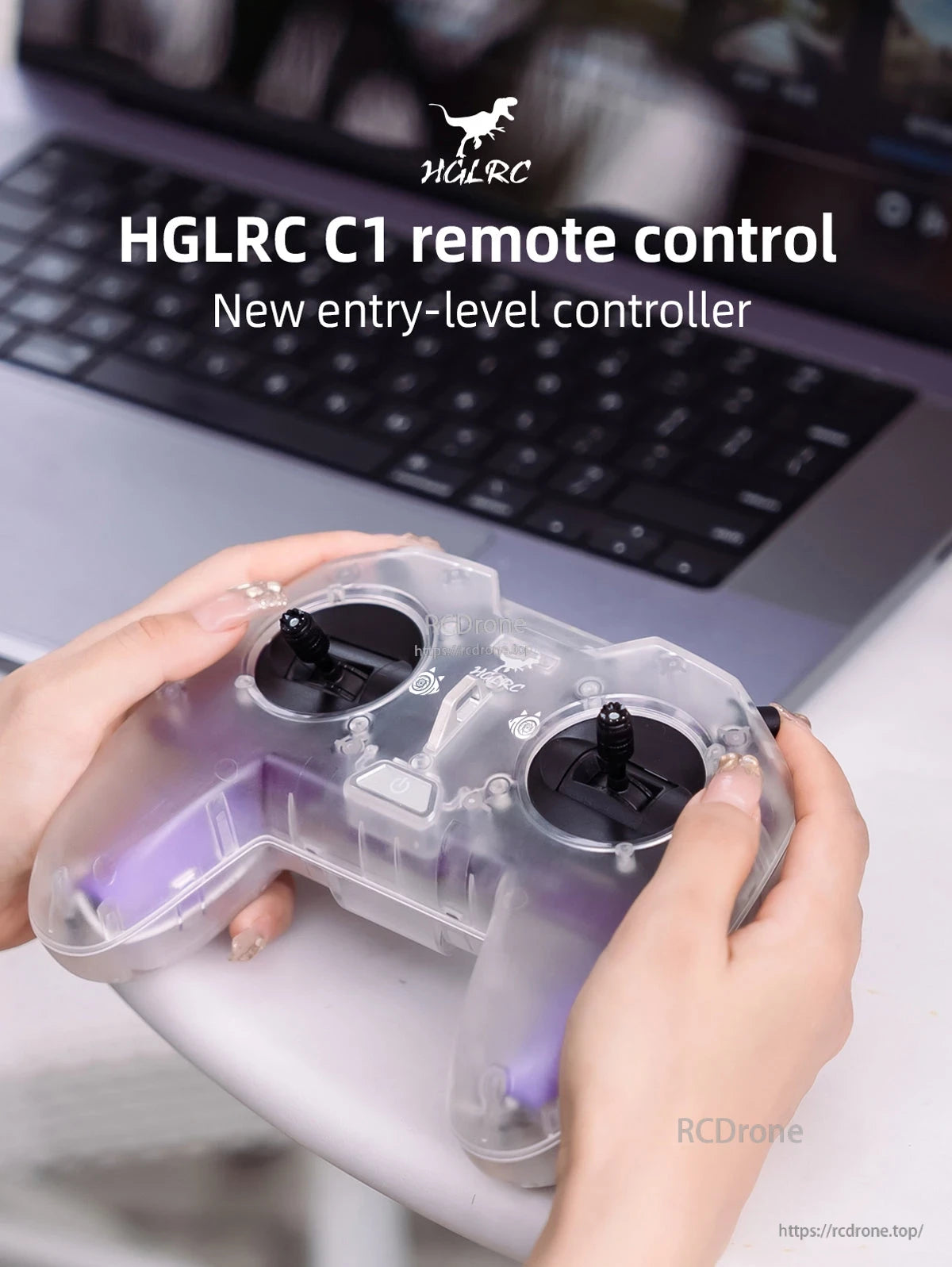
Starten Sie schnell mit einem ergonomischen, griffartigen Controller, der für einfaches FPV-Fliegen und Simulatorübungen entwickelt wurde.

Die Hauptmerkmale konzentrieren sich auf einfache Einrichtung, flexible Schalter und trainingsfreundliche Anschlussmöglichkeiten.

Integrierte ELRS 2.4GHz-Übertragung und eine integrierte Antenne halten das Setup sauber und anfängerfreundlich.

Betreiben Sie mit zwei 18650-Zellen für lange Sitzungen; Batterien werden separat gekauft.
 Erweitern Sie das Radio mit einem externen NANO TX-Modul; der interne TX schaltet sich nach der Verbindung aus.
Schnelle Verfahren unterstützen das Binden, die Leistungsanpassung und die Stickkalibrierung, ohne auf einen Bildschirm angewiesen zu sein.
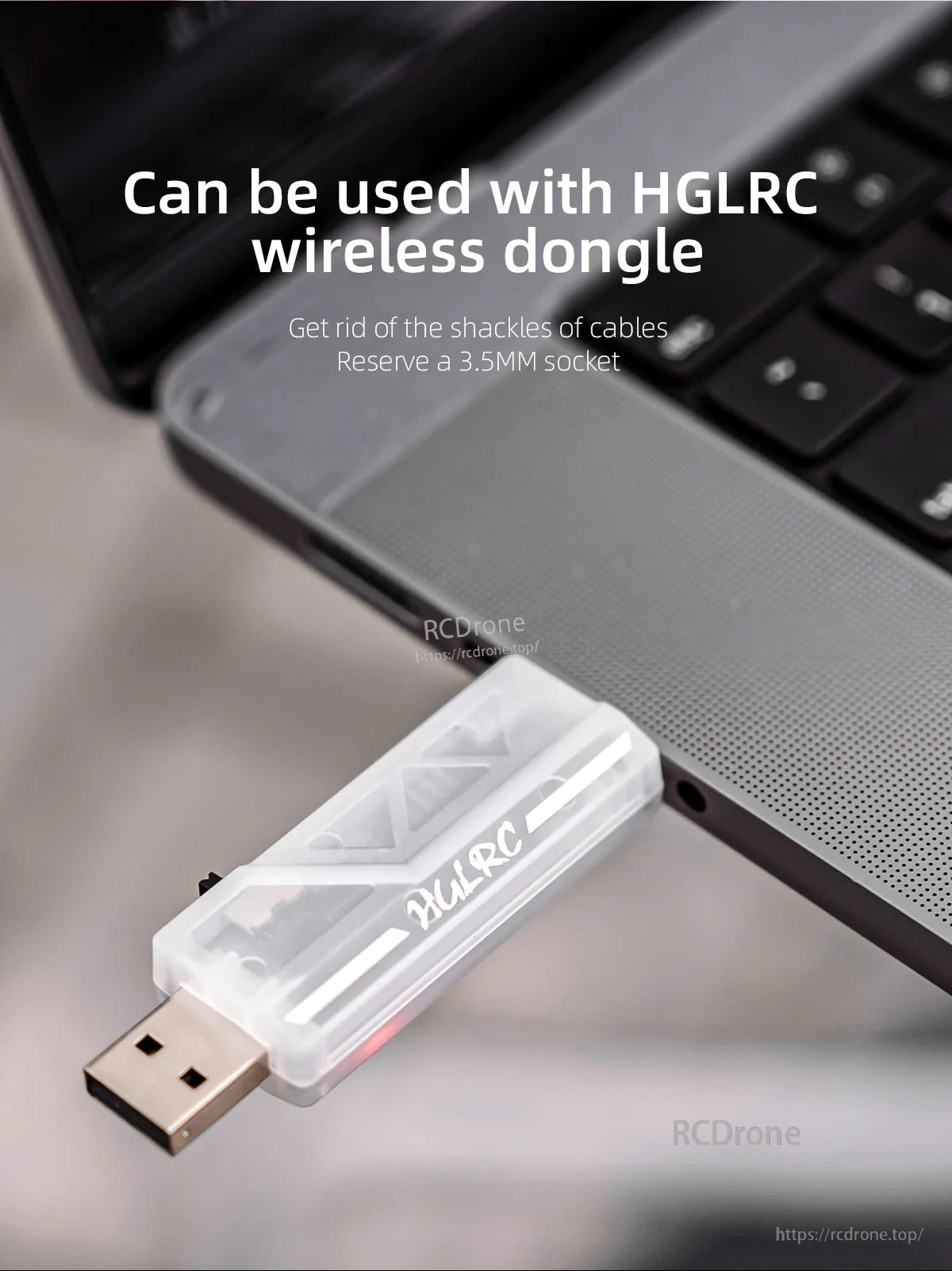
Optionaler drahtloser Dongle ermöglicht die Nutzung des Simulators ohne ein USB-Datenkabel, während ein 3,5-mm-Traineranschluss verfügbar bleibt.

Der Bluetooth 4.2-Handmodus bietet eine weitere bequeme Möglichkeit, sich für Übung und Einrichtung zu verbinden.

Kompatibel mit beliebten FPV-Simulatoren wie Liftoff und DRL für stetigen Fähigkeitsaufbau zu Hause.

Die Unterstützung für Dongle-Nutzung und Receiver-Hot-Swap macht den Wechsel zwischen Setups und Simulatoren bequemer.
Drahtlose ELRS-Firmware-Updates helfen, sowohl den Controller als auch den Dongle mit weniger Aufwand auf dem neuesten Stand zu halten.

Referenzspezifikationen decken die ELRS-Leistung, Kanäle, Anschlüsse, Leistungsanforderungen und Gesamtmaße ab.

Die optionalen Dongle-Spezifikationen fassen den Schnittstellentyp, die unterstützte Rate, Upgrade-Methoden und die physische Größe zusammen.