


Raspberry Pi Pico 2 Mikrocontroller-Entwicklungsboard Starter Kit, RP2350A 150MHz 520KB SRAM 4MB Flash
Raspberry Pi Pico 2 Mikrocontroller-Entwicklungsboard Starter Kit, RP2350A 150MHz 520KB SRAM 4MB Flash
Yahboom
Verfügbarkeit für Abholungen konnte nicht geladen werden


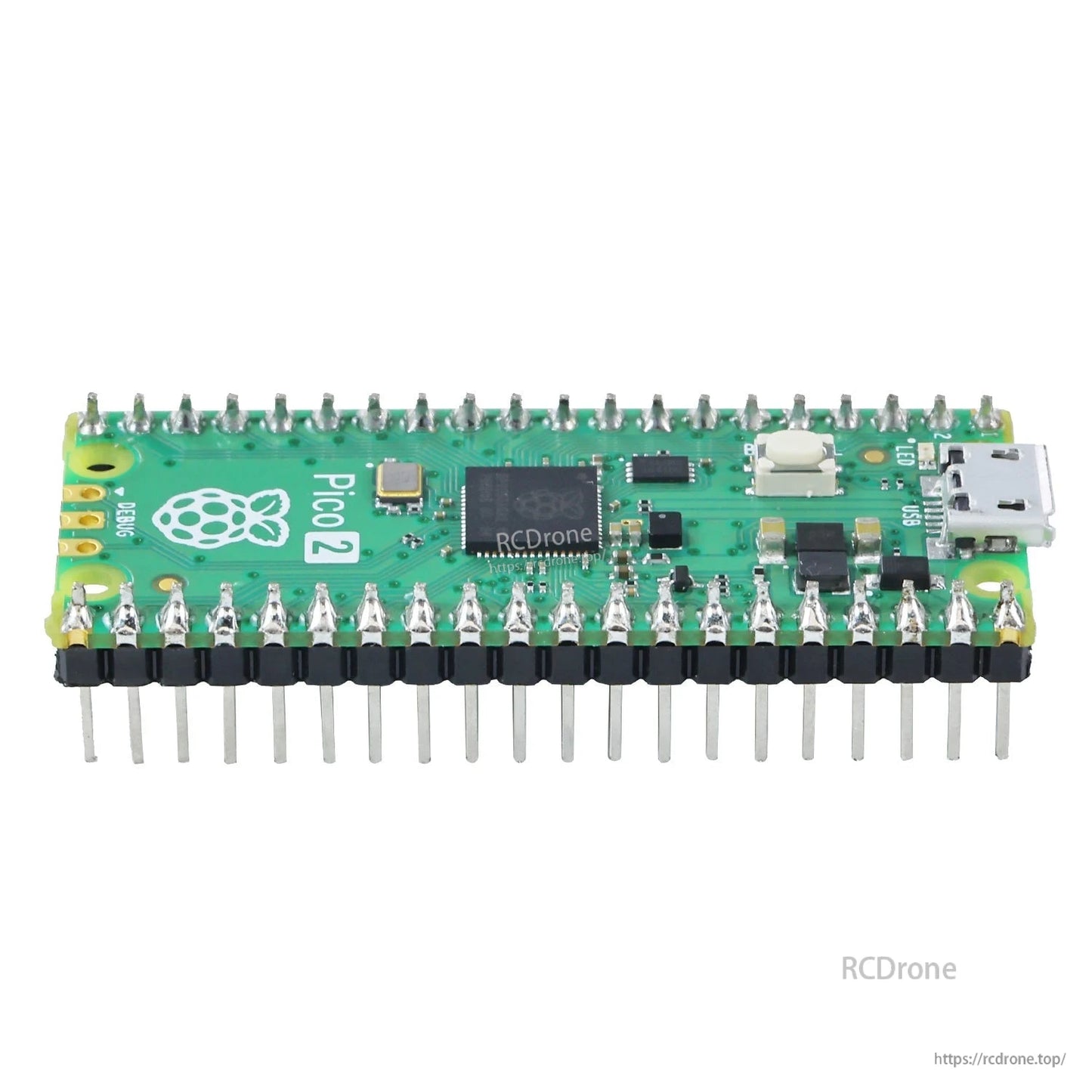
Überblick
Der Raspberry Pi Pico 2 ist ein Mikrocontroller-Entwicklungsboard, das für kostengünstige, leistungsstarke Embedded-Entwicklung mit flexiblen digitalen Schnittstellen konzipiert ist. Es verwendet den Raspberry Pi RP2350 Mikrocontroller, der ein einzigartiges Dual-Core-, Dual-Architektur-Design bietet, eine Betriebsfrequenz von bis zu 150 MHz, integrierten 520 KB SRAM, 4 MB Speicher und bis zu 26 multifunktionale GPIO-Pins an Bord. Die Entwicklung kann mit dem Raspberry Pi C/C++ SDK oder MicroPython erfolgen.
Hauptmerkmale
- RP2350 Mikrocontroller-Chip, entworfen von Raspberry Pi
- Dual-Core, Dual-Architektur: kann zwischen Arm Cortex-M33 Kernen und Hazard3 (RISC-V) Kernen wechseln
- Läuft mit Frequenzen bis zu 150 MHz (flexibler Takt)
- On-Board 520 KB SRAM und 4 MB Flash
- Stempelloch-Design (kastelliert) für direktes Löten/Integration in eine kundenspezifische Basisplatine
- USB 1.1 Host- und Geräteunterstützung; kann als Massenspeicher für Drag-and-Drop-Programmdownloads aufgelistet werden
- Unterstützt stromsparende Schlaf- und Ruhezustände
- Bis zu 26 multifunktionale GPIO-Pins
- Peripherieunterstützung umfasst SPI, I2C, UART, ADC, PWM und PIO für benutzerdefinierte Peripheriegeräte
- Eingebauter Temperatursensor
- Sicherheitsrelevante Funktionen umfassen: Arm TrustZone für Cortex-M signierten Boot, 8kB Anti-Fuse OTP (einmal programmierbarer Speicher) für Schlüsselspeicherung, SHA-256-Beschleunigung, Hardware-TRNG und schnellere Fehlerdetektoren
Spezifikationen
| Board | Raspberry Pi Pico 2 |
| Hauptchip | RP2350 (Chipmodell gezeigt: RP2350A) |
| Kernarchitektur | Dual-Core Cortex-M33 oder RISC-V Hazard3 Prozessoren |
| Hauptfrequenz | 150MHz (bis zu) |
| On-chip SRAM | 520KB |
| On-board OSPI-Flash | 4MB |
| GPIO | 26 GPIO-Pins (3 Stück können als ADC verwendet werden) |
| PIO | 3x Programmierbare IO (PIO)-Blöcke, insgesamt 12 Zustandsmaschinen |
| Peripheriegerät | 2 x UART; 2 x SPI-Controller; 2 x I2C-Controller; 1 x USB 1.1 Controller und PHY (Host- und Geräteunterstützung) |
| ADC | 3 x 12-Bit ADC; 12 Bit 500KPS ADC |
| PWM | 24 steuerbare PWM-Kanäle (auch als 16 x PWM-Kanäle in einem Parameterdiagramm aufgeführt) |
| USB-Anschlusstyp | Micro-USB |
| Stromversorgungsmethode | USB-5V, VSYS-1.8V-5.5V |
| Stromversorgungsspannung | 5V |
| Ausgangsspannung | 5V/3.3V |
| GPIO-Spannung | 3.3V |
| Betriebsstrom | <= 300mA |
| Anzahl der Pins | 40 Pin |
| Betriebstemperatur | -20~85° |
| Programmiermethode | Als Massenspeicher identifizieren; Drag-and-Drop-Download |
| Entwicklungssprache | MicroPython, C/C++ |
| Entwicklungsumgebung | Visual Studio Code, Eclipse |
| Hersteller (aufgeführt) | Raspberry Pi Foundation |
Mechanische Abmessungen (Einheit: mm)
| Gesamtlänge | 51 |
| Länge (angezeigt) | 48.26 |
| Gesamtbreite | 21 |
| Breite (angezeigt) | 17.78 |
| Dicke | 1.3 (typ) |
| Stiftabstand | 2.54 |
| Lochdurchmesser | Ø2.1 |
| Anderer Lochdurchmesser (angezeigt) | Ø1 (x2 angezeigt) |
| Andere angezeigte Abmessungen | 11.4; 8; 2; 1.6; 2.4; 4.8; 1.61; 3.8; 5.7 |
RP2350 Chip-Parameter (aus der Tabelle)
| Modell | Flash | QFN60-Verpackung | QFN80-Verpackung |
|---|---|---|---|
| RP2350A (Dieses Produkt) | Keine | Ja | Nein |
| RP2354A | 2MB Flash | Nein | Ja |
| RP2350B | Keine | Ja | Nein |
| RP2354B | 2MB Flash | Nein | Ja |
- QFN60-Verpackung: 7 x 7mm Chip-Verpackung mit 30 GPIOs
- QFN80-Verpackung: 10 x 10mm Chip-Verpackung mit 48 GPIOs
Pinbelegung (40-Pin-Header)
| Pin | Signal | Funktionen angezeigt |
|---|---|---|
| 1 | GP0 | UART0 TX / I2C0 SDA / SPI0 RX |
| 2 | GP1 | UART0 RX / I2C0 SCL / SPI0 CSn |
| 3 | GND | Masse |
| 4 | GP2 | I2C1 SDA / SPI0 SCK |
| 5 | GP3 | I2C1 SCL / SPI0 TX |
| 6 | GP4 | UART1 TX / I2C0 SDA / SPI0 RX |
| 7 | GP5 | UART1 RX / I2C0 SCL / SPI0 CSn |
| 8 | GND | Masse |
| 9 | GP6 | I2C1 SDA / SPI0 SCK |
| 10 | GP7 | I2C1 SCL / SPI0 TX |
| 11 | GP8 | UART1 TX / I2C0 SDA / SPI1 RX |
| 12 | GP9 | UART1 RX / I2C0 SCL / SPI1 CSn |
| 13 | GND | Masse |
| 14 | GP10 | I2C1 SDA / SPI1 SCK |
| 15 | GP11 | I2C1 SCL / SPI1 TX |
| 16 | GP12 | UART0 TX / I2C0 SDA / SPI1 RX |
| 17 | GP13 | UART0 RX / I2C0 SCL / SPI1 CSn |
| 18 | GND | Masse |
| 19 | GP14 | I2C1 SDA / SPI1 SCK |
| 20 | GP15 | I2C1 SCL / SPI1 TX |
| 21 | GP16 | SPI0 RX / I2C0 SDA / UART0 TX |
| 22 | GP17 | SPI0 CSn / I2C0 SCL / UART0 RX |
| 23 | GND | Masse |
| 24 | GP18 | SPI0 SCK / I2C1 SDA |
| 25 | GP19 | SPI0 TX / I2C1 SCL |
| 26 | GP20 | I2C0 SDA |
| 27 | GP21 | I2C0 SCL |
| 28 | GND | Masse |
| 29 | GP22 | GPIO/PIO/PWM |
| 30 | RUN | Systemsteuerung |
| 31 | GP26 | ADC0 / I2C1 SDA |
| 32 | GP27 | ADC1 / I2C1 SCL |
| 33 | AGND | Analoge Masse |
| 34 | GP28 | ADC2 |
| 35 | ADC_VREF | ADC-Referenz |
| 36 | 3V3(OUT) | Stromversorgung |
| 37 | 3V3_EN | Stromversorgung |
| 38 | GND | Masse |
| 39 | VSYS | Stromversorgung |
| 40 | VBUS | Stromversorgung |
Was ist enthalten
- Separate Platine
- Basis-Kit
- Gehäuse-Kit
Für Hilfe bei der Auswahl der richtigen Kit-Option oder für After-Sales-Support, kontaktieren Sie https://rcdrone.top/ oder senden Sie eine E-Mail an [email protected].
Anwendungen
- Eingebettetes Prototyping und Bildung
- Sensor-Interfacing, Datenerfassung (12-Bit-ADC) und Steuerungsaufgaben (PWM/PIO)
- Robotik, Automatisierung und allgemeine MCU-Projekte mit C/C++ oder MicroPython
Handbücher
Details
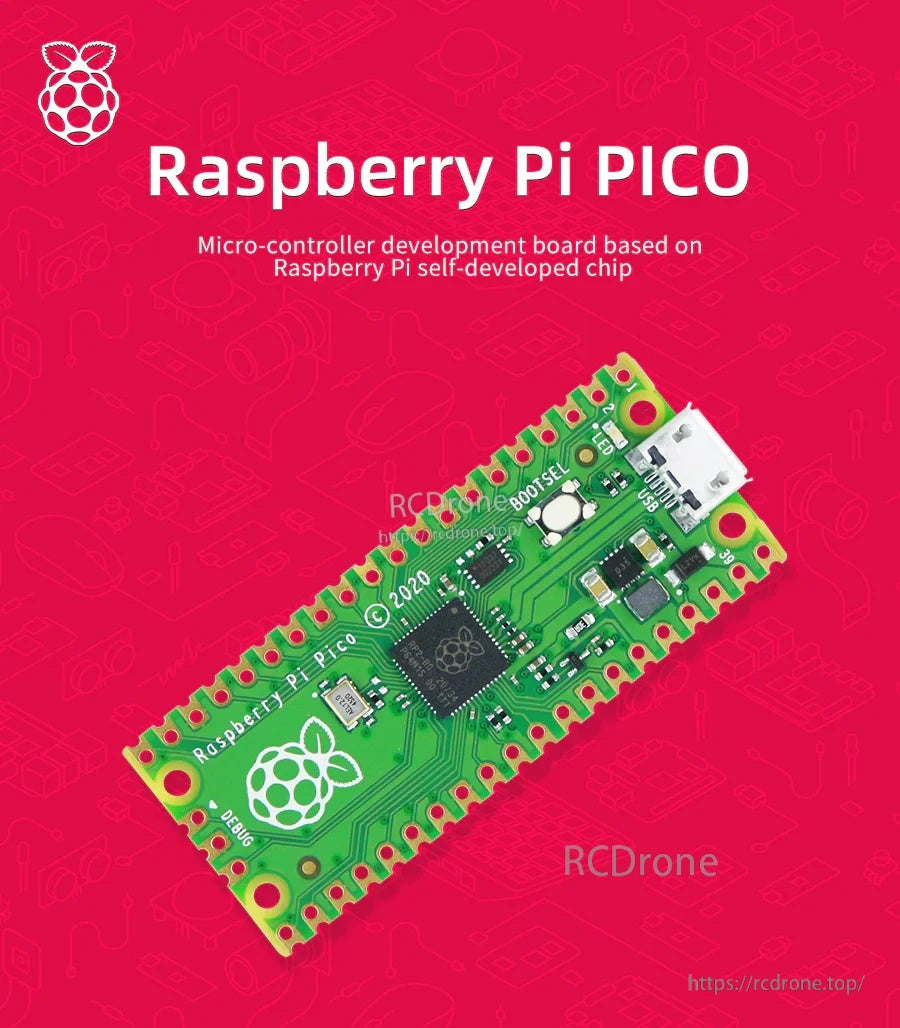
Starten Sie schnell mit Raspberry Pi Pico 2 mit einem kompakten, auf RP2350A basierenden Entwicklungsboard, das für eingebettete Projekte entwickelt wurde.
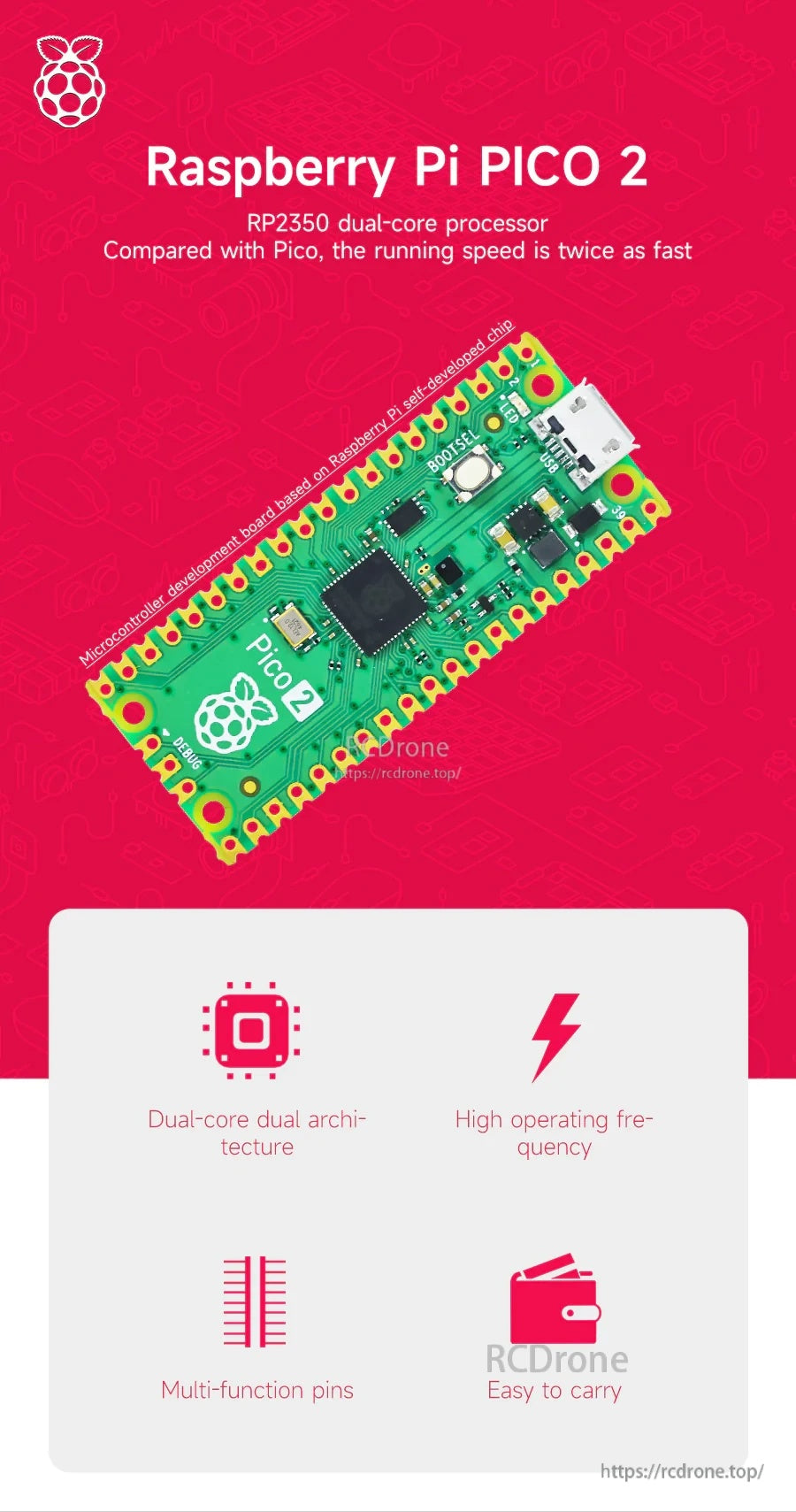
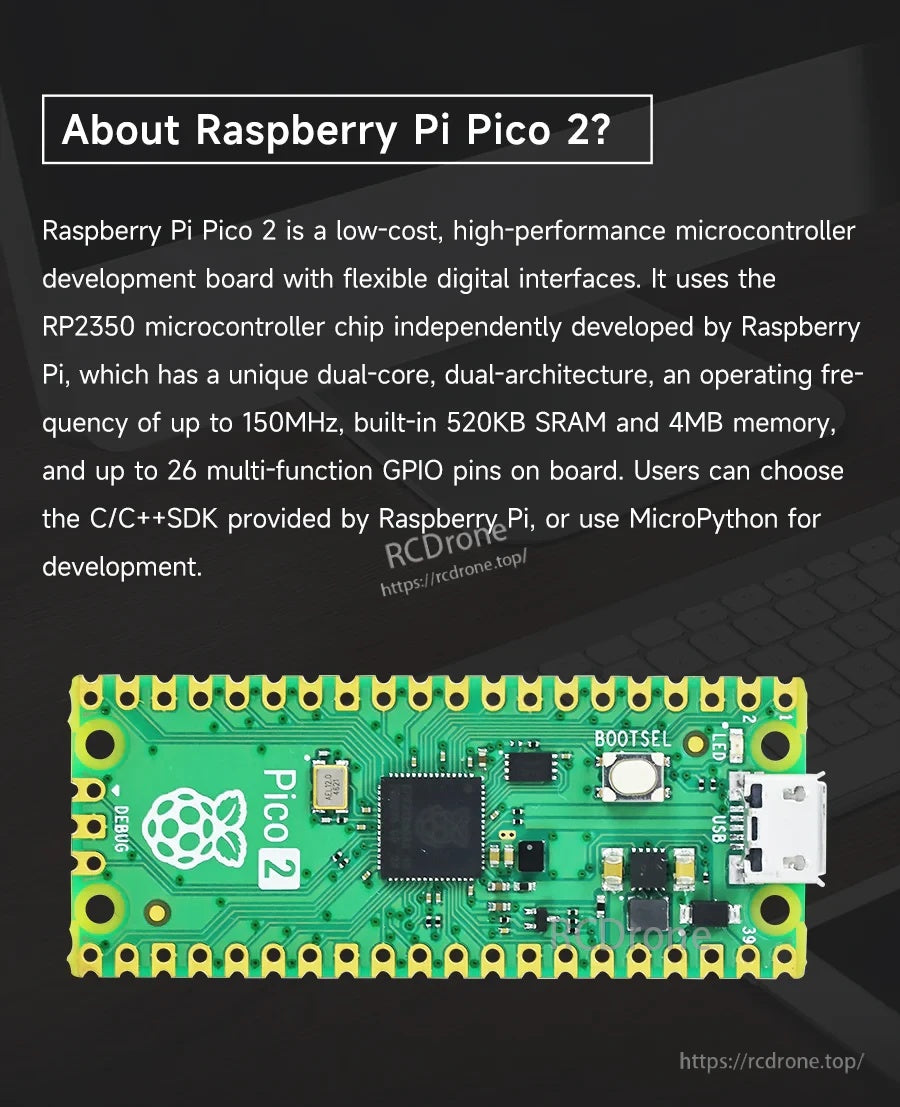
Drag-and-Drop-Programmierung über USB macht das Laden der Firmware einfach, während Sie in C/C++ oder MicroPython prototypisieren.
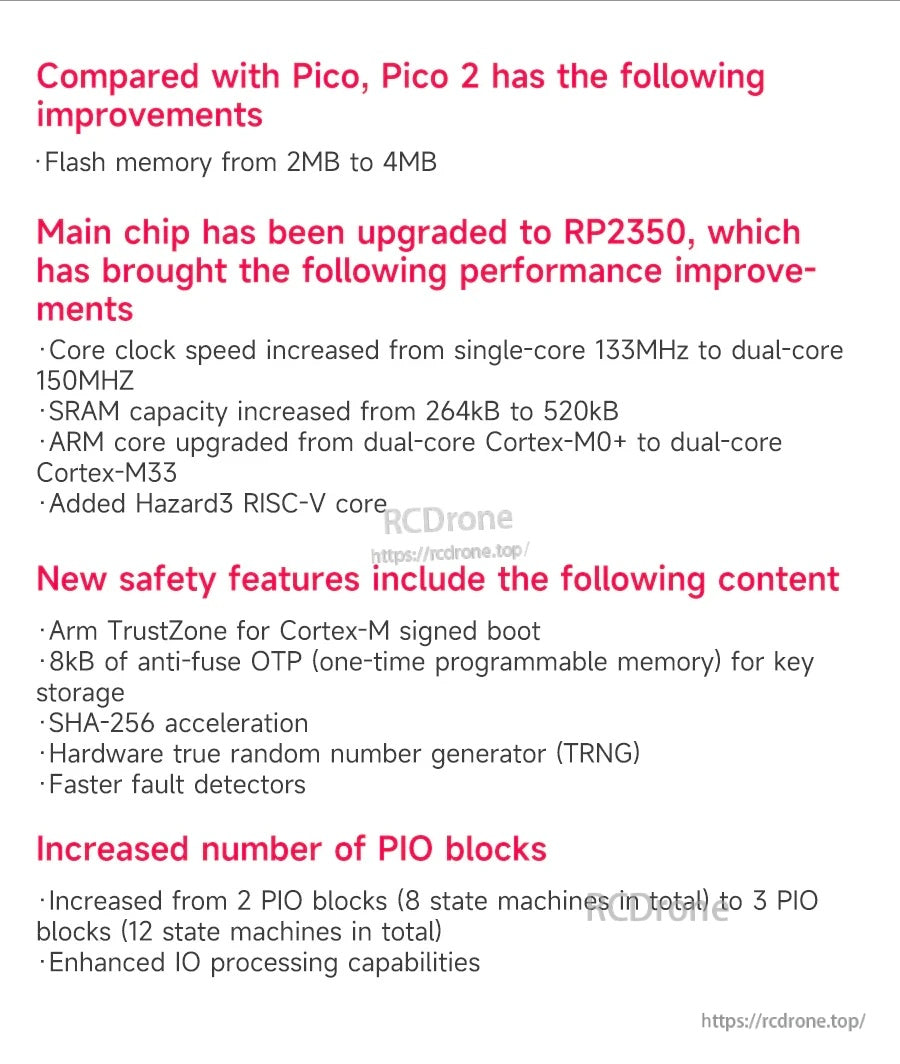
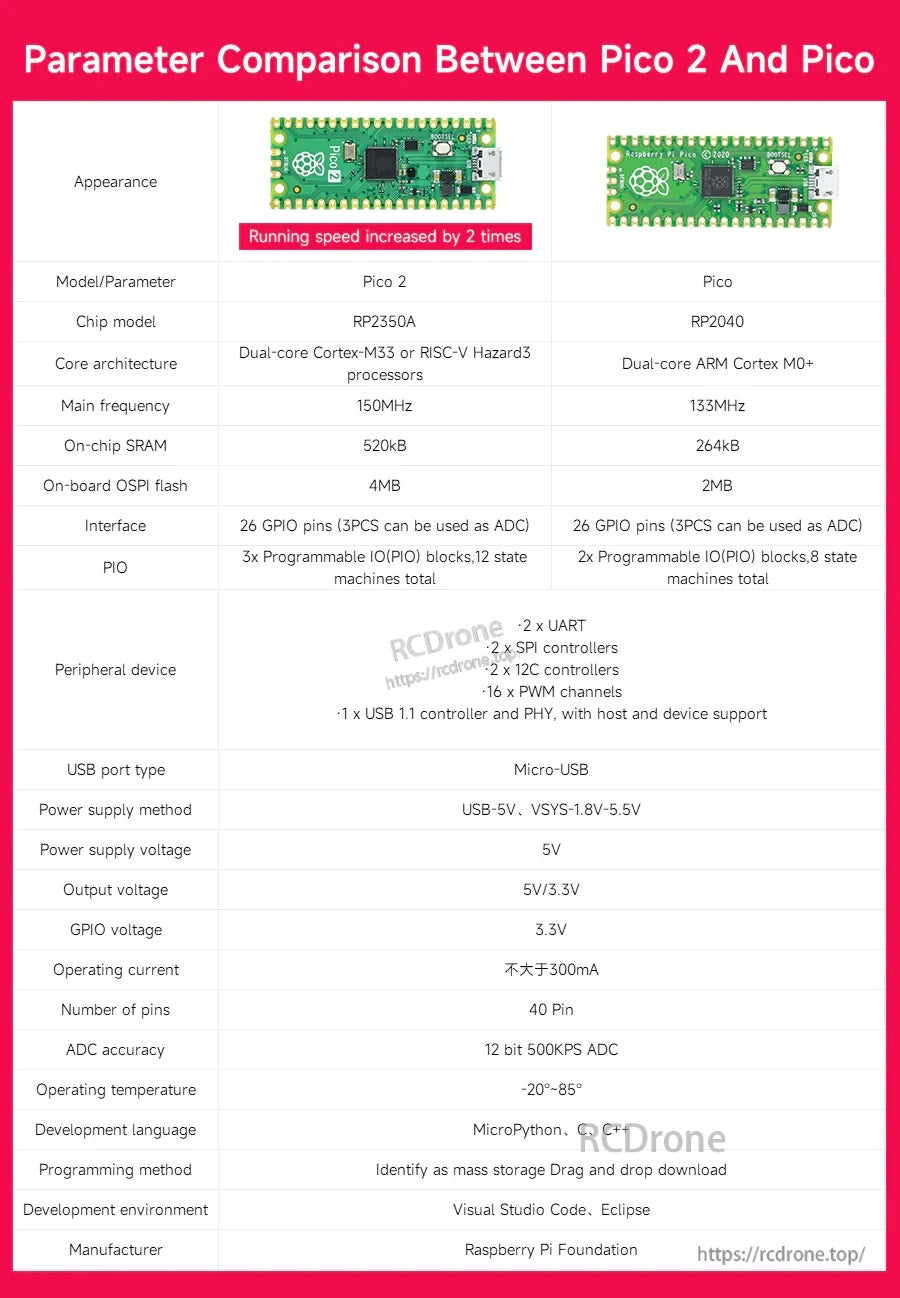
Im Vergleich zum ursprünglichen Pico bietet Pico 2 mehr Speicherplatz und stärkere Leistung für Multi-Peripherie-Bauten.
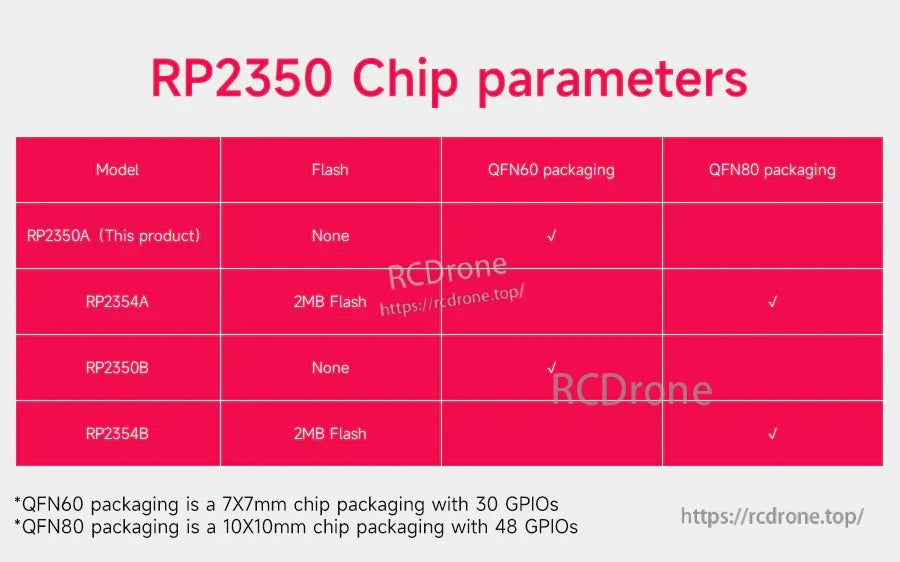
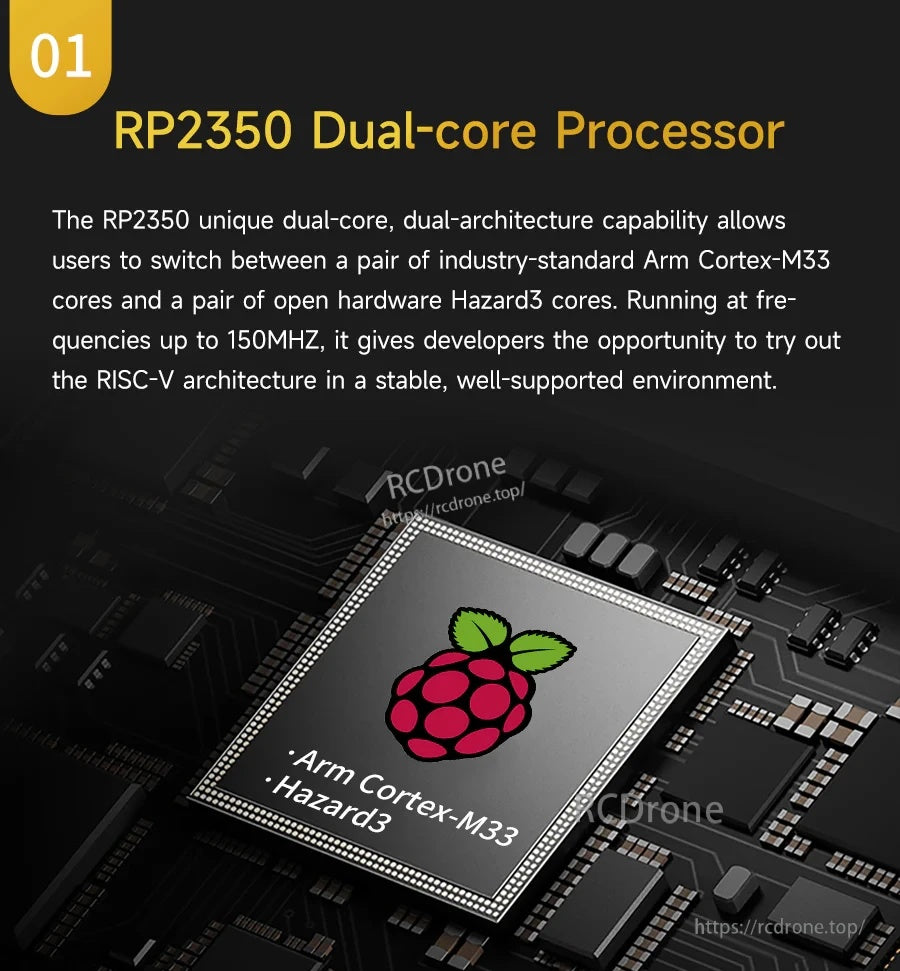
Wechseln Sie zwischen Cortex‑M33 und Hazard3 (RISC‑V) Kernen, um Ihre Toolchain- und Leistungsanforderungen zu erfüllen.
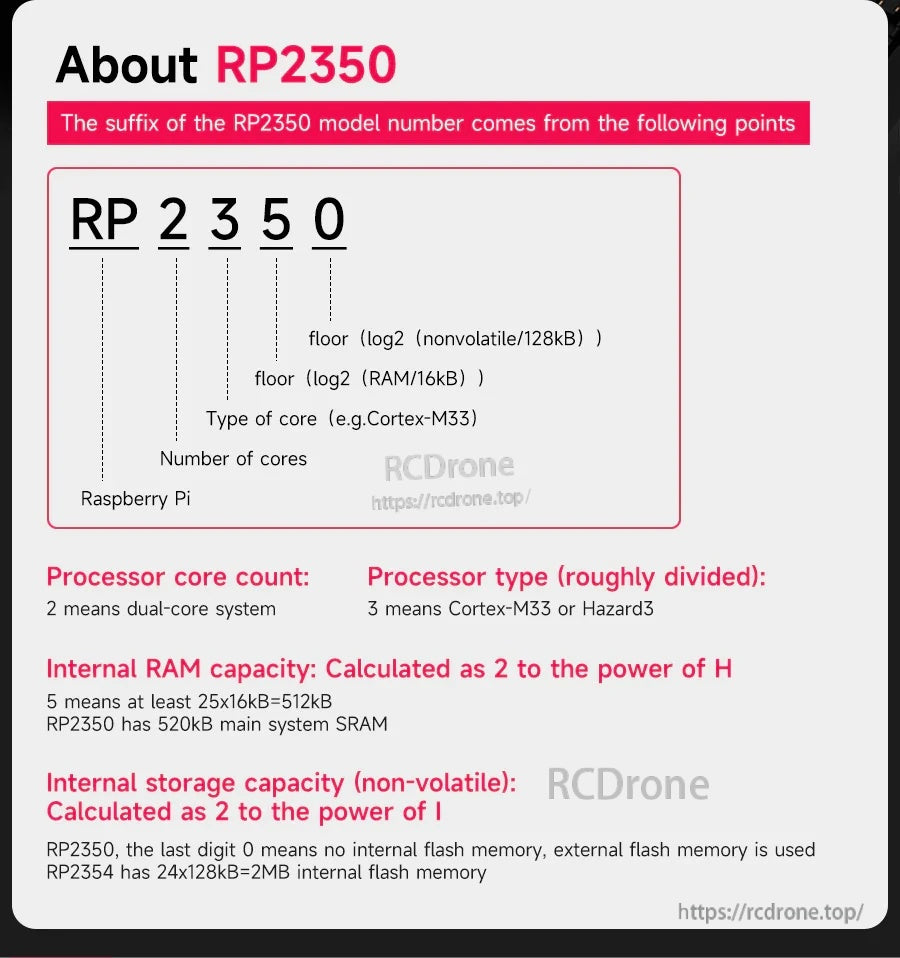
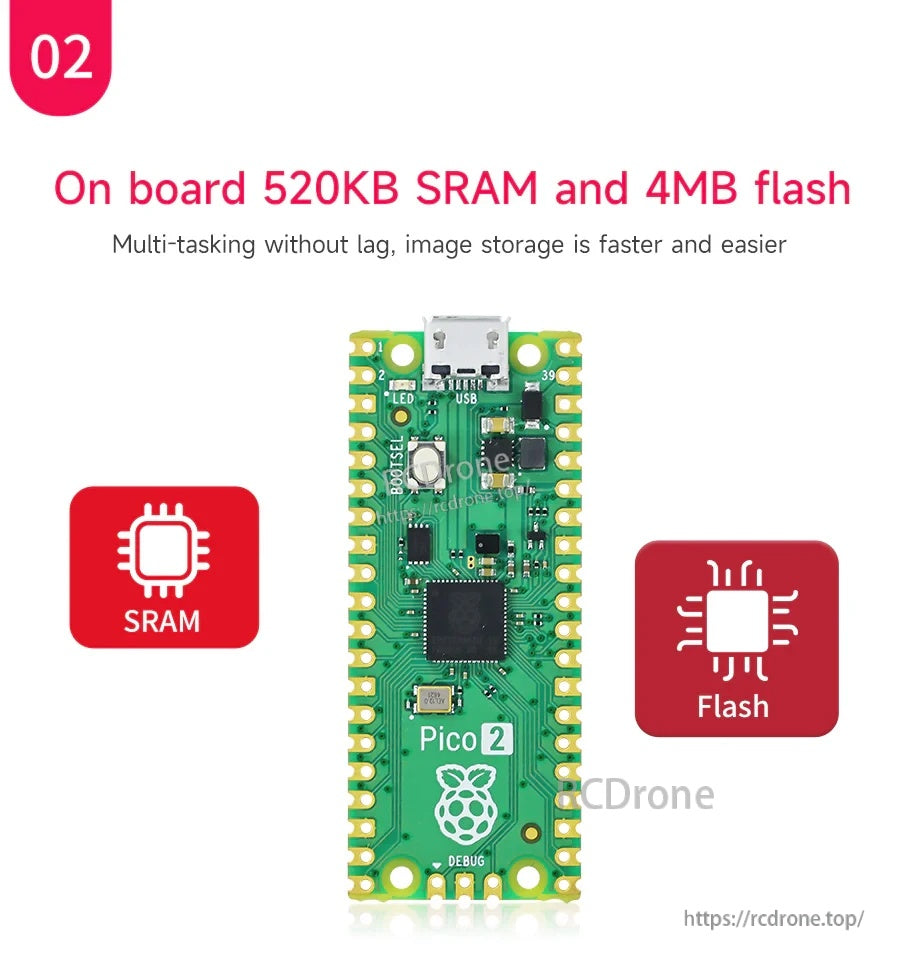
Das On-Board 520KB SRAM und 4MB Flash helfen, Echtzeitaufgaben reaktionsschnell zu halten, während größere Programme und Assets gespeichert werden.
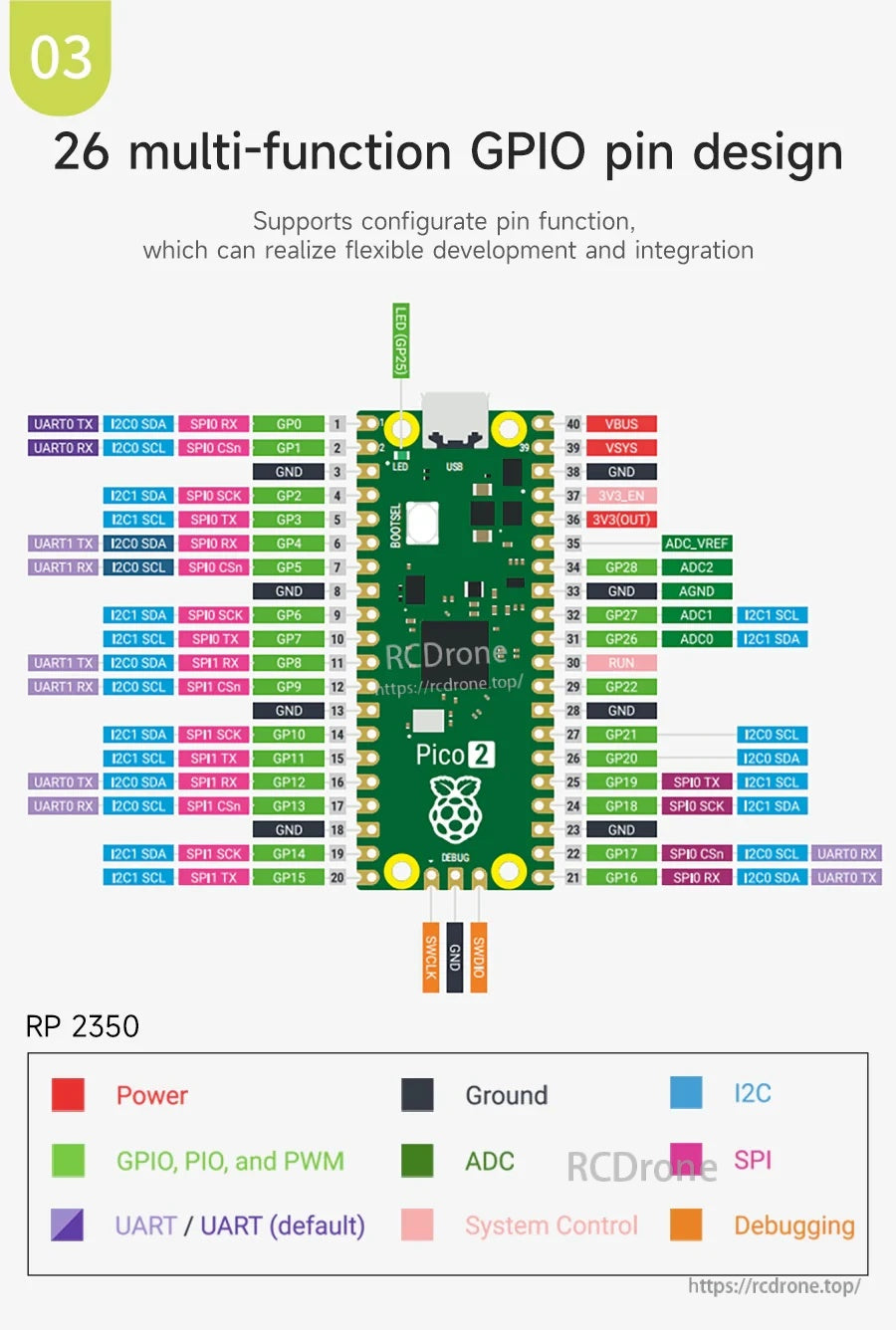
Ein klares 26-GPIO-Pinout unterstützt SPI, I2C, UART, ADC, PWM und PIO für Sensoren, Displays und benutzerdefinierte Schnittstellen.
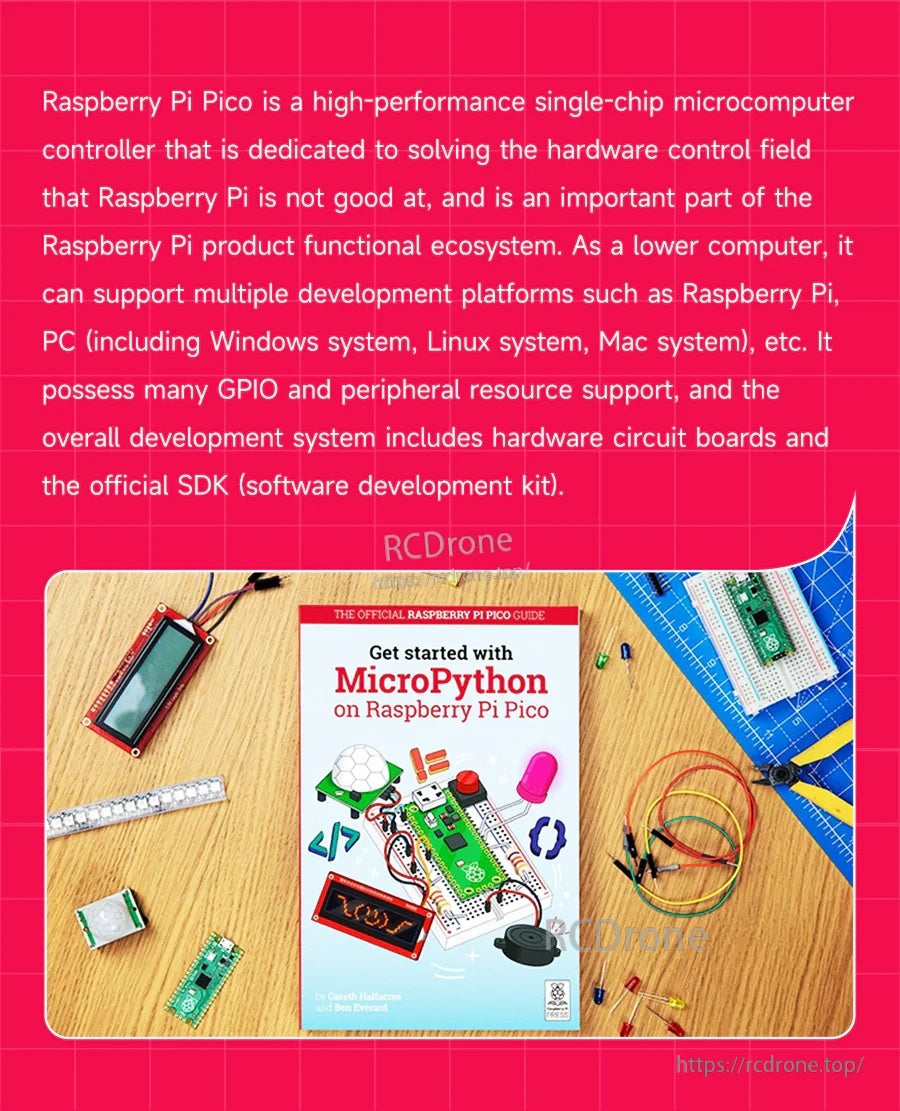
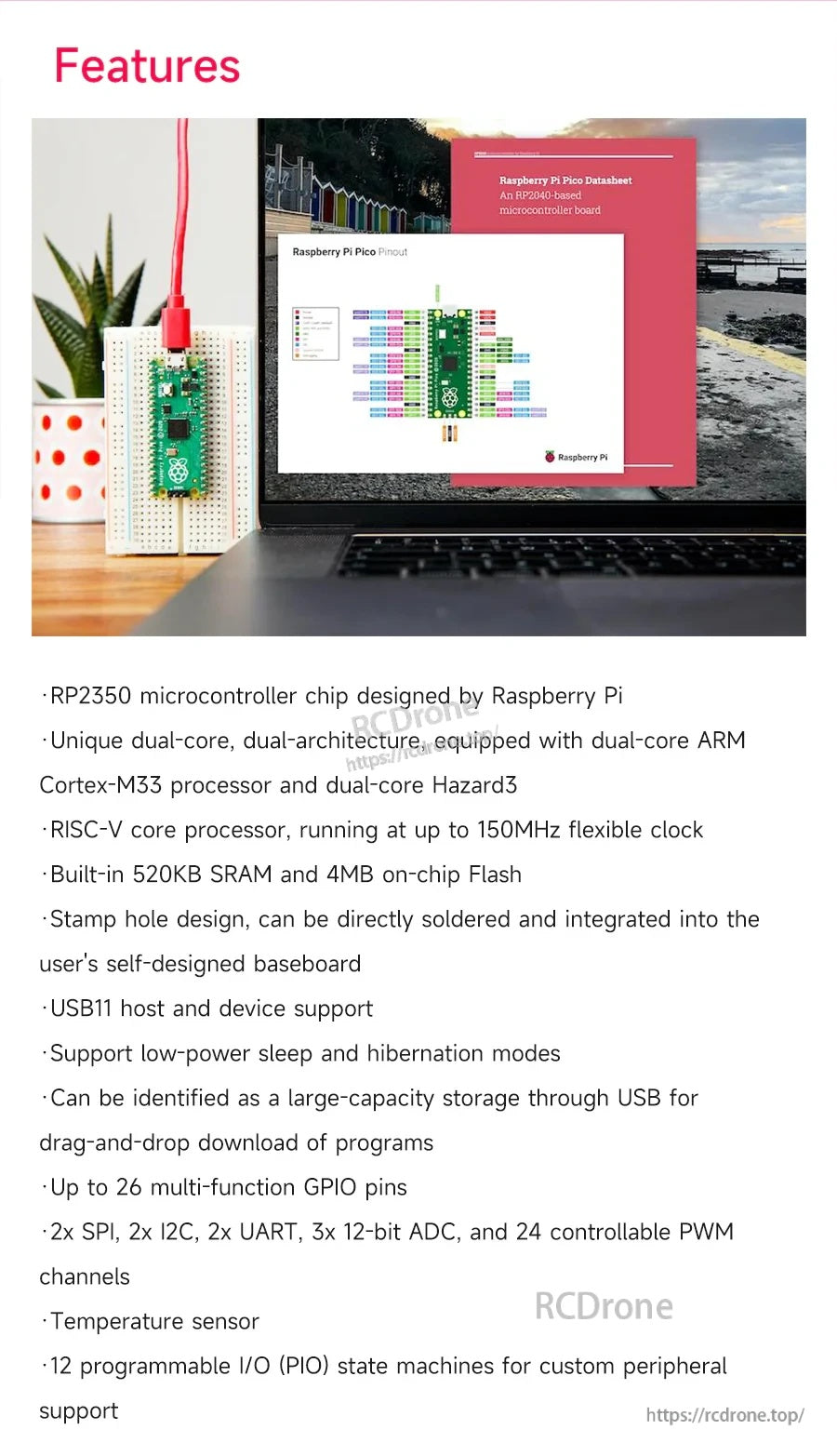
Flexible Schnittstellen und USB-Massenspeicherprogrammierung vereinfachen die Entwicklung vom ersten Blinken bis zu vollständigen Anwendungen.
Wählen Sie MicroPython für schnelle Iterationen oder C/C++ mit dem Raspberry Pi SDK für volle Kontrolle und Optimierung.
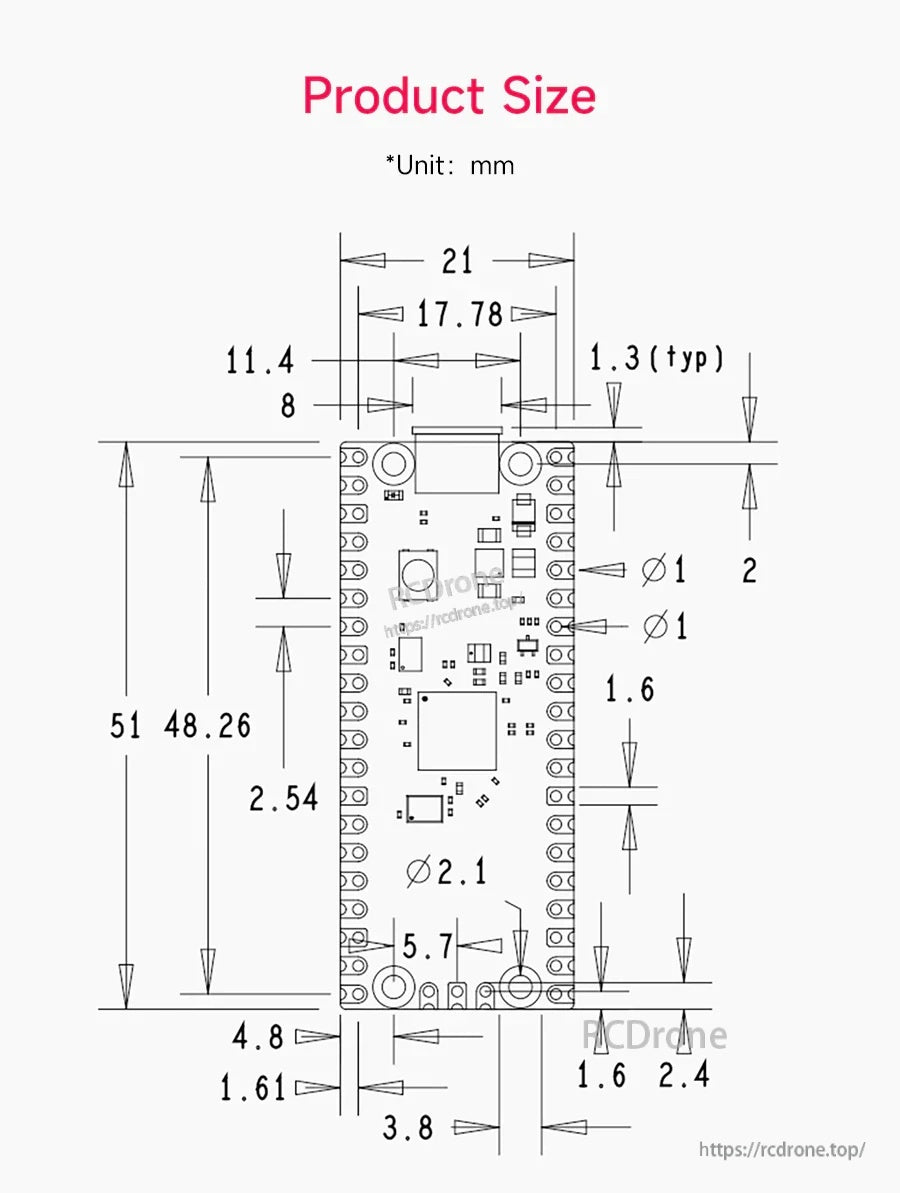
Mechanische Abmessungen helfen bei der Planung der Gehäuseanpassung und der Header-Abstände, bevor Pico 2 in eine benutzerdefinierte Basisplatine integriert wird.
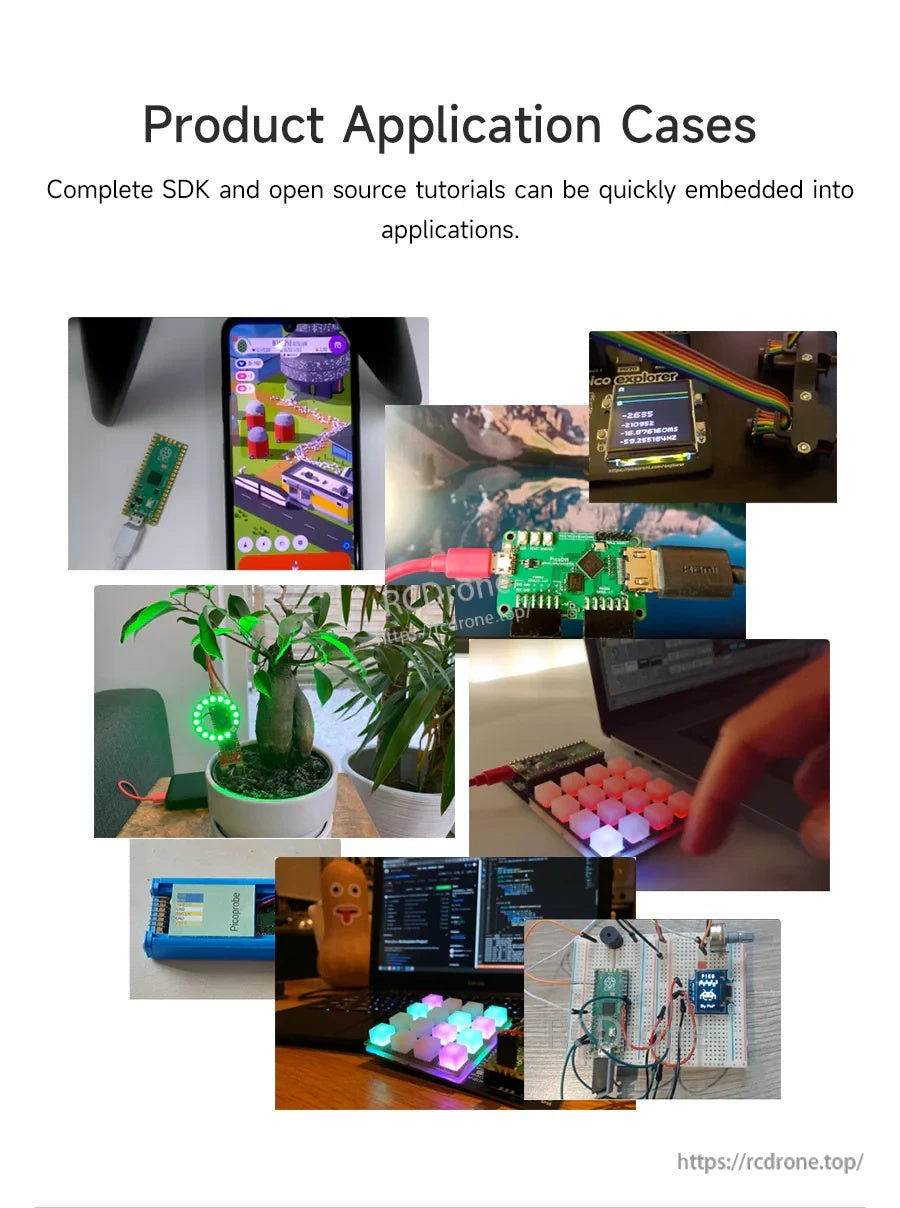
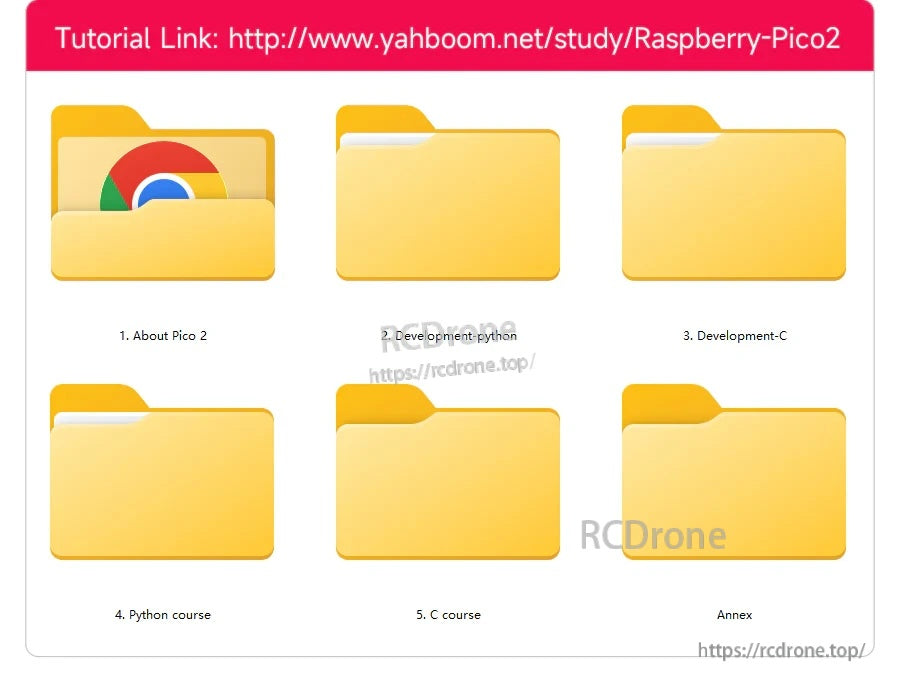
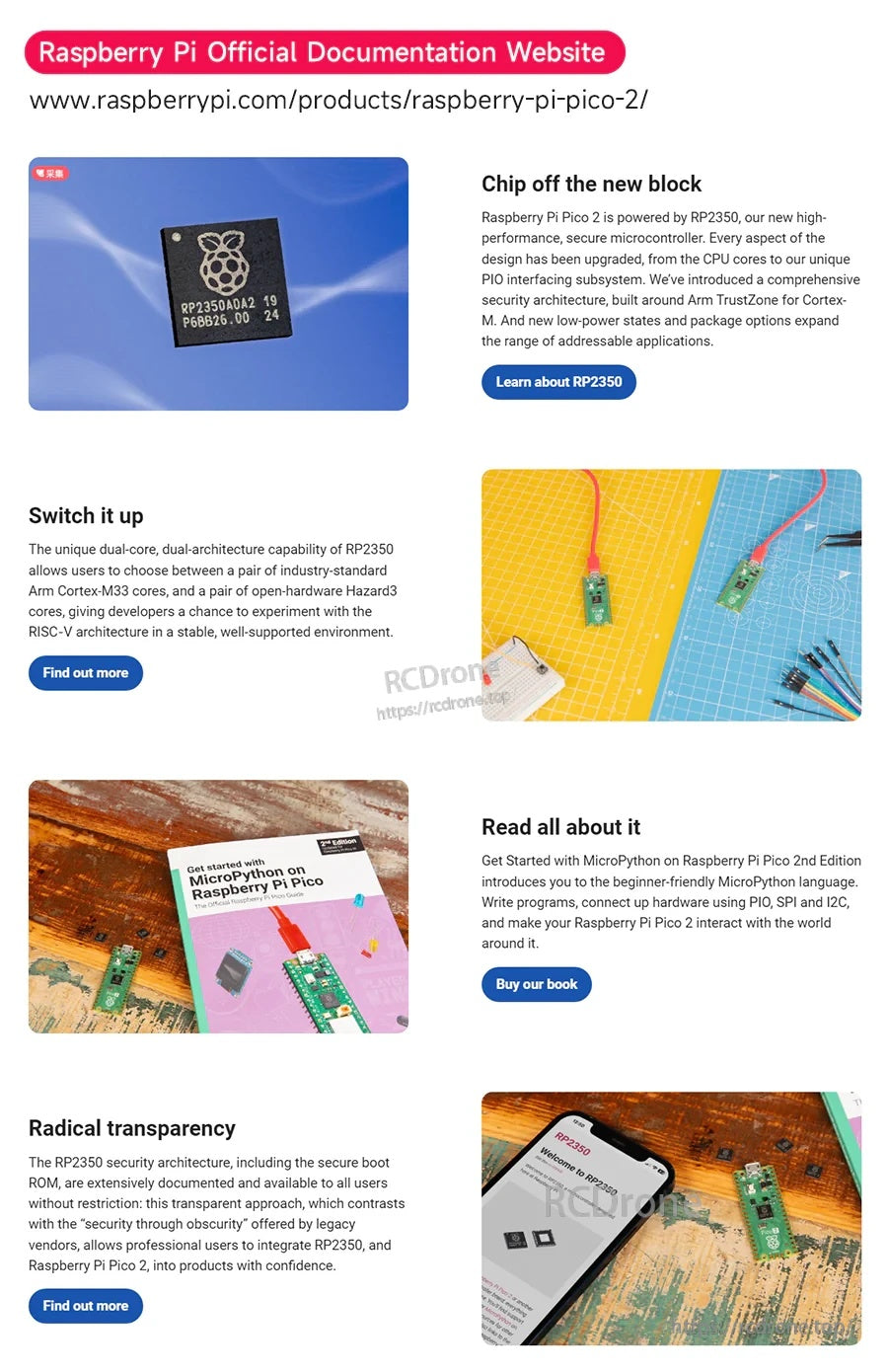
Offizielle Dokumentation und Anleitungen bieten einen zuverlässigen Ausgangspunkt für RP2350-Funktionen, APIs und bewährte Verfahren.

Das Raspberry Pi Pico 2 Board wird mit installierten Pin-Headern geliefert und enthält ein 15 cm USB-Datenkabel für eine schnelle Einrichtung.
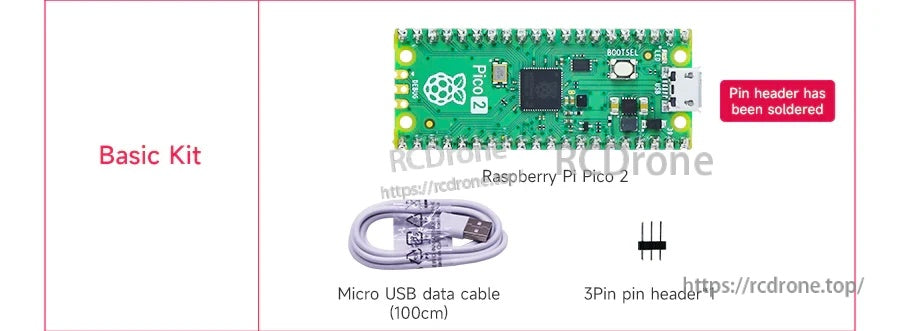
Das Raspberry Pi Pico 2 Basiskit enthält ein Pico 2 Board mit gelöteten Pin-Headern, ein Micro-USB-Datenkabel und einen 3-Pin-Header für eine schnelle Einrichtung.
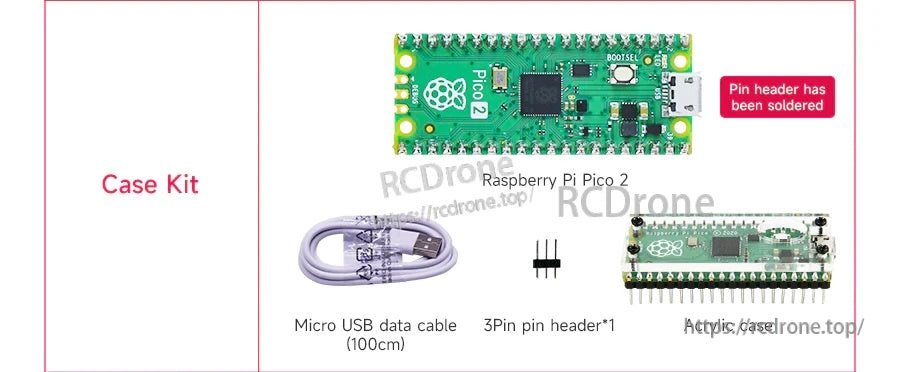
Das Raspberry Pi Pico 2 Kit enthält ein Micro-USB-Datenkabel, einen 3-Pin-Header und ein Pico Board mit bereits gelöteten Pin-Headern.