


Yahboom Tiny:bit Pro KI-Visual-Roboterauto für BBC micro:bit mit K210 Vision Modul, MakeCode + MicroPython
Yahboom Tiny:bit Pro KI-Visual-Roboterauto für BBC micro:bit mit K210 Vision Modul, MakeCode + MicroPython
Yahboom
Verfügbarkeit für Abholungen konnte nicht geladen werden


Überblick
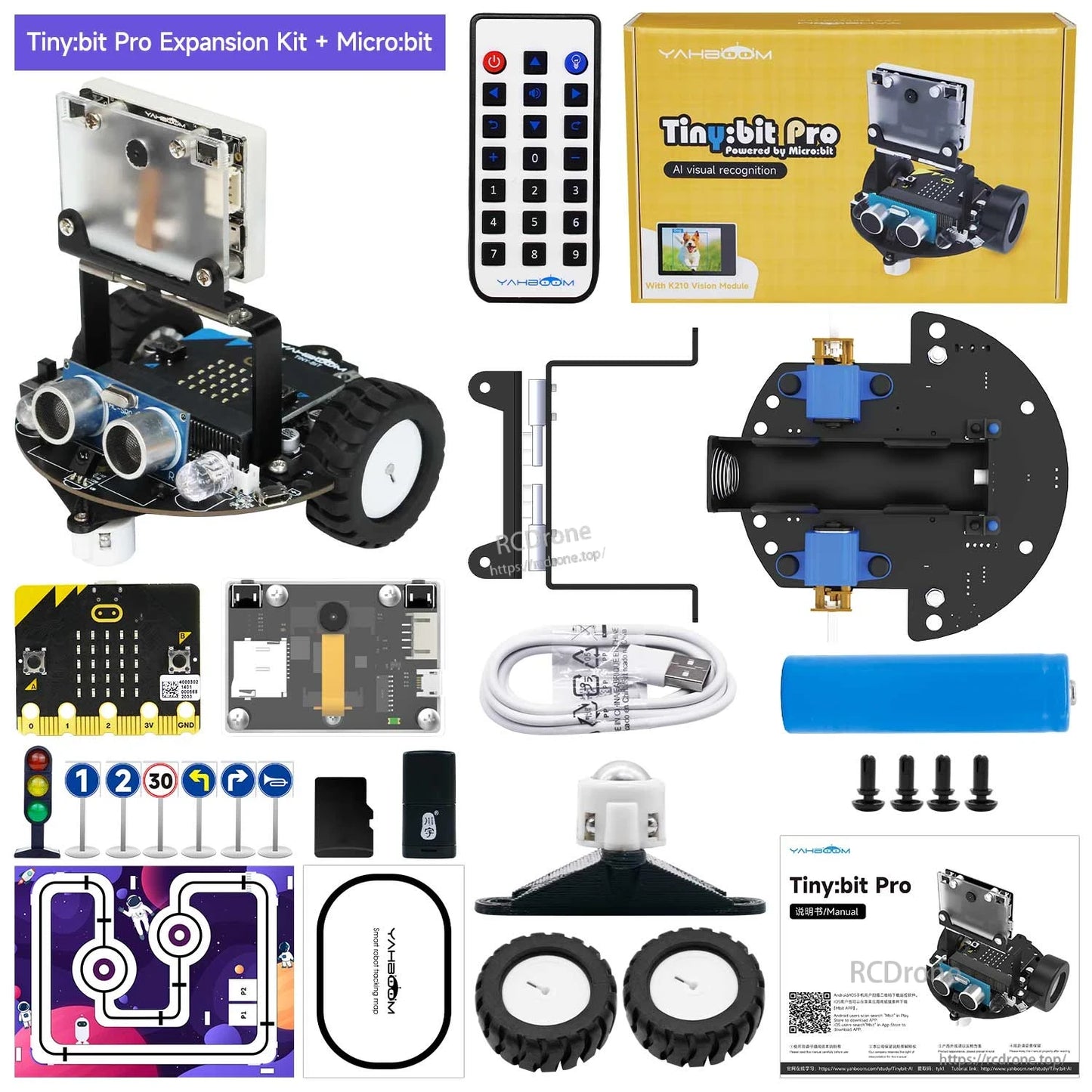
Tiny:bit Pro AI Visual Robot Car ist ein auf BBC micro:bit basierendes Roboterauto, das die Yahboom Tiny:bit Auto-Plattform mit einem K210 Vision-Modul für AI-Visuelle Erkennung, kreative Erweiterung und Autopilot-ähnliche Szeneninteraktion kombiniert. Es integriert mehrere Onboard-Sensoren (Infrarotsensor, Ultraschallmodul, Schallsensor) sowie einen Summer und RGB-Lichteffekte, die Funktionen wie Hindernisvermeidung, Folgen und „Singen“ über MakeCode-Grafikprogrammierung ermöglichen. Mit dem K210-Modul kann es HD-Bilder erfassen, um maschinelles Lernen, Bilderkennung, Farberkennung und Zielverfolgung zu unterstützen.
Hauptmerkmale
- Für BBC micro:bit; kompatibel mit alten und neuen Versionen der micro:bit-Platine: Micro:bit V2-Platine (Standard) und Micro:bit V1-Platine (kompatibel mit).
- Verstellbare Halterung ermöglicht es, den Kamerawinkel am K210-Modul frei einzustellen.
- Duales Programmier-Workflow: Roboterauto verwendet MakeCode grafische Programmierung; K210 Vision-Modul verwendet MicroPython.
- Grundfunktionen: Infrarotverfolgung, Ultraschall-Hindernisvermeidung (Entfernungsmessung), Summergesang, Schallpegelerkennung, RGB-Lichteffekt.
- Unterstützt Fernsteuerung: Android/iOS App Fernsteuerung; Infrarot-Fernbedienung (Standard); micro:bit Griff-Fernbedienung (separat erhältlich).
AI Vision & Erkennungsfunktionen
- Farberkennung
- Barcode-Erkennung / Barcode-Erkennung (micro:bit zeigt Barcode-Inhalt an; Suchscheinwerfer wird grün, wenn erkannt, rot, wenn nicht erkannt)
- QR-Code-Erkennung (erkennt QR-Code-Informationen und führt Aktionen basierend auf dem QR-Code-Inhalt aus)
- Maschinencode-Erkennung
- Maschinencode-Verfolgung
- Objekterkennung (micro:bit-Punktmatrix kann die entsprechende Objekt-ID anzeigen)
- Gesichtserkennung (micro:bit LED-Punktmatrix zeigt verschiedene Gesichtseriennummern an und spielt unterschiedliche Musik)
- Maskenwarnung (erkennt, ob ein Gesicht eine Maske trägt; Summer kann eine Warnung ausgeben, wenn keine Maske getragen wird)
- Verkehrszeichenerkennung
- Zahlerkennung / digitale Identifikation (erkennt handgeschriebene Zahlen und löst voreingestellte Aktionen aus)
- Visuelle Inspektionslinie / visuelle Verfolgung der Farblinie
- Autonomes Lernklassifizierung (unterstützt einen einfachen autonomen Trainingsklassifizierungsprozess durch Aufzeichnung von 5 Bildern)
Konfigurationsoptionen
- Tiny:bit Pro Standard Kit: kleinere Größe, höhere Energie; unterstützt verschiedene KI-Visuelle Erkennung und Grundfunktionen.
- Tiny:bit Pro Erweiterungskit: fügt eine Autopilot-Karte hinzu, um in Kombination mit der Karte/Requisiten einen Autopilot-ähnlichen Szenenbetrieb abzuschließen.
Hinweis: Wenn ein Micro:bit V2 Board nicht verfügbar ist, wählen Sie die Konfiguration, die ein micro:bit Board enthält.
Autopilot-Karte (Erweiterungskit) Spezifikationen
| Größe der Autopilot-Karte | 2 x 1.5 m |
| Autopilot-Karten-Mini-Version Material | PVC-Gewebe (UV-Hochdruck, wasserdicht) |
| Verkehrsschild-Aufkleber | Bereits auf der Eisenplatte angebracht |
| Verkehrslichtmodell | Manuelle Lichtsteuerung |
| Verkehrsschild-Eisenplatte | *6 |
| Verkehrsschild-Anzeigebereich | 7 x 7 cm |
| Verkehrsschildhöhe | 18 cm |
Anleitungen
Yahboom Tiny:bit Pro AI visuelle Roboterauto-Anleitungen
Wenn Unterstützung bei der Produktauswahl oder Einrichtung benötigt wird, kontaktieren Sie den Kundenservice unter [email protected] oder besuchen Sie https://rcdrone.top/.
Details
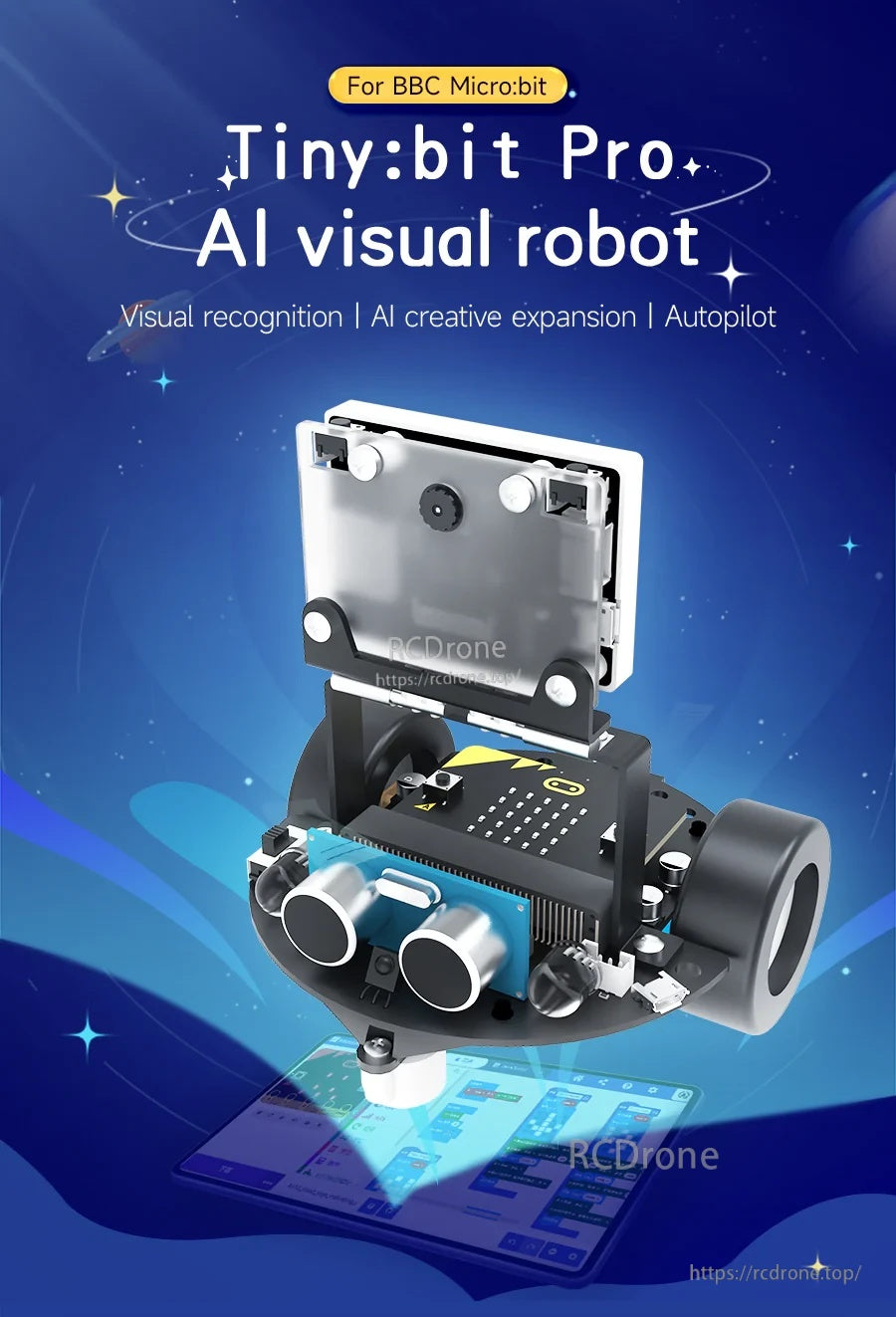
Lernen Sie den Tiny:bit Pro kennen—ein KI-Visions-Roboterauto für BBC micro:bit, das die Tiny:bit-Plattform mit einem K210-Visionsmodul für interaktive Projekte kombiniert.
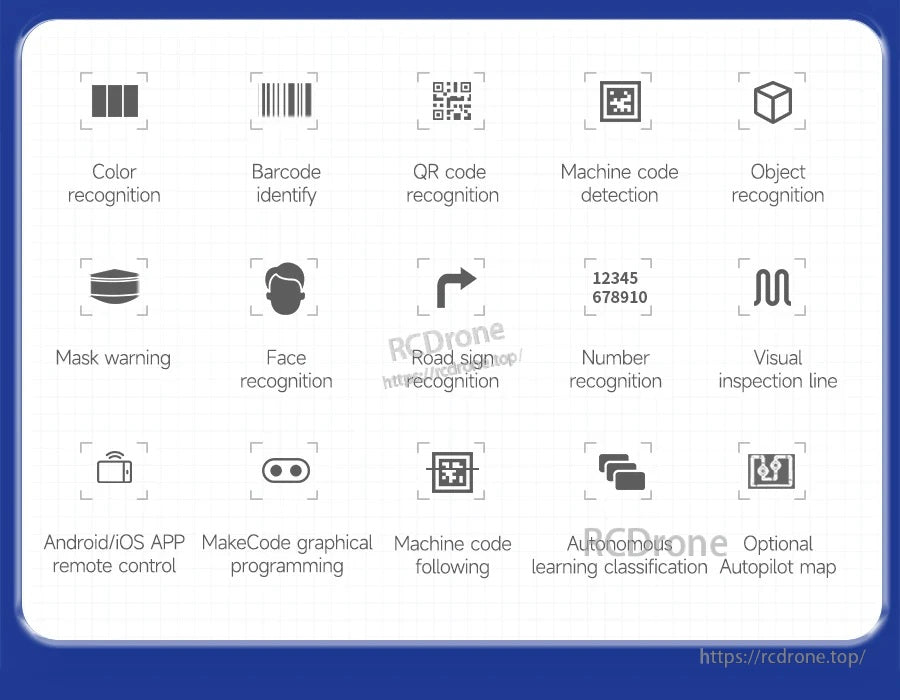
Eine breite Palette von Visionsdemos wird unterstützt, von Farb- und QR-Erkennung bis hin zu Objekt-IDs, Tracking und einfacher Trainingsklassifikation.
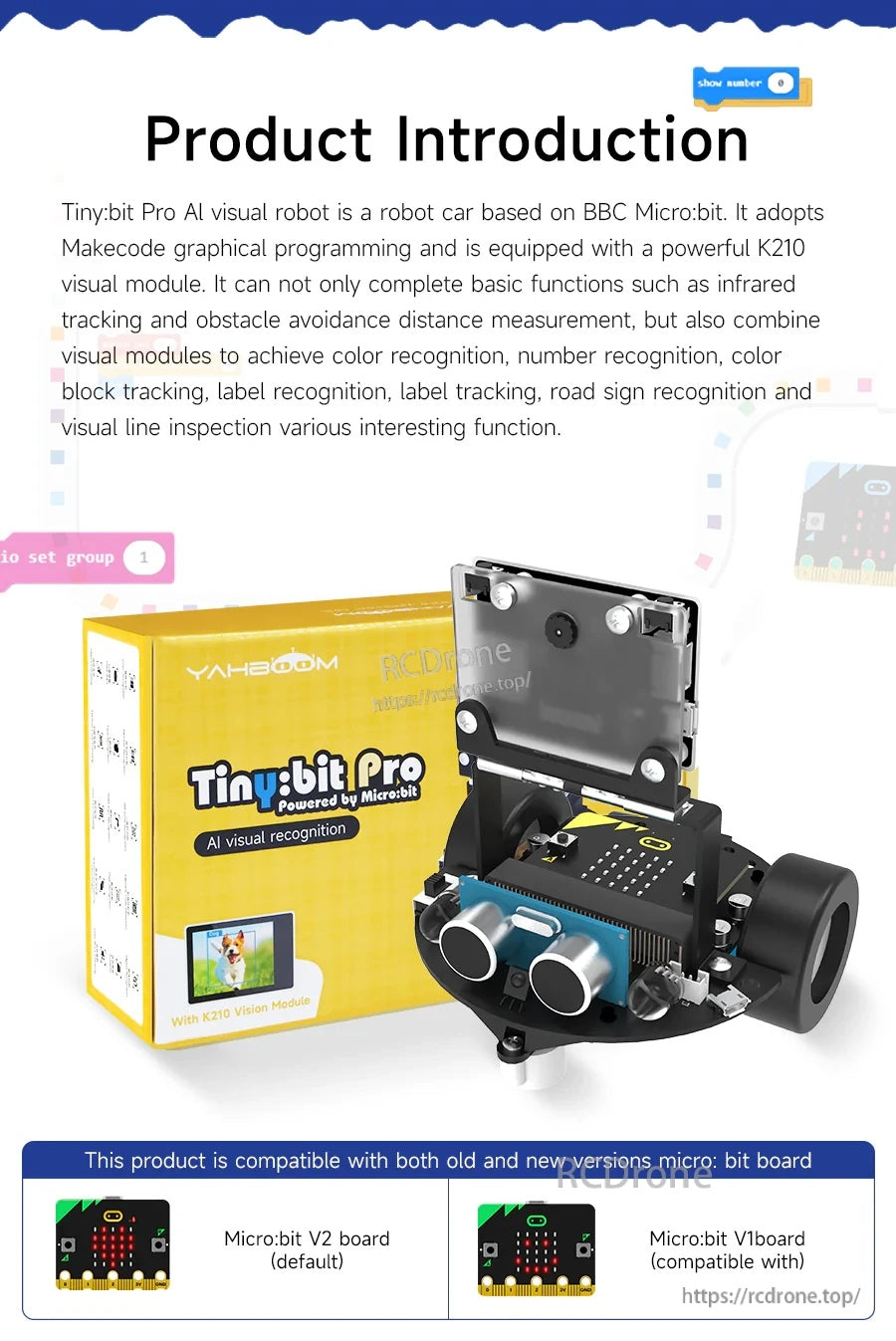
Funktioniert standardmäßig mit micro:bit V2 und bleibt kompatibel mit micro:bit V1, was die Nutzung in Klassenzimmern und Clubs erleichtert.
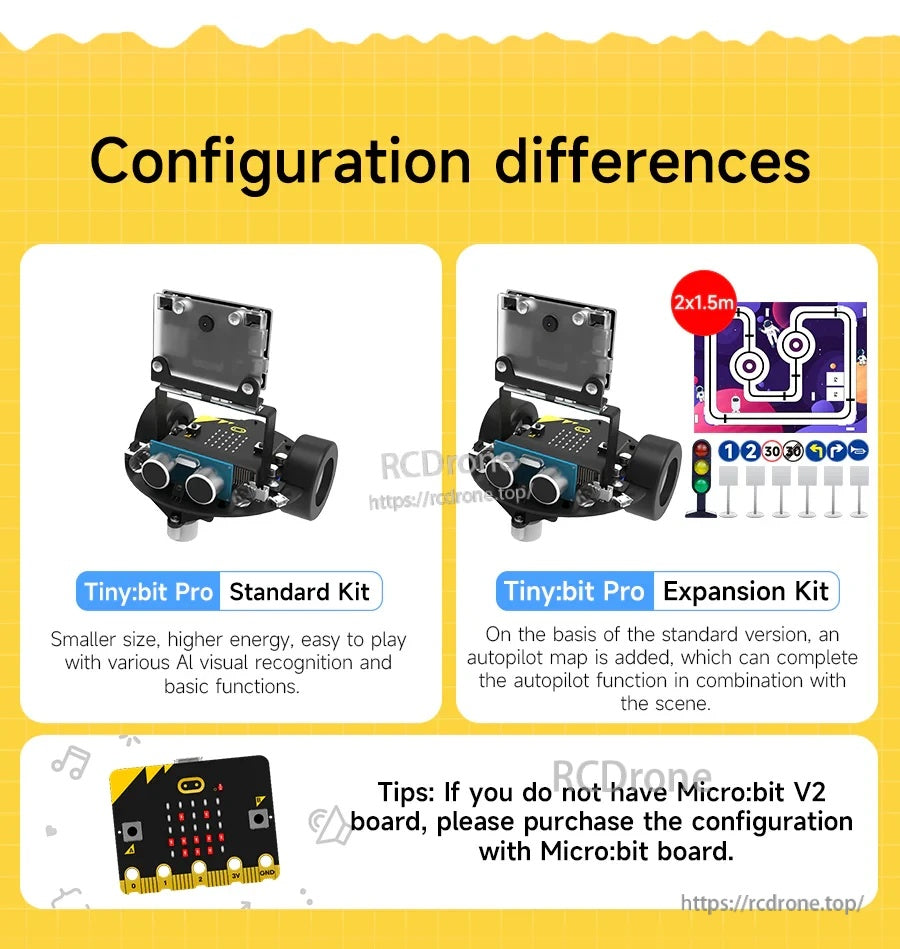
Wählen Sie das Standard-Kit für kompakte KI-Demos oder das Erweiterungs-Kit, um eine Autopilot-ähnliche Kartenerfahrung mit Requisiten hinzuzufügen.
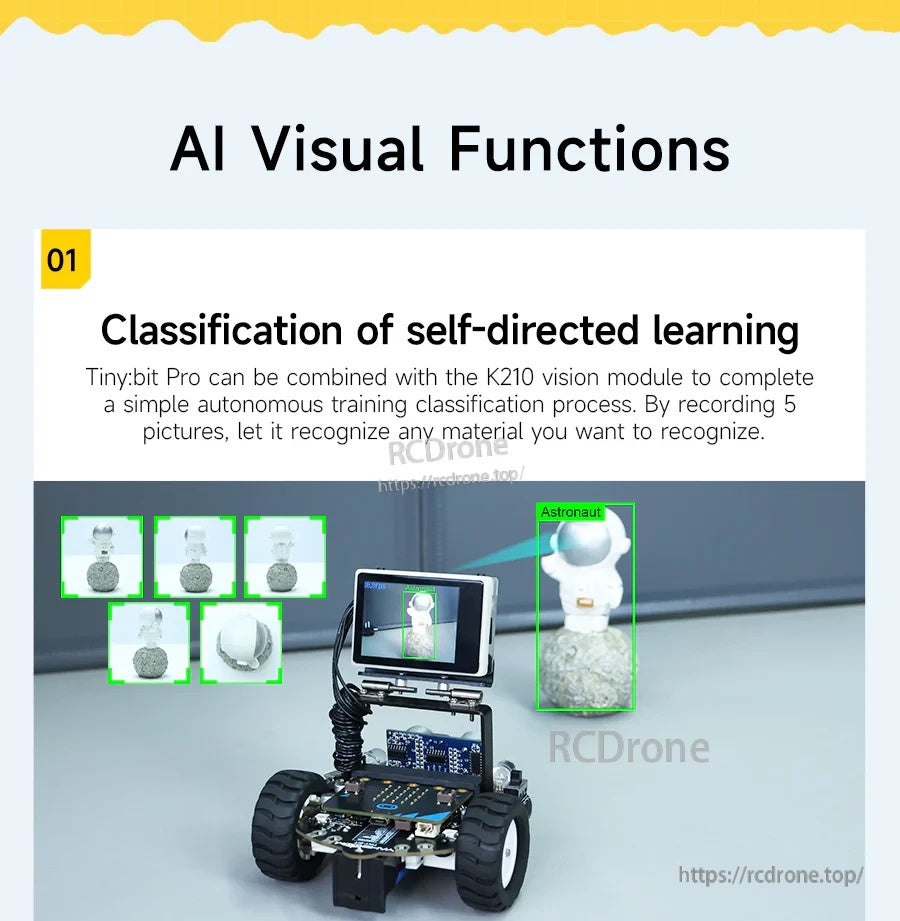
Erstellen Sie schnelle benutzerdefinierte Erkennungstests, indem Sie Beispielbilder aufnehmen und das Visionsmodul klassifizieren lassen, was es sieht.
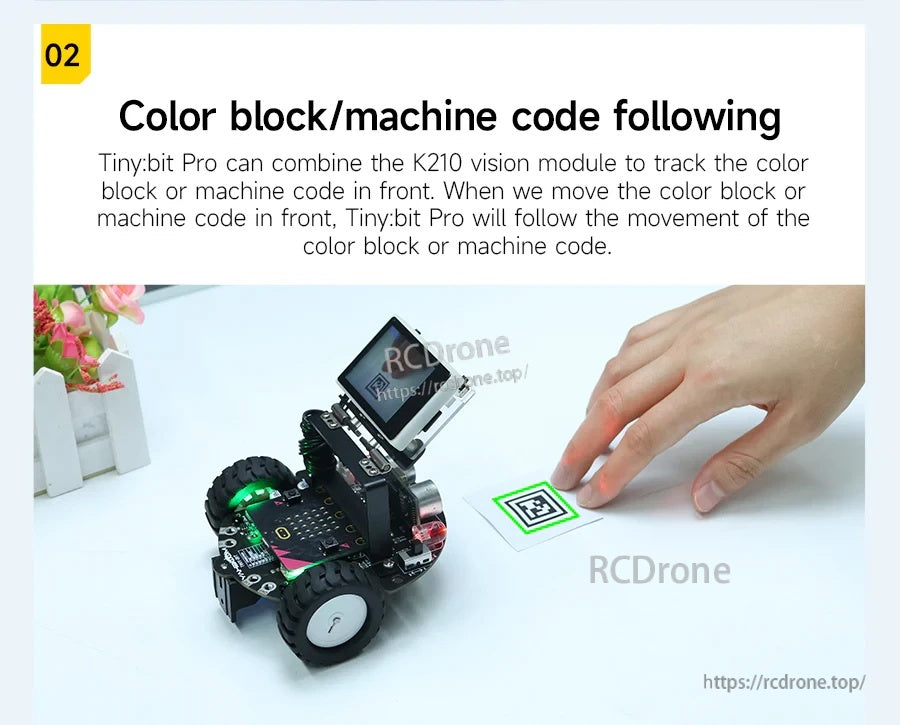
Verfolgen Sie einen Farbblock oder Marker und programmieren Sie ein Folge-Verhalten für praktische KI-Navigationsaktivitäten.
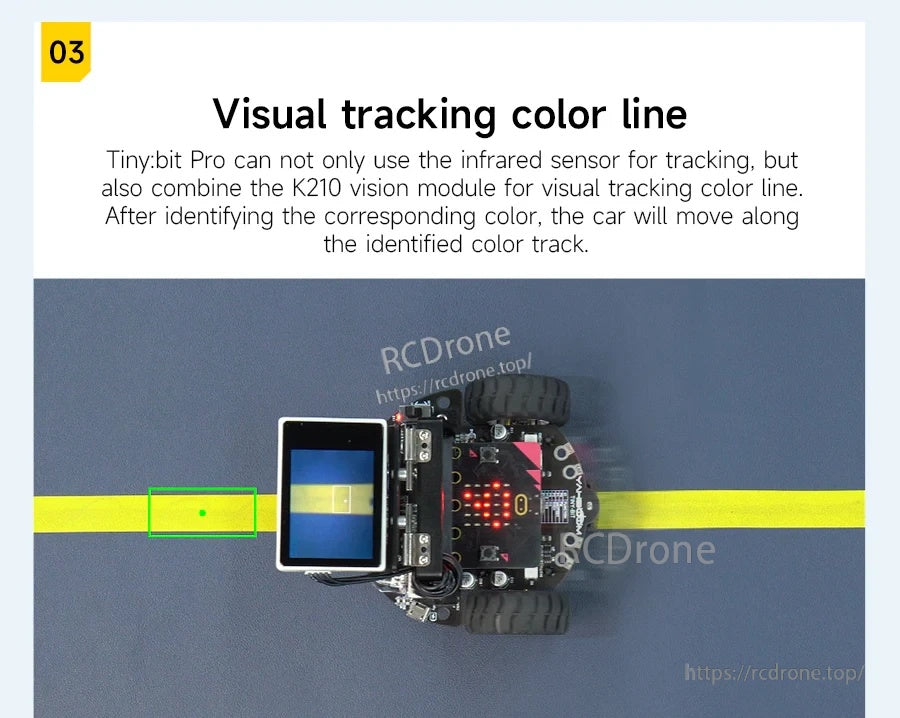
Kombinieren Sie Vision und Sensoren, um einer Farblinie für zuverlässige Routen- und Pfadexperimente zu folgen.
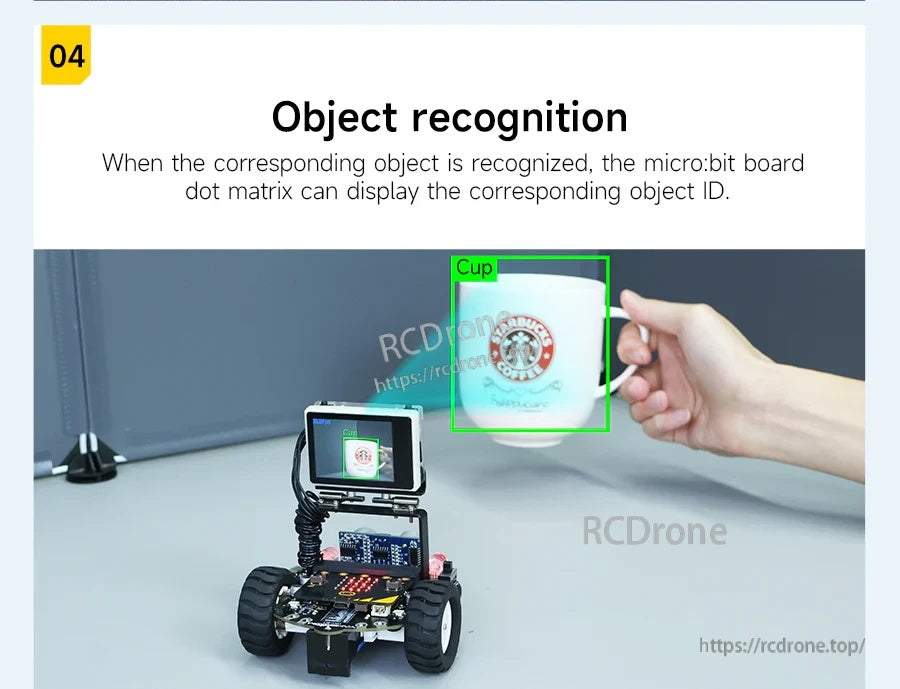
Objekterkennung kann micro:bit-Aktionen auslösen—ideal für interaktive Spiele, Sortierideen und MINT-Herausforderungen.
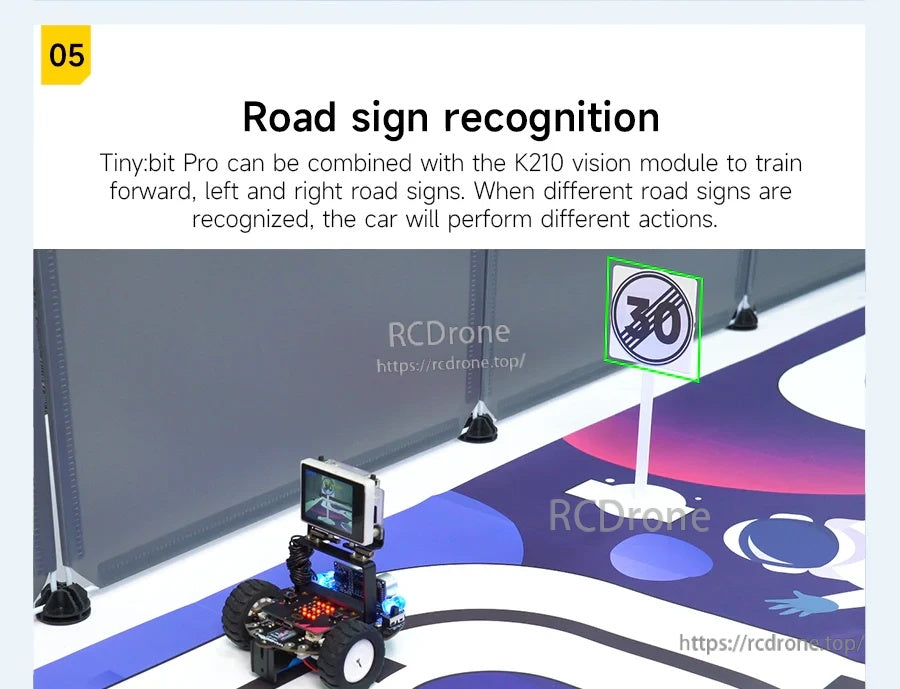
Verkehrszeichenerkennung unterstützt szenariobasiertes Lernen, bei dem verschiedene Zeichen unterschiedliche Roboterverhalten auslösen können.
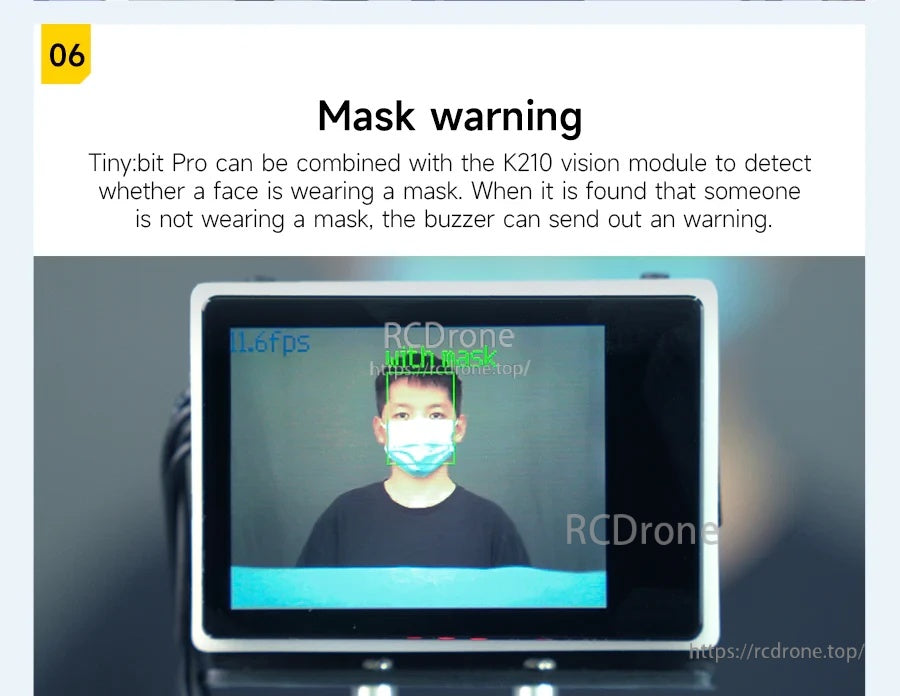
Optionale sicherheitsorientierte Demos beinhalten Maskenerkennungswarnungen über den eingebauten Summer und Display-Feedback.
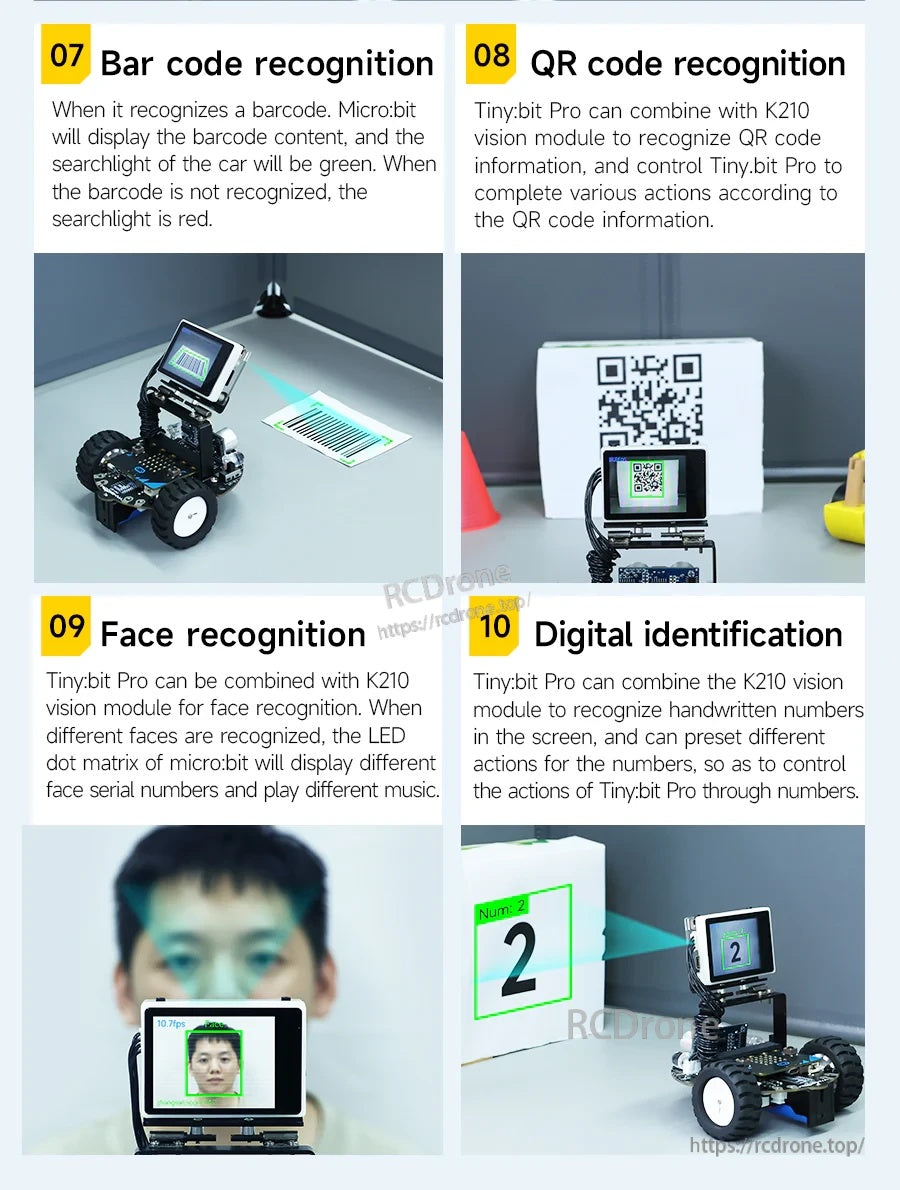
Barcode-/QR-Scannen und Nummernerkennung erweitern den Roboter über das Fahren hinaus—verwenden Sie Codes und Ziffern, um programmierte Aktionen zu starten.
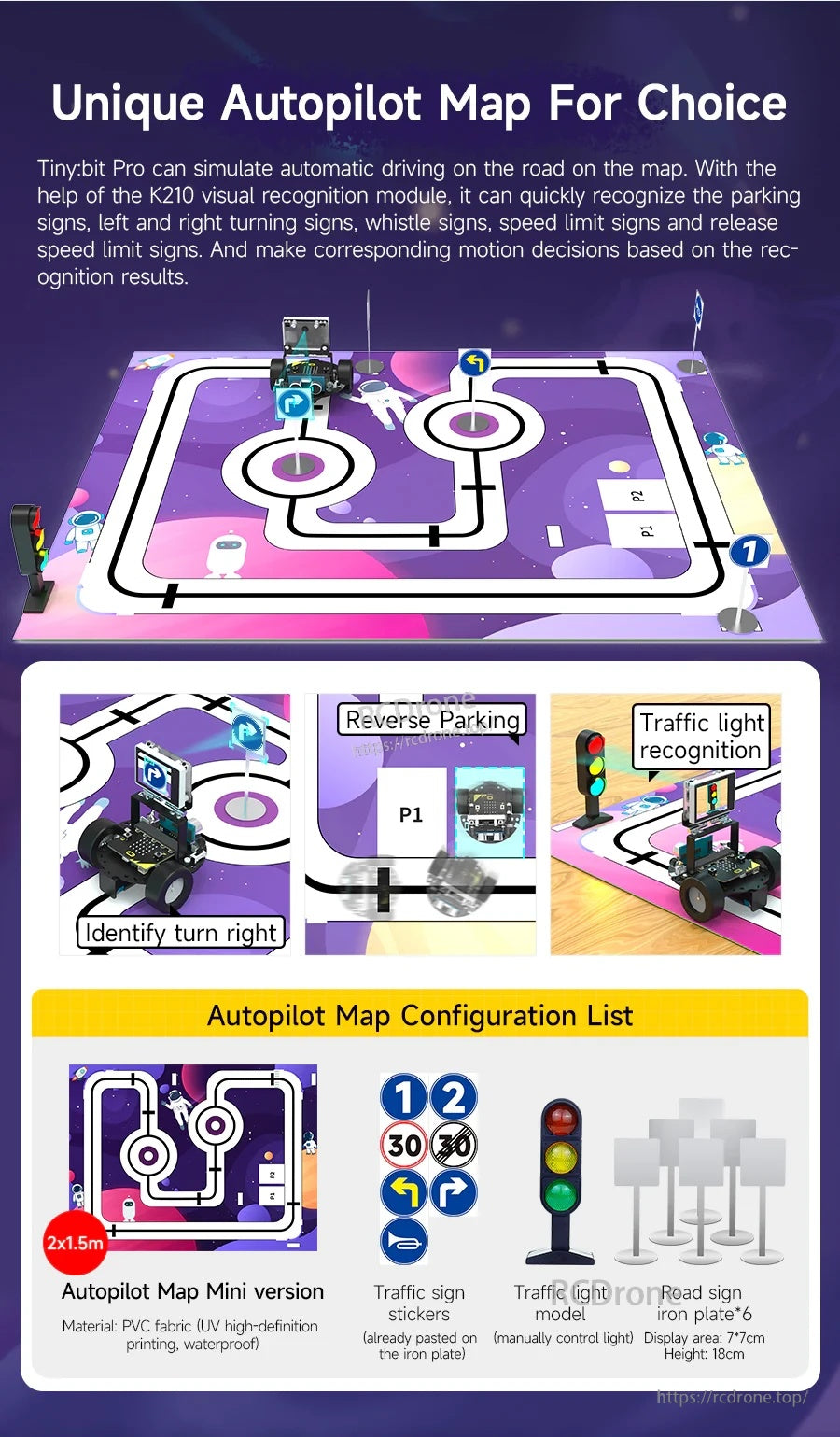
Das Autopilot-Kartenset fügt eine strukturierte Umgebung hinzu, um Kurven, Kreuzungen, Parken und Ampellogik zu üben.
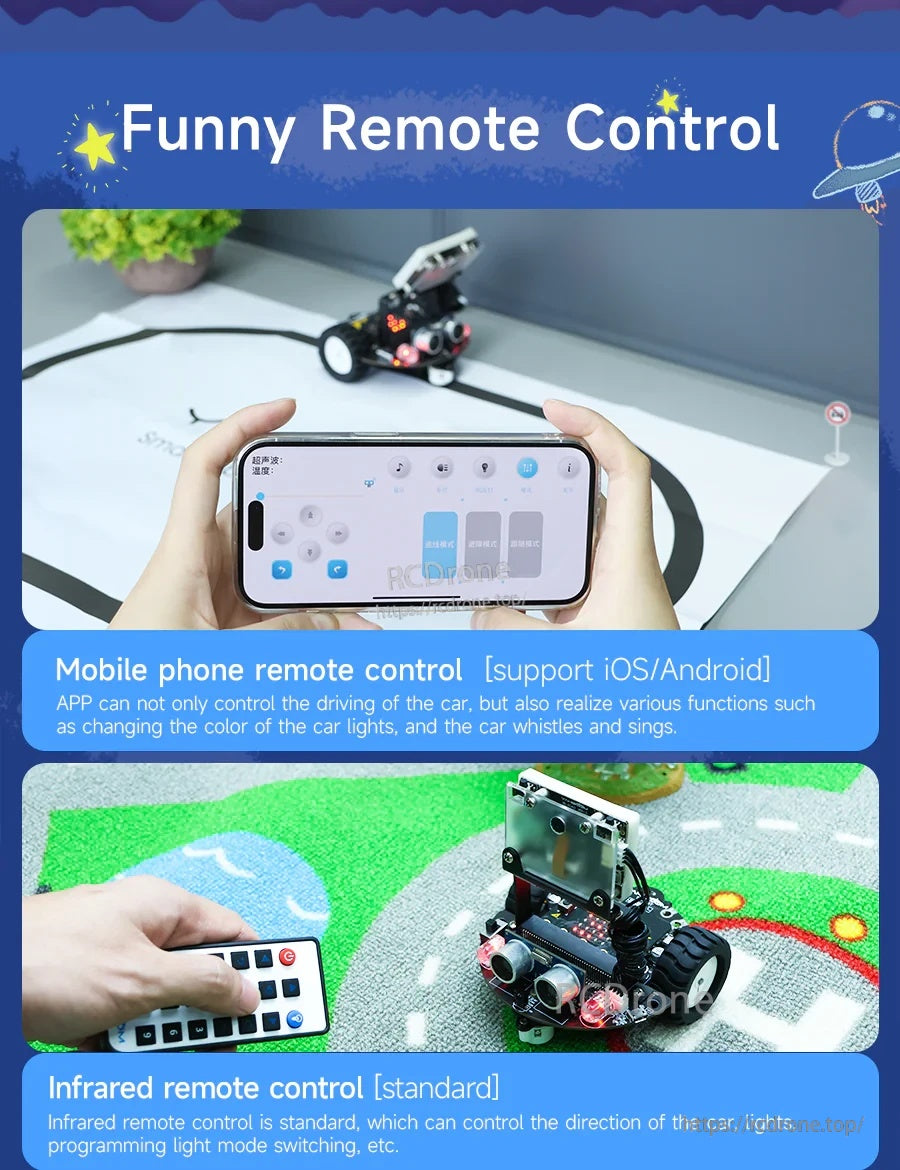
Mehrere Steuerungsoptionen sind verfügbar, einschließlich mobiler App-Steuerung und einer Standard-Infrarot-Fernbedienung.
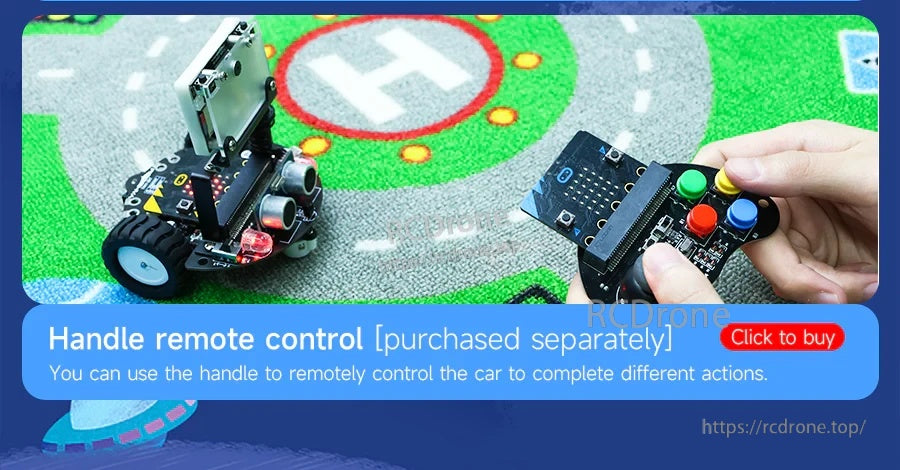
Für interaktives Spielen kann ein micro:bit-Griffcontroller separat hinzugefügt werden, um benutzerdefinierte Steuerungsprojekte auszuführen.
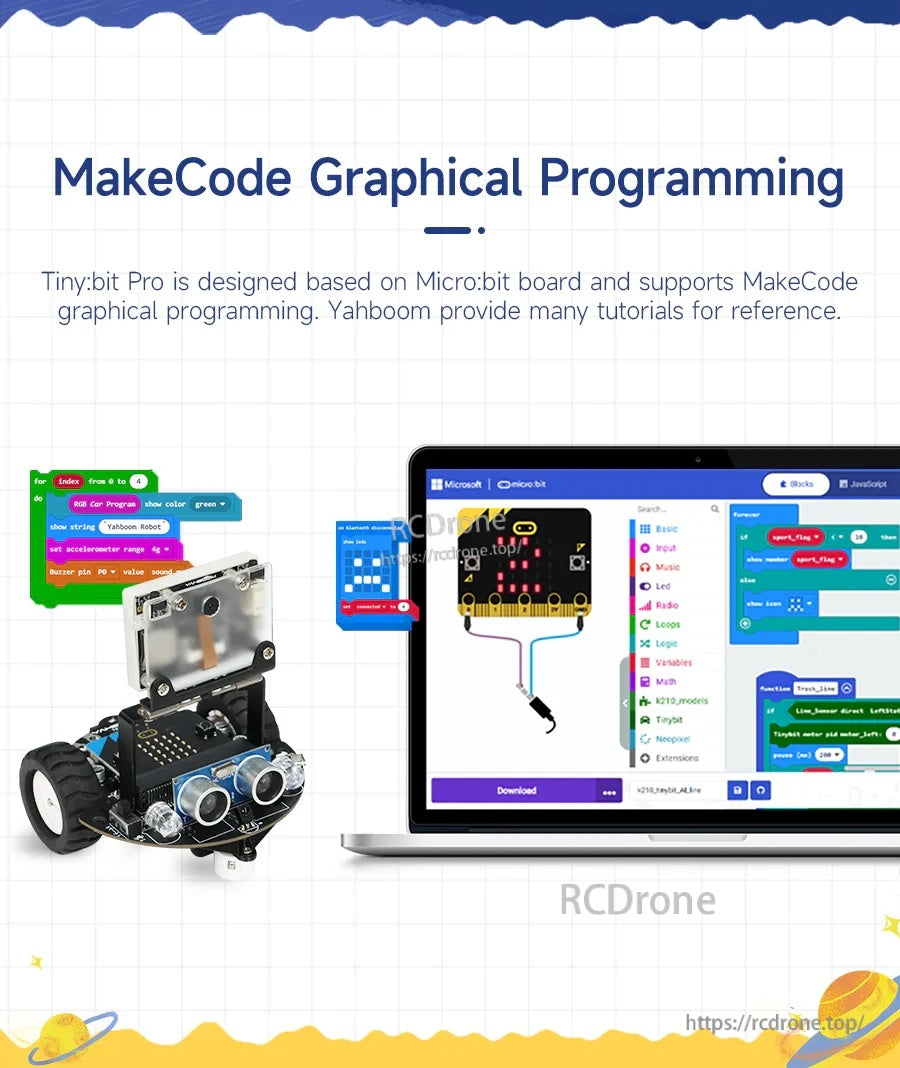
Programmieren Sie das Fahren, die Beleuchtung, den Ton und das Sensorverhalten in MakeCode und erweitern Sie die Vision-Funktionen mit MicroPython auf dem K210-Modul.
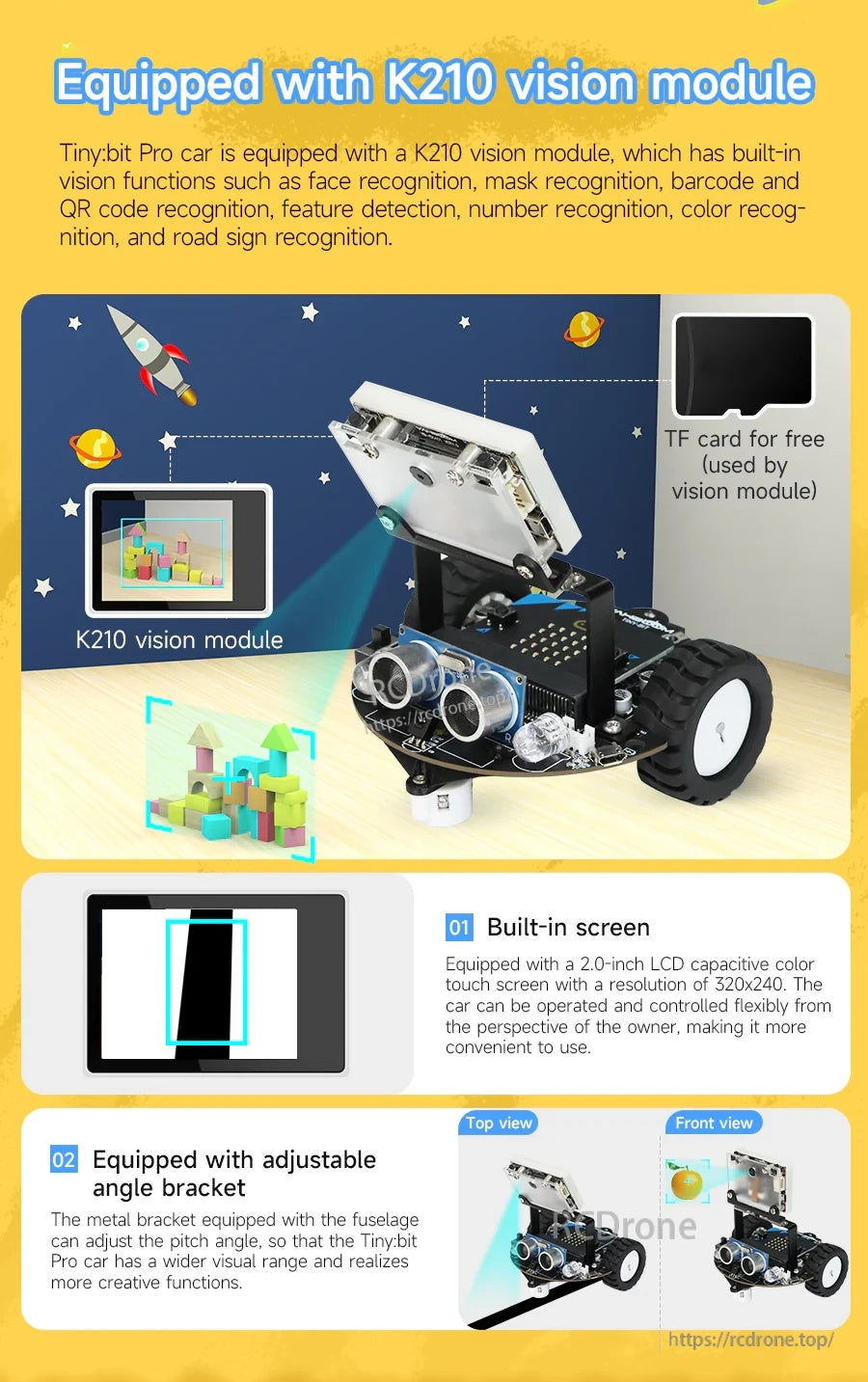
Eine verstellbare Halterung hilft, die Kamera auszurichten, während der integrierte Bildschirm während der Erkennung und Verfolgung Live-Feedback bietet.
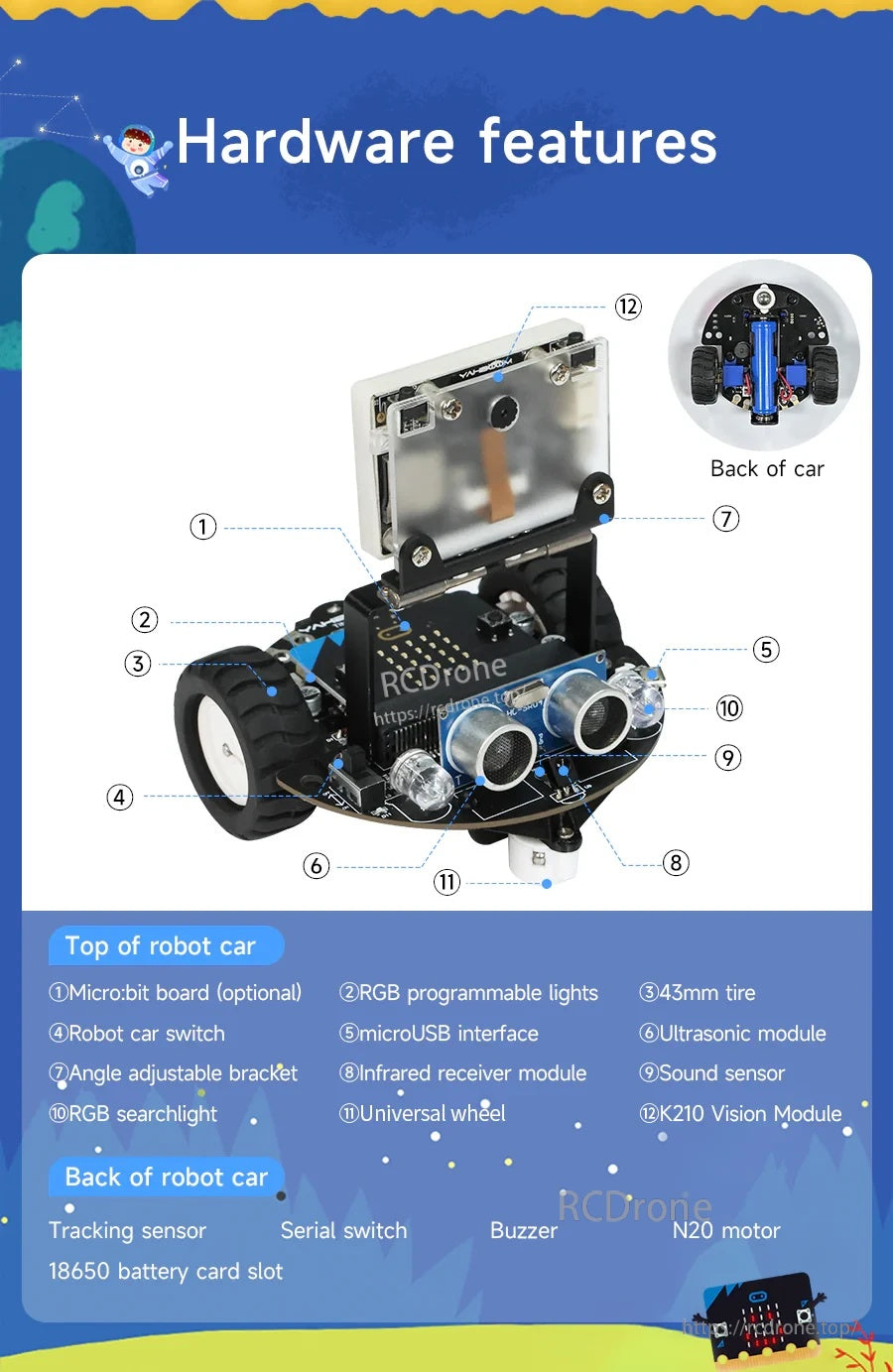
Zu den Onboard-Komponenten gehören Ultraschall-Abstandsmessung, Infrarot-Verfolgung, RGB-Beleuchtung, Schallerkennung und Motorantrieb für reichhaltige Roboterverhalten.
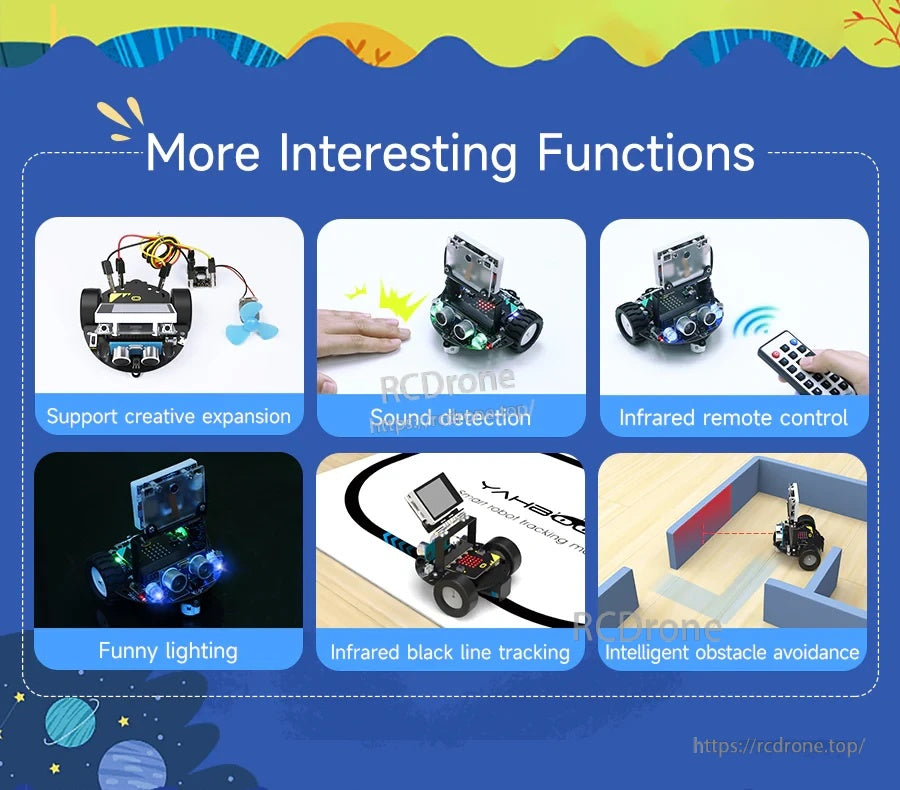
Über die KI-Vision hinaus decken die Kernfunktionen des Roboterautos Hindernisvermeidung, Linienverfolgung, Schallreaktion und bunte Lichteffekte ab.
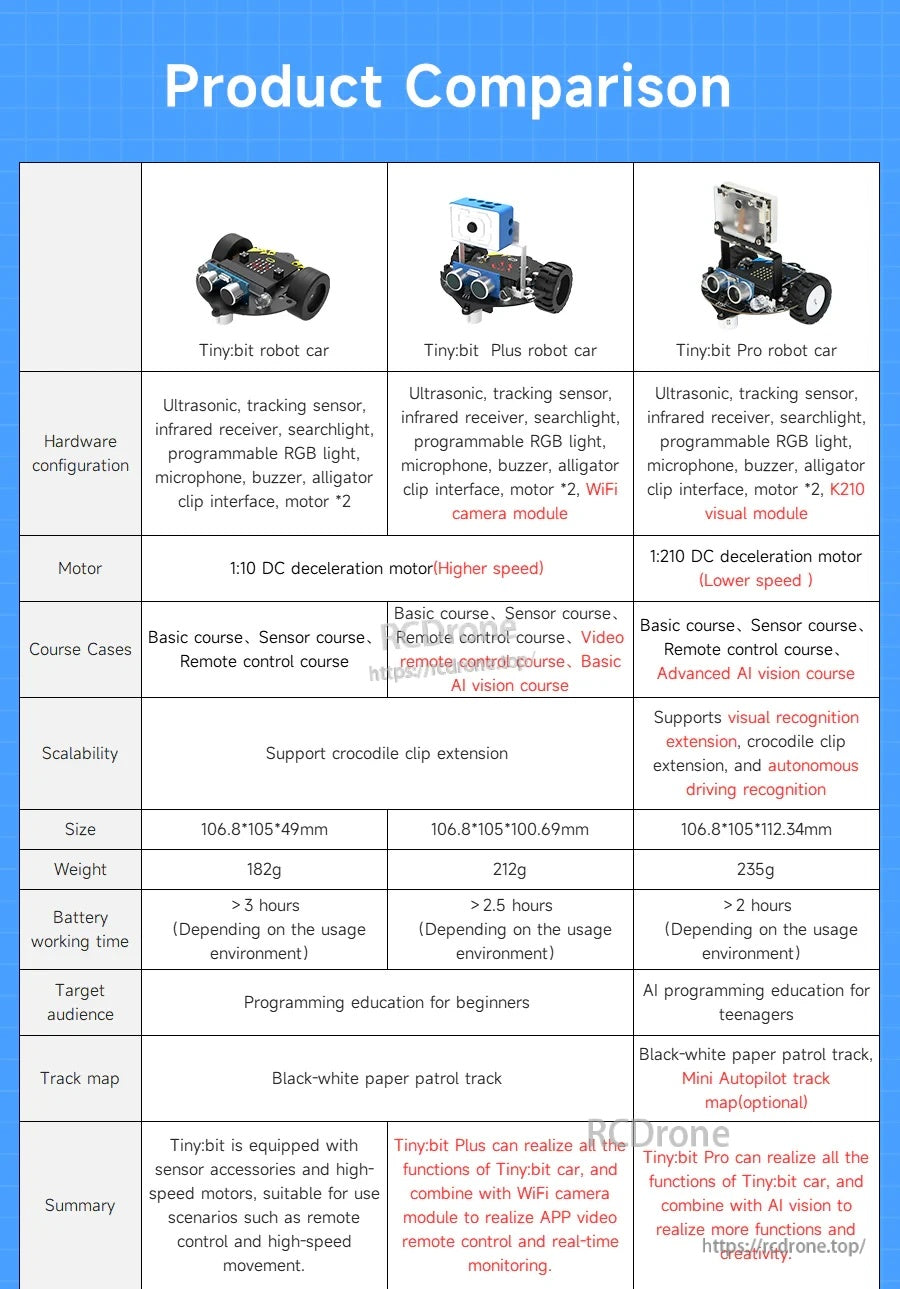
Die Vergleichstabelle zeigt Unterschiede zwischen den Tiny:bit, Tiny:bit Plus und Tiny:bit Pro Roboterautos auf, einschließlich Sensoren, Motoren, Größe und Batterielebensdauer.
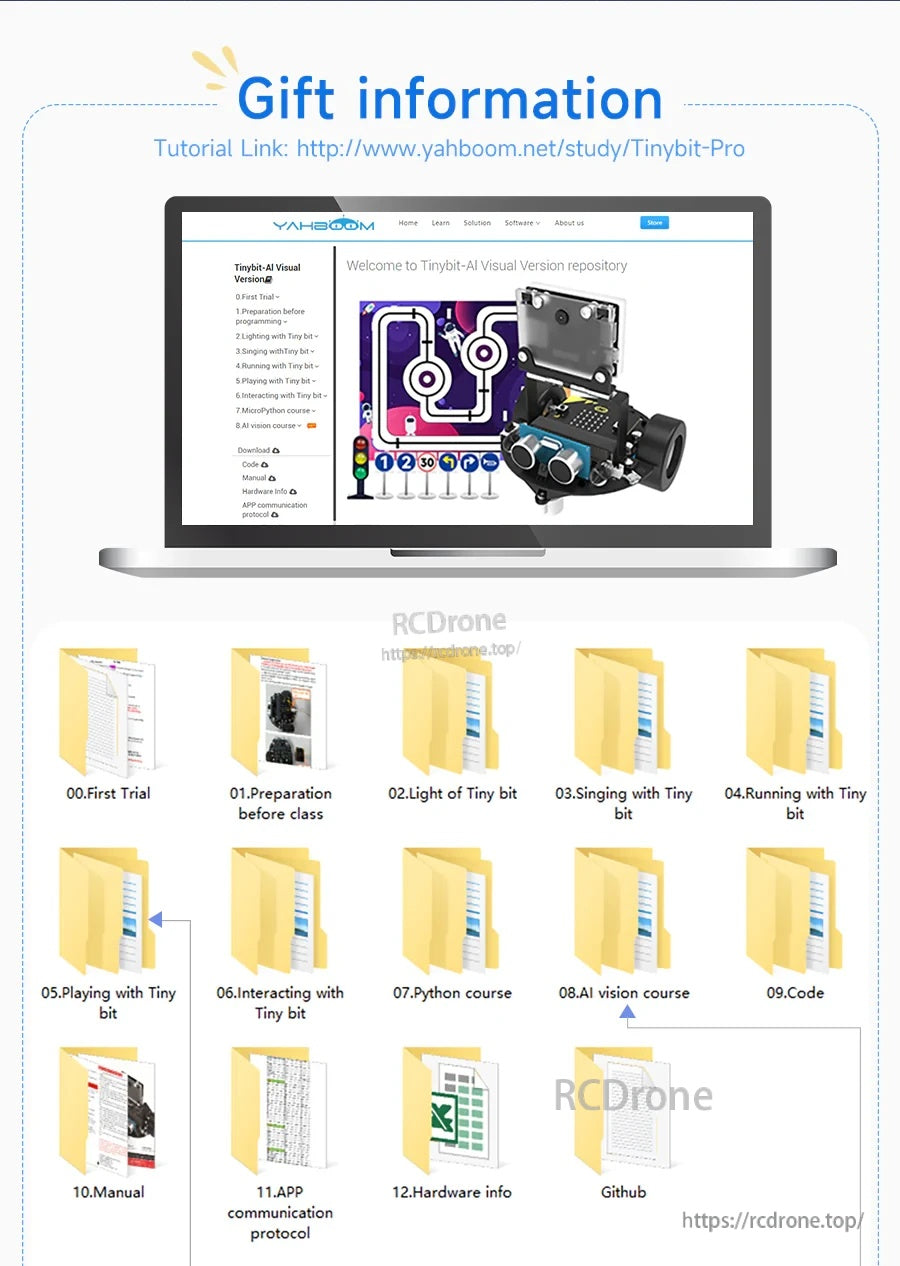
Yahboom Tiny:bit Pro enthält einen Tutorial-Link und organisierte Lektionenordner, die Einrichtung, KI-Vison, Programmierung und Handbücher abdecken.
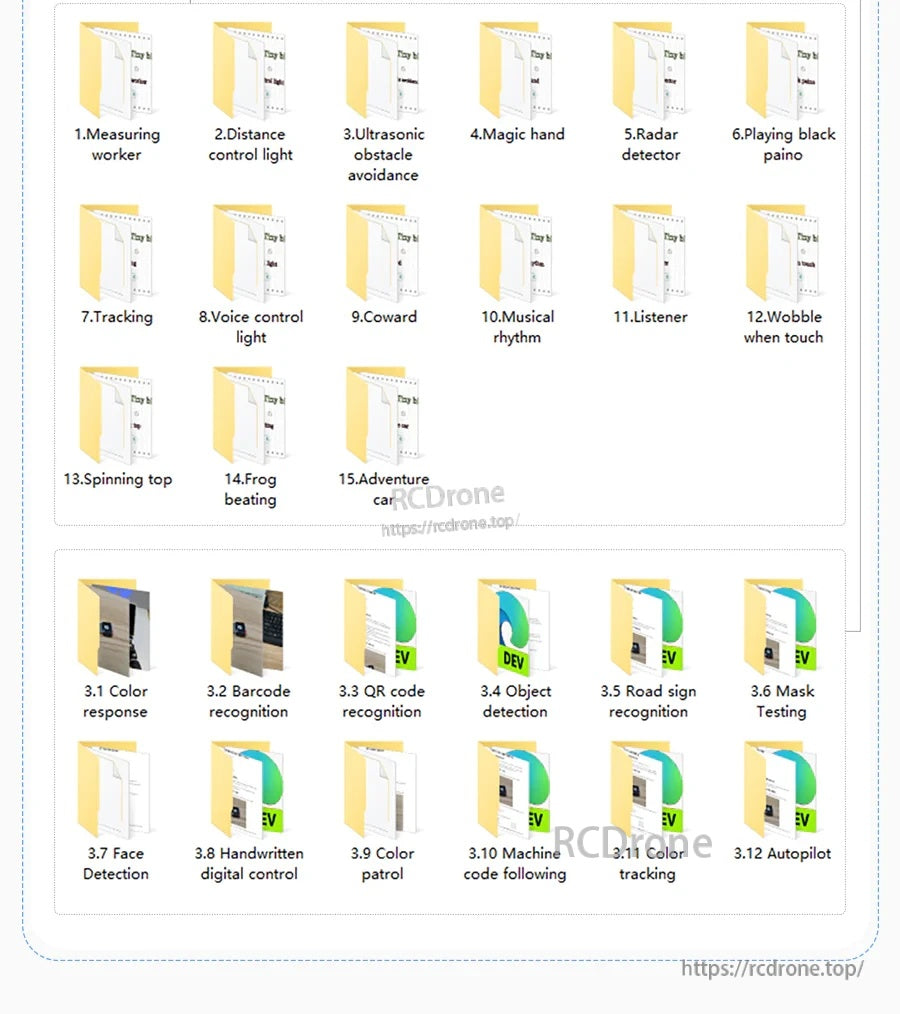
Tiny:bit Pro enthält eine Bibliothek mit Beispielprogrammen, die Hindernisvermeidung, Verfolgung und KI-Visionsaufgaben wie Barcode/QR-Erkennung und Objekterkennung abdecken.
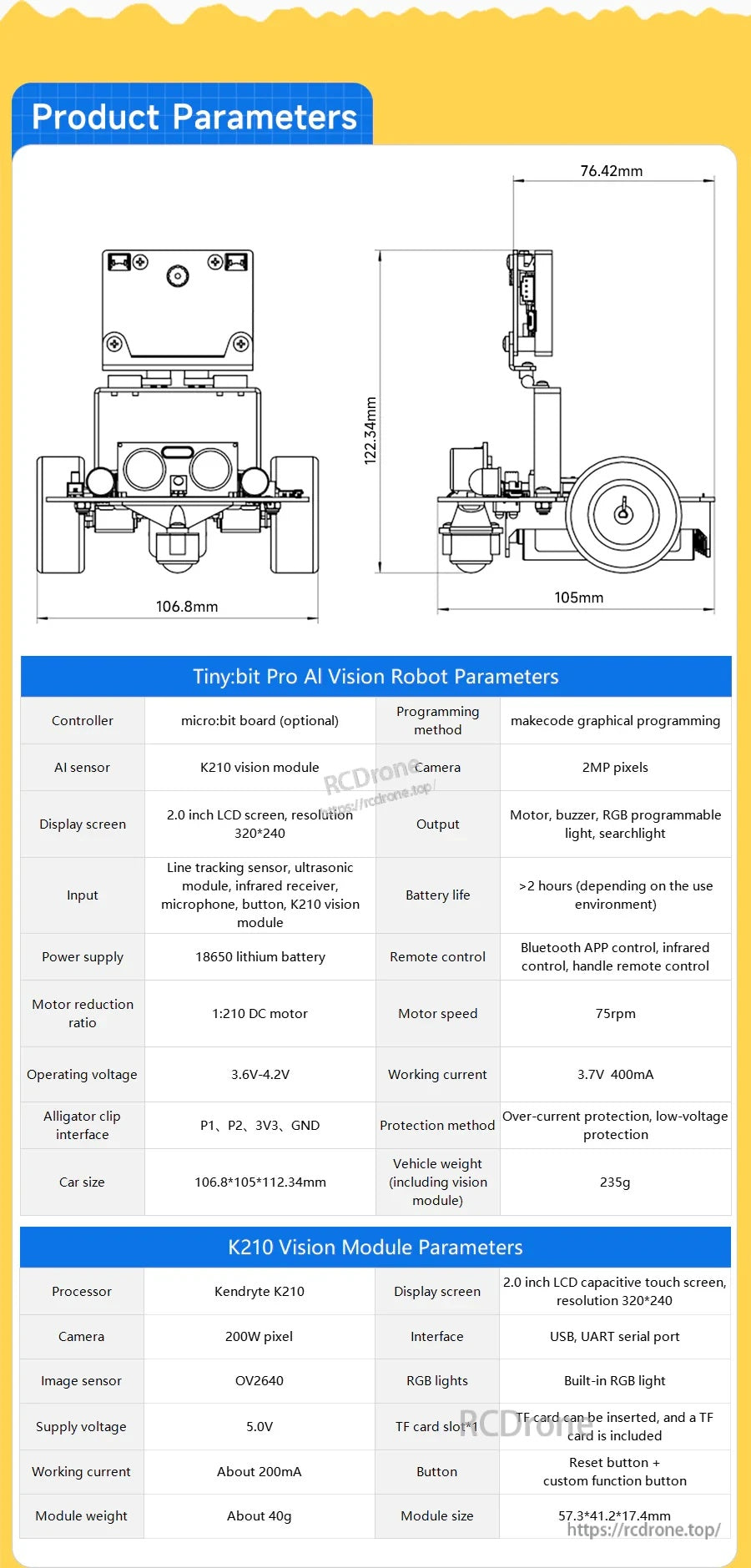
Tiny:bit Pro AI Visual Robot Parameterliste enthält wichtige Spezifikationen wie ein K210-Visionsmodul, 2-Zoll-LCD (320×240) und 7,4V 2000mAh Batterie.
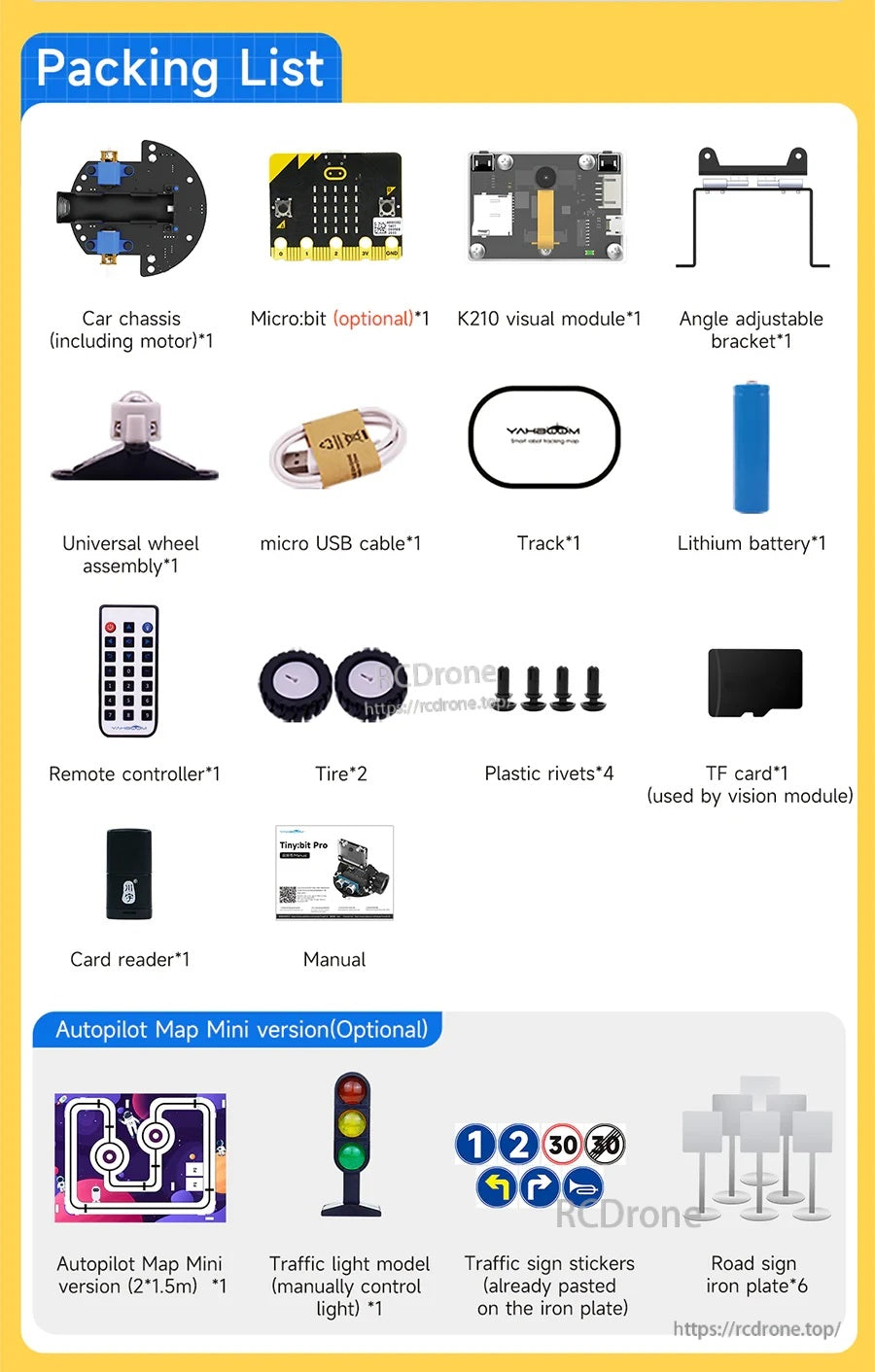
Das Tiny:bit Pro Kit enthält das Fahrgestell mit Motor, K210-Visionsmodul, Batterie, Fernbedienung, TF-Karte und wichtige Montagezubehörteile.