EYOU RHU14L-52-N-F Harmonic Robot Joint Actuator, 48 V, 50/80/100 Ratios for Humanoid Robots
EYOU RHU14L-52-N-F Harmonic Robot Joint Actuator, 48 V, 50/80/100 Ratios for Humanoid Robots
EYOU
通常価格
$669.00 USD
通常価格
セール価格
$669.00 USD
単価
あたり
税込。
配送料はチェックアウト時に計算されます。
受取状況を読み込めませんでした


Overview
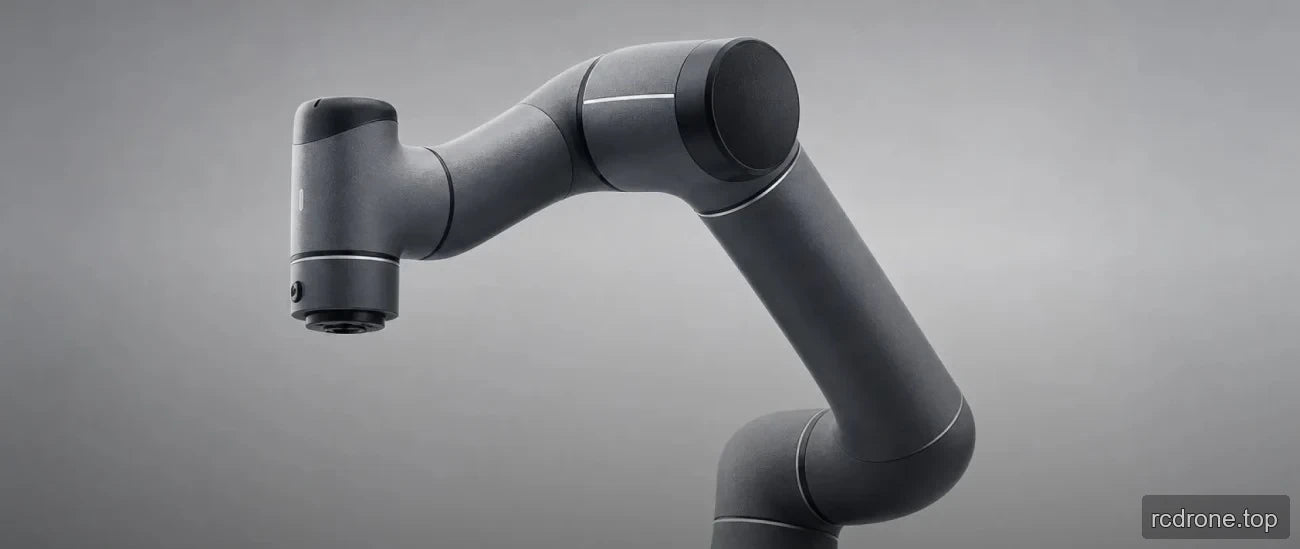
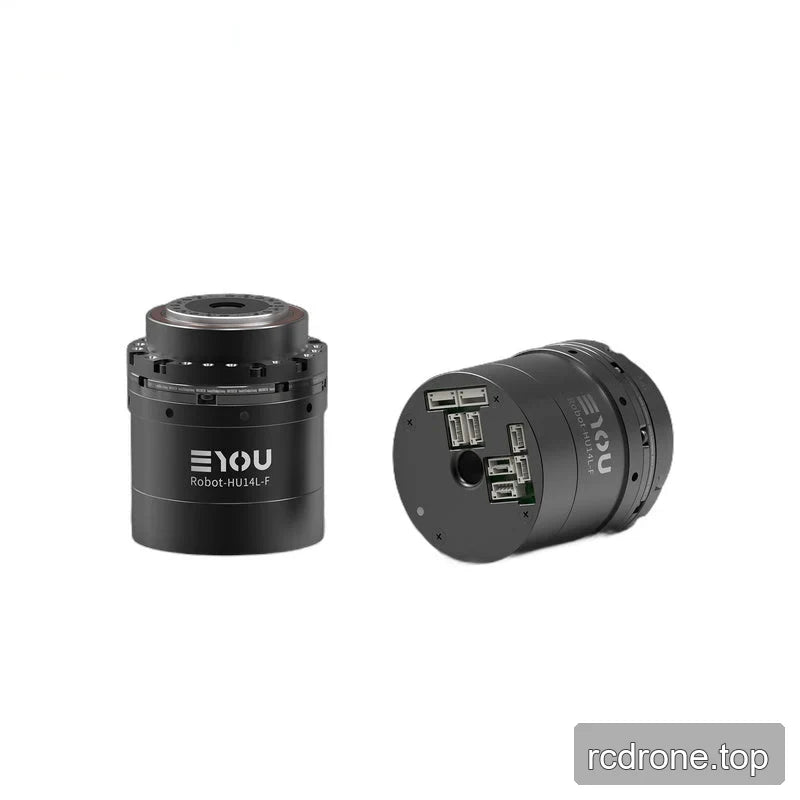
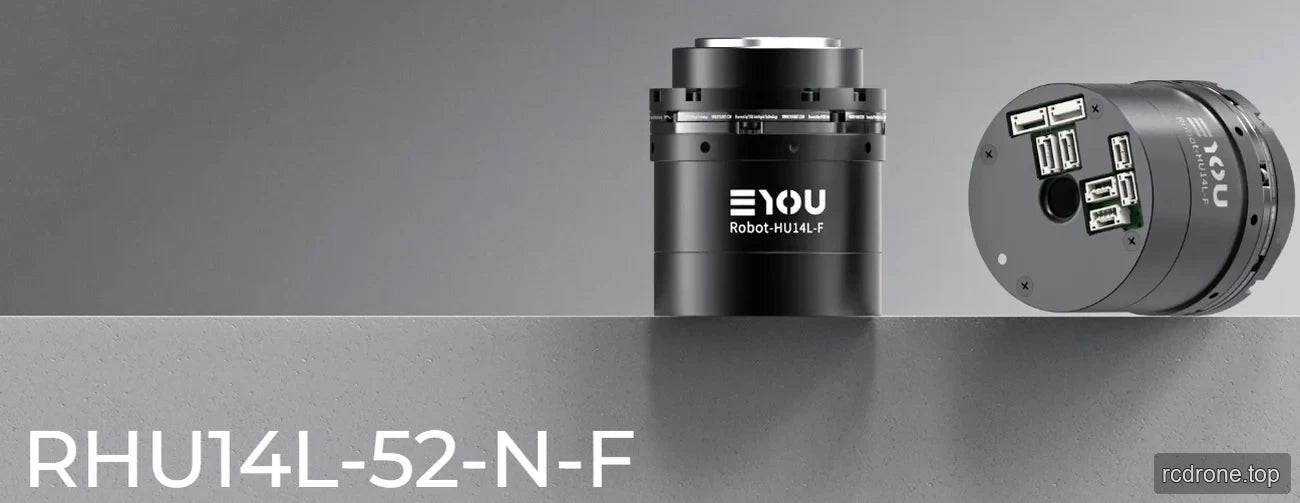
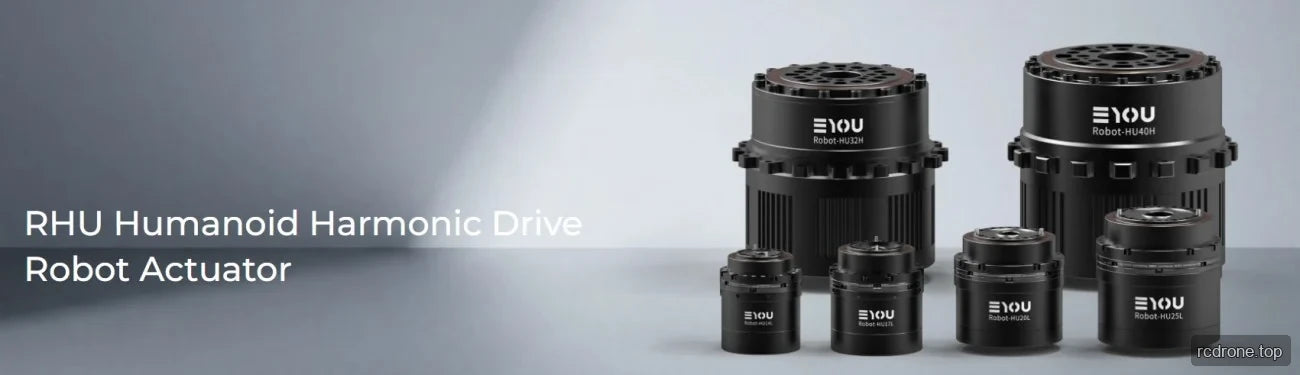
The EYOU RHU14L-52-N-F is a harmonic robot joint actuator for humanoid robot joints, with 50, 80, and 100 reduction-ratio options and with-brake or without-brake selections. It combines a 46 W motor, built-in driver, torque sensor, dual absolute encoder, and EtherCAT/CANopen communication. Its 48 VDC rated supply and compact Φ52 × 65 mm dimensions help buyers evaluate integration into robotic joints.
Features
- Harmonic reducer with 50, 80, or 100 reduction-ratio options.
- 46 W rated motor power, 0.11 N·m rated motor torque, and 0.33 N·m peak motor torque.
- Built-in driver, 18 N·m torque sensor range, and dual absolute encoder: motor side 17 bit and reducer side 19 bit.
- EtherCAT and CANopen communication protocols; supported control modes include Profile Position (PP), Profile Velocity (PV), Profile Torque (PT), Cyclic Synchronous Position (CSP), and Force Control (CSF).
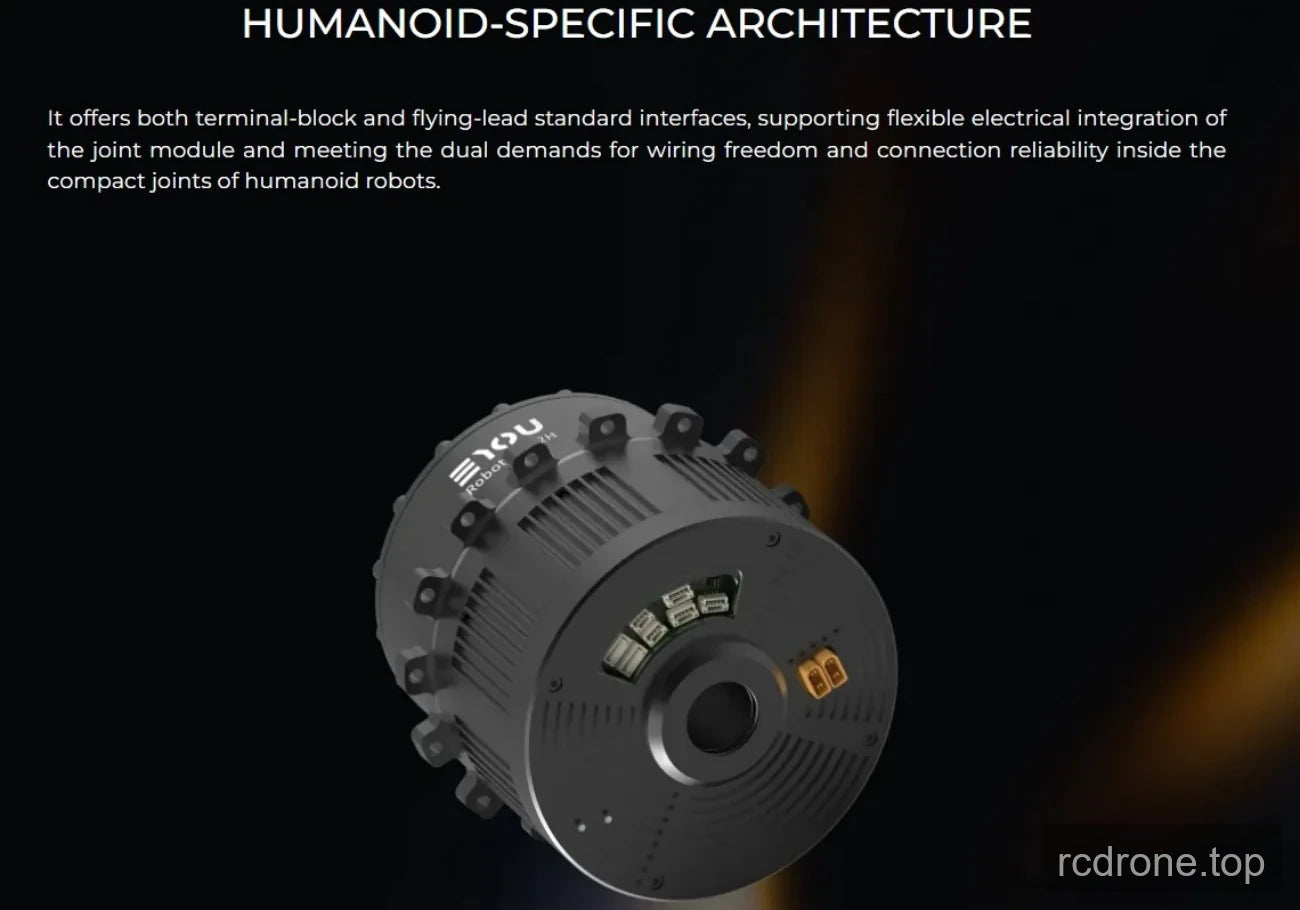
- Power wire type (DC in/DC out), CAN FD (In/Out), EtherCAT (In/Out), and STO (1/2) driver interfaces.
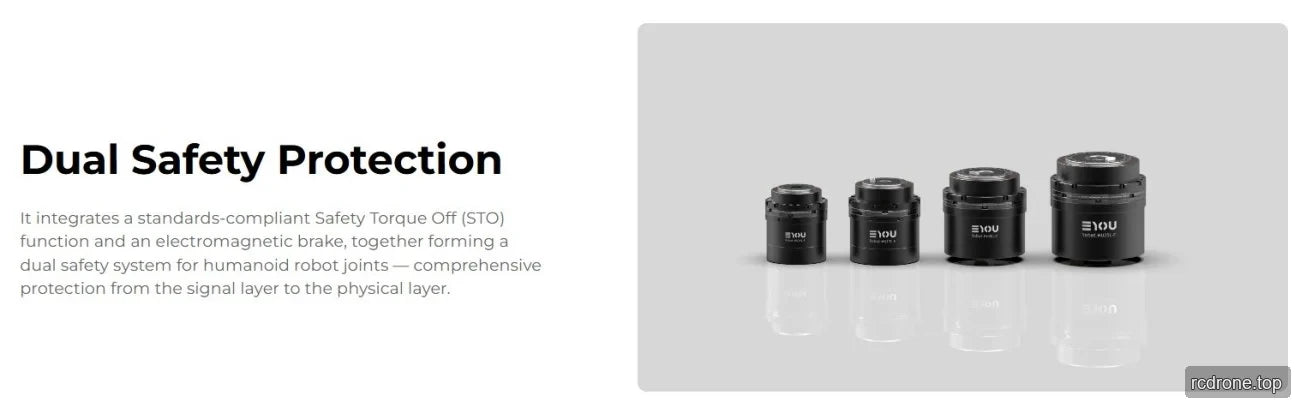
- With-brake and without-brake options are available.
Specifications
| Parameter | 50 ratio | 80 ratio | 100 ratio |
|---|---|---|---|
| Module model | RHU-14L-52-N-F | ||
| Reducer type | Harmonic | ||
| Motor rated power (W) | 46 | ||
| Motor rated torque (N·m) | 0.11 | ||
| Motor peak torque (N·m) | 0.33 | ||
| Reduction ratio | 50 | 80 | 100 |
| Joint rated power (W) — life constraint | 15 | 14 | 11 |
| Rated torque at 2000 rpm input (N·m) | 3.7 | 5.4 | 5.4 |
| Average load torque at output (N·m) | 4.8 | 7.7 | 7.7 |
| Peak start/stop torque at output (N·m) | 12 | 16 | 19 |
| Max. allowable external torque at output, instantaneous (N·m) | 24 | 35 | 35 |
| Backlash (arcsec) | ≤20 | ≤20 | ≤20 |
| Rated speed at output (rpm) — life constraint | 40 | 25 | 20 |
| Peak speed at output (rpm) | 99 | 62.5 | 50 |
| Brake (B/N) | B/N | ||
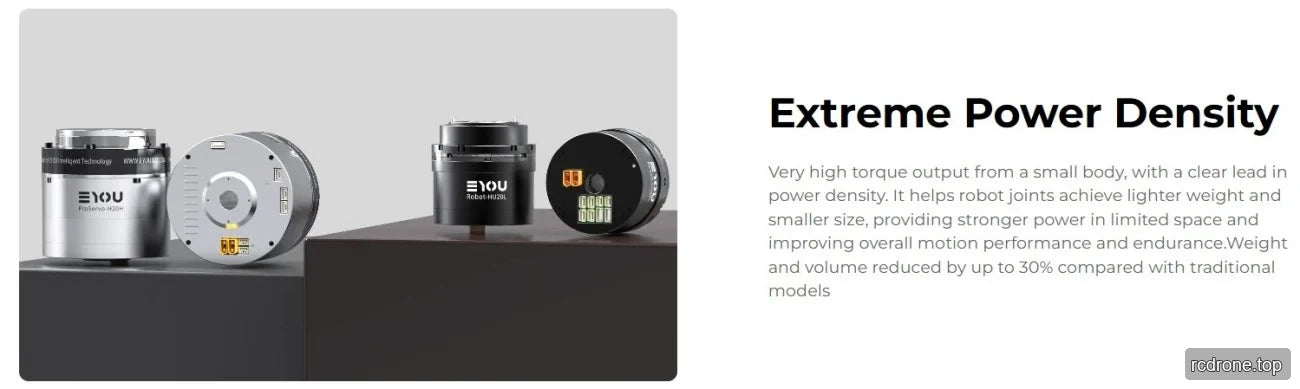
| Dimensions, outer diameter × axial (mm) | Φ52 × 65 | ||
| Weight (kg), B/N | 0.397 / 0.382 | ||
| Hollow diameter (mm) | 8 | ||
| Housing appearance (process color) | Black anodized (non-sandblasted) | ||
| Reducer appearance (process color) | Outer ring blackened | ||
| Radial (dynamic/static) allowable load at output (N) | 180 | ||
| Axial (dynamic/static) allowable load at output (N) | 180 | ||
| Output bending moment (N·m) | 12 | ||
| Reducer torsional stiffness (N·m/rad) | 5000 | ||
| Reducer input inertia (kg·mm²), B | 7.71 | 7.71 | 7.71 |
| Equivalent joint output inertia (kg·mm²), B | 19275 | 49344 | 77100 |
| Torque sensor range (N·m) | 18 | ||
| Torque sensor accuracy (% F.S.) | ≤±0.5 | ||
| Torque sensor resolution (% F.S.) | 0.1 | ||
| Torque sensor overload limit (% F.S.) | 300 | ||
| Torque sensor sampling frequency (kHz), digital | 8 | ||
| Torque closed-loop bandwidth (Hz) | 30 | ||
| Impedance control frequency (kHz) | 1 | ||
| Rated operating voltage (VDC) | 48 | ||
| Operating voltage range (VDC) | 24–48 | ||
| Driver | Built-in | ||
| Encoder/bit | Dual absolute / motor side 17 bit & reducer side 19 bit | ||
| Driver interface (see terminal model description) | Power wire type (DC in/DC out), CAN FD (In/Out), EtherCAT (In/Out), STO (1/2) | ||
| Communication protocol (see communication description) | EtherCAT / CANopen | ||
| Control modes | Profile Position (PP), Profile Velocity (PV), Profile Torque (PT), Cyclic Synchronous Position (CSP), Force Control (CSF), etc. | ||
| Operating ambient temperature (°C) | -20–60 | ||
| Housing operating temperature (°C) | ≤60 | ||
| Noise (dB) | ≤60 | ||
| IP rating | IP54 | ||
| Life (h) | >10000 | ||
Applications
- Humanoid robots
- Robotic arms
- Exoskeletons
- Quadruped robots
- AGV vehicles
- ARU robots
Documents
- EYOU CANable — User Manual (PDF)
- EYOU RHU 14L 52 N F Drawing — Drawing (PDF)
- EYOU PHU RHU Series Joint CANopen EtherCAT Communication — Manual (PDF)
- EYOU Robot Joint Catalog — Robot Joint Product Catalog (PDF)
- EYOU RP Series EN V1.0 20260608 — User Manual (PDF)
- EYOU UART Debug Module — User Manual (PDF)
Visual Details
Product Views
Application Examples

Interfaces and Connections
Features and Design
Additional Product Details