


VCI SPARK 2306.5 1950KV/2800KV 브러시리스 모터, FPV 쿼드콥터용, M5 샤프트, 16mm 마운트
VCI SPARK 2306.5 1950KV/2800KV 브러시리스 모터, FPV 쿼드콥터용, M5 샤프트, 16mm 마운트
VCI
정가
$20.45 USD
정가
할인가
$20.45 USD
단가
단위
세금이 포함된 가격입니다.
배송료는 결제 시 계산됩니다.
픽업 사용 가능 여부를 로드할 수 없습니다.


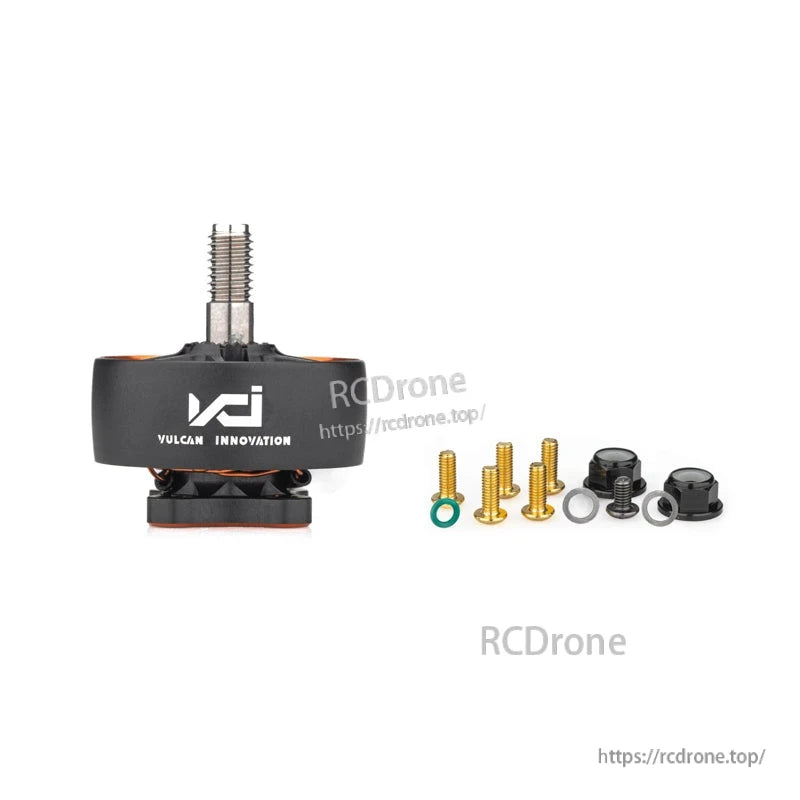
개요
VCI SPARK 2306.5 브러시리스 모터는 FPV 쿼드콥터 빌드를 위해 두 가지 KV 옵션(1950KV 또는 2800KV)으로 제공됩니다. 5mm (M5) 샤프트, 4x M3 장착 패턴 및 20AWG 모터 리드를 사용합니다.
주요 특징
- 사용 가능한 KV 옵션: 1950KV 또는 2800KV
- N52SH 아크 자석을 사용한 12S14P 구성
- M5 샤프트 및 4x M3 균등 간격 장착 홀(16mm 패턴)
- 20AWG 실리콘 와이어, 150mm 리드 길이
사양
기계적 (공통)
| 모터 크기 | 지름 28.7mm x 31.9mm |
| 스테이터 크기 | 지름 23mm x 6.5mm |
| 샤프트 직경 | M5 |
| 샤프트 길이 | 13mm |
| 장착 | 4x M3, 16mm 패턴 (균등 간격) |
| 전선 | 20AWG 실리콘 전선, 150mm |
| 구성 | 12S14P |
| 자석 | N52SH 아크 |
전기 (KV 옵션에 따라)
| 매개변수 | SPARK 2306.5-1950KV | SPARK 2306.5-2800KV |
|---|---|---|
| KV | 1950KV | 2800KV |
| 내부 저항 | 60 mOhm | 35 mOhm |
| 정격 전압 | 6S (24V) | 4S (16V) |
| 최대 전류 | 41.24A | 52.78A |
| 유휴 전류 (10V) | 1.0A | 1.5A |
| 최대 순간 전력 | 989.76W | 844.48W |
| 무게 (케이블 포함) | 32.2g | 32.6g |
테스트 데이터 하이라이트 (정적 테스트)
SPARK 2306.5-1950KV @ 24V
- GF F3-3 @ 100%: 37.02A, 1717g 추력, 888.48W, 28363 RPM, 96C
- GF F4-3 @ 100%: 40.17A, 1742g 추력, 964.08W, 31241 RPM, 105C
- GF 51466-3 @ 100%: 41.24A, 1574g 추력, 989.76W, 30725 RPM, 82C
SPARK 2306.5-2800KV @ 16V
- GF F3-3 @ 100%: 47.11A, 1465g 추력, 753.76W, 29074 RPM, 80C
- GF F4-3 @ 100%: 51.54A, 1558g 추력, 824.64W, 29770 RPM, 88C
- GF 51466-3 @ 100%: 52.78A, 1469g 추력, 844.48W, 29337 RPM, 85C
노트
- 위의 테스트 데이터는 VCI 회사의 테스트 플랫폼에서 얻어진 것으로 참고용입니다.
- 모터 온도는 스로틀이 0에서 100까지 테스트된 후의 스핀들 온도입니다 (정적 테스트).
귀하의 빌드에 대해 1950KV와 2800KV 중에서 선택하는 데 도움이 필요하시면 [email protected] or에 문의하시거나 https://rcdrone.top/.
자세히 보기
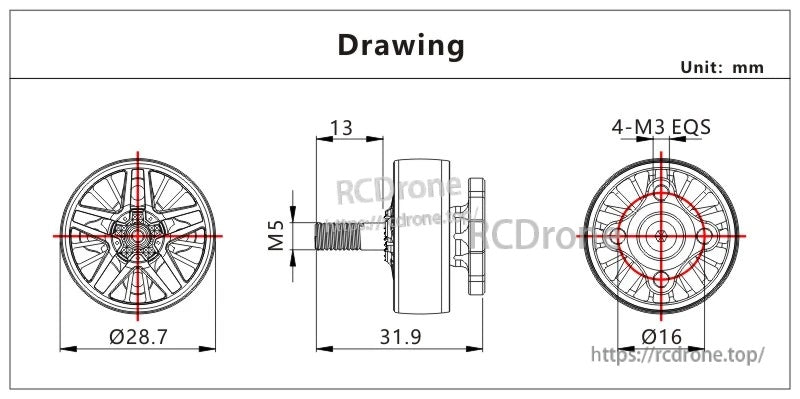 일반 FPV 프레임을 위해 제작된 2306.5 레이아웃은 16mm 4×M3 장착 패턴, M5 샤프트 및 컴팩트한 28.7×31.9mm 모터 본체를 사용합니다.
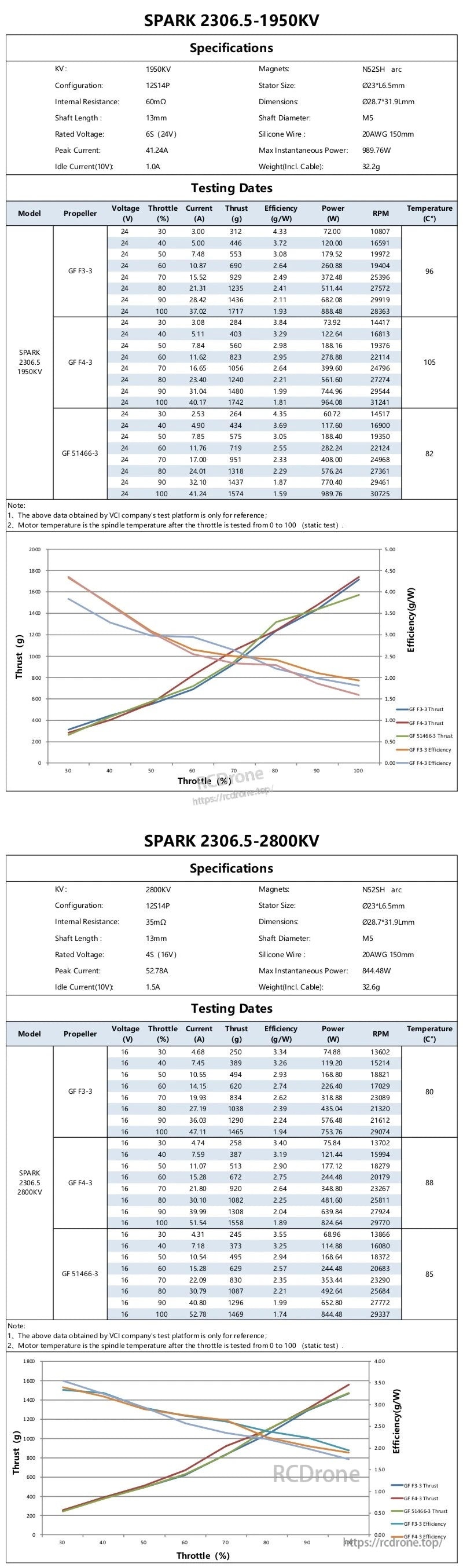
성능 표는 정적 테스트에서의 전류 소모, 추력, RPM 및 온도를 포함하여 1950KV (6S) 및 2800KV (4S) 옵션을 비교합니다.