ZeroErr eRob 170 I Robot Joint Actuator, CANopen/EtherCAT, 48 V
ZeroErr eRob 170 I Robot Joint Actuator, CANopen/EtherCAT, 48 V
ZeroErr
Звичайна ціна
$3,471.00 USD
Звичайна ціна
Ціна продажу
$3,471.00 USD
Ціна за одиницю
пер
Taxes included.
Доставка розраховується під час оформлення замовлення.
Не вдалося завантажити інформацію про можливість самовивозу


Overview
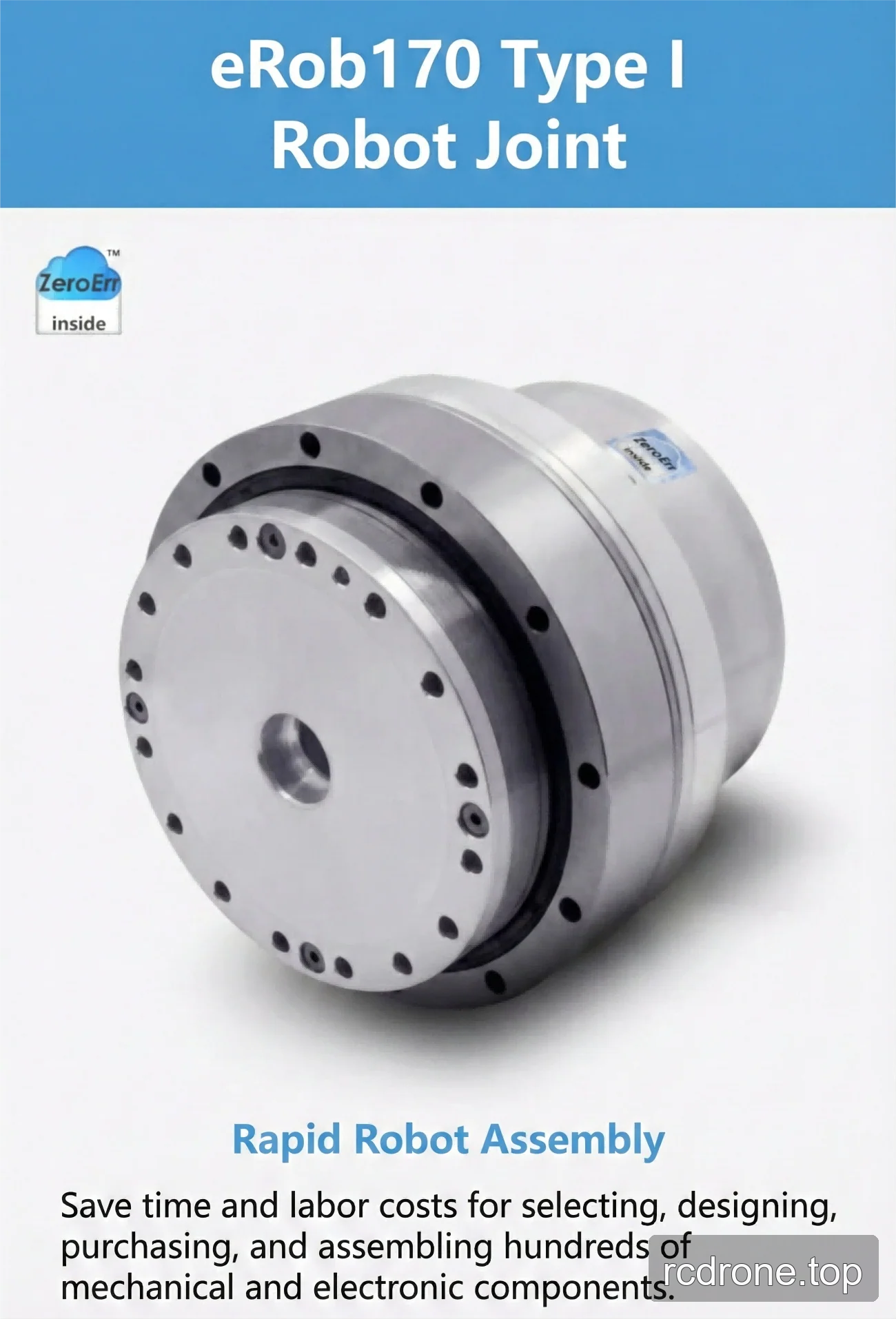
The ZeroErr eRob 170 I is an eRob170 Type I robot-joint actuator family offered with CANopen or EtherCAT communication, brake or no-brake versions, reduction ratios of 50, 80, 100, 120, or 160, and selectable multi-turn and torque configurations.
Its integrated robot-joint design is intended to simplify robot assembly by reducing the need to select, design, purchase, and assemble numerous separate mechanical and electronic components.
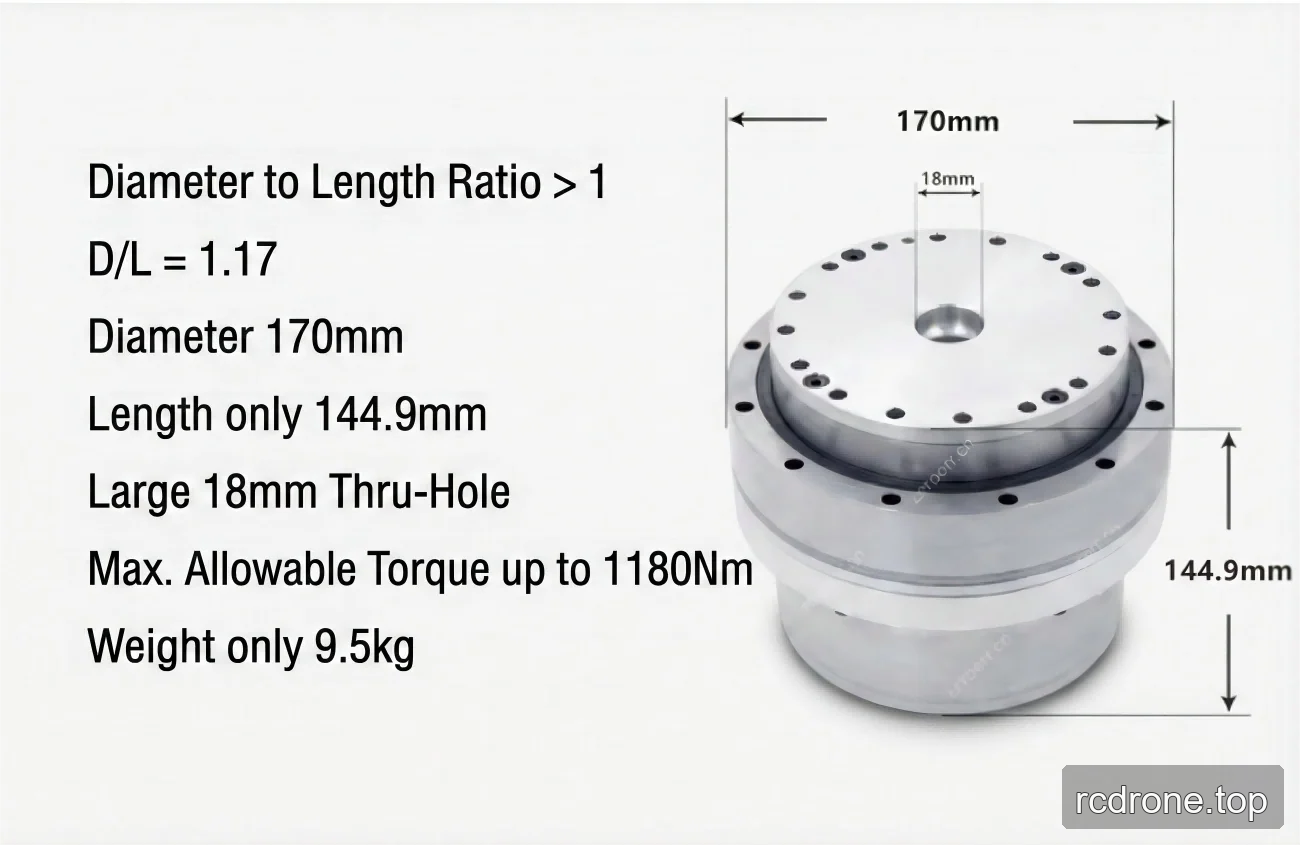
Published family specifications list a 1,000 W motor, 48 V input (±10%), a 170 × 144.9 mm outer diameter × length, an 18 mm thru-hole, and a 9.29 kg weight. The published diameter-to-length ratio is greater than 1 (D/L = 1.17).
Features
- CANopen and EtherCAT versions are selectable.
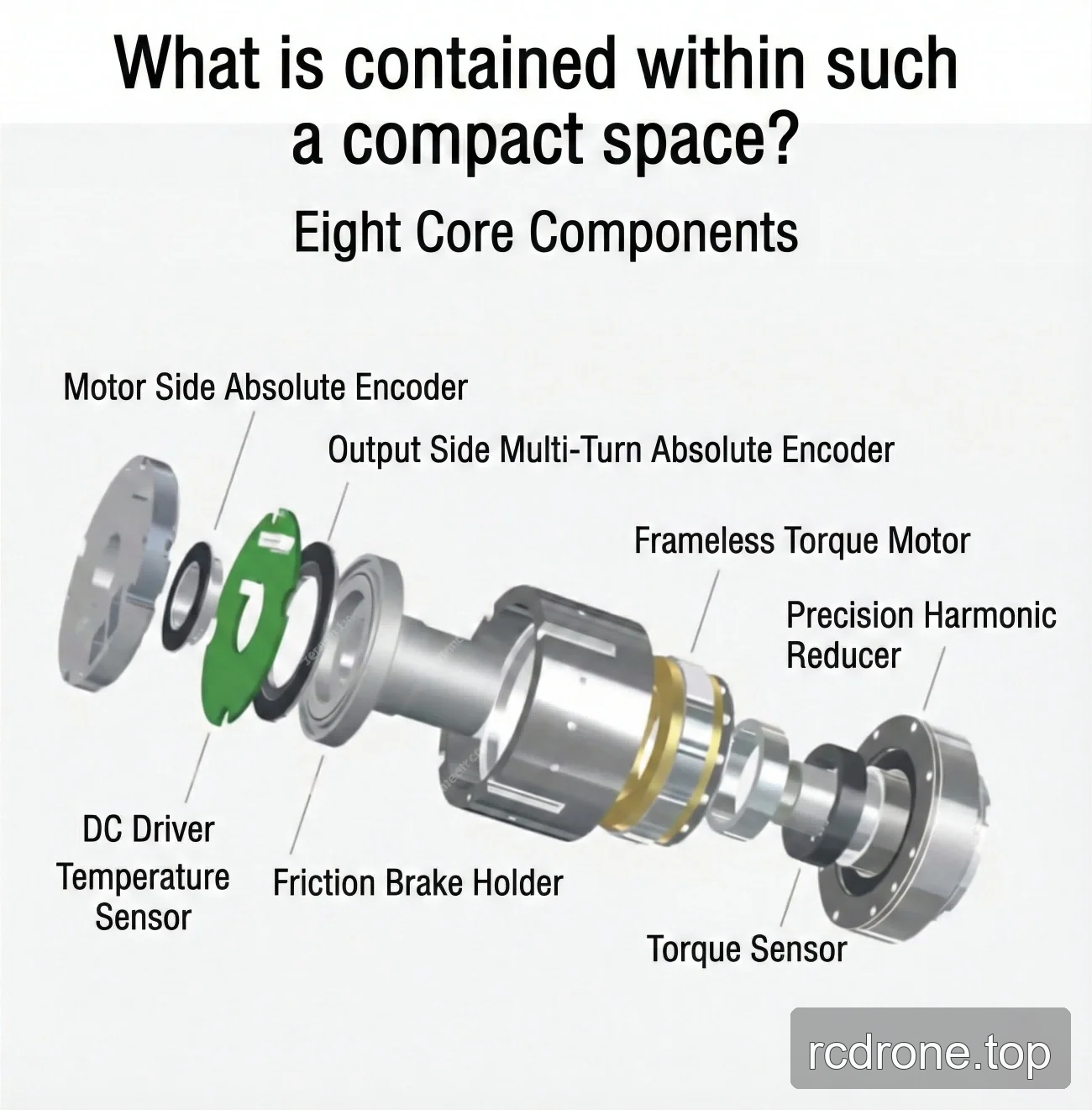
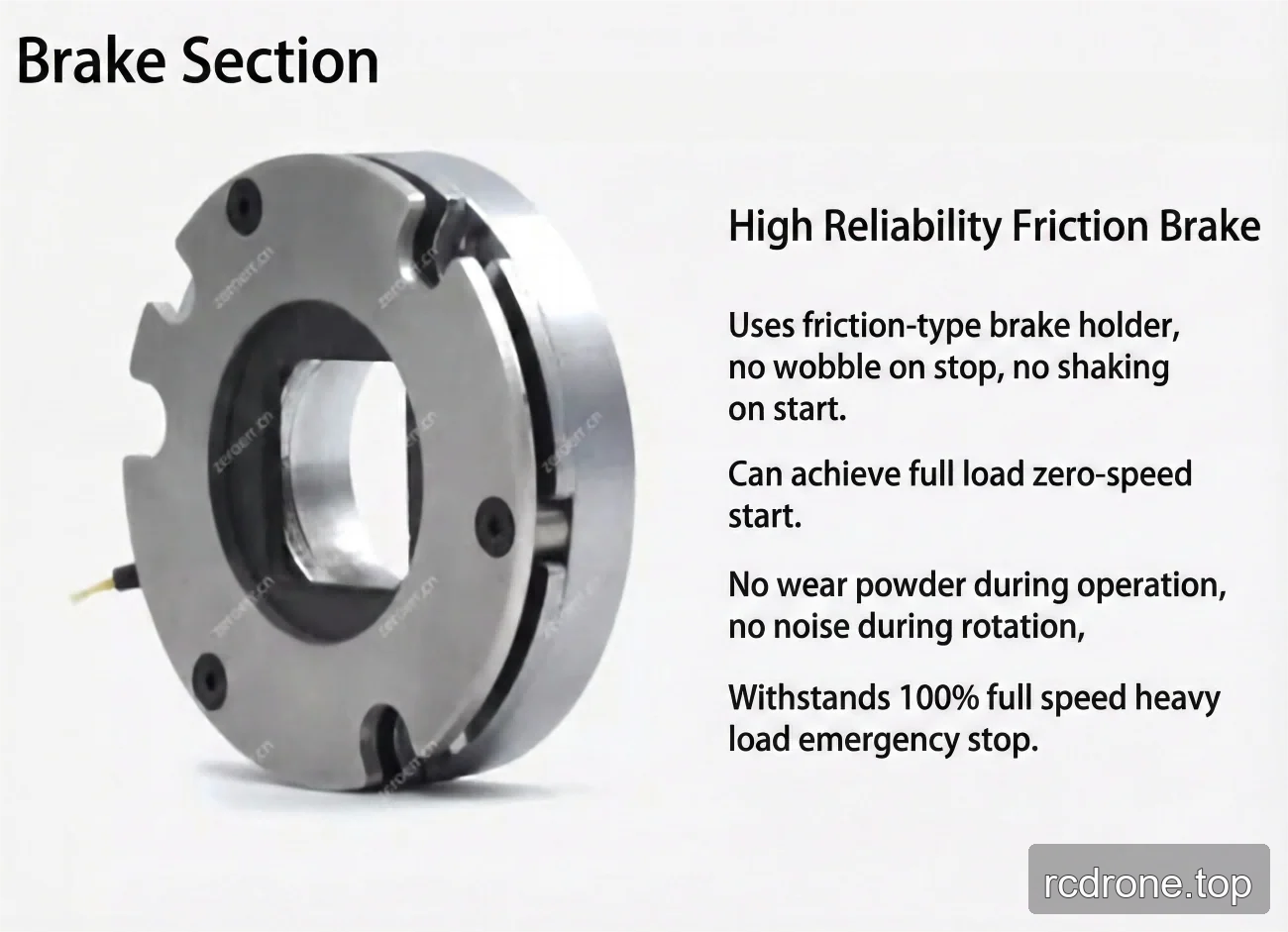
- With-brake and without-brake versions are selectable; the published brake model is a friction brake.
- Multi-turn and torque selections are available in the listed combinations.
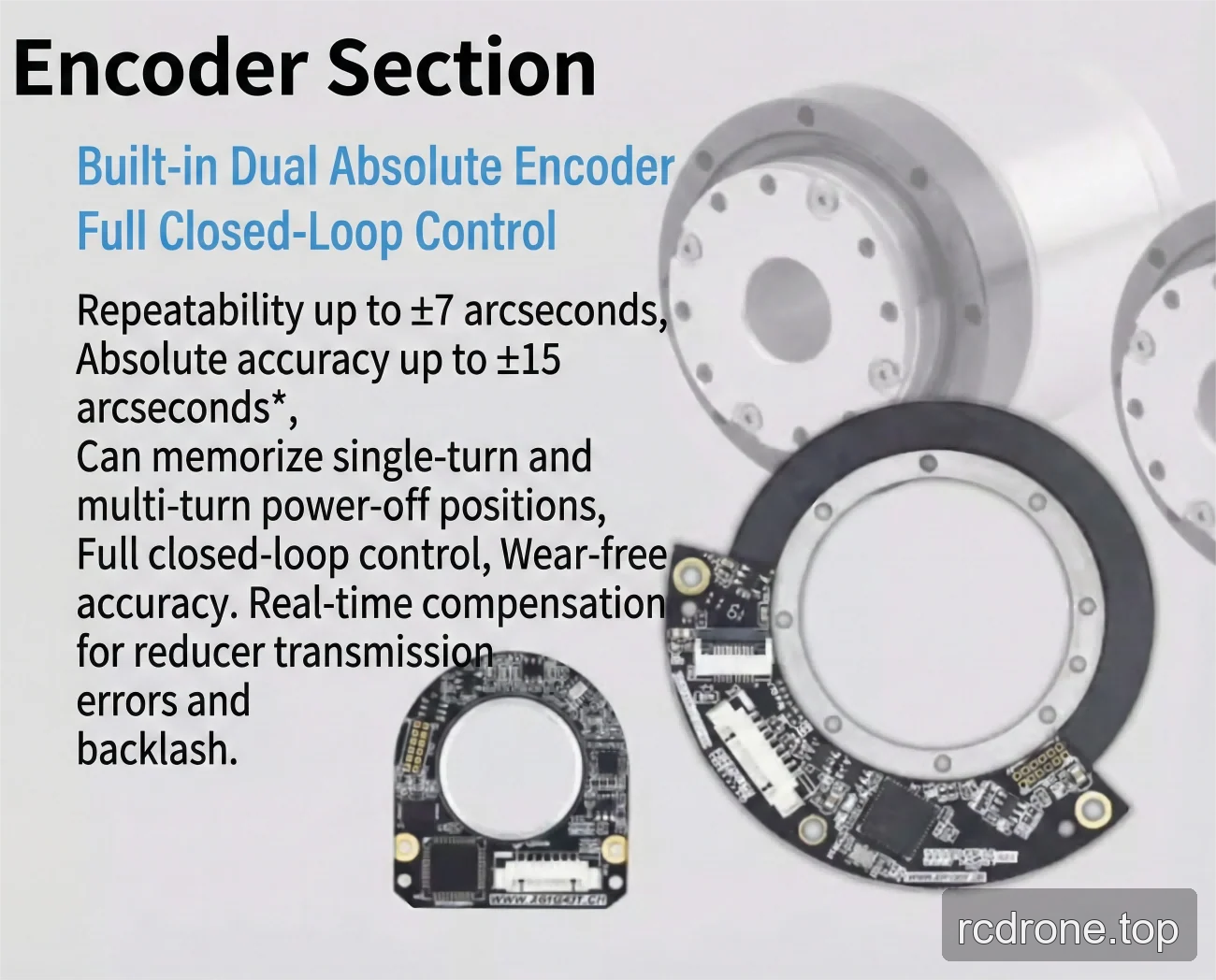
- Published output encoder resolution: 19 bit.
- Published encoder repeatability/accuracy options: ±7/±15 arcseconds or ±10/±25 arcseconds.
Specifications
Reduction-ratio-dependent values
| Parameter | 50 (source notation: 40-50) | 80 (source notation: 40-80) | 100 (source notation: 40-100) | 120 (source notation: 40-120) | 160 (source notation: 40-160) |
|---|---|---|---|---|---|
| Peak torque for start and stop (Nm) | 402 | 519 | 568 | 617 | 647 |
| Permissible maximum value at average load torque (Nm) | 196 | 284 | 372 | 451 | 451 |
| Rated torque (Nm) | 137 | 206 | 265 | 294 | 294 |
| Permissible maximum momentary torque (Nm) | 686 | 980 | 1080 | 1180 | 1180 |
| Maximum output rotational speed (RPM) | 40 | 25 | 20 | 16.7 | 12.5 |
Common published parameters
| Model | eRob170HXXI |
|---|---|
| Motor power | 1000 W |
| Power input voltage | 48 V (±10%) |
| Strain wave gear output inertia | 6679752 g-mm² |
| Strain wave gear output mass | 2.02 kg |
| Outer diameter × length | 170 × 144.9 mm |
| Diameter-to-length ratio | Greater than 1; D/L = 1.17 |
| Thru-hole / ID | 18 mm |
| Strain wave gear input inertia | 1517148 g-mm² |
| Strain wave gear input mass | 1.66 kg |
| Weight | 9.29 kg |
| Common parameters | IP grating: IP54*; brake model: friction brake. |
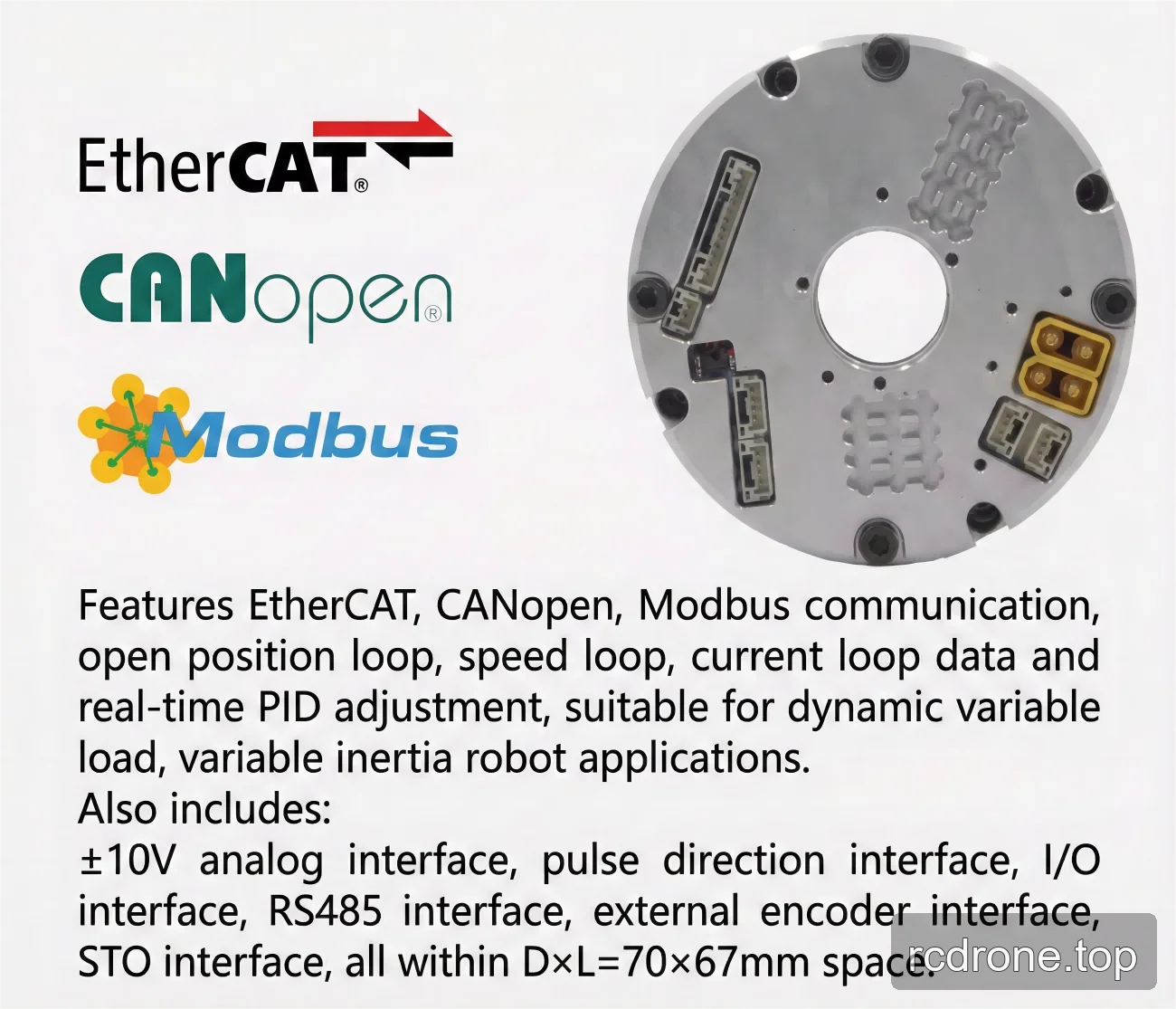
| Optional device | Communication type: EtherCAT / CANopen / Modbus; output encoder resolution: 19 bit; repeatability/accuracy: ±7/±15 arcseconds or ±10/±25 arcseconds. |
| EtherCAT version rotary actuator | Optional interface: RS485, Pulse/DIR, I/O, ±10 V analog, and STO. |
| CANopen version rotary actuator | Optional interface: RS485, Pulse/DIR, I/O, ±10 V analog, and STO. |
Configuration Options
- Version: eRob 170 I (CANopen With Brake), eRob 170 I (CANopen Without Brake), eRob 170 I (EtherCAT With Brake), or eRob 170 I (EtherCAT Without Brake).
- Reduction ratio: 50, 80, 100, 120, or 160.
- Multi-turn and torque: Without Multi-turn and Without Torque; Without Multi-turn and With Torque; With Multi-turn and Without Torque; or With Multi-turn and With Torque.
Applications
- Humanoid robots
- Robotic arms
- Exoskeletons
- Quadruped robots
- AGV vehicles
- ARU robots
Downloads
Downloads & Resources
- EROB170I I Series EtherCAT — 3D Model (ZIP)
- EROB170I I Series EtherCAT — 3D Model (ZIP)
- EROB110I I Series EtherCAT — 3D Model — STEP File (ZIP)
- EROB170I I Series CANopen — 3D Model — STEP File (ZIP)
- EROB170I I Series EtherCAT instalation drawing — Installation Drawing (PDF)
- EROB170I I Series CANopen instalation drawing — Installation Drawing (PDF)
Visual Details
Product Video
Product Views
Dimensions and Construction
Features and Design
Interfaces and Connections
Application Examples