Overview
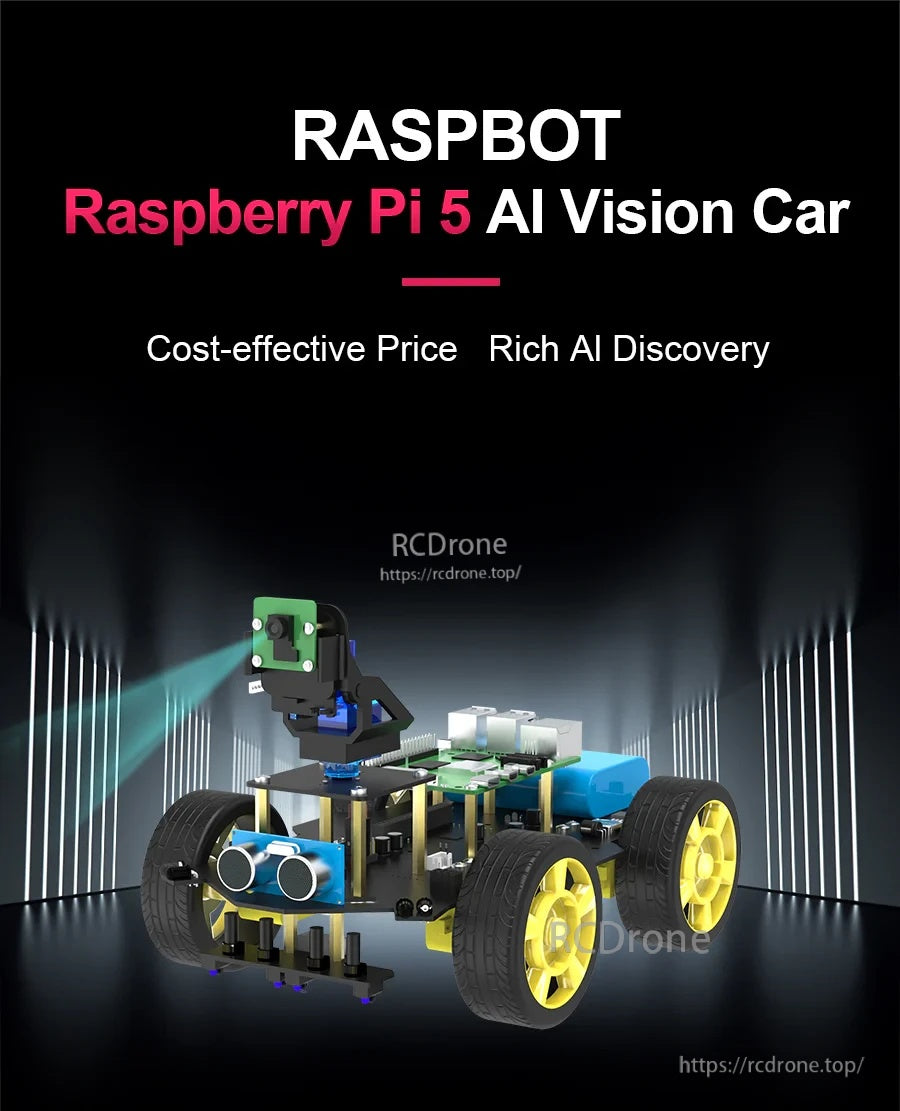
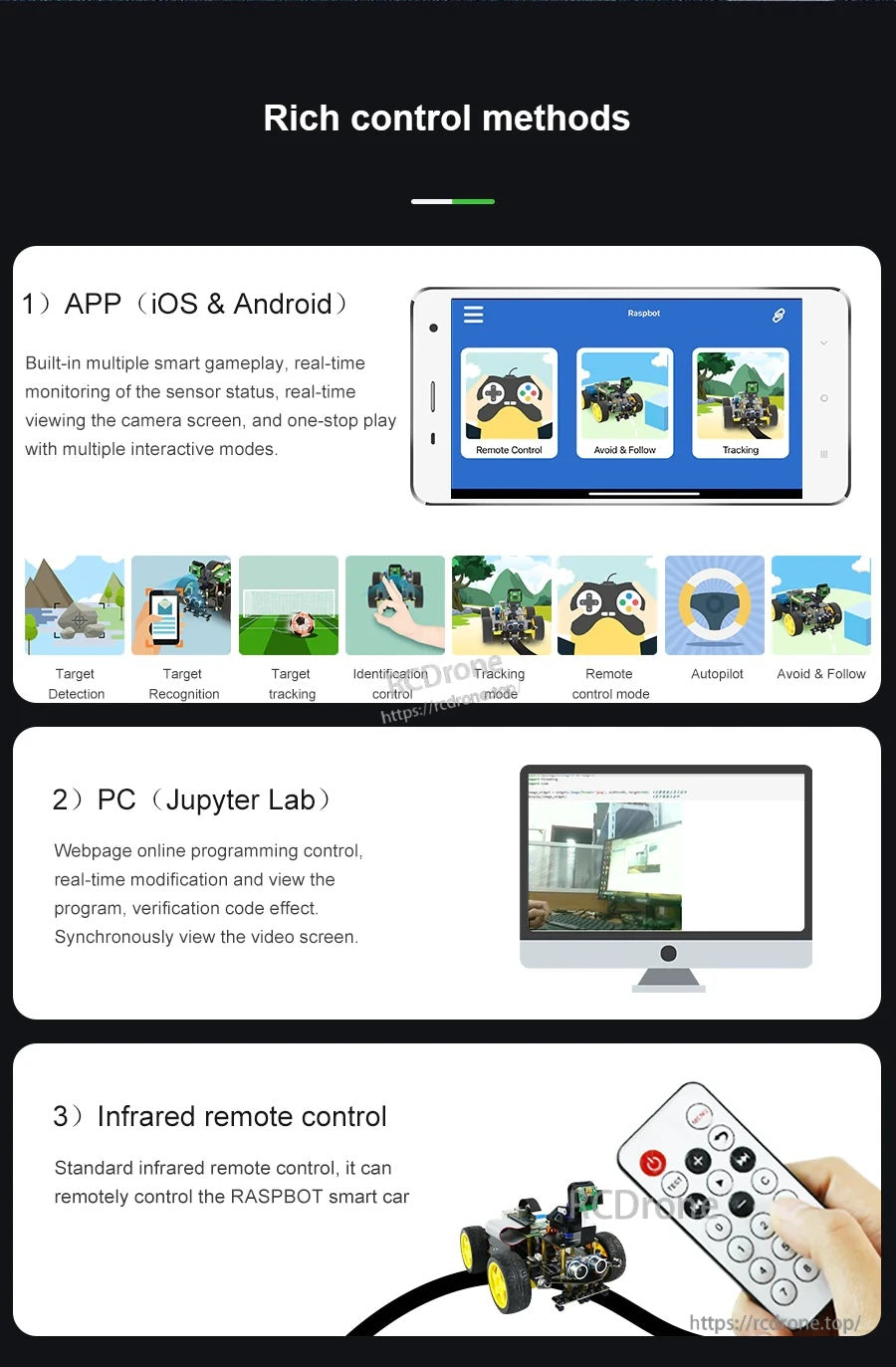
Yahboom Raspbot is an AI vision robot car kit designed for AI beginners and compatible with the Raspberry Pi 5 development board. It uses a multifunctional robot car expansion board as the chassis and integrates 4WD TT motors, a high-definition CSI camera, a four-channel tracking module, and an ultrasonic module for FPV driving and AI vision learning with Python3 and open-source CV. Control is available via Android/iOS app, infrared remote control, and PC (Jupyter Lab) web programming, with real-time video viewing.
Key Features
- Simple structure for assembly and fast learning experience
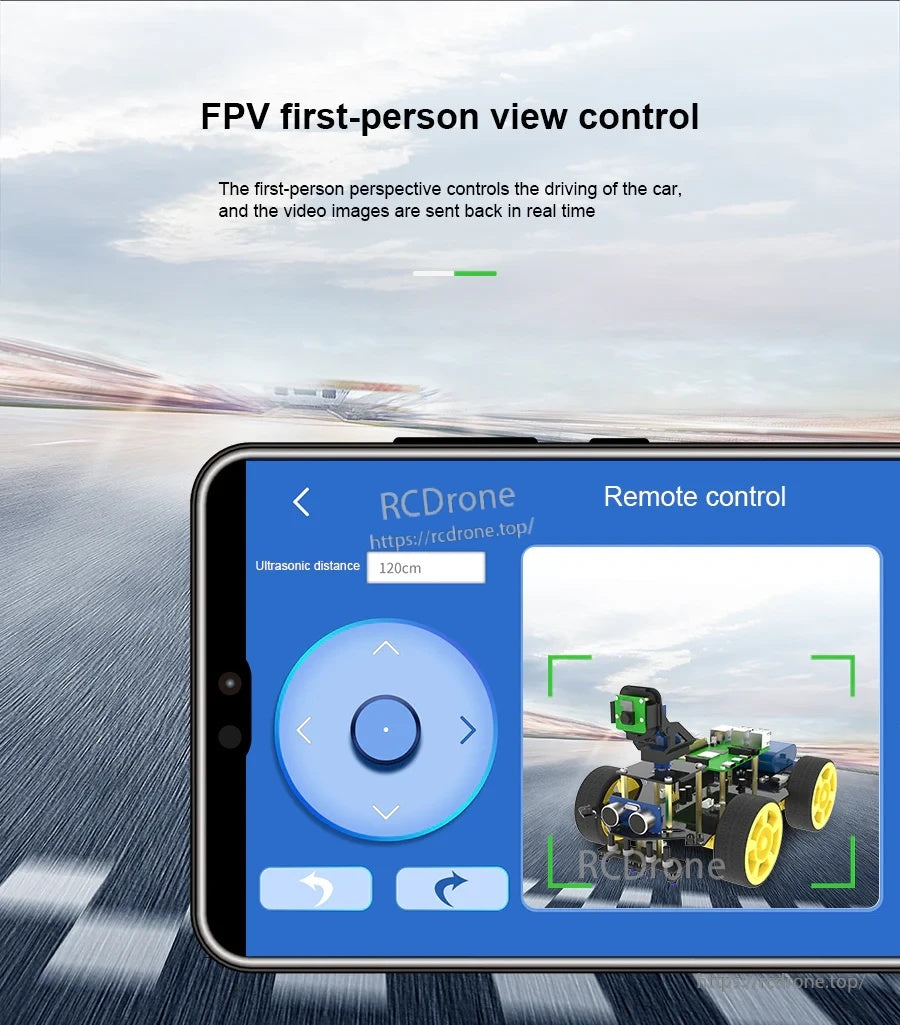
- FPV first-person view control with real-time video return
- Rich control methods: APP (iOS & Android), PC (Jupyter Lab), infrared remote control
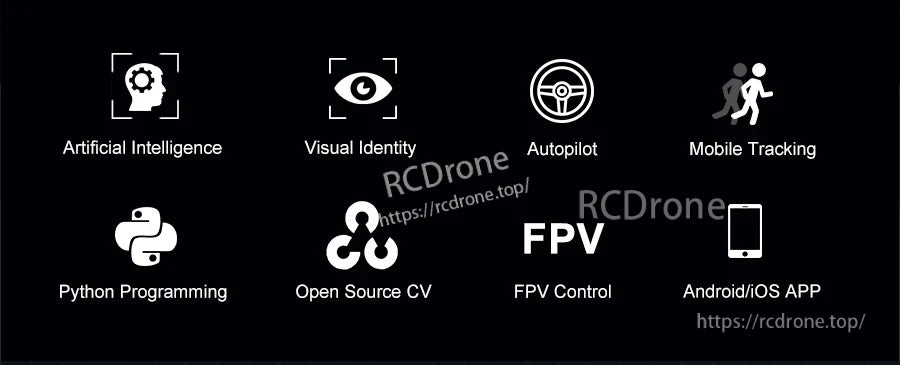
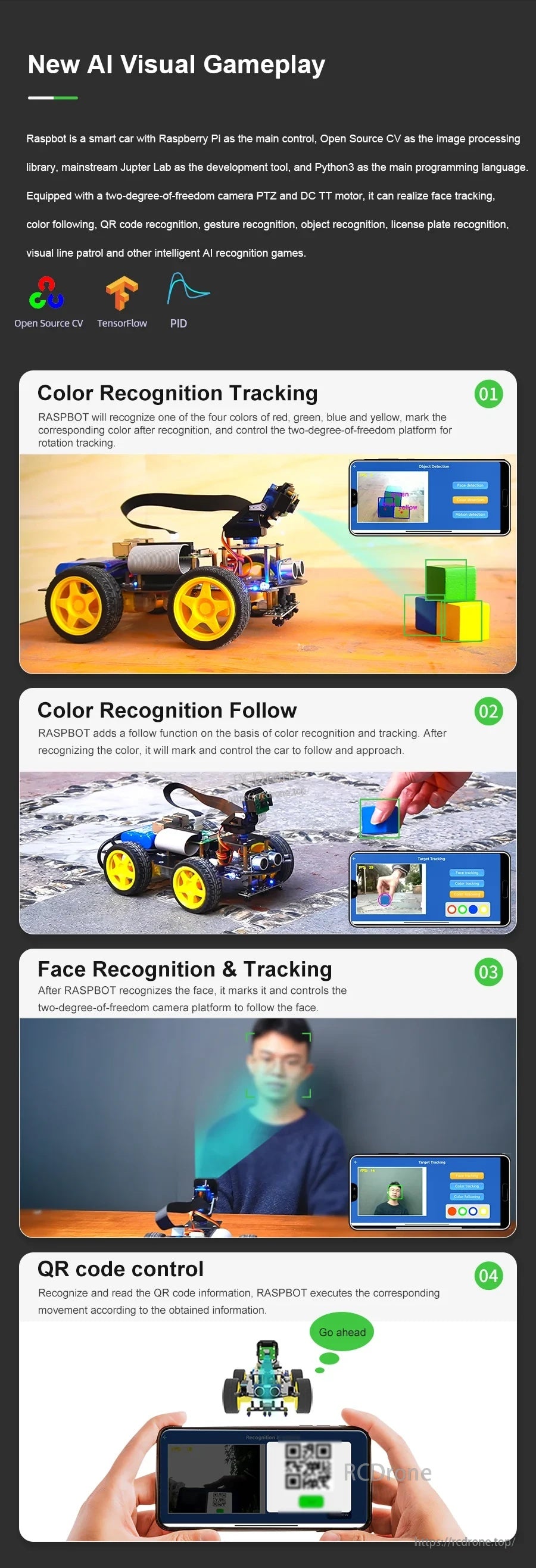
- AI vision gameplay based on Python programming and open-source CV: visual identity, mobile tracking, autopilot, object recognition, gesture recognition, QR code recognition/control, license plate recognition, visual line patrol, and more
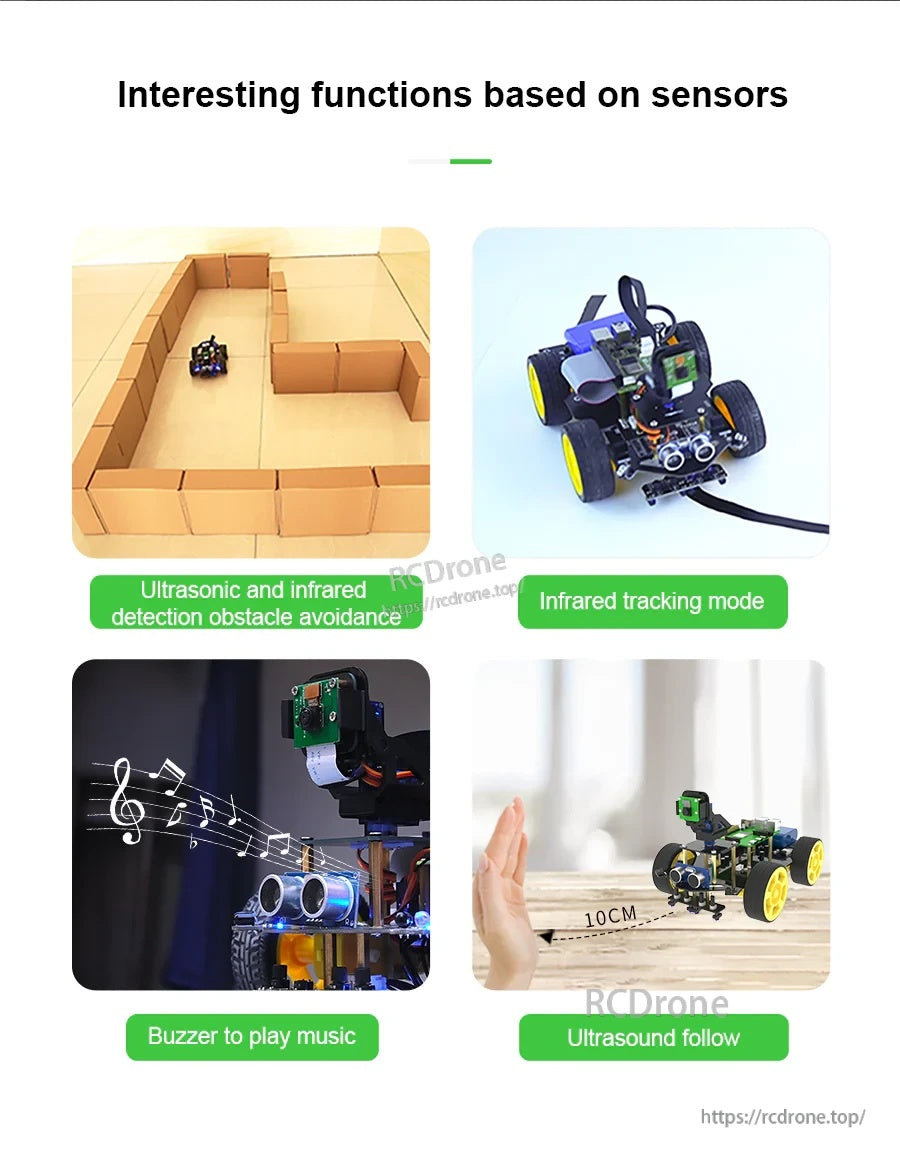
- Sensor-based functions: ultrasonic and infrared detection obstacle avoidance, infrared tracking mode, buzzer to play music, ultrasound follow
- Two-degree-of-freedom camera platform (PTZ)
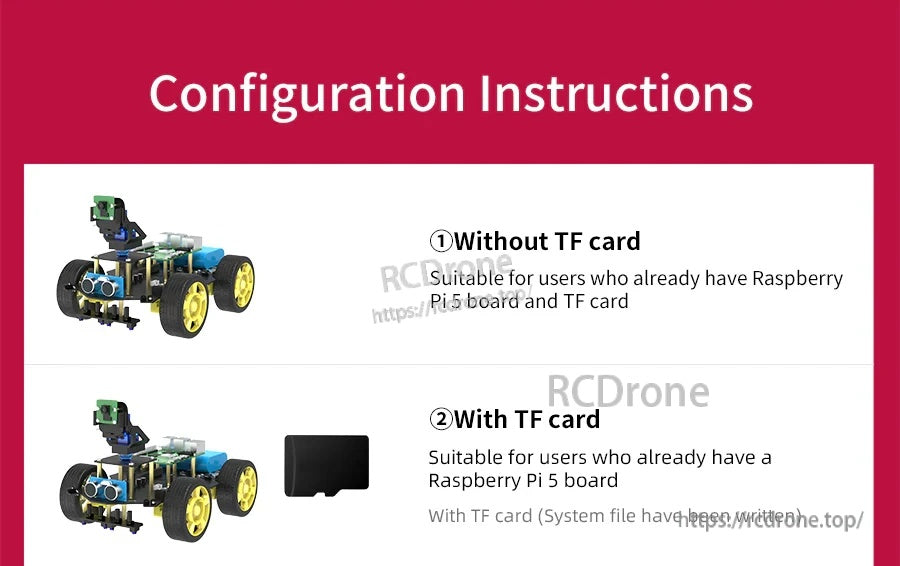
Configuration Options
- Without TF card: Suitable for users who already have Raspberry Pi 5 board and TF card
- With TF card: Suitable for users who already have a Raspberry Pi 5 board; TF card system file has been written
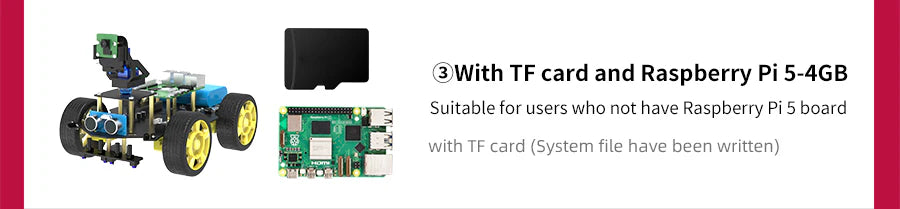
- With TF card and Raspberry Pi 5-4GB: Suitable for users who do not have a Raspberry Pi 5 board; TF card system file has been written
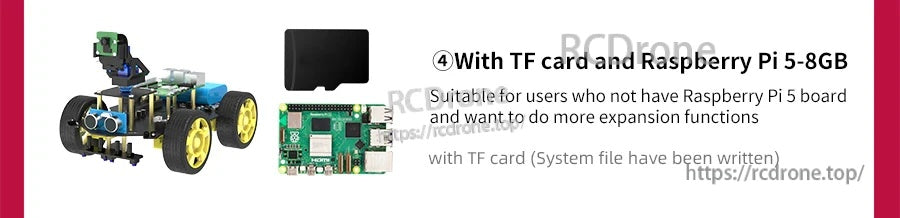
- With TF card and Raspberry Pi 5-8GB: Suitable for users who do not have a Raspberry Pi 5 board and want to do more expansion functions; TF card system file has been written
Specifications
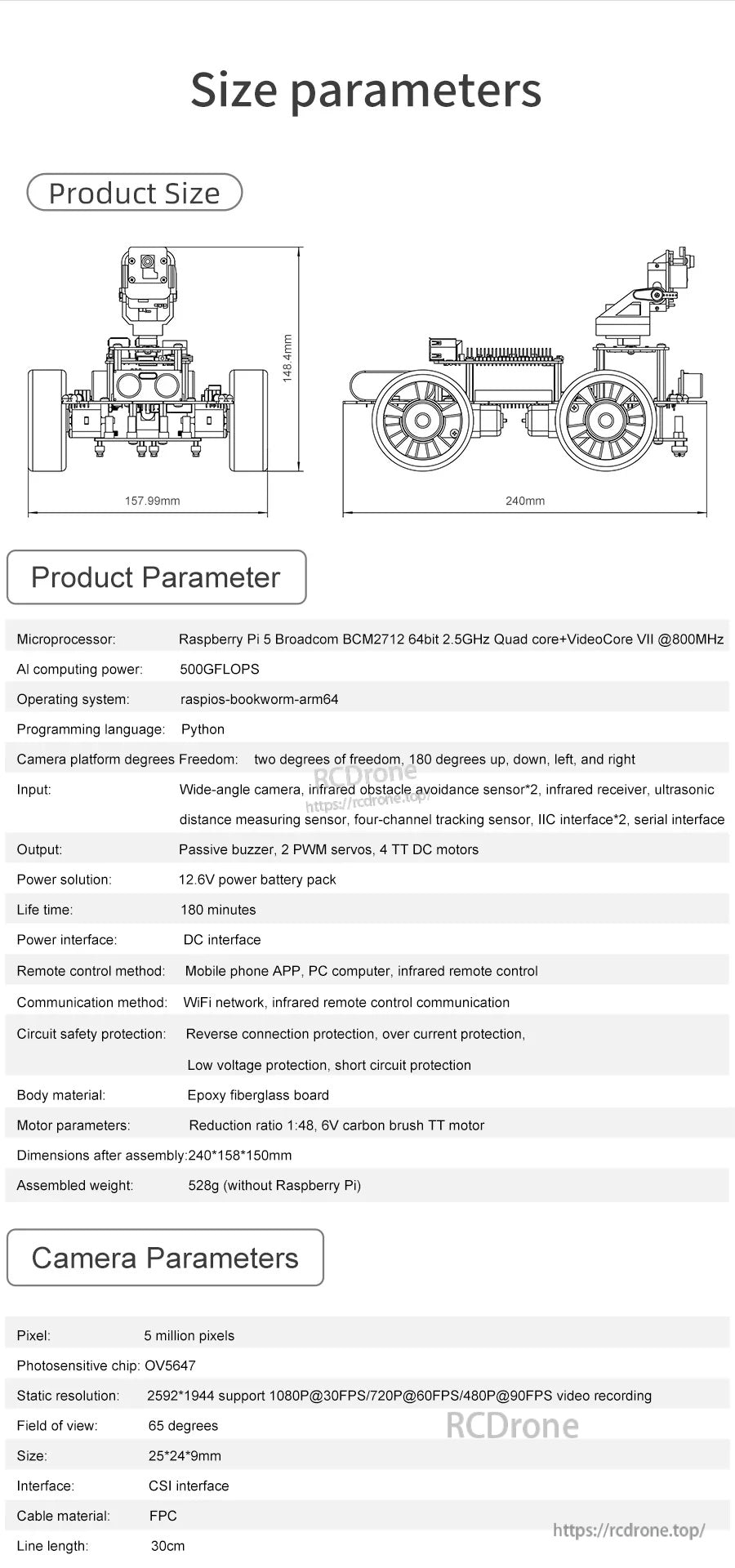
| Product size (drawing) | Length 240 mm; Width 157.99 mm; Height 148.4 mm |
| Dimensions after assembly | 240*158*150 mm |
| Assembled weight | 528 g (without Raspberry Pi) |
| Body material | Epoxy fiberglass board |
| Microprocessor | Raspberry Pi 5 Broadcom BCM2712 64bit 2.5GHz quad core + VideoCore VII @800MHz |
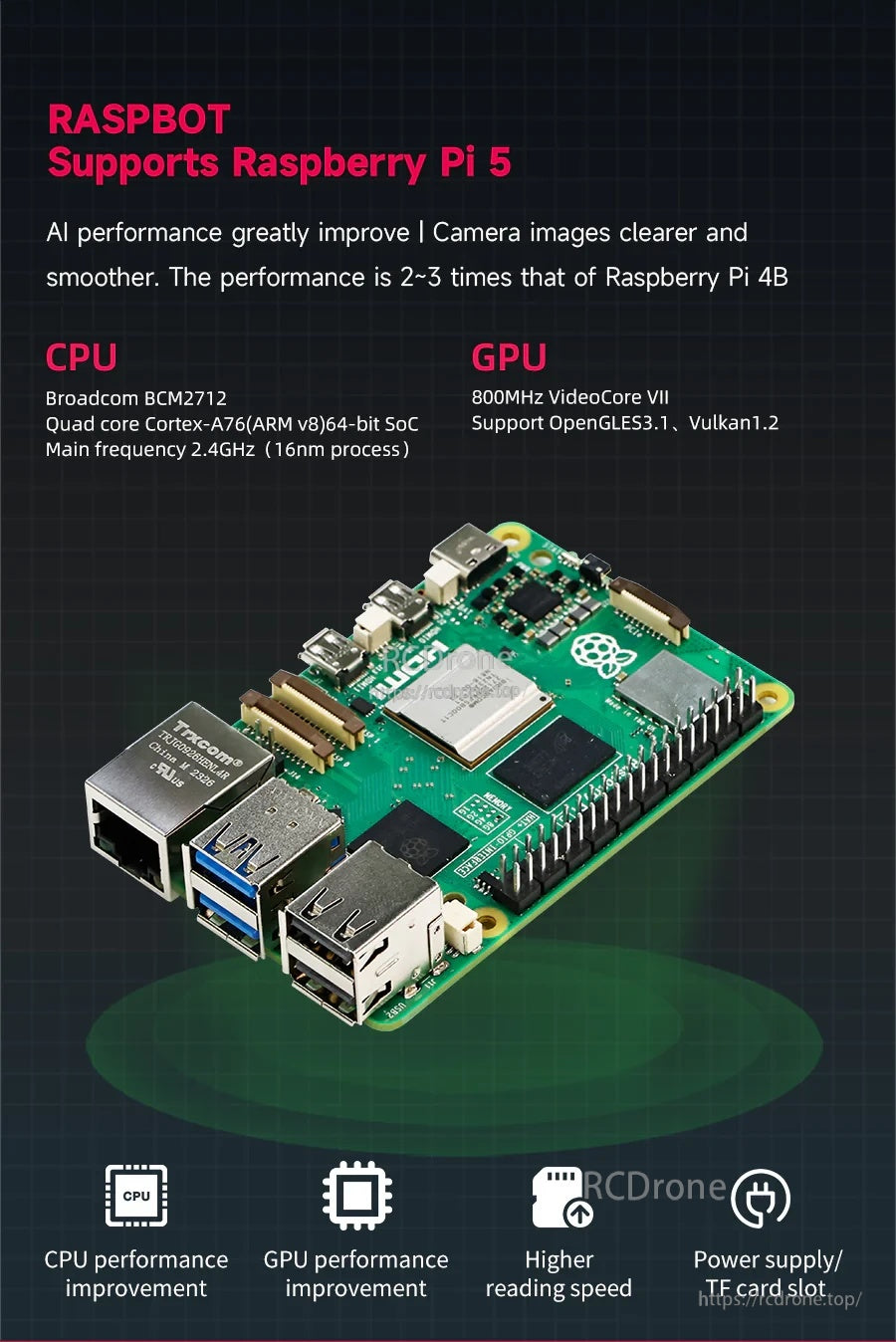
| CPU (Raspberry Pi 5 reference) | Broadcom BCM2712; Quad core Cortex-A76 (ARM v8) 64-bit SoC; Main frequency 2.4GHz (16nm process) |
| GPU (Raspberry Pi 5 reference) | 800MHz VideoCore VII; Support OpenGLES3.1, Vulkan1.2 |
| AI computing power | 500GFLOPS |
| Operating system | raspios-bookworm-arm64 |
| Programming language | Python |
| Drive | 4WD drive |
| Motor parameters | Reduction ratio 1:48; 6V carbon brush TT motor |
| Camera platform degrees of freedom | Two degrees of freedom; 180 degrees up, down, left, and right |
| Input | Wide-angle camera; infrared obstacle avoidance sensor*2; infrared receiver; ultrasonic distance measuring sensor; four-channel tracking sensor; IIC interface*2; serial interface |
| Output | Passive buzzer; 2 PWM servos; 4 TT DC motors |
| Power solution | 12.6V power battery pack |
| Life time | 180 minutes |
| Power interface | DC interface |
| Remote control method | Mobile phone APP; PC computer; infrared remote control |
| Communication method | WiFi network; infrared remote control communication |
| Circuit safety protection | Reverse connection protection; over current protection; low voltage protection; short circuit protection |
Camera Parameters
| Pixel | 5 million pixels |
| Photosensitive chip | OV5647 |
| Static resolution | 2592*1944; support 1080P@30FPS / 720P@60FPS / 480P@90FPS video recording |
| Field of view | 65 degrees |
| Size | 25*24*9 mm |
| Interface | CSI interface |
| Cable material | FPC |
| Line length | 30 cm |
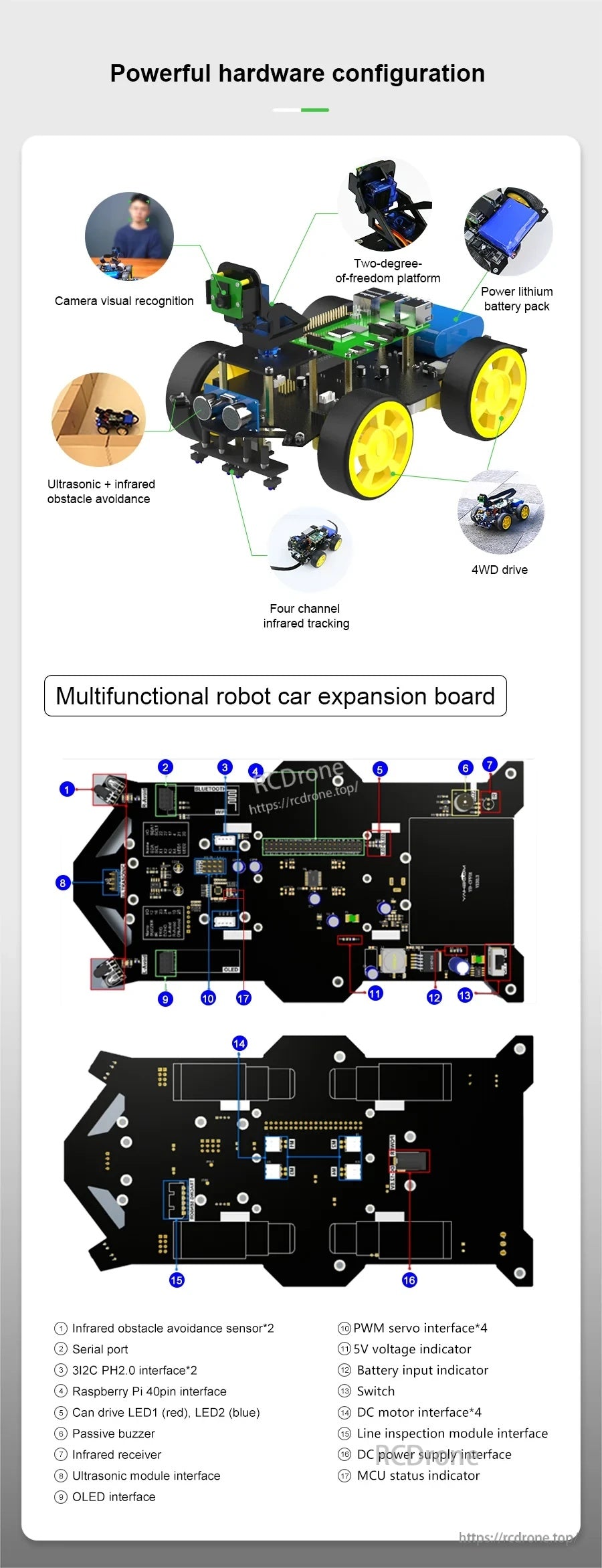
Expansion Board Interfaces (Multifunctional Robot Car Expansion Board)
- Infrared obstacle avoidance sensor*2
- Serial port
- I2C PH2.0 interface*2
- Raspberry Pi 40pin interface
- Can drive LED1 (red), LED2 (blue)
- Passive buzzer
- Infrared receiver
- Ultrasonic module interface
- OLED interface
- PWM servo interface*4
- 5V voltage indicator
- Battery input indicator
- Switch
- DC motor interface*4
- Line inspection module interface
- DC power supply interface
- MCU status indicator
Applications
- Raspberry Pi 5 robotics learning and AI vision projects
- Python3 + OpenCV practice (tracking, recognition, and autonomous driving demos)
- FPV robot car programming via app and Jupyter Lab
For order assistance, configuration selection, or technical support, contact https://rcdrone.top/ or email support@rcdrone.top.
Manuals
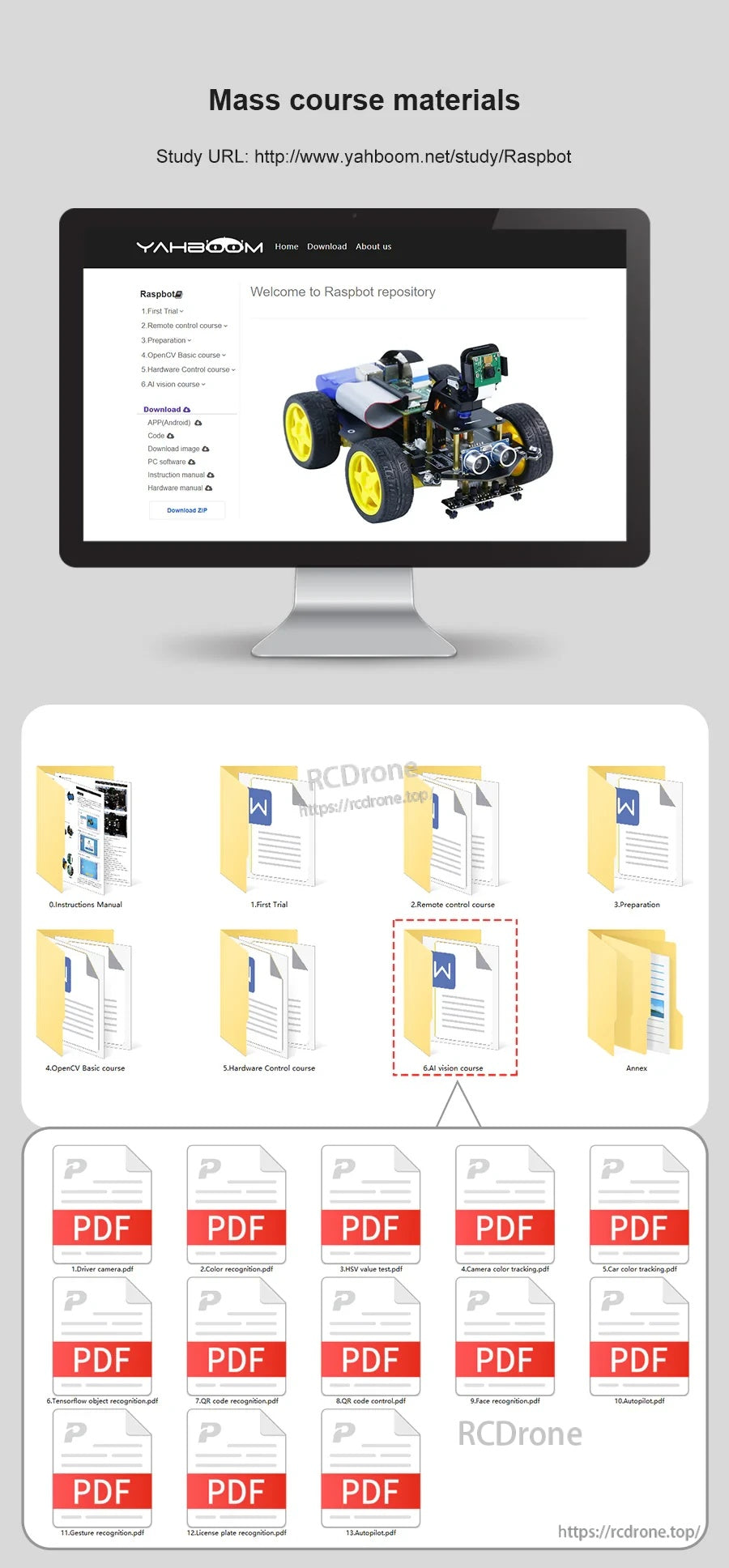
Study URL: http://www.yahboom.net/study/Raspbot
- Instructions Manual
- First Trial
- Remote control course
- Preparation
- OpenCV Basic course
- Hardware Control course
- AI vision course
- Annex
- PDFs shown: Driver camera.pdf; Color recognition.pdf; HSV value test.pdf; Camera color tracking.pdf; Car color tracking.pdf; Tensorflow object recognition.pdf; QR code recognition.pdf; QR code control.pdf; Face recognition.pdf; Autopilot.pdf; Gesture recognition.pdf; License plate recognition.pdf; Autopilot.pdf
Details

Start learning AI vision on Raspberry Pi 5 with a 4WD robot car that combines FPV driving, camera pan/tilt, and onboard sensors.

Python + open-source CV gameplay covers visual recognition, tracking, and autonomous driving, with FPV control and mobile app support.

Built for Raspberry Pi 5 performance, supporting smoother camera processing for computer-vision learning projects.

Choose a kit configuration based on whether you already have a microSD (TF) card for Raspberry Pi 5.

Bundle options are available with a preloaded TF card and Raspberry Pi 5 (4GB) for faster setup.

For more room to expand, the Raspberry Pi 5 (8GB) bundle pairs with a prewritten TF card for quick start.

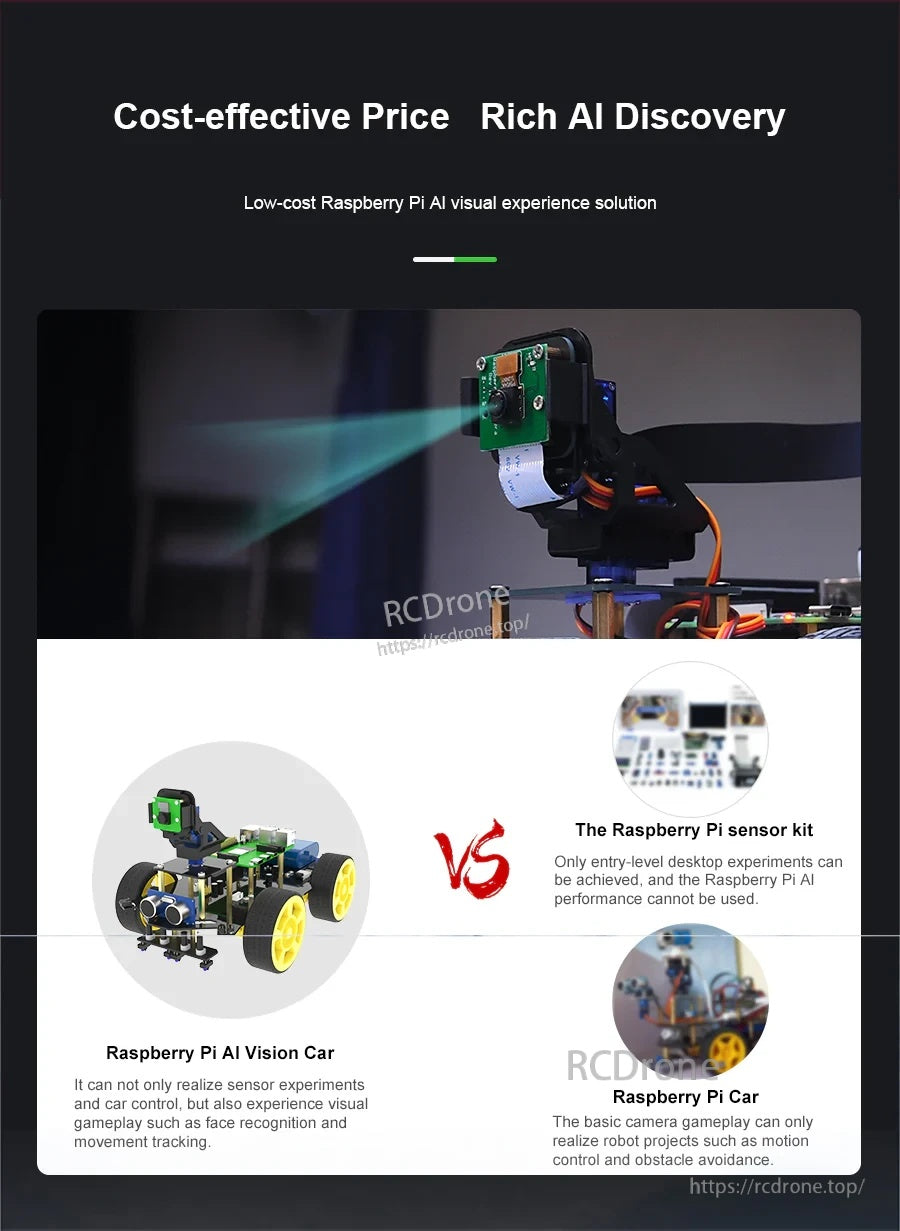
A cost-effective way to explore AI vision on Raspberry Pi, combining a CSI camera, PTZ mount, and robot chassis in one build.

Drive in FPV mode from iOS/Android with real-time video return and an on-screen remote control interface.

Control it your way—mobile app for driving, PC web programming in JupyterLab, or the included infrared remote.

Prebuilt demos help you practice color tracking, following behaviors, and QR code control using Python-based vision routines.

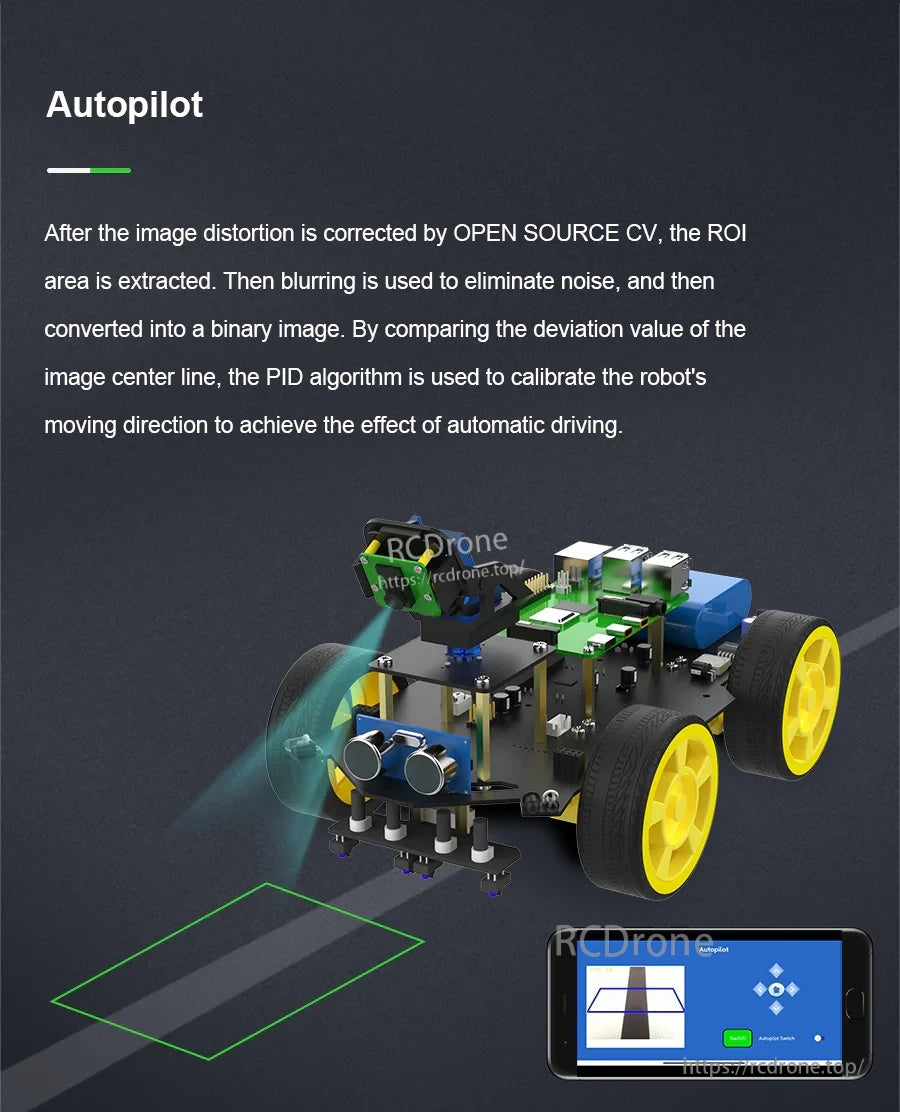
Autopilot routines use OpenCV processing and PID control concepts to support automatic driving experiments.

Sensor-based play includes obstacle avoidance, infrared line tracking, ultrasound follow, and buzzer sound effects.

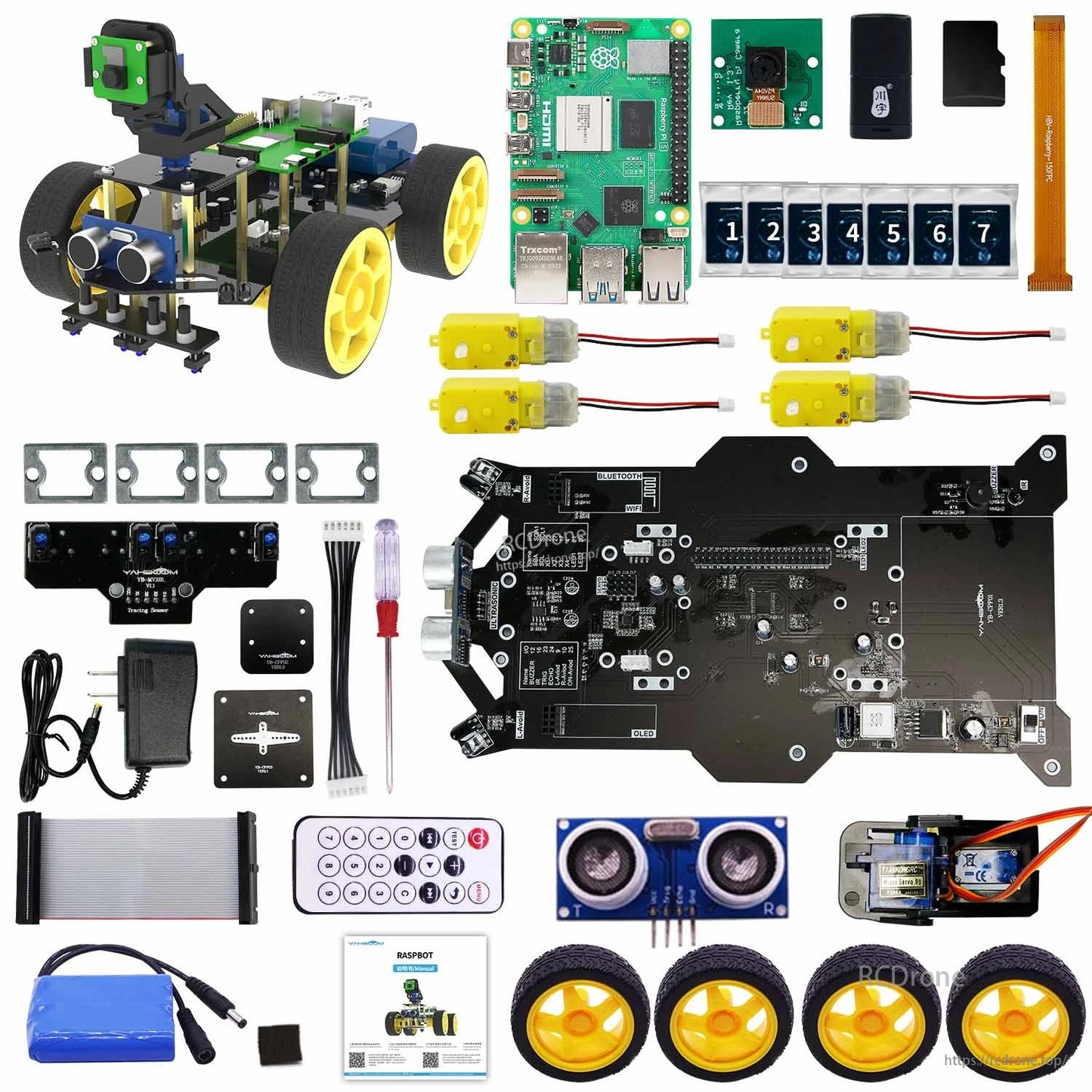
Core hardware integrates a multifunction expansion board with 4WD drive, camera pan/tilt, ultrasonic ranging, and a tracking module.

Step-by-step lessons and downloadable documents support assembly, coding, and vision experiments.

Check dimensions and key specs before building, including camera interface details and overall assembled size.

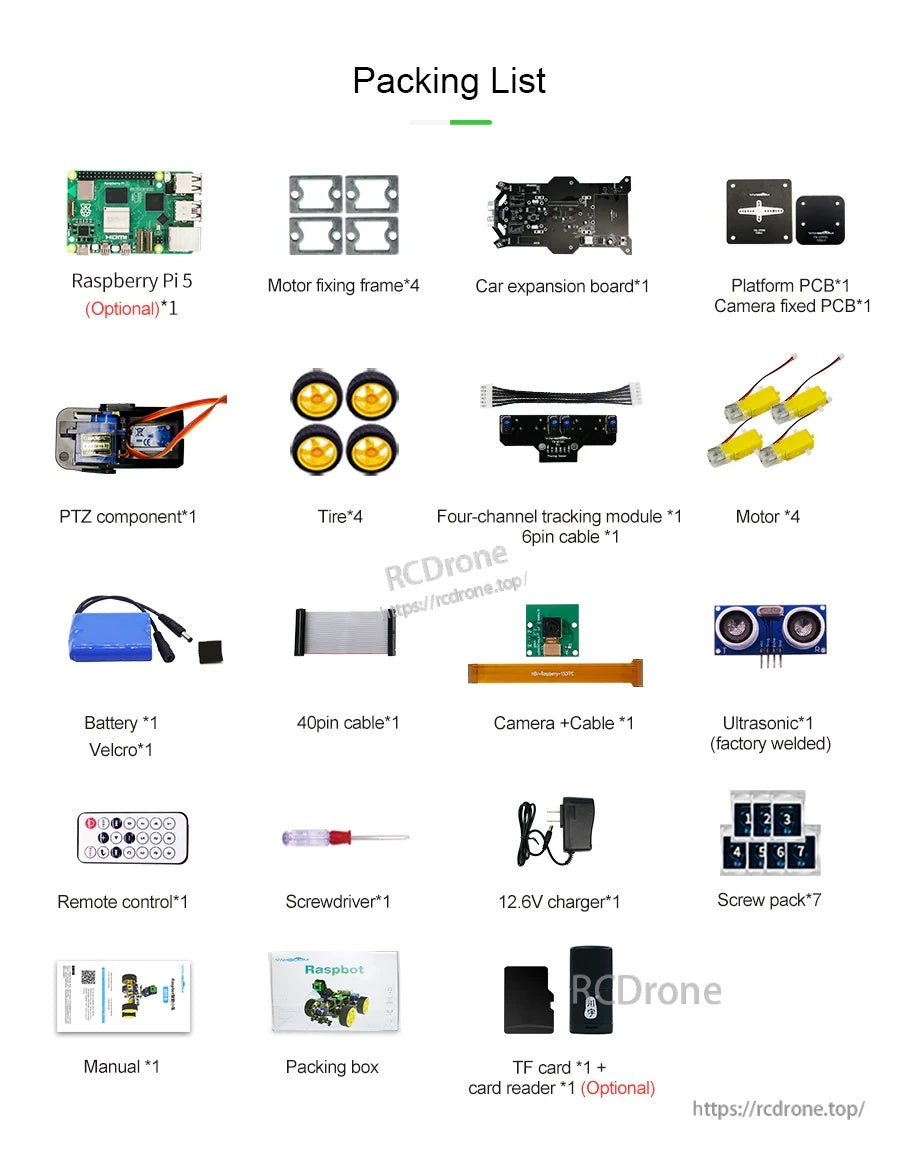
Everything needed for assembly is itemized, including chassis electronics, motors, sensors, cables, remote, and tools (options vary).