


Yahboom মিনি হুইলড রোবট কার চ্যাসিস কিট ৪WD অ্যালুমিনিয়াম অ্যালয় ১৯.৫ x ১৪.২ x ৪.৫ সেমি, ৩১০ এনকোডার মোটর
Yahboom মিনি হুইলড রোবট কার চ্যাসিস কিট ৪WD অ্যালুমিনিয়াম অ্যালয় ১৯.৫ x ১৪.২ x ৪.৫ সেমি, ৩১০ এনকোডার মোটর
Yahboom
পিকআপের উপলভ্যতা লোড করা যায়নি


ওভারভিউ
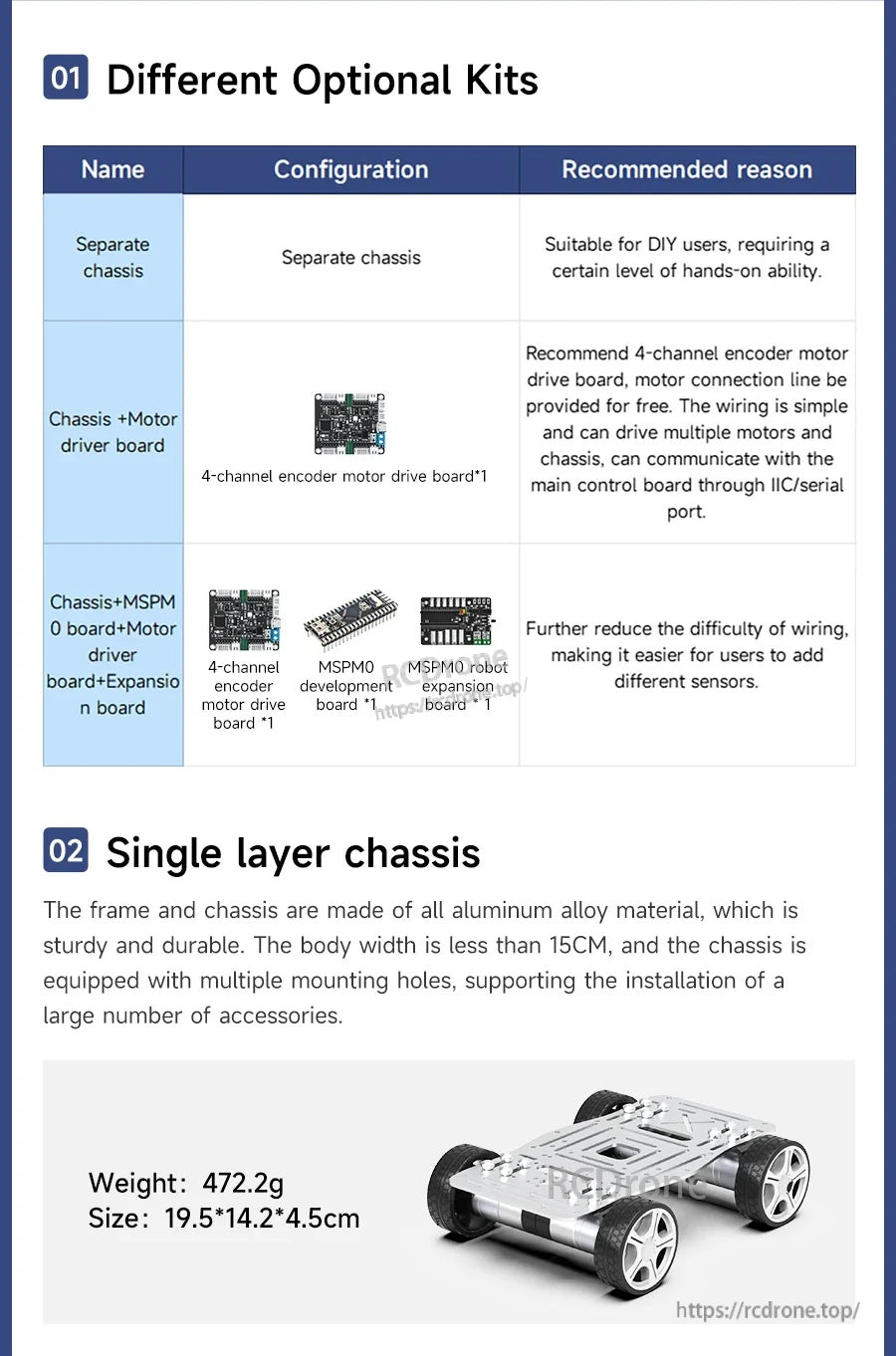
ইয়াহবুম মিনি হুইলড রোবট কার রোবট কার চ্যাসিস কিট একটি কমপ্যাক্ট অ্যালুমিনিয়াম-অ্যালয়, একক-স্তরের চ্যাসিস ব্যবহার করে যা রোবট কার রেসের জন্য ডিজাইন করা হয়েছে যেখানে ক্ষেত্রের আকারের সীমাবদ্ধতা রয়েছে। চ্যাসিসের প্রস্থ ১৪.২ সেমি (১৫ সেমির কম) এবং সামগ্রিক আকার ২৫ সেমির কম দৈর্ঘ্যের হওয়ায় এটি ছোট-ফরম্যাট DIY মোবাইল রোবট প্ল্যাটফর্মের জন্য উপযুক্ত। একাধিক মাউন্টিং হোল সংরক্ষিত রয়েছে যা এক্সপ্যানশন বোর্ড, সেন্সর, ক্যামেরা PTZ অ্যাসেম্বলি এবং যোগাযোগ ডিভাইস সমর্থন করে।
মূল বৈশিষ্ট্যসমূহ
- সমস্ত অ্যালুমিনিয়াম অ্যালয় ফ্রেম; কারিগরি: সিলভার, অক্সাইড স্যান্ডব্লাস্টেড
- ব্যক্তিগতকৃত সম্প্রসারণের প্রয়োজন মেটাতে সংরক্ষিত ইনস্টলেশন হোল
- চার-চাকা ড্রাইভ চ্যাসিস কাঠামো; প্ল্যাটফর্ম নোট: দুই-চাকা ড্রাইভ/চার-চাকা ড্রাইভ ঐচ্ছিক
- ৩১০ এনকোডার রিডাকশন মোটর ব্যবহার করে; এনকোডার প্রকার: ১৩-ওয়্যার AB ফেজ হল এনকোডার (৩.3–5V)
- 48 মিমি রাবার টায়ার; 310 মোটর শ্যাফ্ট একটি "ফ্লাওয়ার শ্যাফ্ট" ডিজাইন ব্যবহার করে ঘর্ষণ বৃদ্ধি এবং টায়ার বিচ্ছিন্নতার ঝুঁকি কমায়
- চ্যাসিসের 3D মডেল ফাইল সরবরাহকারী দ্বারা প্রদত্ত (যেমনটি সরবরাহকারী উল্লেখ করেছে)
স্পেসিফিকেশন
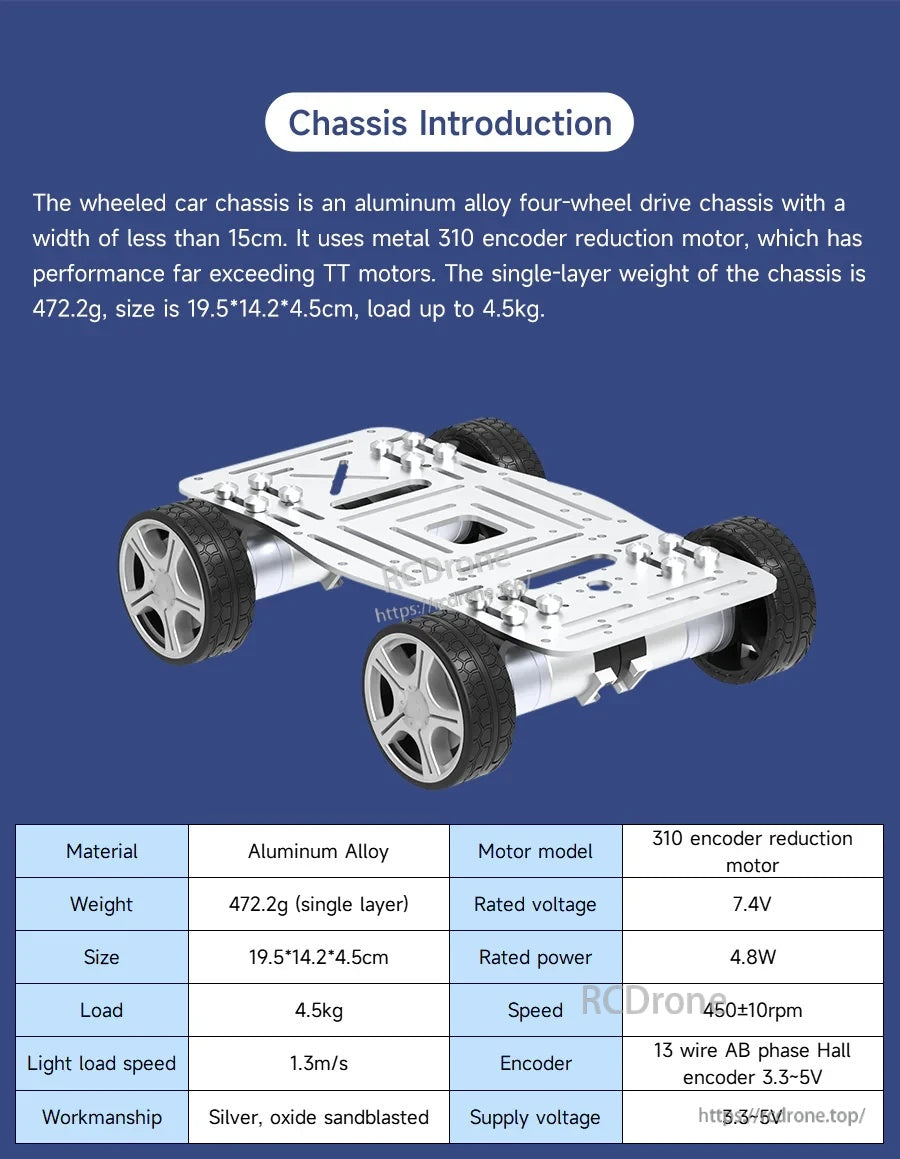
| উপাদান | অ্যালুমিনিয়াম অ্যালয় |
| চ্যাসিসের আকার | 19.5 x 14.2 x 4.5 সেমি |
| সর্বমোট আকার সীমা (প্ল্যাটফর্ম নোট) | দৈর্ঘ্য < 25 সেমি; প্রস্থ < 15 সেমি; উচ্চতা < 15 সেমি |
| চ্যাসিস প্রস্থ | <14.2 সেমি (প্রস্থ 15 সেমির কম)|
| ওজন | 472.2 গ্রাম (একক স্তর) |
| লোড | 4.5 কেজি |
| হালকা লোড গতি | 1.3 মি/সেকেন্ড |
| মোটর মডেল | 310 এনকোডার রিডাকশন মোটর |
| মোটর রেটেড ভোল্টেজ | 7.4 V |
| মোটর রেটেড পাওয়ার | 4.8 W |
| মোটর গতি | 450 ± 10 rpm |
| এনকোডার | 13-ওয়্যার AB ফেজ হল এনকোডার, 3.3–5V |
| সরবরাহ ভোল্টেজ (এনকোডার) | 3.3–5V |
| টায়ারের আকার | 48 মিমি রাবার টায়ার |
কি অন্তর্ভুক্ত আছে
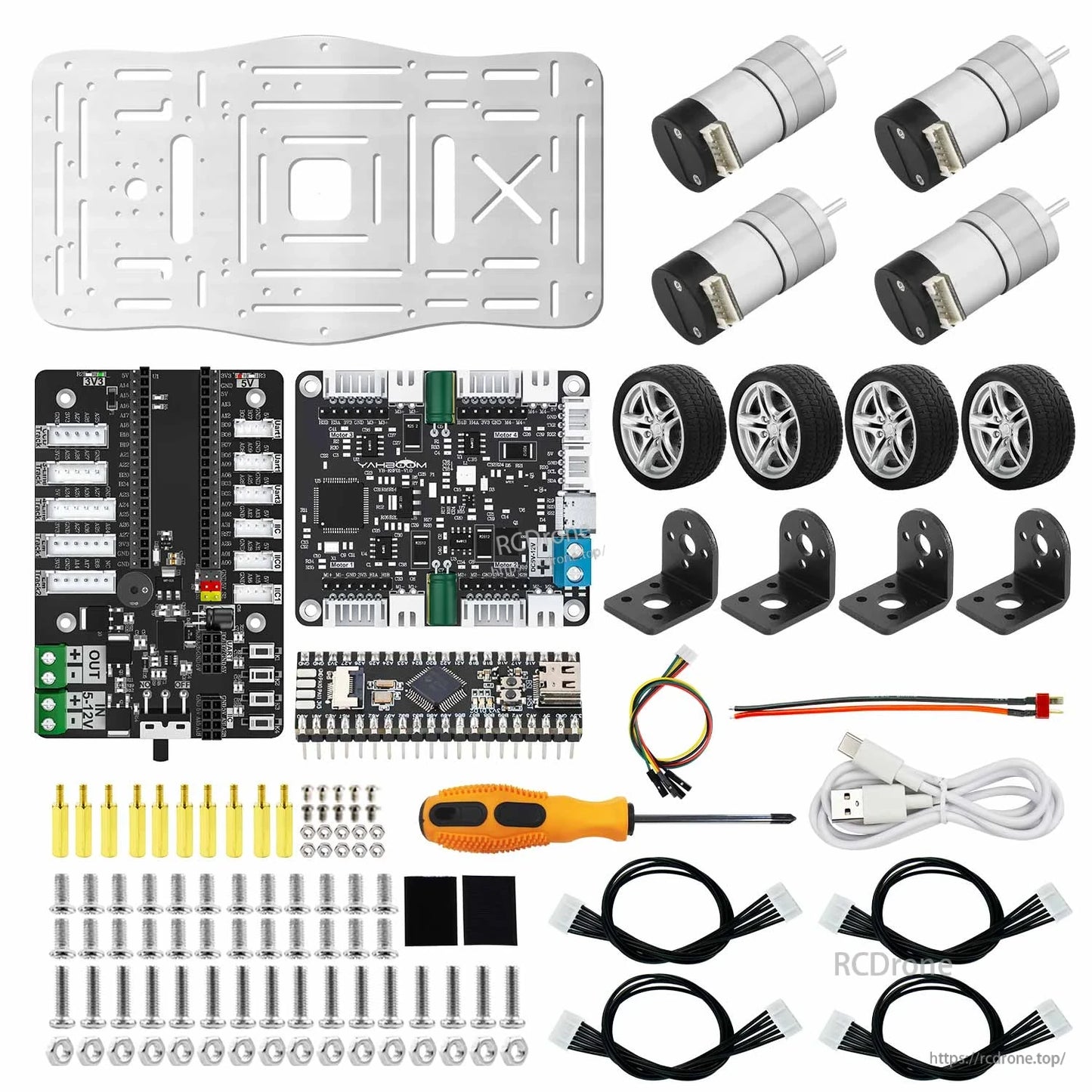
- অ্যালুমিনিয়াম অ্যালয় চেসিস (একক স্তর)
- 310 মোটর x 4
- রাবার টায়ার x 4
প্রয়োগসমূহ
- কমপ্যাক্ট রোবট গাড়ি রেস এবং প্রশিক্ষণ প্রকল্পগুলি চেসিস প্রস্থ সীমাবদ্ধতার সাথে
- DIY মোবাইল রোবট প্ল্যাটফর্ম সেন্সর, ক্যামেরা PTZ, এবং যোগাযোগ ডিভাইস যোগ করার জন্য সংরক্ষিত মাউন্টিং হোল ব্যবহার করে
ঐচ্ছিক নিয়ন্ত্রণ & সম্প্রসারণ (অন্তর্ভুক্ত নয়)
এই চেসিস প্ল্যাটফর্মের জন্য বিভিন্ন ঐচ্ছিক কিট কনফিগারেশন উল্লেখ করা হয়েছে: পৃথক চেসিস; চেসিস + মোটর ড্রাইভার বোর্ড (4-চ্যানেল এনকোডার মোটর ড্রাইভ বোর্ড x 1); চেসিস + MSPM0 বোর্ড + মোটর ড্রাইভার বোর্ড + সম্প্রসারণ বোর্ড (4-চ্যানেল এনকোডার মোটর ড্রাইভ বোর্ড x 1, MSPM0 ডেভেলপমেন্ট বোর্ড x 1, MSPM0 রোবট সম্প্রসারণ বোর্ড x 1)।নির্বাচন সহায়তার জন্য, https://rcdrone.top/ এর সাথে যোগাযোগ করুন বা [email protected].
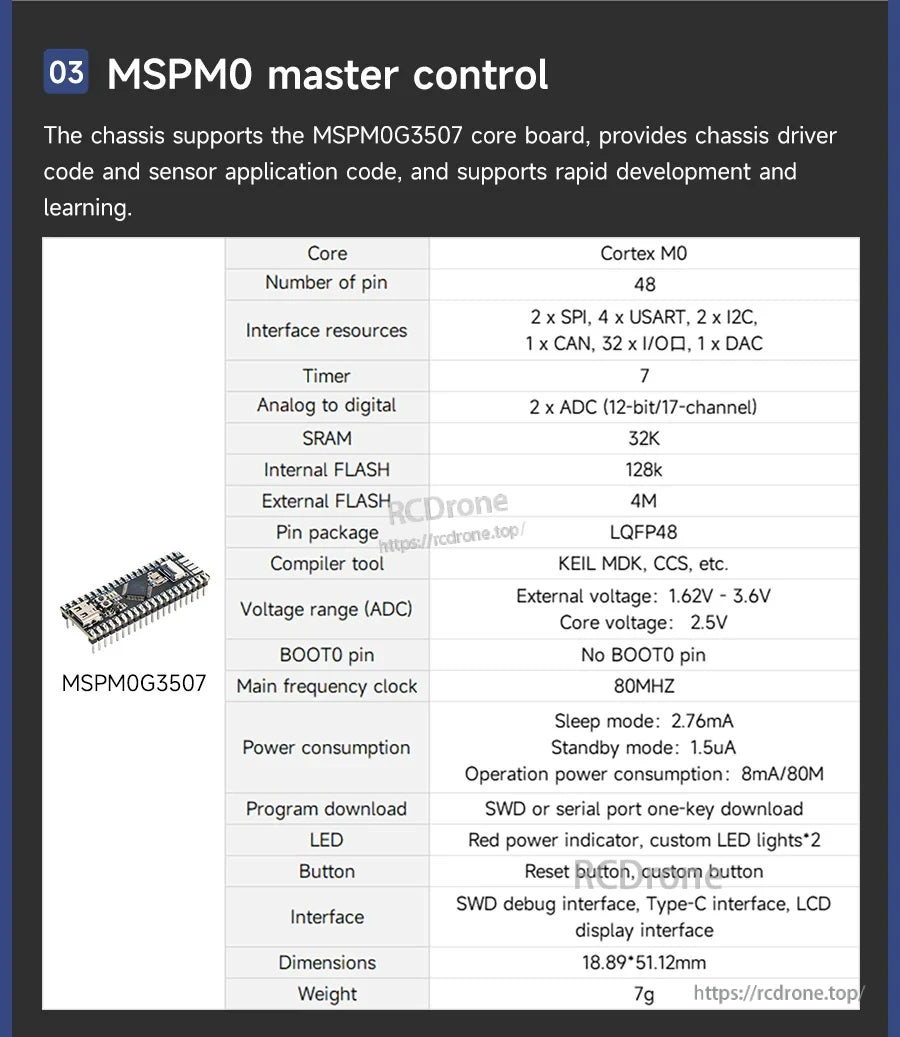
এ ইমেইল করুন MSPM0 মাস্টার কন্ট্রোল (MSPM0G3507) – উল্লেখিত স্পেসিফিকেশন
| কোর | Cortex M0 |
| পিন সংখ্যা | 48 |
| ইন্টারফেস রিসোর্স | 2 x SPI, 4 x USART, 2 x I2C, 1 x CAN, 32 x I/O, 1 x DAC |
| টাইমার | 7 |
| অ্যানালগ থেকে ডিজিটাল | 2 x ADC (12-bit/17-channel) |
| SRAM | 32K |
| ইন্টারনাল ফ্ল্যাশ | 128k |
| এক্সটার্নাল ফ্ল্যাশ | 4M |
| পিন প্যাকেজ | LQFP48 |
| কম্পাইলার টুল | KEIL MDK, CCS, ইত্যাদি। |
| ভোল্টেজ রেঞ্জ (ADC) | বাহ্যিক ভোল্টেজ: 1.62V - 3.6V; কোর ভোল্টেজ: 2.5V |
| BOOT0 পিন | কোনো BOOT0 পিন নেই |
| প্রধান ফ্রিকোয়েন্সি ঘড়ি | 80MHZ |
| বিদ্যুৎ খরচ | ঘুম মোড: 2.76mA; স্ট্যান্ডবাই মোড: 1.5uA; অপারেশন পাওয়ার খরচ: 8mA/80M |
| প্রোগ্রাম ডাউনলোড | SWD বা সিরিয়াল পোর্ট এক-কী ডাউনলোড |
| এলইডি | লাল পাওয়ার সূচক, কাস্টম LED লাইট x 2 |
| বাটন | রিসেট বাটন, কাস্টম বাটন |
| ইন্টারফেস | SWD ডিবাগ ইন্টারফেস, টাইপ-C ইন্টারফেস, LCD ডিসপ্লে ইন্টারফেস |
| মাত্রা | 18.89 x 51.১২ মিমি |
| ওজন | ৭ গ্রাম |
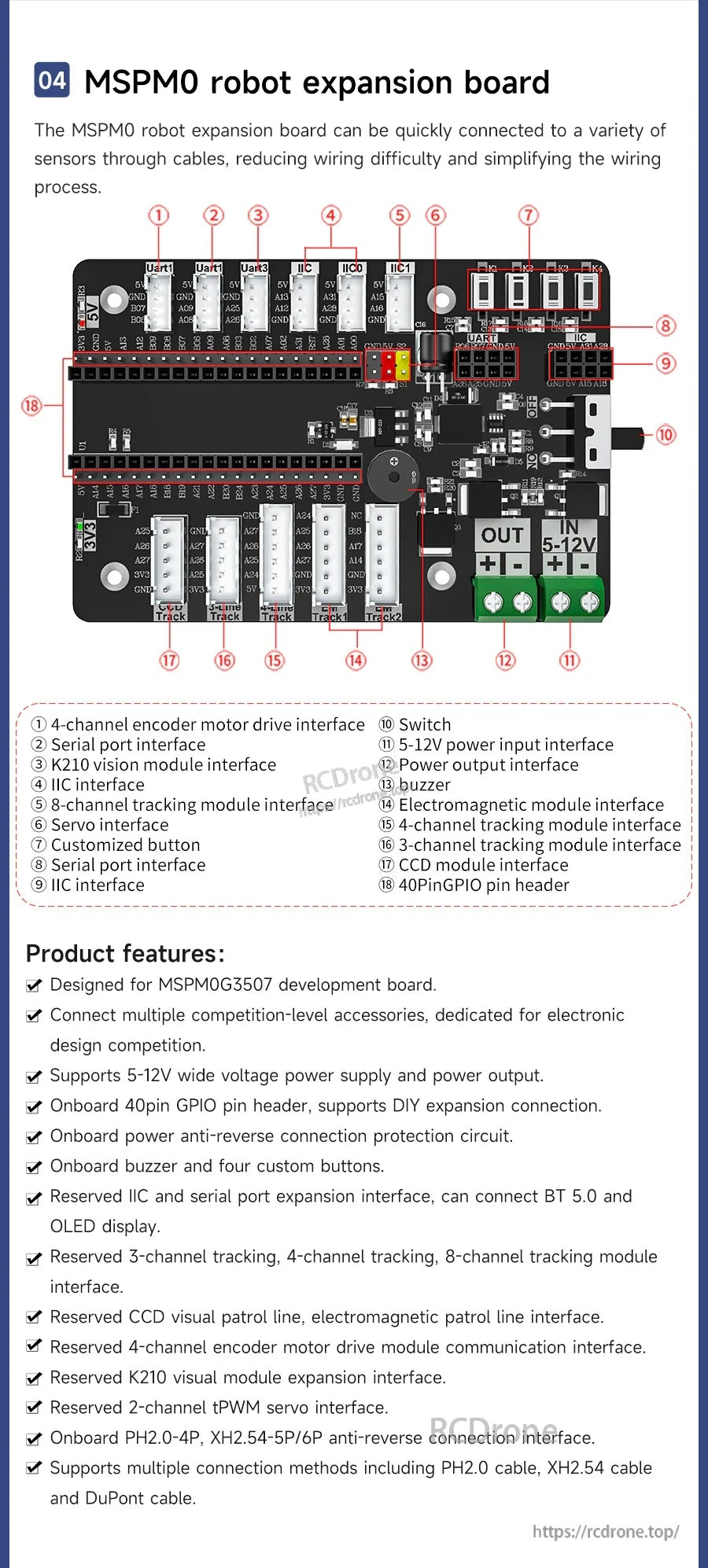
MSPM0 রোবট সম্প্রসারণ বোর্ড – রেফারেন্সড ইন্টারফেস & বৈশিষ্ট্যসমূহ
- ইন্টারফেস: ৪-চ্যানেল এনকোডার মোটর ড্রাইভ ইন্টারফেস; সিরিয়াল পোর্ট ইন্টারফেস; K210 ভিশন মডিউল ইন্টারফেস; IIC ইন্টারফেস; ৮-চ্যানেল ট্র্যাকিং মডিউল ইন্টারফেস; সার্ভো ইন্টারফেস; কাস্টমাইজড বোতাম; সুইচ; ৫–১২V পাওয়ার ইনপুট ইন্টারফেস; পাওয়ার আউটপুট ইন্টারফেস; বাজার; ইলেক্ট্রোম্যাগনেটিক মডিউল ইন্টারফেস; ৪-চ্যানেল ট্র্যাকিং মডিউল ইন্টারফেস; ৩-চ্যানেল ট্র্যাকিং মডিউল ইন্টারফেস; CCD মডিউল ইন্টারফেস; ৪০পিন GPIO পিন হেডার
- বৈশিষ্ট্যসমূহ: MSPM0G3507 ডেভেলপমেন্ট বোর্ডের জন্য ডিজাইন করা হয়েছে; ৫–১২V ওয়াইড ভোল্টেজ পাওয়ার সাপ্লাই এবং পাওয়ার আউটপুট সমর্থন করে; অনবোর্ড ৪০-পিন GPIO হেডার; পাওয়ার অ্যান্টি-রিভার্স কানেকশন প্রোটেকশন সার্কিট; অনবোর্ড বাজার এবং চারটি কাস্টম বোতাম; সংরক্ষিত IIC এবং সিরিয়াল সম্প্রসারণ (BT 5 সংযোগ সমর্থন করে।0 এবং OLED ডিসপ্লে); সংরক্ষিত 3-চ্যানেল/4-চ্যানেল/8-চ্যানেল ট্র্যাকিং ইন্টারফেস; সংরক্ষিত CCD ভিজ্যুয়াল প্যাট্রোল লাইন এবং ইলেক্ট্রোম্যাগনেটিক প্যাট্রোল লাইন ইন্টারফেস; সংরক্ষিত 4-চ্যানেল এনকোডার মোটর ড্রাইভ মডিউল যোগাযোগ ইন্টারফেস; সংরক্ষিত K210 ভিজ্যুয়াল মডিউল সম্প্রসারণ ইন্টারফেস; সংরক্ষিত 2-চ্যানেল tPWM সার্ভো ইন্টারফেস; অনবোর্ড PH2.0-4P এবং XH2.54-5P/6P অ্যান্টি-রিভার্স সংযোগ ইন্টারফেস; PH2.0, XH2.54, এবং DuPont কেবল সংযোগ সমর্থন করে
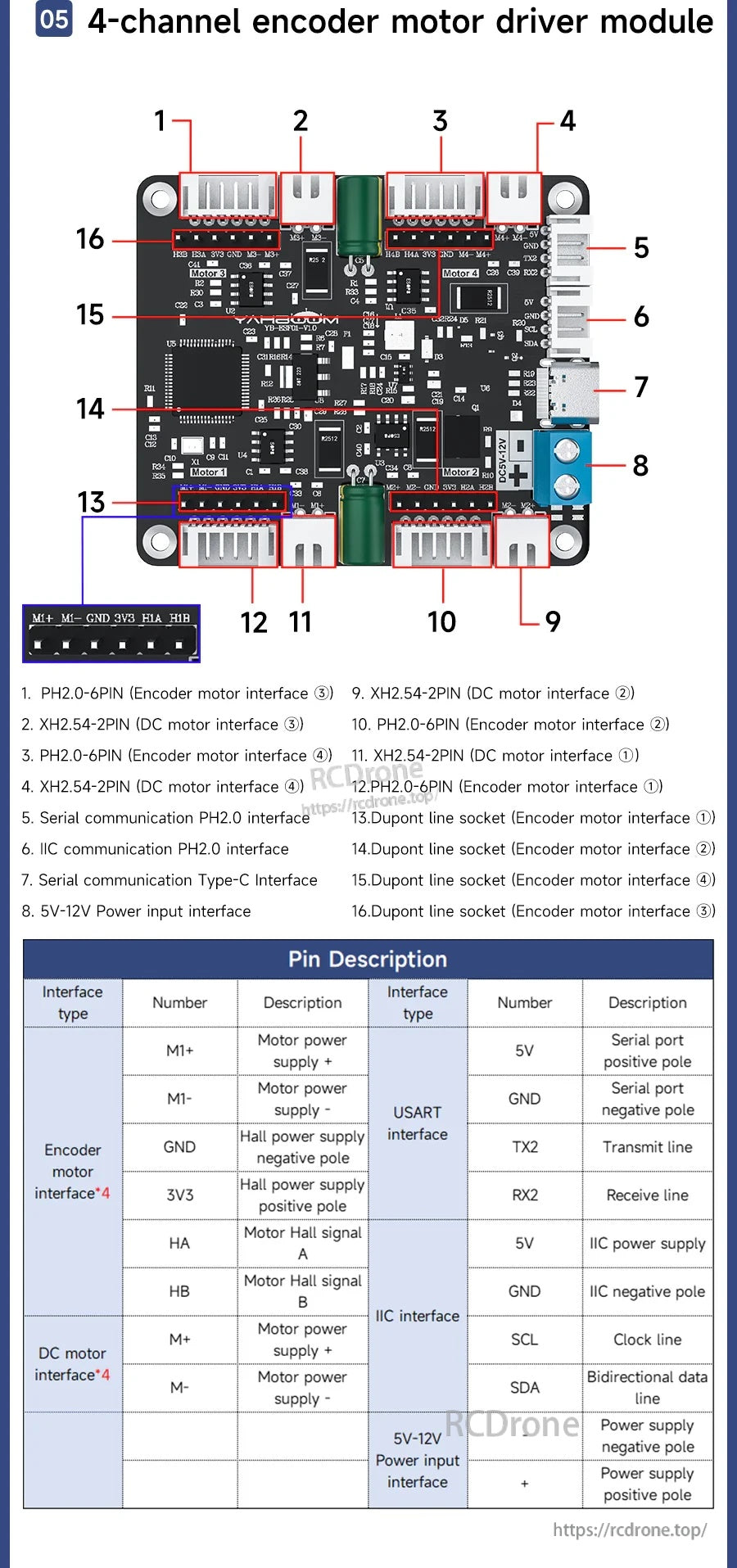
4-চ্যানেল এনকোডার মোটর ড্রাইভার মডিউল – রেফারেন্সড কানেক্টর & পিন বর্ণনা
- কানেক্টর: PH2.0-6PIN (এনকোডার মোটর ইন্টারফেস 1–4); XH2.54-2PIN (DC মোটর ইন্টারফেস 1–4); সিরিয়াল যোগাযোগ PH2.0 ইন্টারফেস; IIC যোগাযোগ PH2.0 ইন্টারফেস; সিরিয়াল যোগাযোগ টাইপ-সি ইন্টারফেস; 5V–12V পাওয়ার ইনপুট ইন্টারফেস; ডুপন্ট লাইন সকেট (এনকোডার মোটর ইন্টারফেস 1–4)
- এনকোডার মোটর ইন্টারফেস পিন: M1+ (মোটর পাওয়ার সাপ্লাই +), M1- (মোটর পাওয়ার সাপ্লাই -), GND (হল পাওয়ার সাপ্লাই নেগেটিভ পোল), 3V3 (হল পাওয়ার সাপ্লাই পজিটিভ পোল), HA (মোটর হল সিগন্যাল A), HB (মোটর হল সিগন্যাল B)
- ডিসি মোটর ইন্টারফেস পিন: M+ (মোটর পাওয়ার সাপ্লাই +), M- (মোটর পাওয়ার সাপ্লাই -)
- USART পিন: 5V (সিরিয়াল পোর্ট পজিটিভ পোল), GND (সিরিয়াল পোর্ট নেগেটিভ পোল), TX2 (ট্রান্সমিট লাইন), RX2 (রিসিভ লাইন)
- IIC পিন: 5V (IIC পাওয়ার সাপ্লাই), GND (IIC নেগেটিভ পোল), SCL (ক্লক লাইন), SDA (দ্বিমুখী ডেটা লাইন)
- 5V–12V পাওয়ার ইনপুট: - (পাওয়ার সাপ্লাই নেগেটিভ পোল), + (পাওয়ার সাপ্লাই পজিটিভ পোল)
রিজার্ভড মাউন্টিং উদাহরণ (প্ল্যাটফর্ম নোট)
- ইনফ্রারেড ট্র্যাকিং মডিউল: 4-চ্যানেল এবং 8-চ্যানেল ট্র্যাকিং মডিউল সাপোর্ট
- MPU6050 6-axis সেন্সর মডিউল মাউন্টিং সাপোর্ট
- 2DOF ইলেকট্রিক PTZ মাউন্টিং সাপোর্ট
- উদাহরণ বোর্ড স্থাপনার রেফারেন্সের মধ্যে রয়েছে Jetson বোর্ড; সামঞ্জস্যতার নোটে উল্লেখ রয়েছে Raspberry Pi, RDK X5, STM32 রোবট কন্ট্রোল বোর্ড, ESP32 রোবট কন্ট্রোল বোর্ড, এবং STM32F103RCT6 ডেভেলপমেন্ট বোর্ড
- ভিজ্যুয়াল মডিউল উদাহরণ: K210 ভিজ্যুয়াল রিকগনিশন মডিউল (2 সহ।0-ইঞ্চি টাচ স্ক্রিন (পেছনে দেখানো) এবং K230 ভিজ্যুয়াল রিকগনিশন মডিউল (2.4-ইঞ্চি টাচ স্ক্রিন সহ (পেছনে দেখানো)
বিস্তারিত
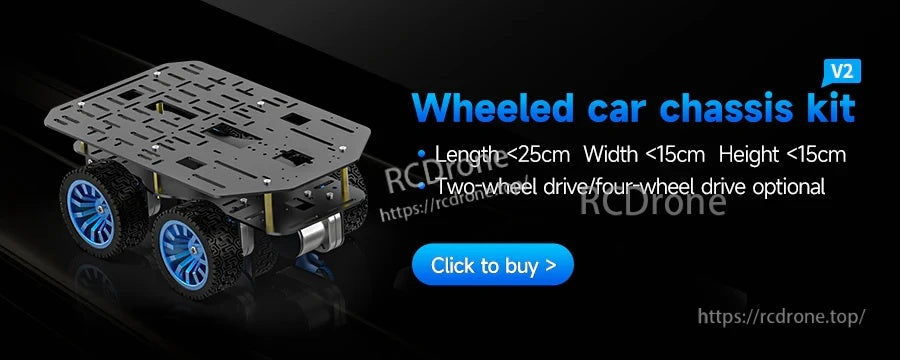
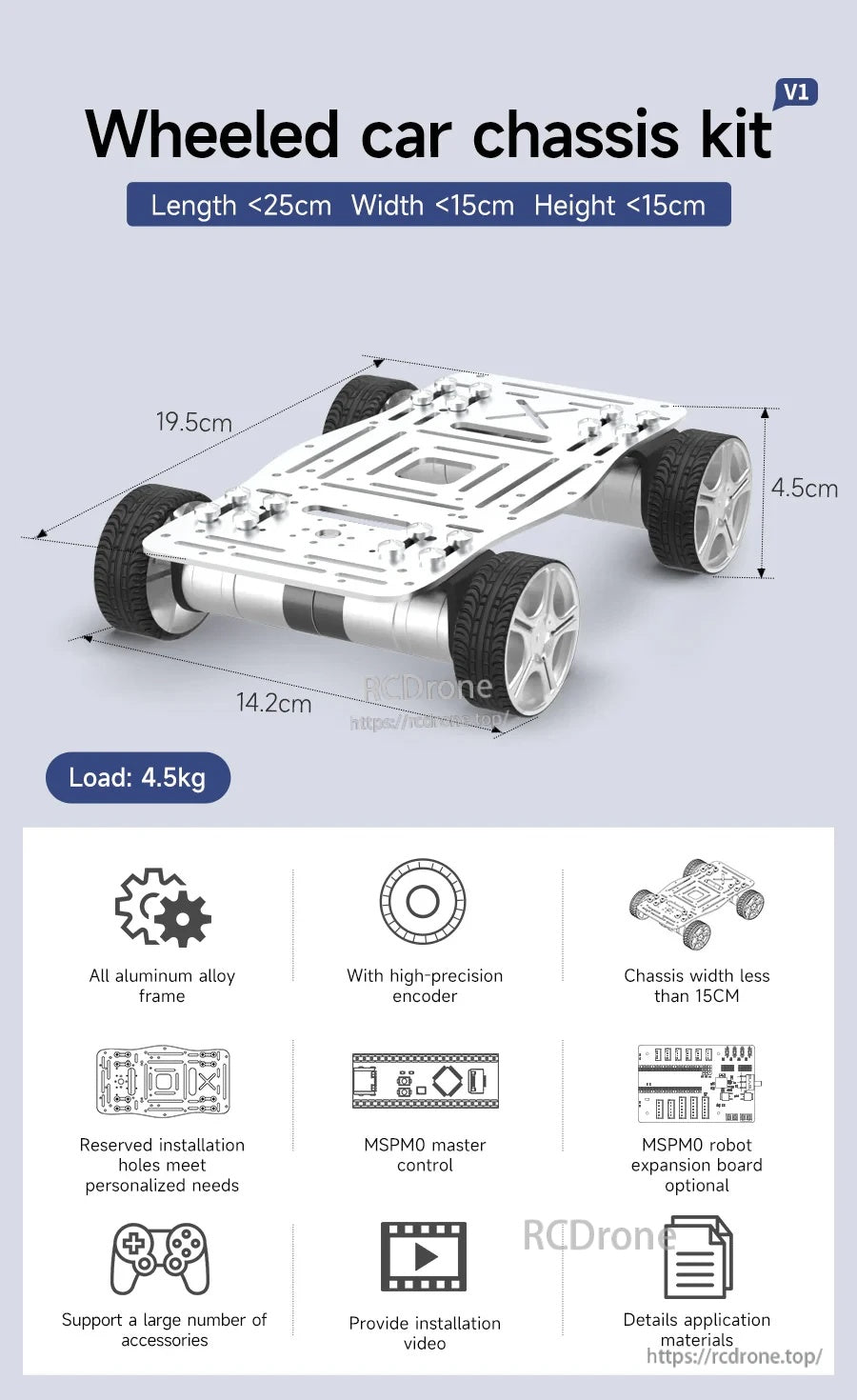
ছোট-ফরম্যাট রোবট কার রেসের জন্য আকারযুক্ত একটি কমপ্যাক্ট 4WD চ্যাসিস প্ল্যাটফর্ম, যেখানে কন্ট্রোলার, সেন্সর এবং অ্যাড-অন মাউন্ট করার জন্য জায়গা রয়েছে।
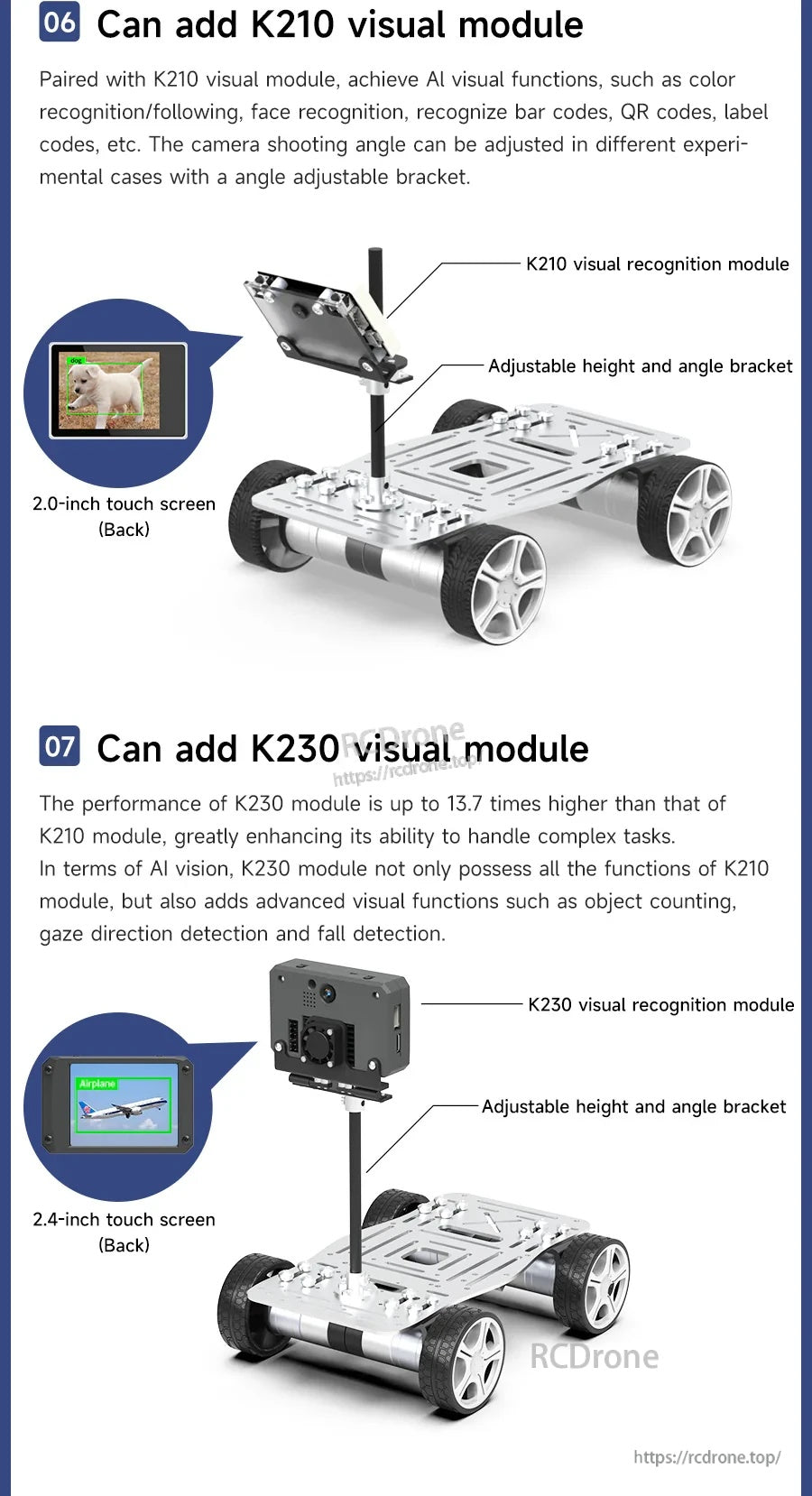
ঐচ্ছিক ভিশন মডিউলগুলি AI রিকগনিশন কাজ এবং ইন্টারেক্টিভ প্রকল্পগুলির জন্য একটি সামঞ্জস্যযোগ্য ব্র্যাকেটে মাউন্ট করা যেতে পারে।
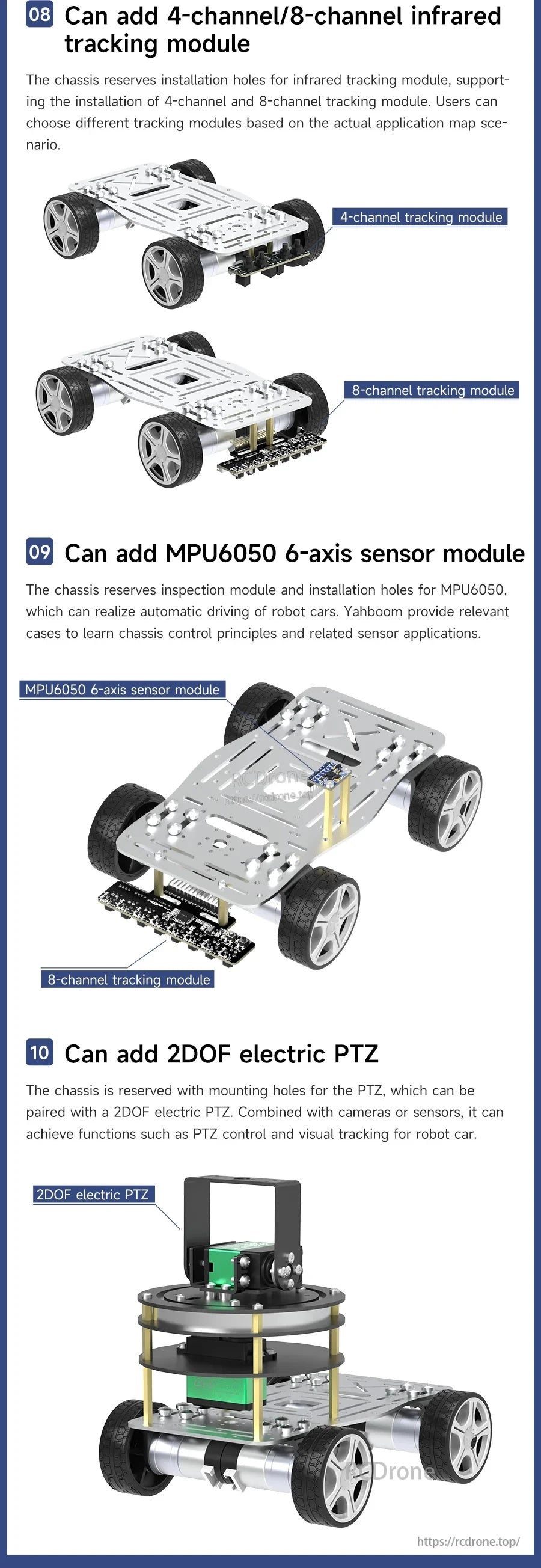
রিজার্ভড মাউন্টিং পয়েন্টগুলি ট্র্যাকিং সেন্সর, একটি IMU, বা ক্যামেরা বা সেন্সর লক্ষ্য করার জন্য একটি 2DOF PTZ যোগ করা সহজ করে তোলে।
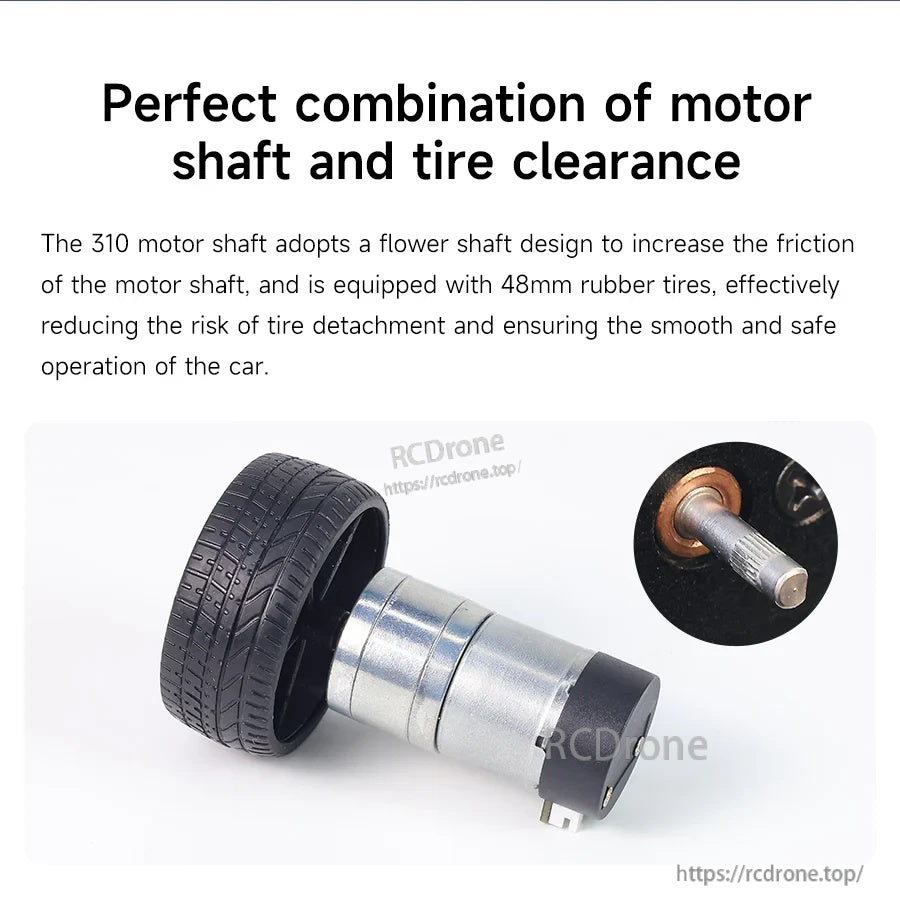
48 মিমি টায়ারগুলি একটি ফ্লাওয়ার-শাফট মোটর ডিজাইনের সাথে জোড়া লাগানো হয়েছে যা গ্রিপ উন্নত করতে এবং টায়ার বিচ্ছিন্নতার সম্ভাবনা কমাতে সহায়তা করে।
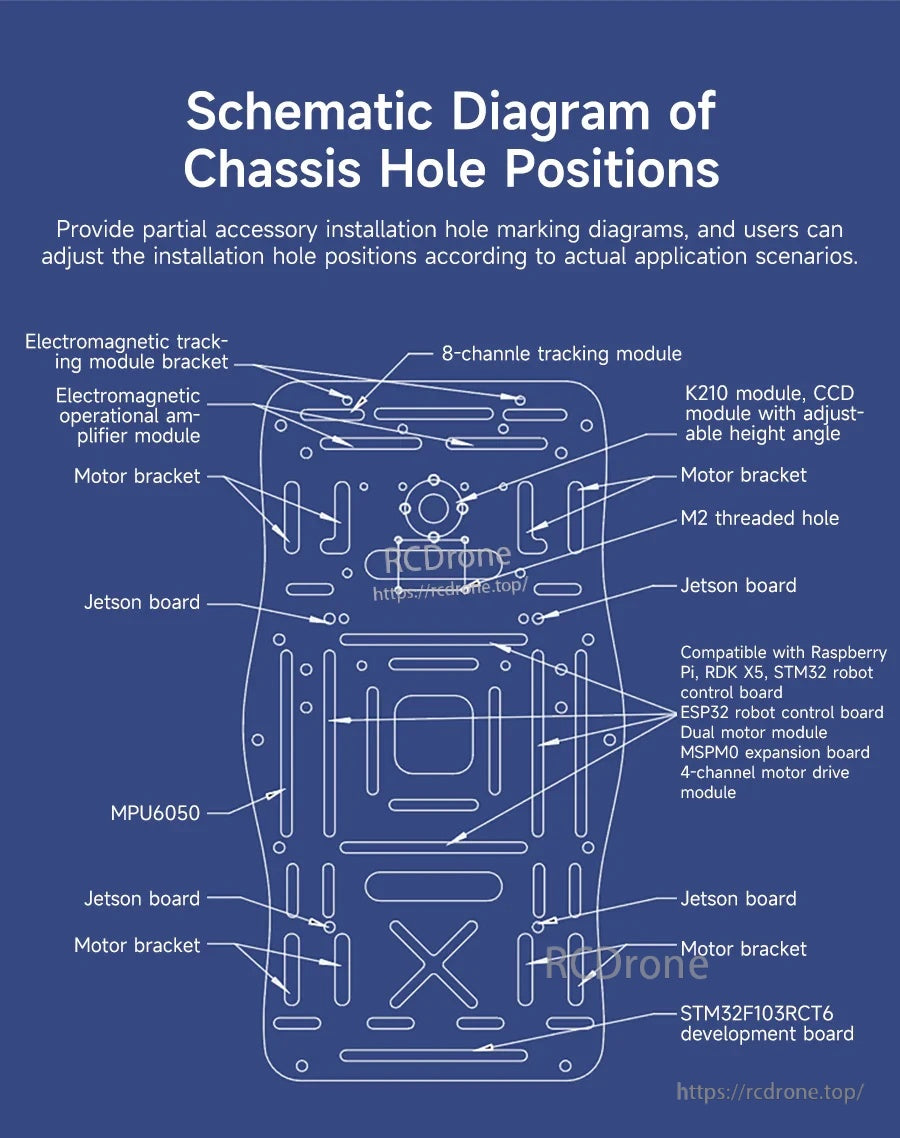
বিভিন্ন স্লট এবং থ্রেডেড হোলগুলি ডেভেলপমেন্ট বোর্ড, মোটর ব্র্যাকেট এবং সাধারণ মডিউল মাউন্টের জন্য নমনীয় লেআউট সমর্থন করে।

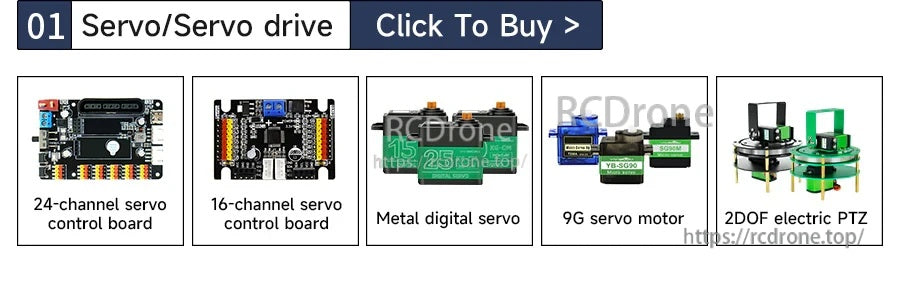
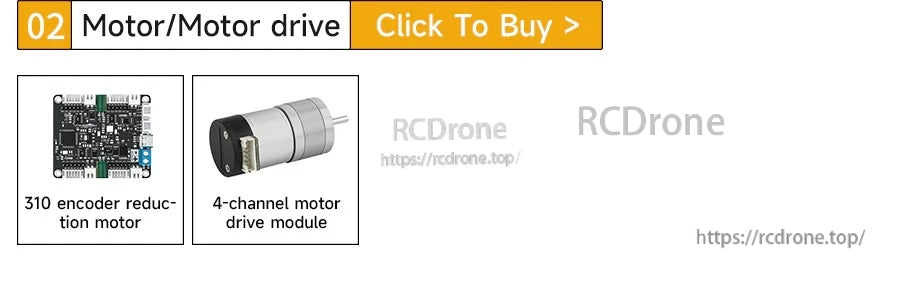
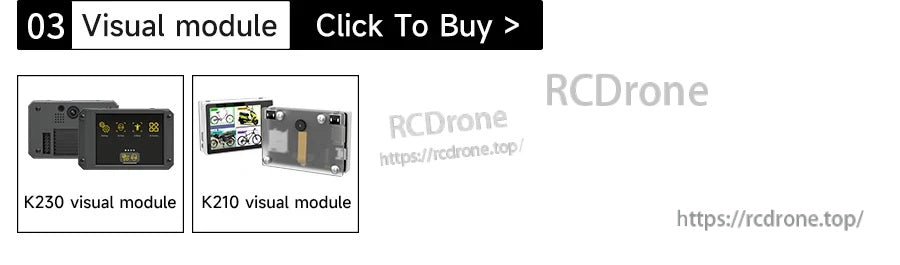
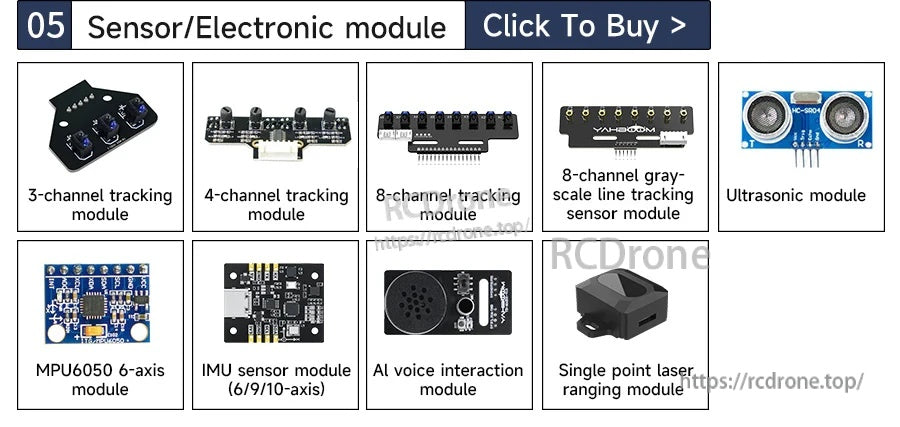
আপনার প্রকল্পের প্রয়োজনীয় রোবট গাড়ির বৈশিষ্ট্য তৈরি করতে ট্র্যাকিং, দূরত্ব, IMU এবং ইন্টারঅ্যাকশন মডিউল থেকে নির্বাচন করুন।
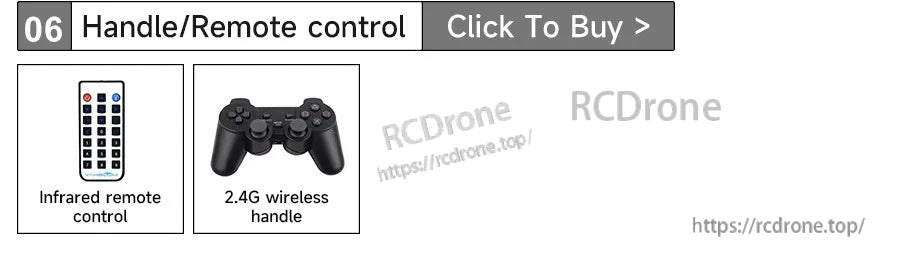
নিয়ন্ত্রণের বিকল্পগুলির মধ্যে রয়েছে একটি IR রিমোট বা 2.4G ওয়্যারলেস কন্ট্রোলার হাতে-কলমে ড্রাইভিং এবং পরীক্ষার জন্য।
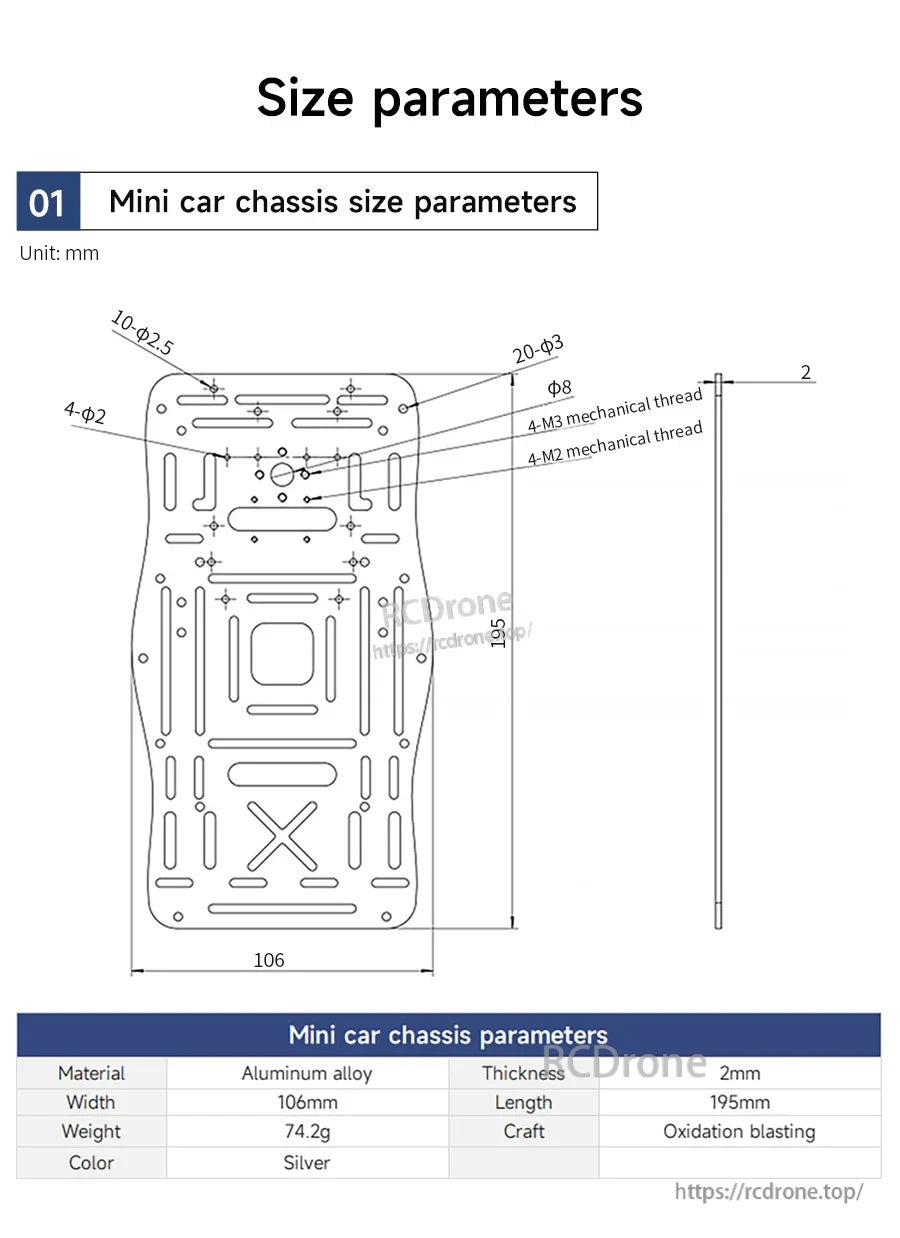
মিনি গাড়ির চ্যাসিসটি 195 × 106 মিমি অ্যালুমিনিয়াম-অ্যালয় প্লেট (2 মিমি পুরু) ব্যবহার করে, যা সহজ সমাবেশের জন্য স্লটেড মাউন্টিং পয়েন্ট এবং M2/M3 থ্রেডেড হোল সহ।
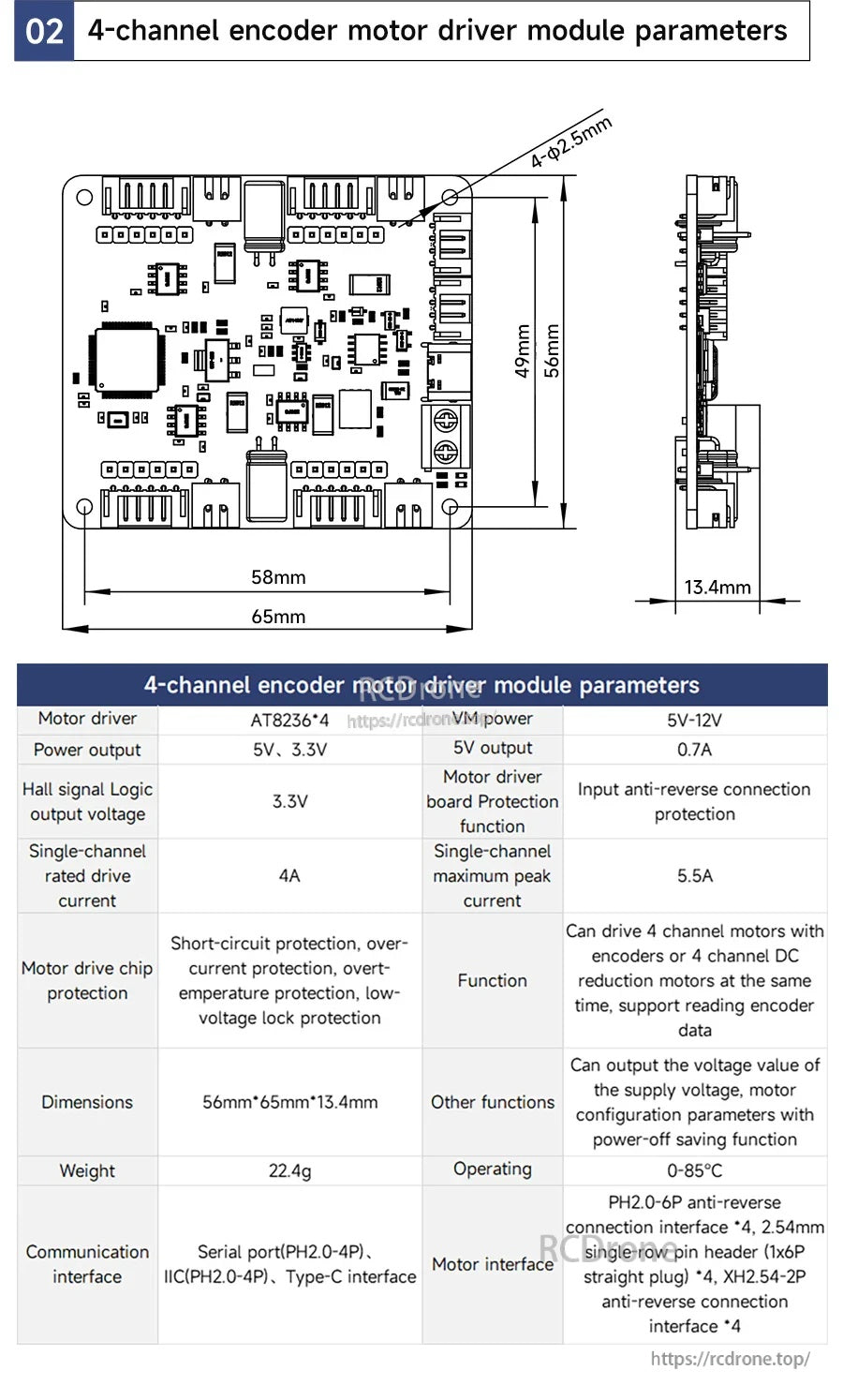
4-চ্যানেল এনকোডার মোটর ড্রাইভার মডিউল 5–12V ইনপুট, 6.5A মোটর ড্রাইভ এবং I2C/সিরিয়াল প্লাস টাইপ‑C সংযোগগুলি রোবট নির্মাণের জন্য সমর্থন করে।
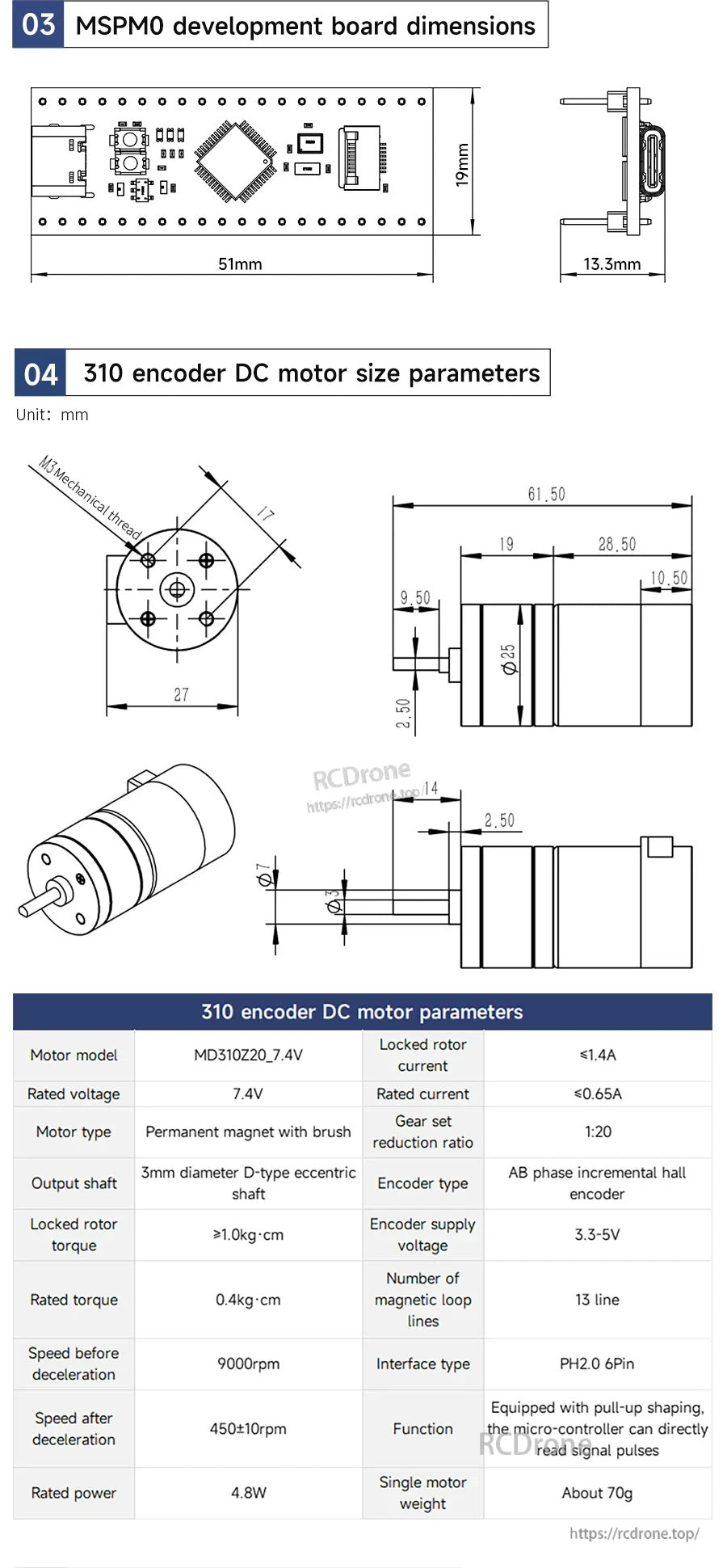
MSPM0 ডেভেলপমেন্ট বোর্ডের মাত্রা এবং 310 এনকোডার ডিসি মোটরের আকারের বিবরণ মিনি চাকার রোবট নির্মাণে ফিটমেন্ট এবং ওয়্যারিং পরিকল্পনায় সহায়তা করে।
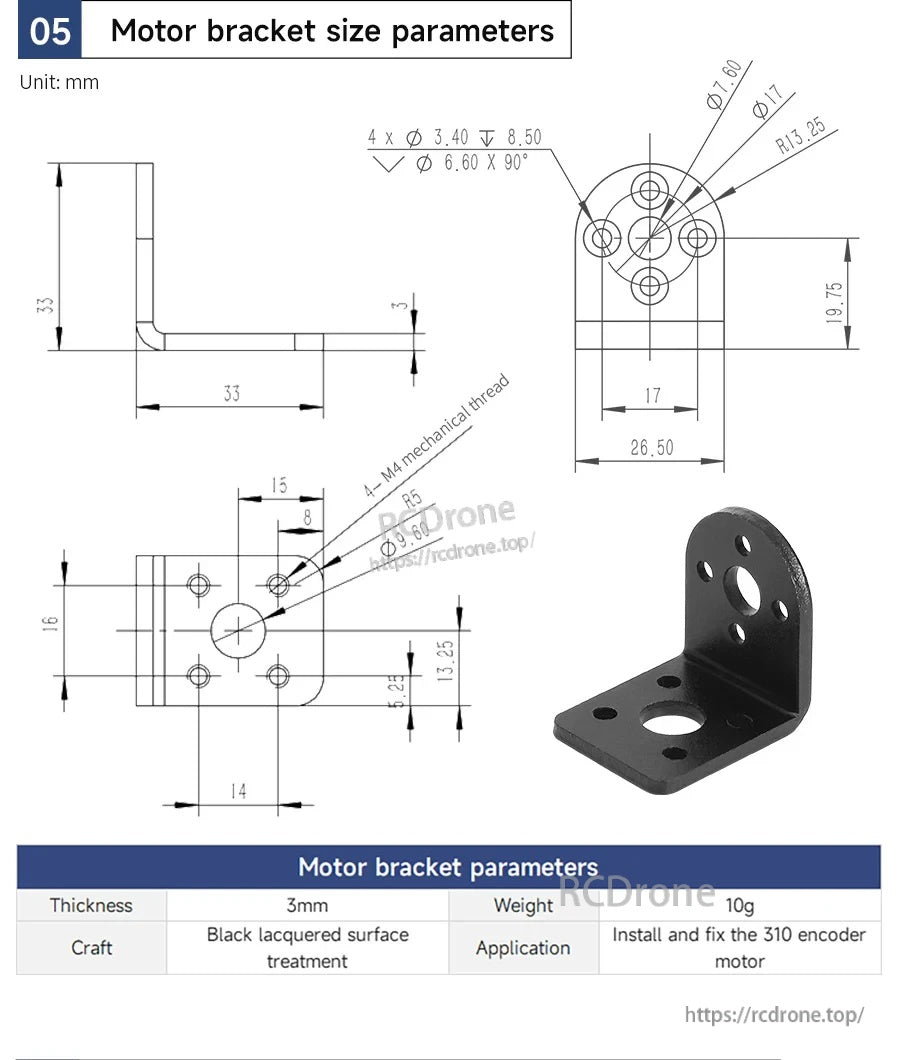
L-আকৃতির ধাতব মোটর ব্র্যাকেটটি 3 মিমি পুরু প্লেট ব্যবহার করে, যা 310 এনকোডার মোটর স্থির করার জন্য একাধিক মাউন্টিং হোল সহ।
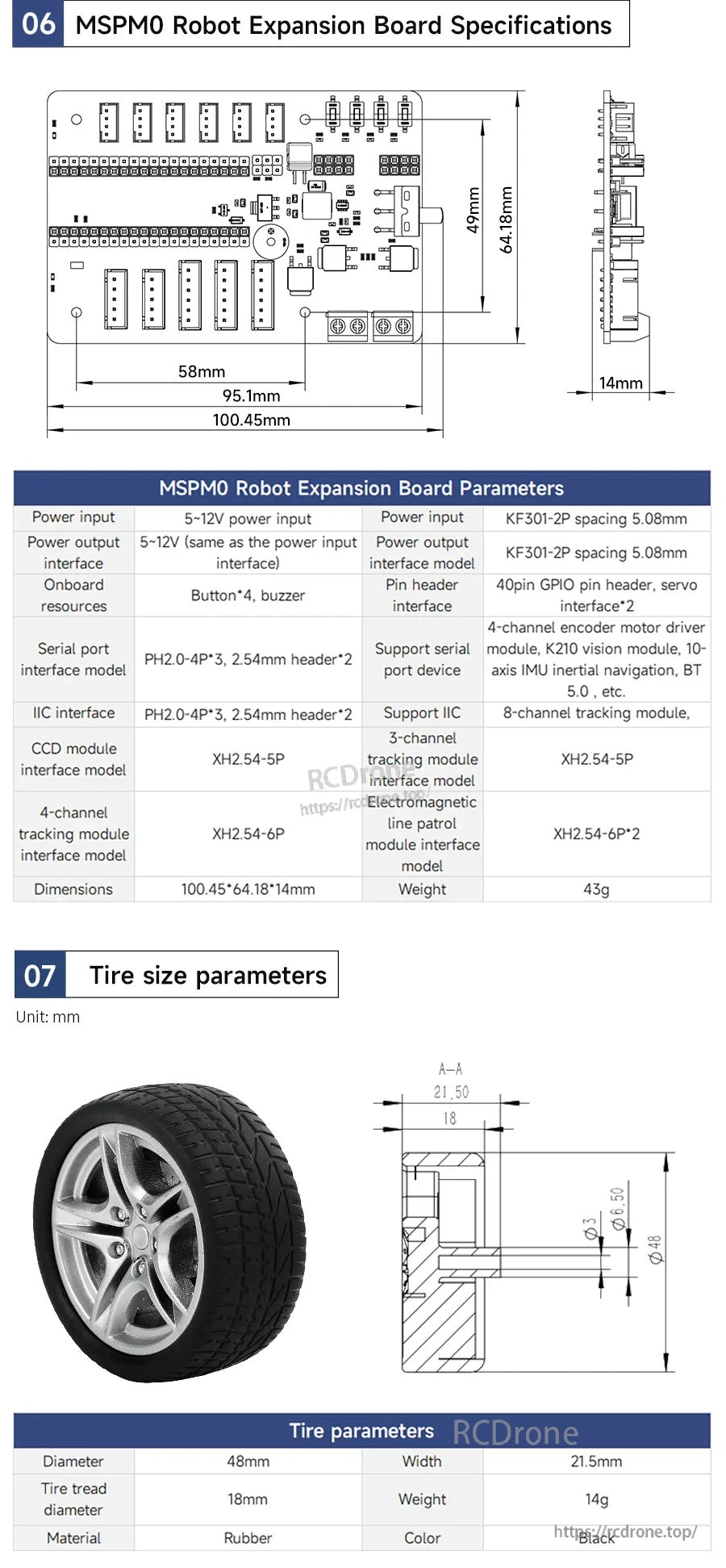
মিনি চাকার রোবটের স্পেসিফিকেশনগুলি সম্প্রসারণ বোর্ডের বিন্যাস এবং মূল আকারের বিবরণ প্রদান করে, যার মধ্যে রয়েছে ৪৮ মিমি টায়ার ব্যাস এবং ২৭.৫ মিমি টায়ার প্রস্থ।
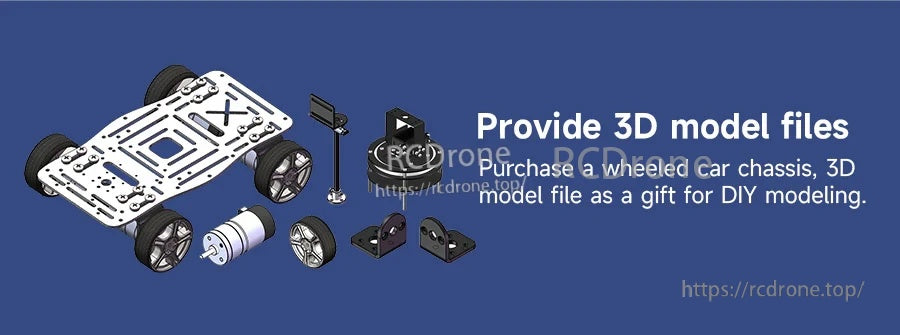
ইয়াহবুম মিনি চাকার রোবটের চ্যাসিসটি একটি বিস্ফোরিত সমাবেশ হিসাবে দেখানো হয়েছে, যার মধ্যে চারটি চাকা, একটি মোটর এবং DIY নির্মাণের জন্য মাউন্টিং ব্র্যাকেট রয়েছে।
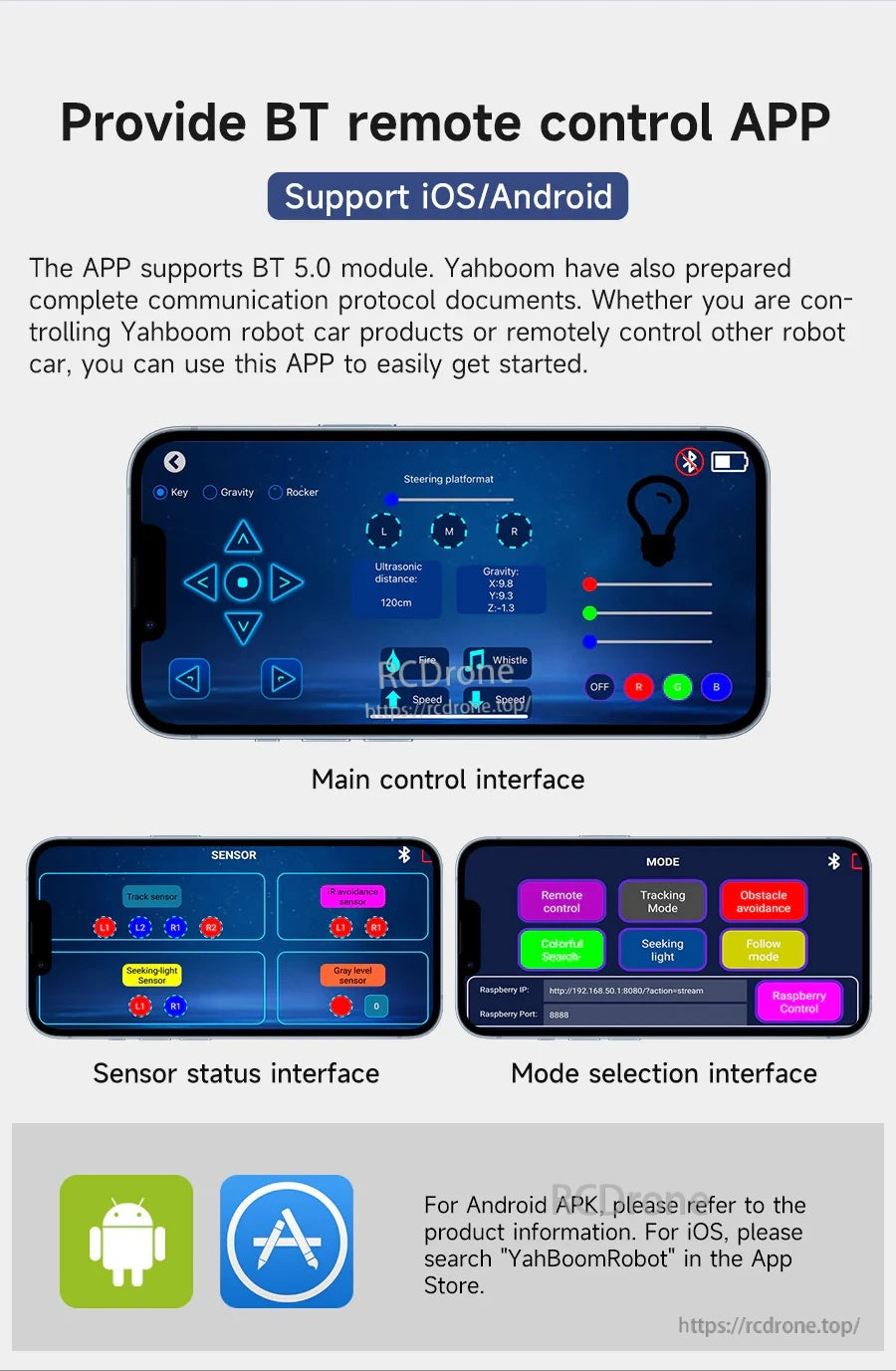
iOS এবং Android এর জন্য ইয়াহবুম BT রিমোট কন্ট্রোল অ্যাপটি একটি প্রধান নিয়ন্ত্রণ স্ক্রীন সহ সেন্সর স্ট্যাটাস এবং মোড নির্বাচন ইন্টারফেস প্রদান করে।
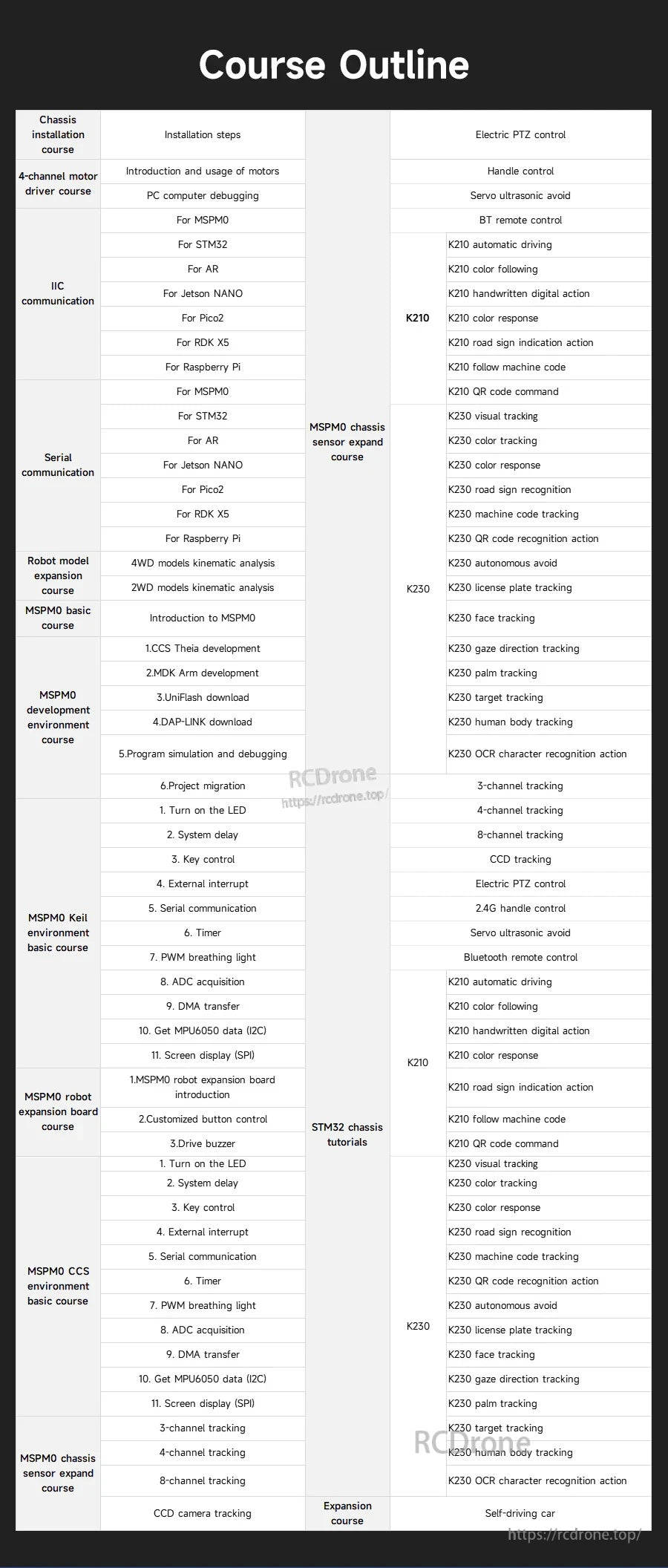
একটি বিস্তারিত কোর্সের রূপরেখা মিনি চাকার রোবটের সেটআপ, প্রোগ্রামিং অনুশীলন এবং মডিউল পরীক্ষায় সহায়তা করে।
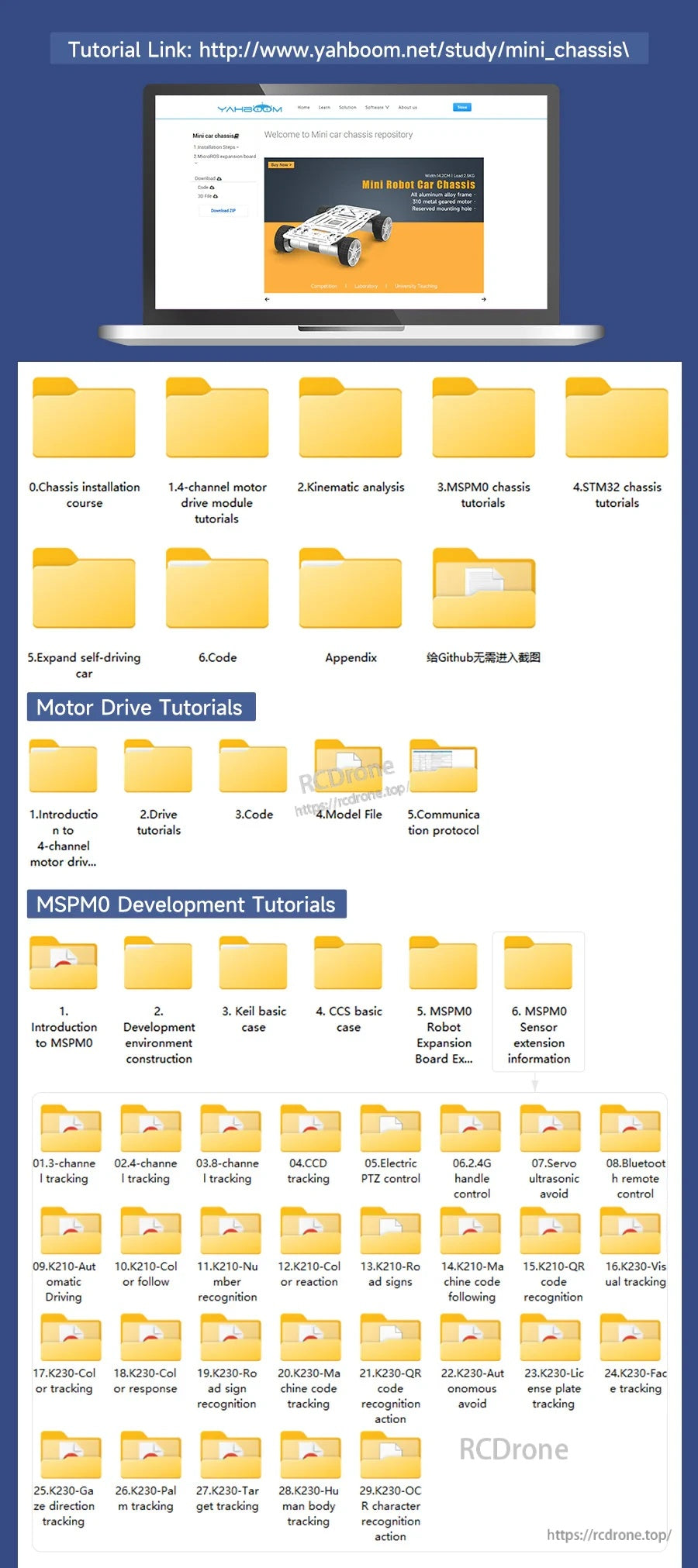
ইয়াহবুমের অনলাইন টিউটোরিয়াল রিসোর্সগুলি মিনি চ্যাসিস ফাইল এবং সম্পর্কিত মোটর ড্রাইভ এবং ডেভেলপমেন্ট গাইডগুলি সহজ সেটআপ এবং শেখার জন্য গোষ্ঠীবদ্ধ করে।
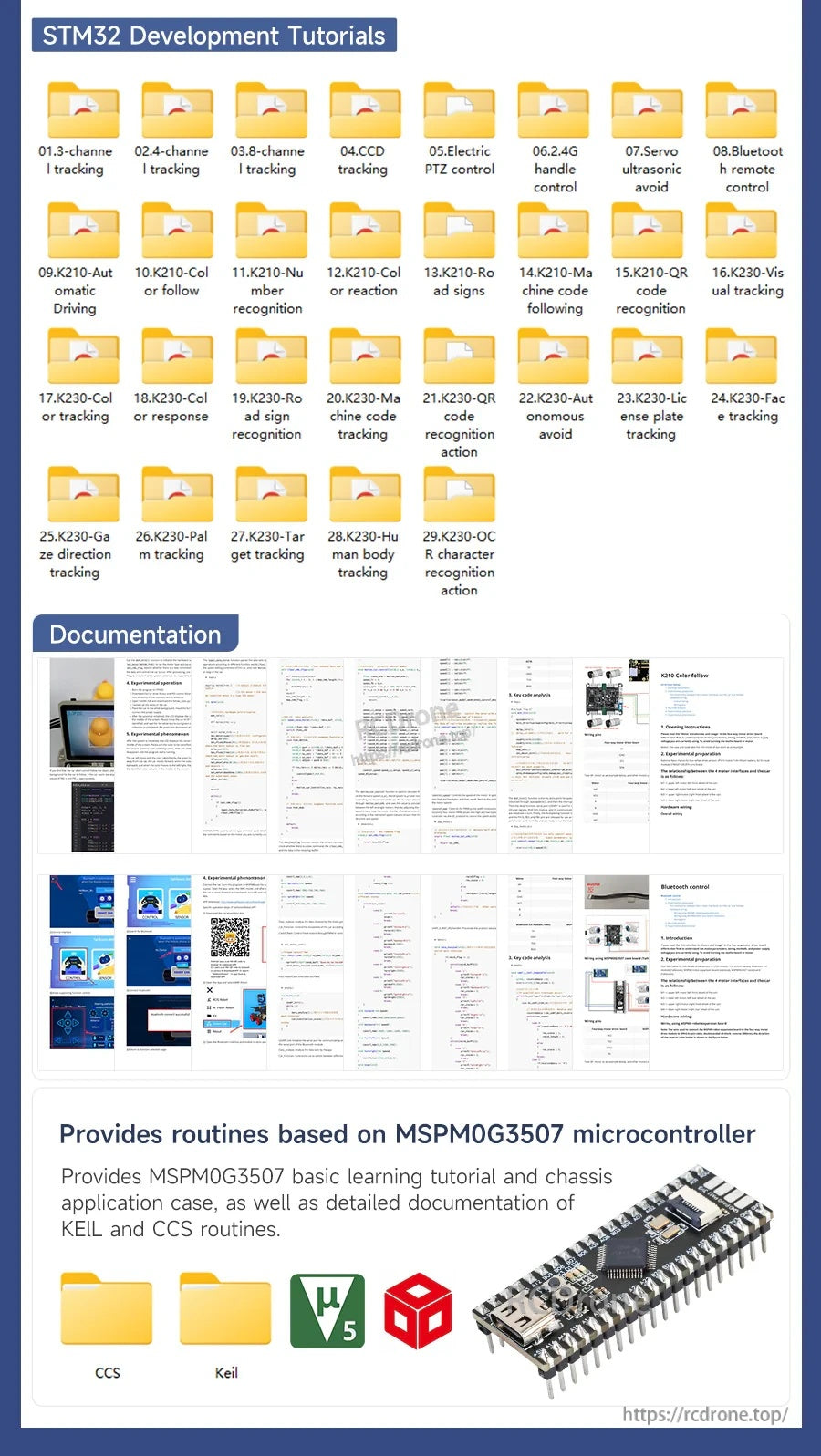
STM32 ডেভেলপমেন্ট টিউটোরিয়াল এবং ডকুমেন্টেশন কন্ট্রোলার বোর্ডের সাথে শুরু করার জন্য প্রস্তুত-ব্যবহার রুটিন এবং রেফারেন্স উপাদান প্রদান করে।
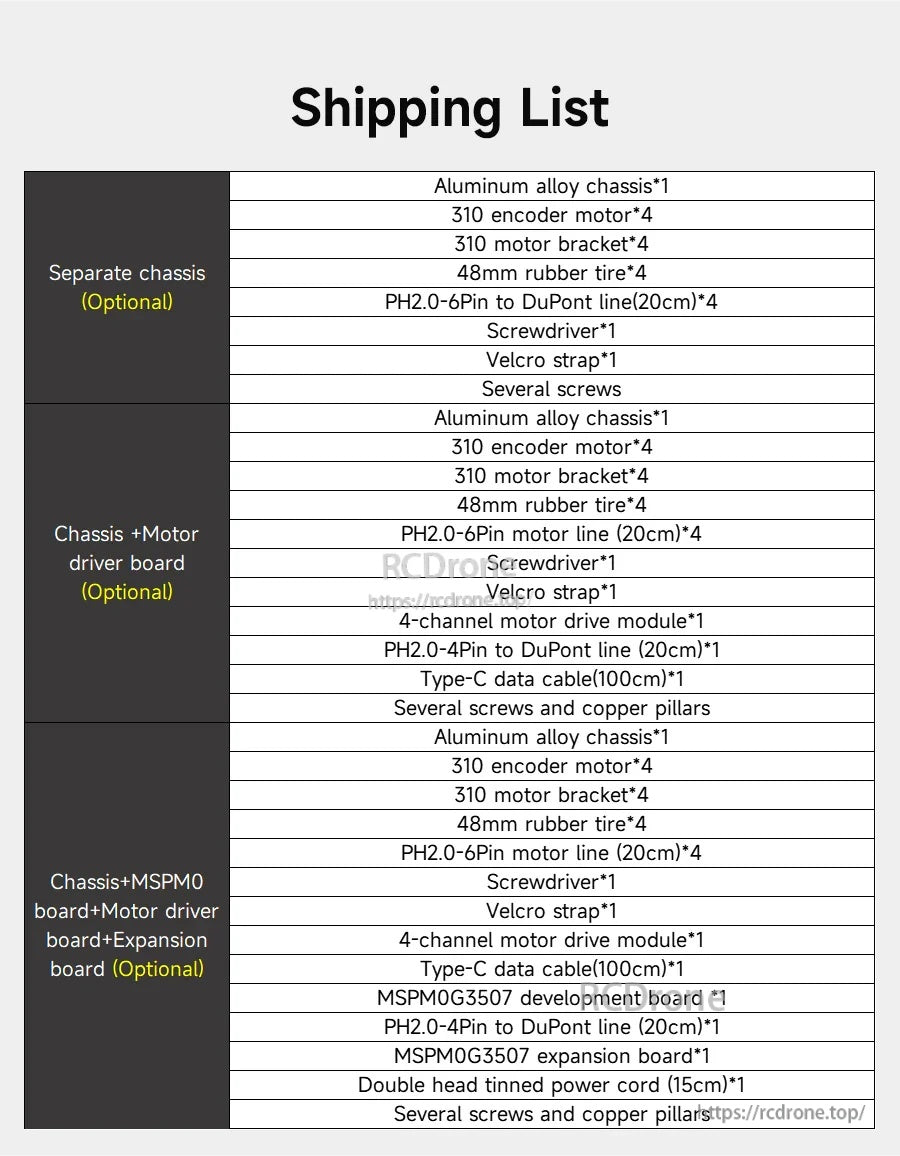
কিটের অংশগুলির তালিকায় রয়েছে একটি অ্যালুমিনিয়াম অ্যালয় চ্যাসিস, 310 এনকোডার মোটর 48 মিমি রাবার টায়ার সহ, তার, স্ক্রু, এবং ঐচ্ছিক ড্রাইভার এবং এক্সপ্যানশন বোর্ড।