


Yahboom DOFBOT AI大型模型視覺機械臂套件,適用於Raspberry Pi 5,支援ROS2 Humble、Python3、USB攝影機
Yahboom DOFBOT AI大型模型視覺機械臂套件,適用於Raspberry Pi 5,支援ROS2 Humble、Python3、USB攝影機
Yahboom
無法載入取貨服務供應情況


概述
Yahboom DOFBOT AI 大模型視覺機械臂是一款桌面機械臂套件,專為在 Raspberry Pi 5 上進行 ROS2 開發和 AI 視覺學習而設計。它結合了一個 6 自由度的機械臂和一個 USB 攝像頭,用於基於視覺的抓取、跟踪和互動 AI 應用,並支持使用 Python3、OpenCV 和 ROS2 Humble(指定 Docker + ROS2 Humble)進行編程。
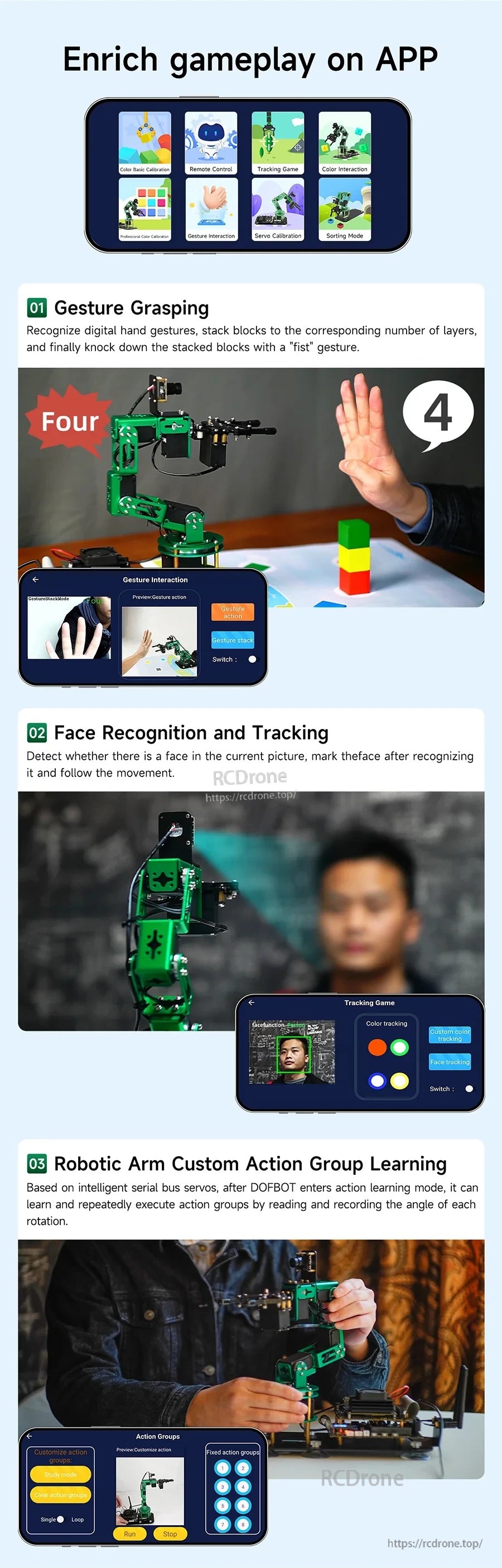
它支持跨平台控制,包括移動 APP(iOS/Android)、PC 主機控制、控制器/手柄控制和 JupyterLab 網頁編程。
視頻
主要特點
- 6 自由度 與攝像頭 + 機械臂集成("6-DOF 攝像頭和機械臂 2 合 1")。
- AI 大模型功能 (如描述):多模態融合、自然語音對話、文本語義理解、視覺場景理解和可擴展的 RAG 知識庫。
- AI視覺互動: 顏色識別追蹤、物體追蹤、手勢相關互動、抓取/分類演示等。
- ROS2開發堆棧: ROS2 Humble(標記為“ROS2 Humble”和“Docker+ROS2 Humble”),列出了MoveIt運動規劃和RViz機器人模擬。
- 算法框架列表: 逆運動學算法、YOLOv11、OpenCV、MediaPipe;提到TensorRT加速可實現毫秒級實時推理。
- 用戶友好的硬件設計: OLED顯示屏顯示IP地址和Raspberry Pi CPU信息;帶有吸盤的底盤以增加穩定性;12V 5A適配器提供持續電力。
- 擴展性: 擴展板聲明與 Jetson NANO、Raspberry Pi、Arduino 和 Micro:bit 兼容;保留的接口包括 6 個總線伺服 + 6 個 PWM 伺服、無線控制器接收器、WiFi/藍牙模塊、I2C 和超聲波模塊接口。
規格
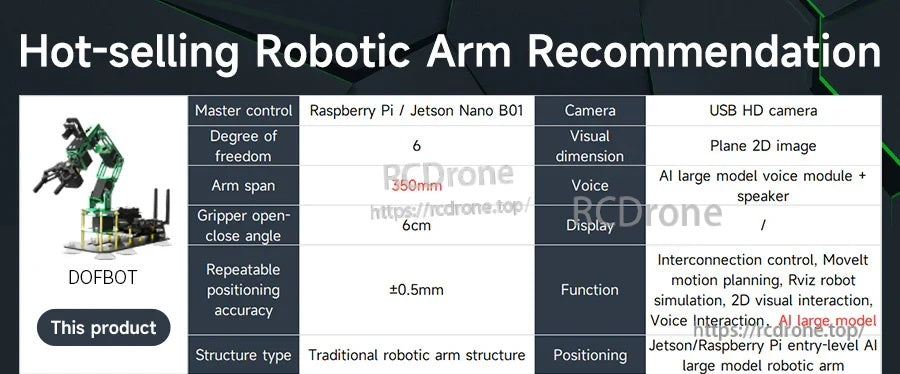
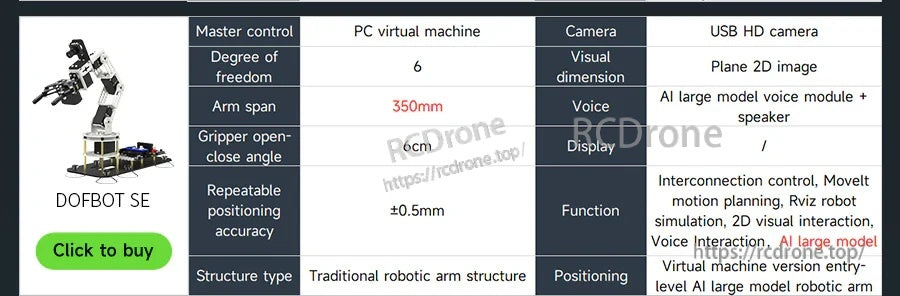
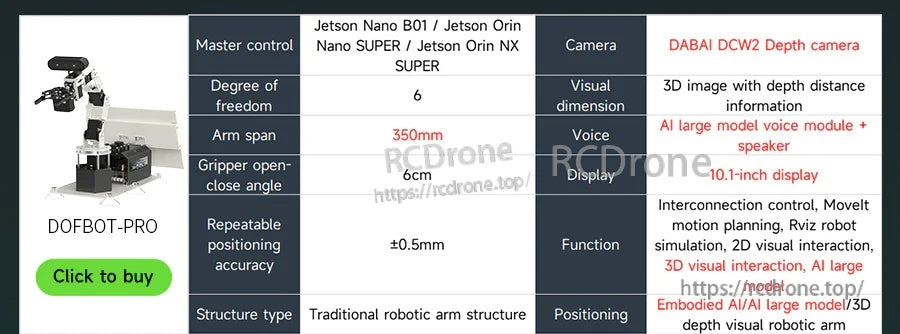
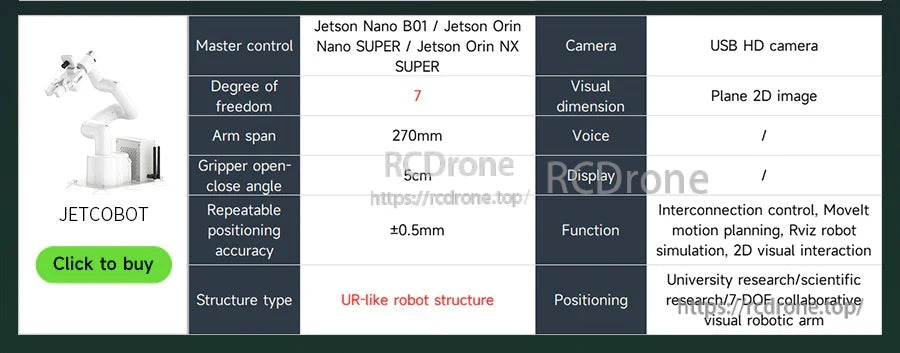
| 產品 | DOFBOT AI 大模型視覺機械臂 |
| 自由度 | 6 |
| 臂展 | 350 mm |
| 夾爪開合 | 6 cm |
| 可重複定位精度 | ±0.5 mm |
| 結構類型 | 傳統機械臂結構 |
| 攝像頭 | USB 高清攝像頭 (a 0.3MP 相機在提供的教程文本中提到) |
| 視覺尺寸 | 平面 2D 圖像 |
| 語音 | AI 大模型語音模組 + 揚聲器(在推薦/規格表中列出) |
| 顯示 | / |
| 列出的功能 | 互聯控制;MoveIt 運動規劃;RViz 機器人模擬;2D 視覺交互;語音交互;AI 大模型 |
Raspberry Pi 5(在產品材料中列出)
| CPU | Broadcom BCM2712, 64-bit, 2.4GHz, Quad core Cortex A76 |
| GPU | VideoCore VII @ 800MHz |
Raspberry Pi 5 與 Raspberry Pi 4B (比較表文本)
| CPU | Raspberry Pi 5:Broadcom BCM2712;四核 Cortex-A76 (ARM v8/64 位 SoC) Raspberry Pi 4B:Broadcom BCM2711;四核 Cortex-A72 (ARM v8/64 位 SoC) |
| GPU | Raspberry Pi 5:800 MHz VideoCore VII;支持 OpenGLES3.1,Vulkan 1.2 Raspberry Pi 4B:600 MHz VideoCore VI;支持 OpenGLES3.0 |
| 記憶體 | Raspberry Pi 5:LPDDR4X-4267 SDRAM Raspberry Pi 4B:LPDDR4-3200 SDRAM |
| UART | Raspberry Pi 5:專用UART介面(3針JST) Raspberry Pi 4B:無 |
| 風扇介面 | Raspberry Pi 5:PWM控制和轉速反饋(4針JST) Raspberry Pi 4B:無 |
| USB介面 | Raspberry Pi 5:2xUSB 支援5Gbps同步運行;2xUSB2.0(位置與PI4B對稱) Raspberry Pi 4B:2xUSB 3.0, 2x USB 2.0 |
| CSI 介面 | Raspberry Pi 5: 2x4lane MIPI 相機或顯示器 Raspberry Pi 4B: 1x2lane MIPI 相機 15pin 端口 |
| DSI 介面 | Raspberry Pi 5: 雙向傳輸介面 22pin 端口 Raspberry Pi 4B: 1x2lane MIPI 顯示器 15pin 端口 |
| HDMI | 兩者: 2 個 micro HDMI 端口 Raspberry Pi 5: 可支持雙通道 4Kp60 和 HDR Raspberry Pi 4B: 可支持單通道 4Kp60 或雙通道 4Kp30 |
| PCIe | Raspberry Pi 5: 1PCS PCIe2.0X1 介面 FPC 連接器 Raspberry Pi 4B: 無 |
| 音頻和視頻介面 | Raspberry Pi 5: 無 (提供 0.1-pitch pads) Raspberry Pi 4B: 是 |
| 電源輸入 | Raspberry Pi 5: 5V/5A DC 通過 USB-C 介面(支持 PD);5V/5A DC 通過 GPIO 介面 Raspberry Pi 4B: 5V/3A DC 通過 USB-C 介面(不支持 PD);5V/3A DC 通過 GPIO 介面 |
| 其他介面 | Raspberry Pi 5: POE 通過獨立的新 POEHAT(網絡端口位置變更) Raspberry Pi 4B: POE 通過獨立的 POE HAT |
ROS 配置差異(標準版 vs 高級版)
| AI 大模型語音模組 | 標準版: / 高級版: ✓ |
| AI 大模型播放 | 標準版: / 高級版: ✓ |
| AI 視覺互動 | 標準版: ✓ 高級版: ✓ |
| ROS 系統 | Docker + ROS2 Humble |
| 推薦 | 標準版:適合學習 AI 視覺功能 高級版:適合學習 AI 大模型、AI 語音互動和 AI 視覺功能應用 |
包含內容
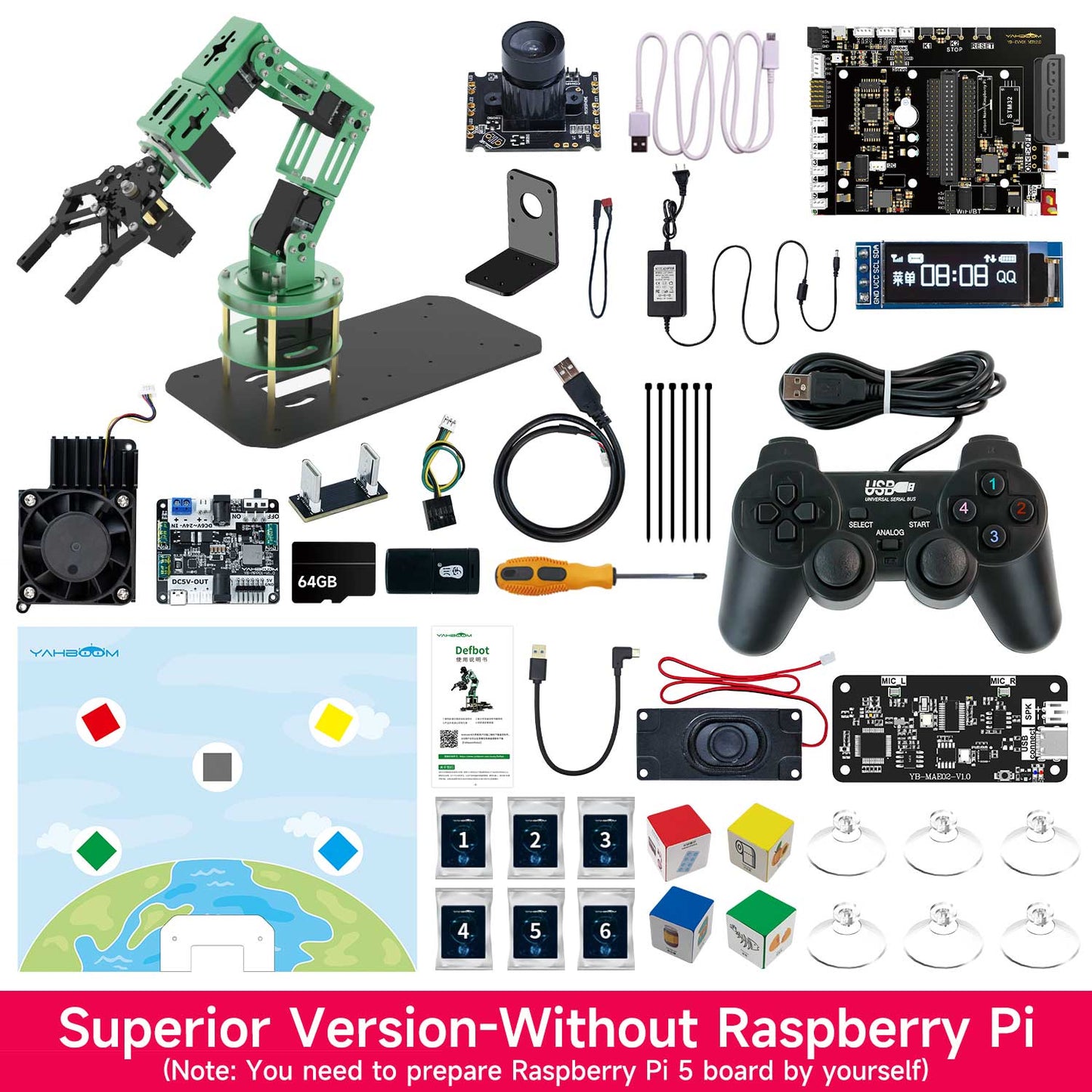
- 組裝好的機械臂
- 配套彩色印刷地圖
- 4 種不同顏色的積木
- PS2 遊戲手柄
- 帶有映像系統的 TF 卡
- Yahboom 專用散熱 HAT
- 12V 5A 電源適配器
注意:演示說明指出“垃圾桶是展示道具,不在發貨清單中。””
應用
- 列出AI視覺功能和遊戲玩法示例:手勢識別、顏色識別、視覺定位、垃圾分類、抓取遊戲、人臉跟蹤和積木堆疊。
- 描述AI視覺互動功能:顏色識別追蹤;抓取遊戲(地圖識別區域);抓取顏色積木;顏色互動;垃圾分類;顏色積木堆疊。
- 列出多模態大模型應用示例:視頻分析;長指令運動控制;智能處理;3D空間排序。
- 列出MoveIt模擬控制和軌跡規劃(具有碰撞檢測和空間抓取)以進行虛擬環境驗證。
- 支持深度學習模型訓練;註明模型訓練需要用戶自行完成。
手冊
如有售前問題、套件版本選擇或技術支持,請聯繫[email protected] or訪問https://rcdrone.top/.
詳情
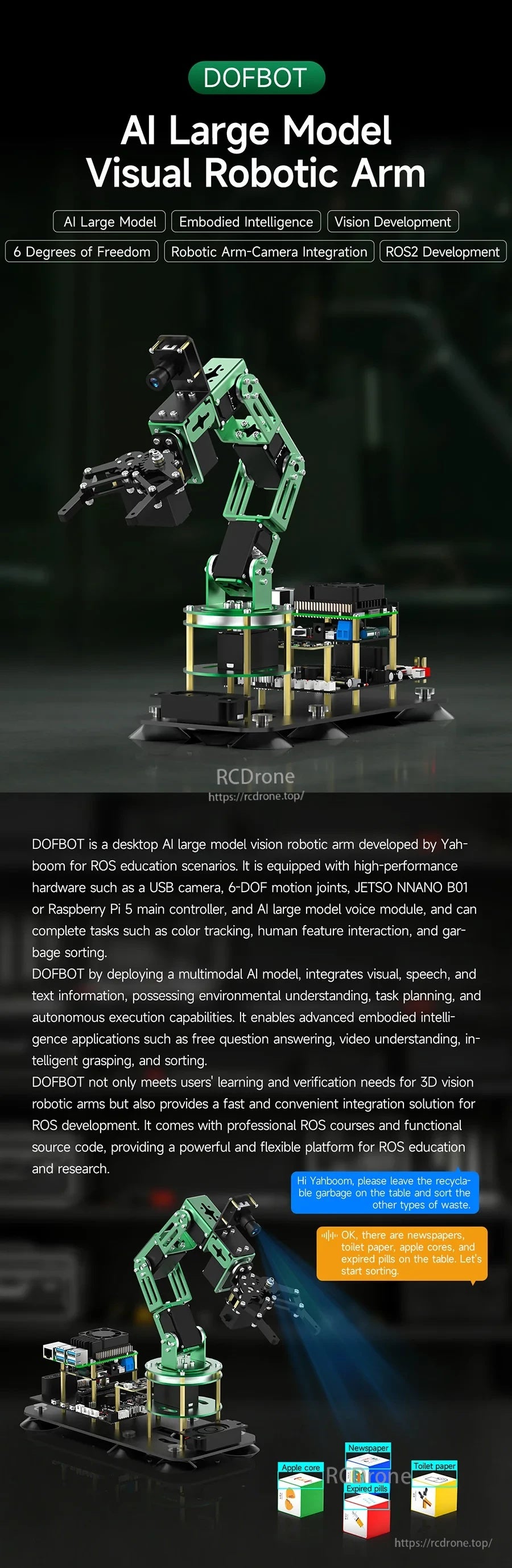
DOFBOT 結合了 6 自由度機械臂和 USB 攝像頭,用於 Raspberry Pi 5 視覺項目、抓取演示和 ROS2 開發。
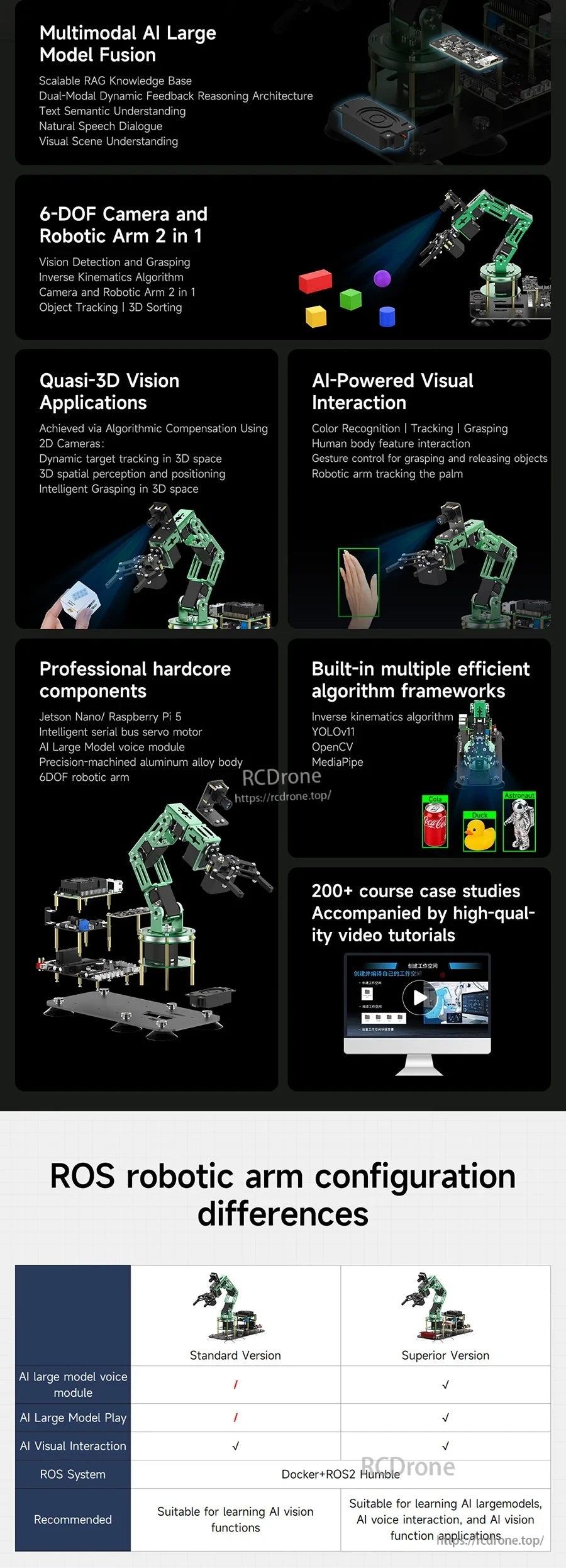
多種控制選項和內置算法演示幫助您從基本伺服控制過渡到視覺交互和 AI 工作流程。
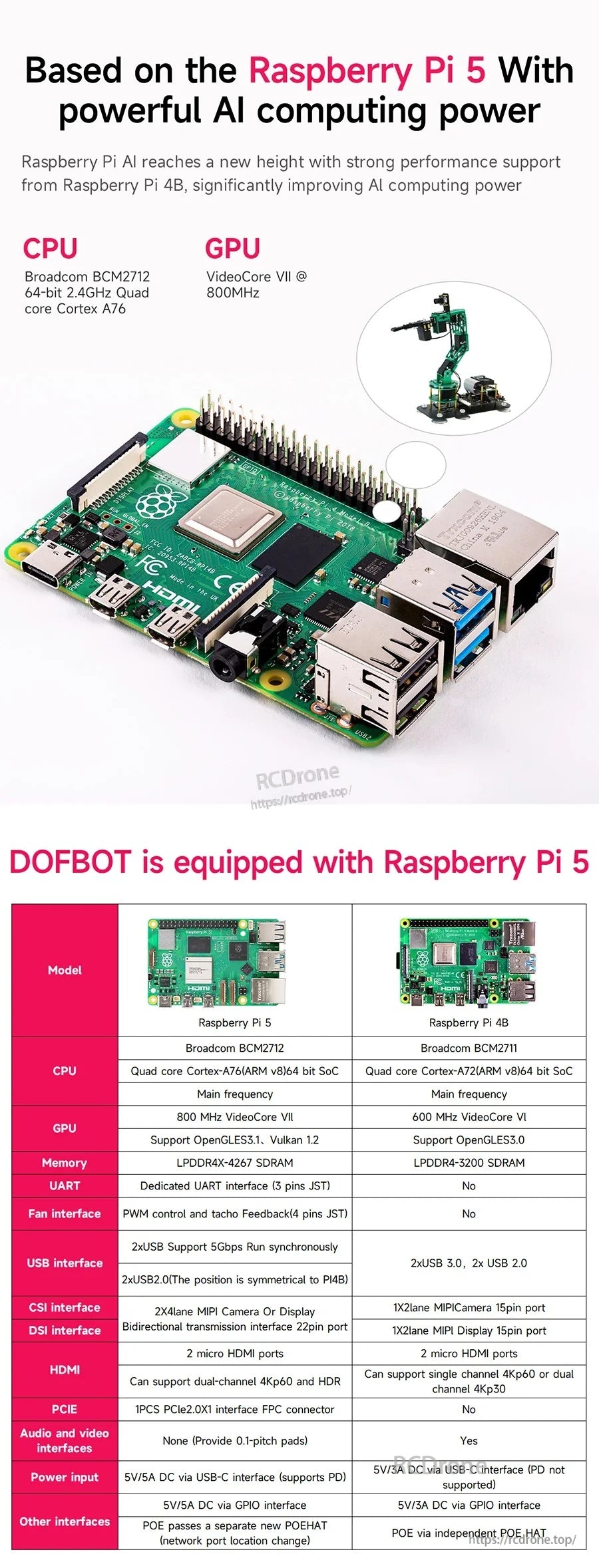
圍繞 Raspberry Pi 5 計算能力設計,用於 ROS2 Humble、Python3 和實時視覺推理工作流程。
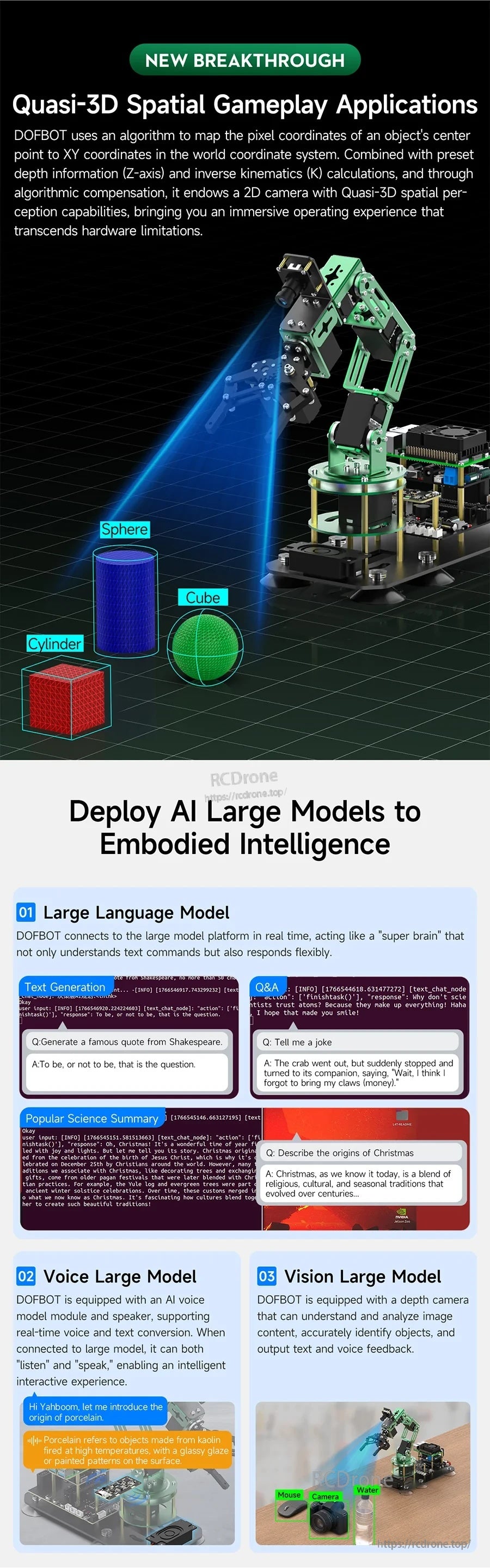
準 3D 空間演示將攝像頭感知與機械臂運動連接起來,用於具身智能應用。
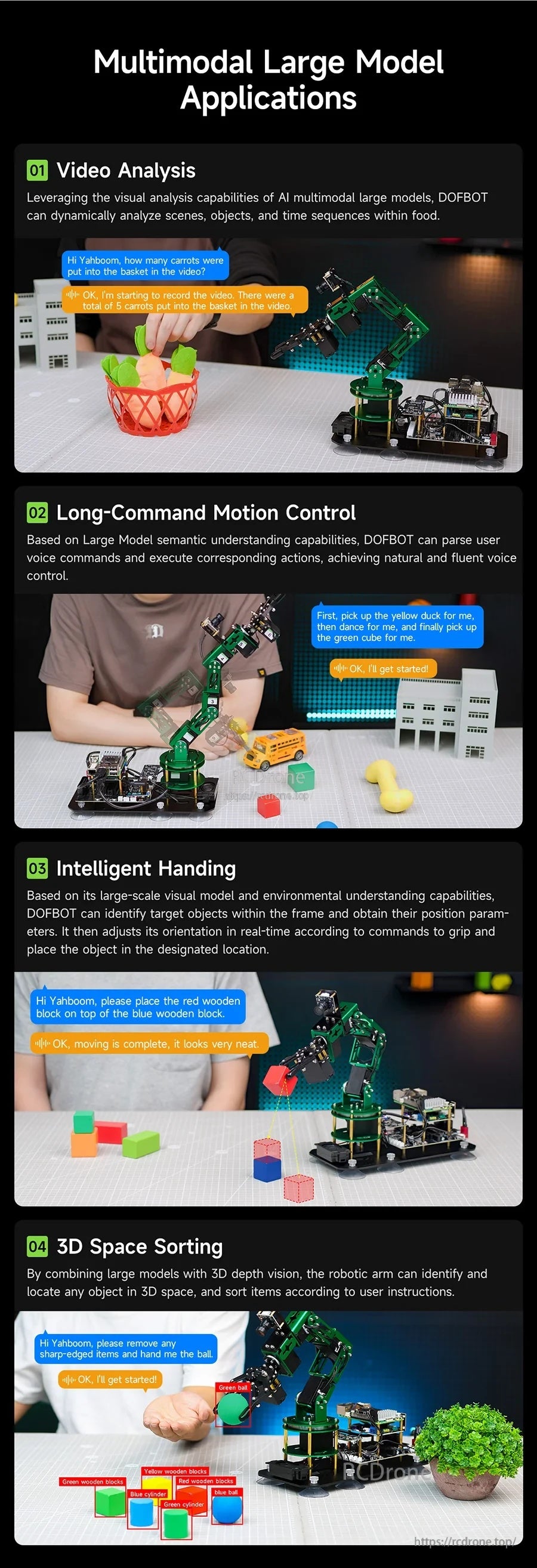
多模態演示涵蓋長指令運動控制、智能處理和由視覺和提示驅動的分揀任務。
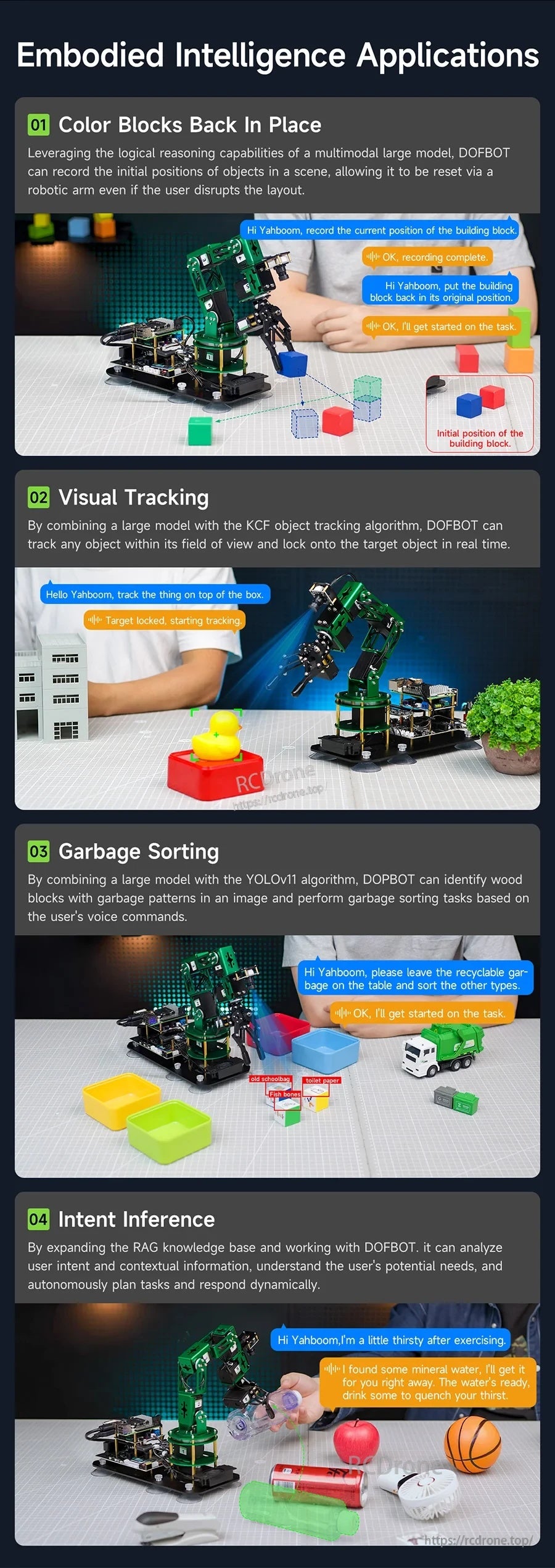
使用內建任務,如視覺追蹤、顏色分類和意圖推斷,來原型化您自己的互動機器人邏輯。
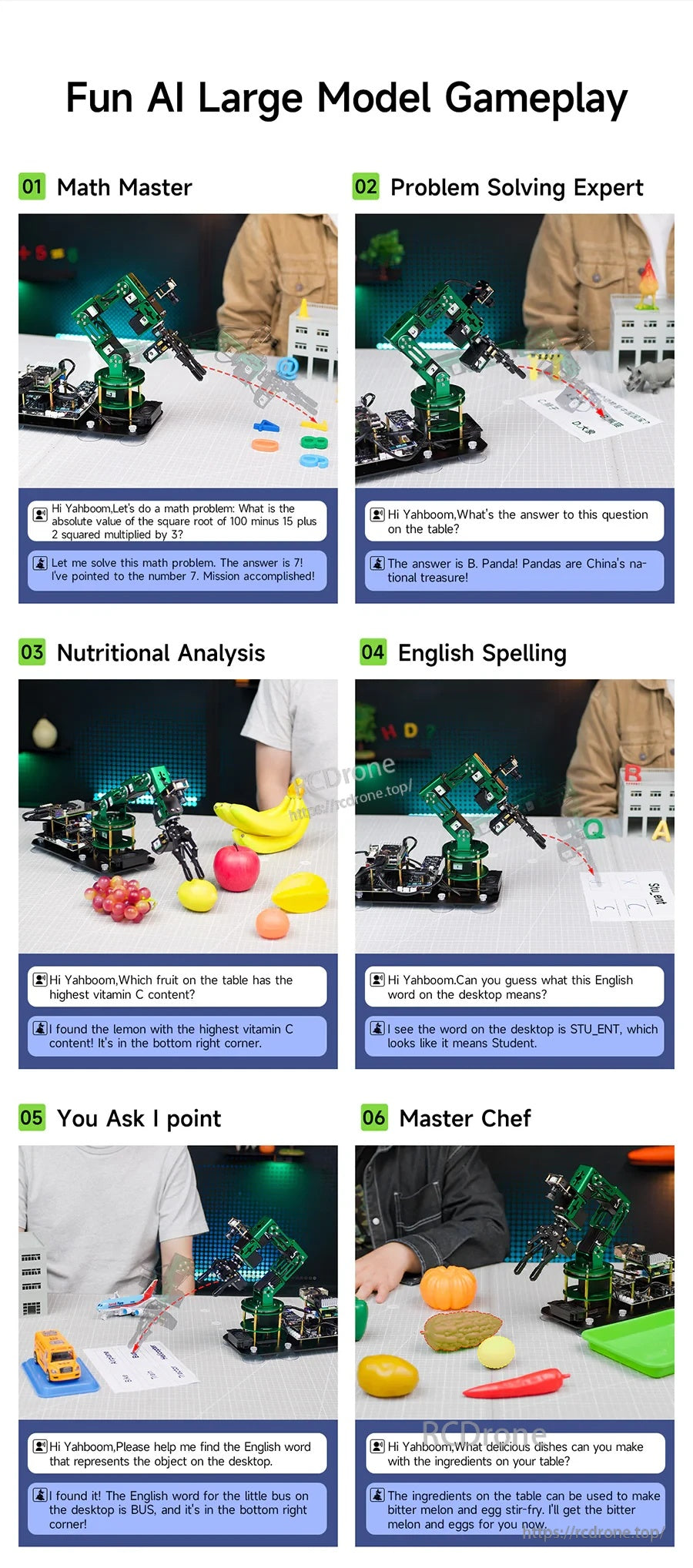
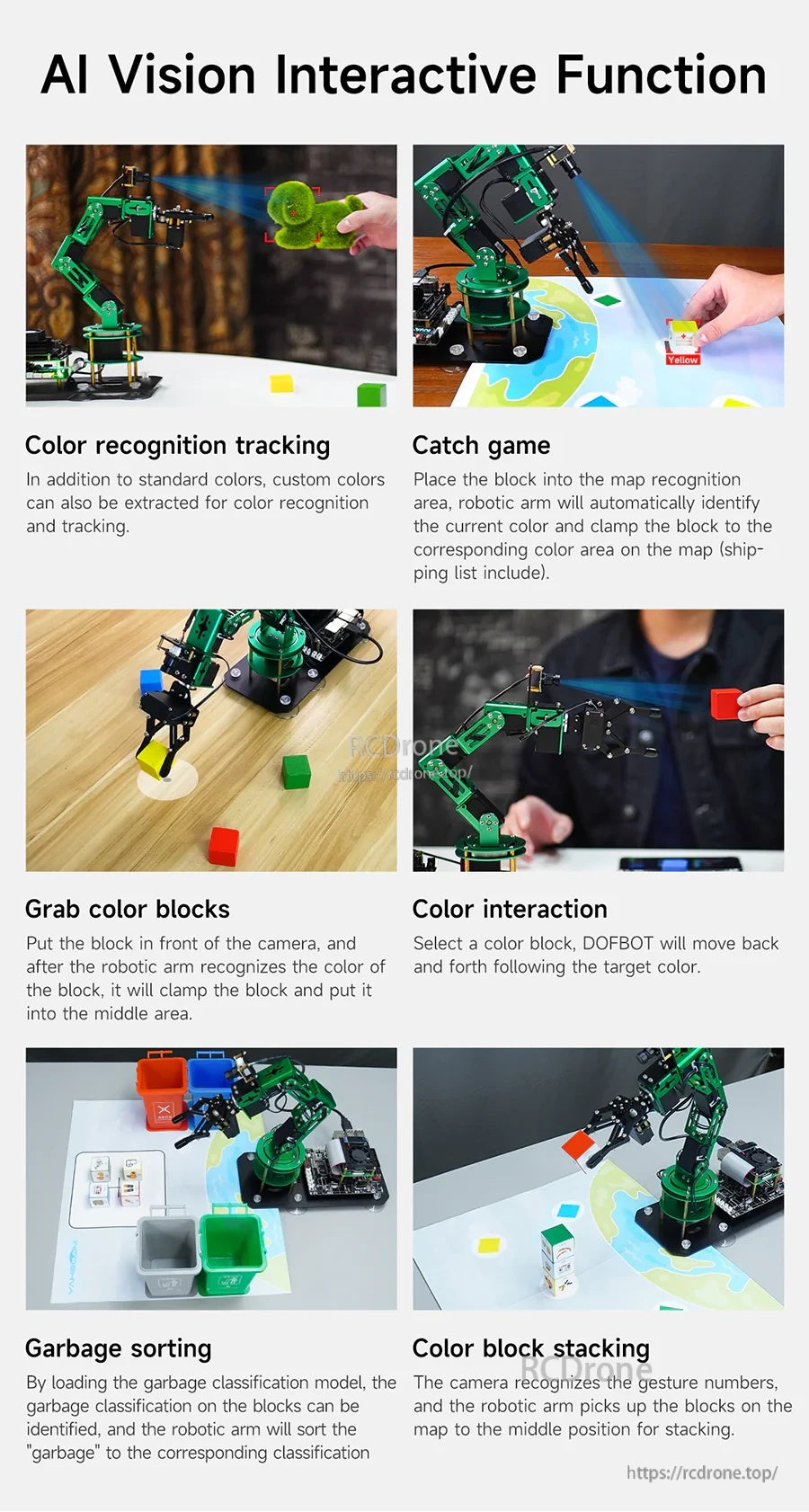
OpenCV風格的視覺互動包括顏色識別、追蹤和抓取程序,適合動手學習。
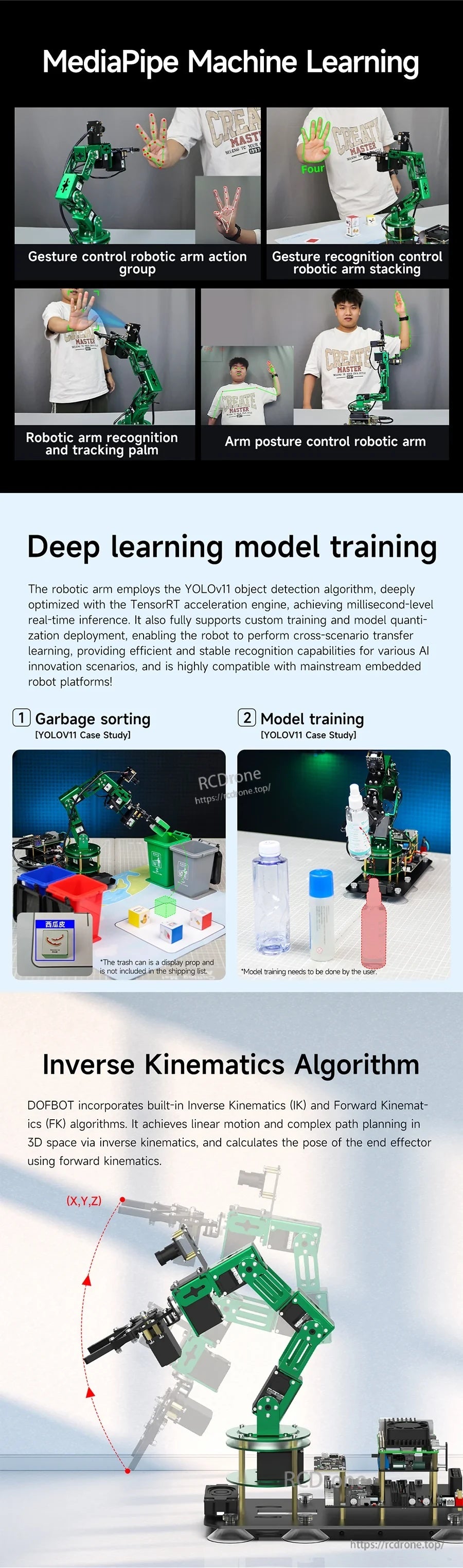
MediaPipe和訓練範例與逆向運動學配對,使視覺結果轉化為精確的關節運動。
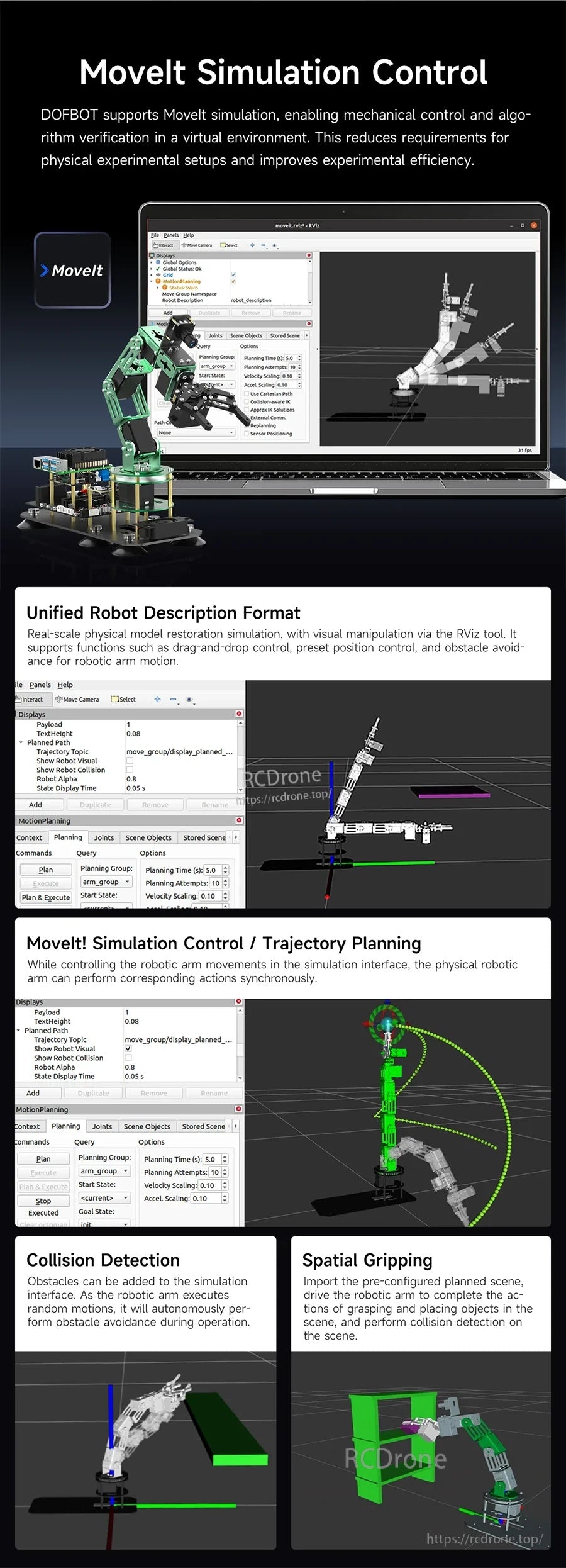
在實際運行軌跡於物理手臂之前,使用MoveIt和RViz開發和驗證運動。
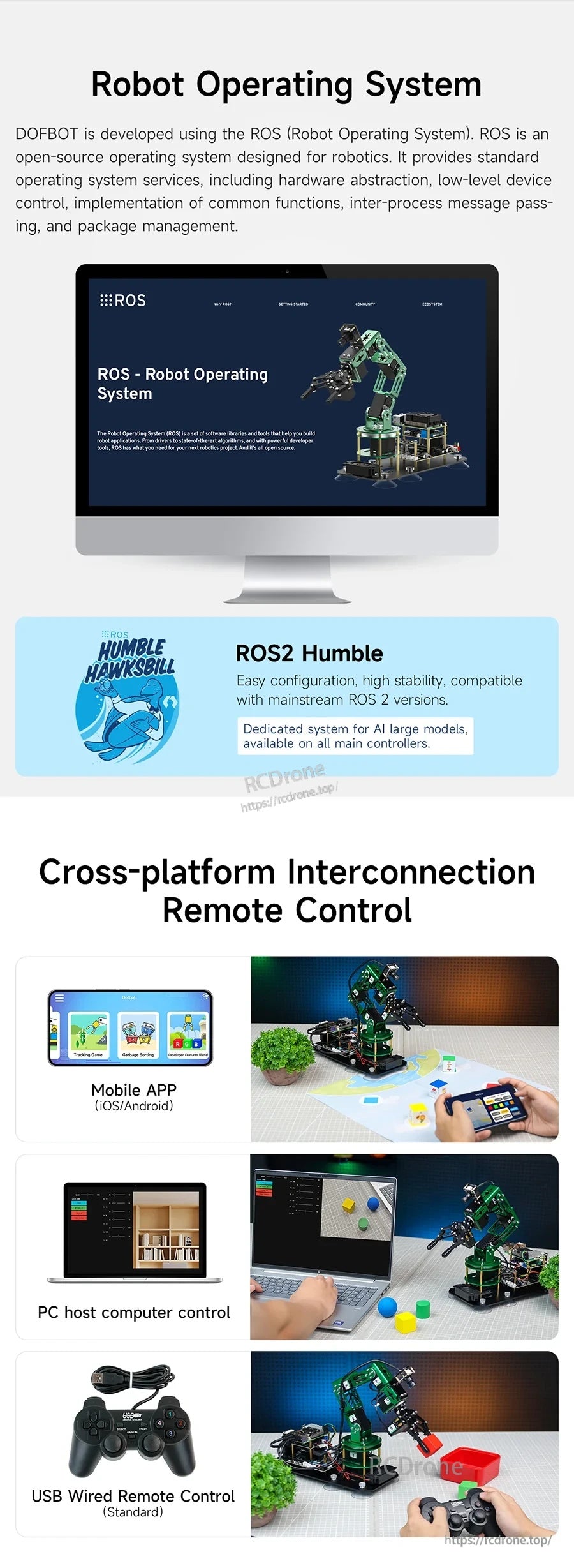
跨平台控制選項包括移動應用、PC主機控制和USB有線遙控,並支持ROS2 Humble。
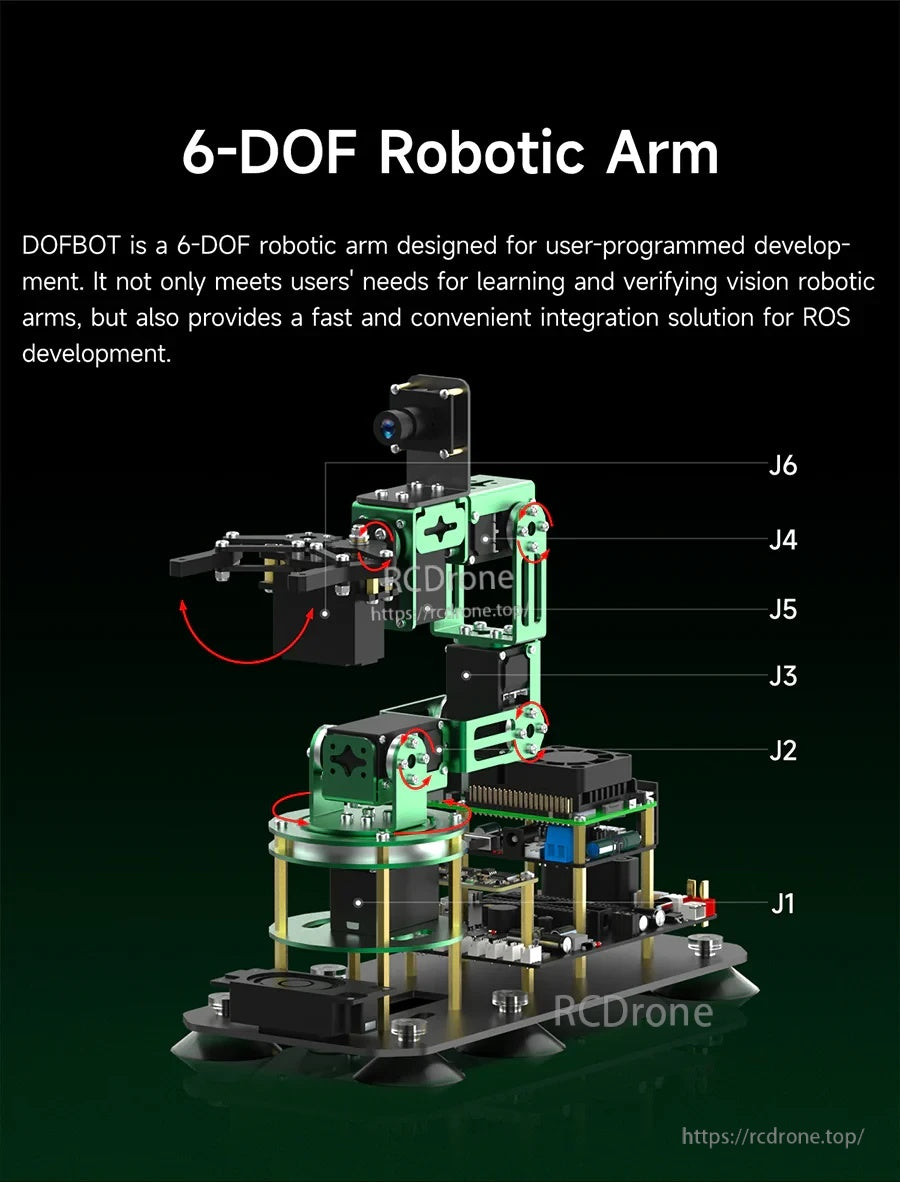
6自由度關節佈局(J1–J6)支持靈活的拾取和放置路徑以及相機引導的互動。
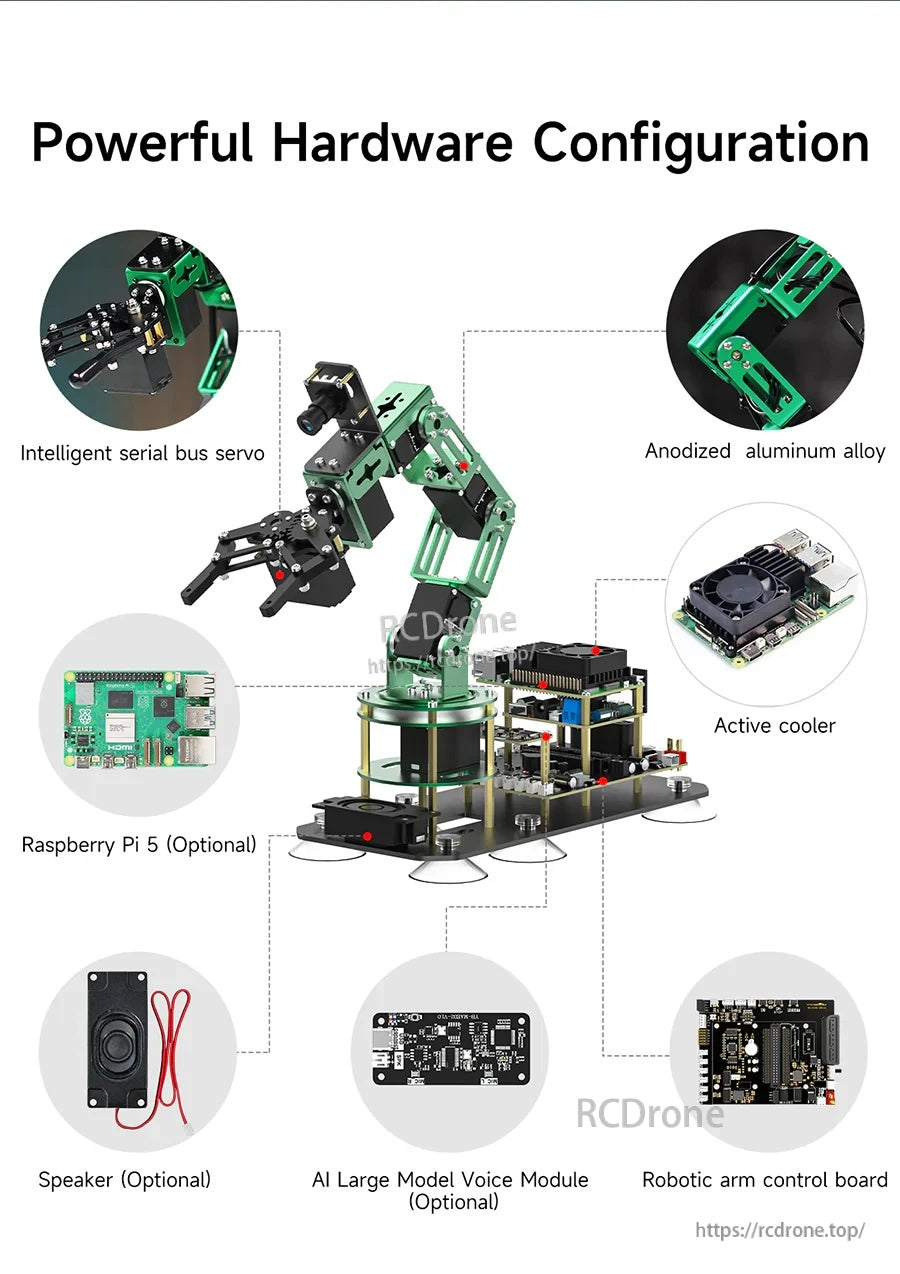
可擴展硬件包括手臂控制板、總線伺服、可選的語音模塊和揚聲器,以及Raspberry Pi 5安裝。
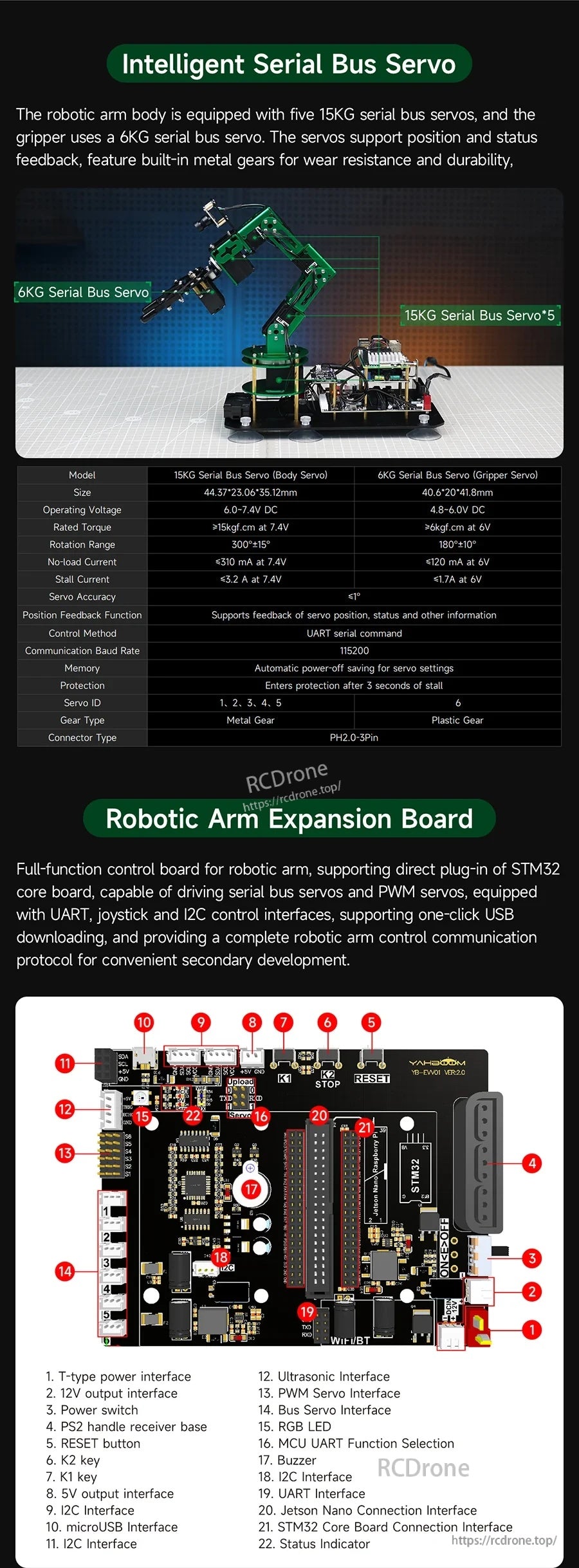
DOFBOT 機械臂擴展板使用標記的端口佈局和串行總線伺服支持,以幫助簡化佈線和控制設置。
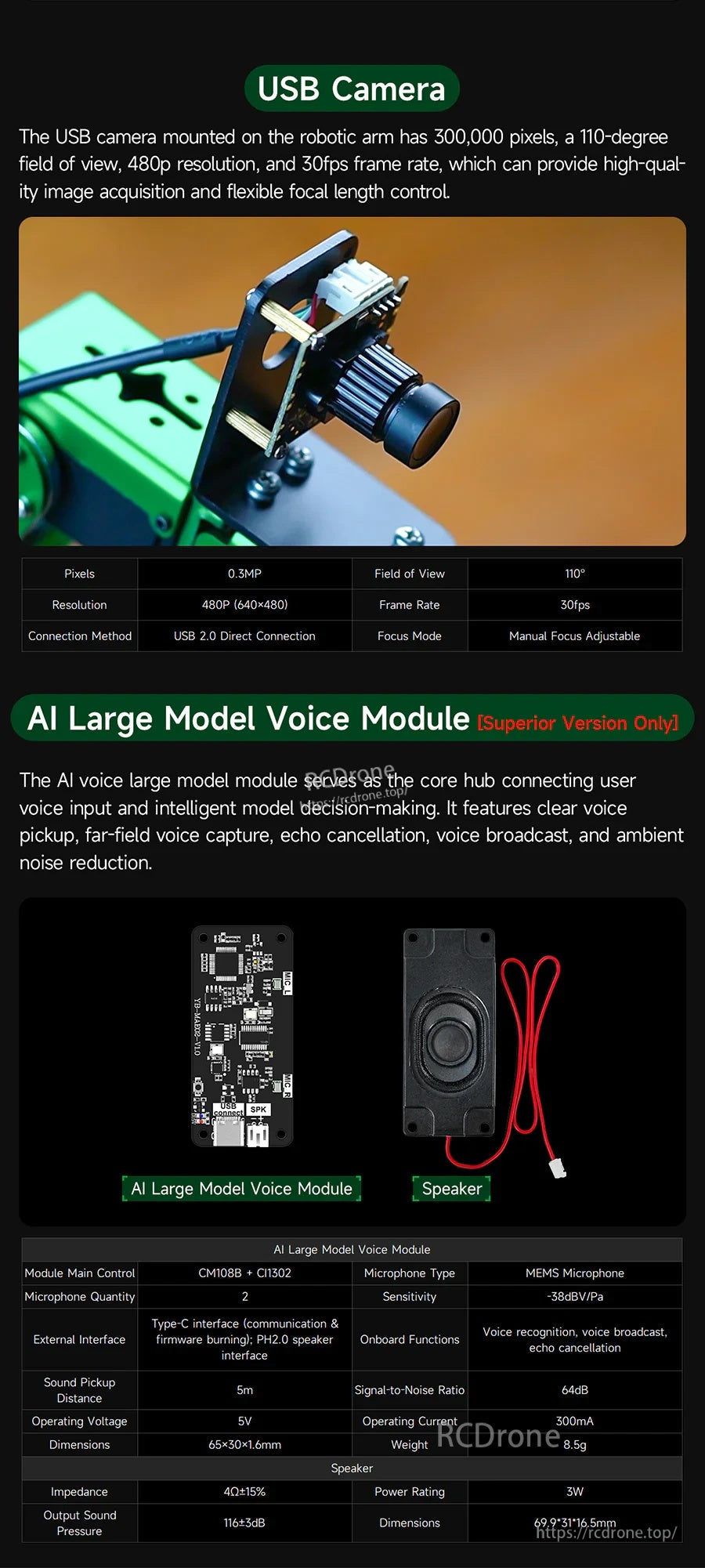
USB 攝像頭安裝在機械臂上,具有 110° 視野,480p 分辨率和 30fps,並配有 AI 語音模塊(高級版),包括主板、揚聲器和佈線。
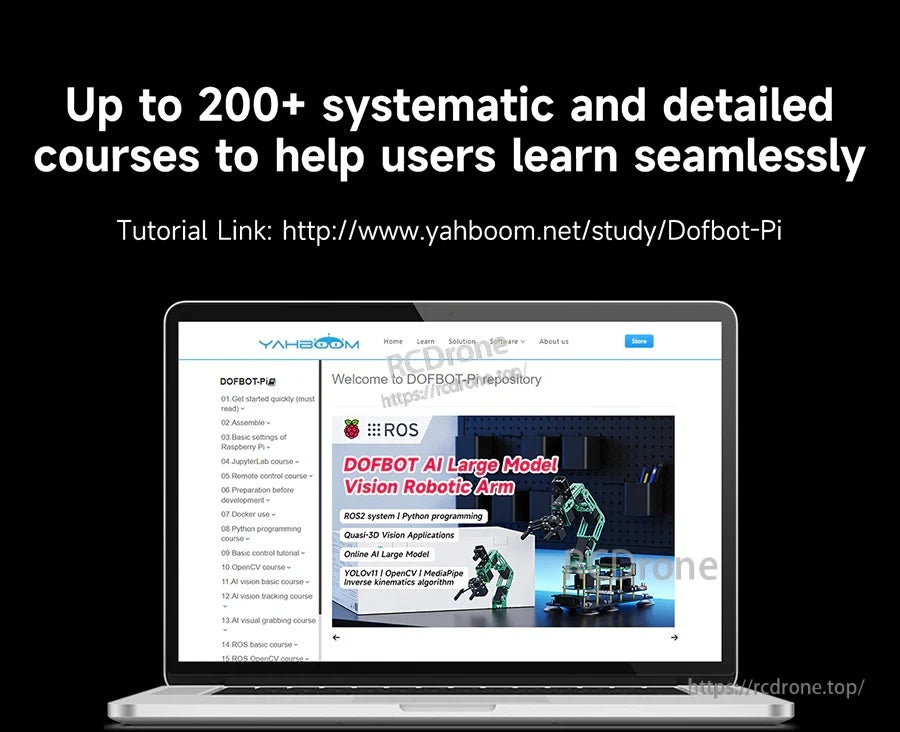
Yahboom 的 DOFBOT-Pi 教程庫提供教程鏈接和多達 200 多個結構化課程,用於學習 DOFBOT 機械臂。
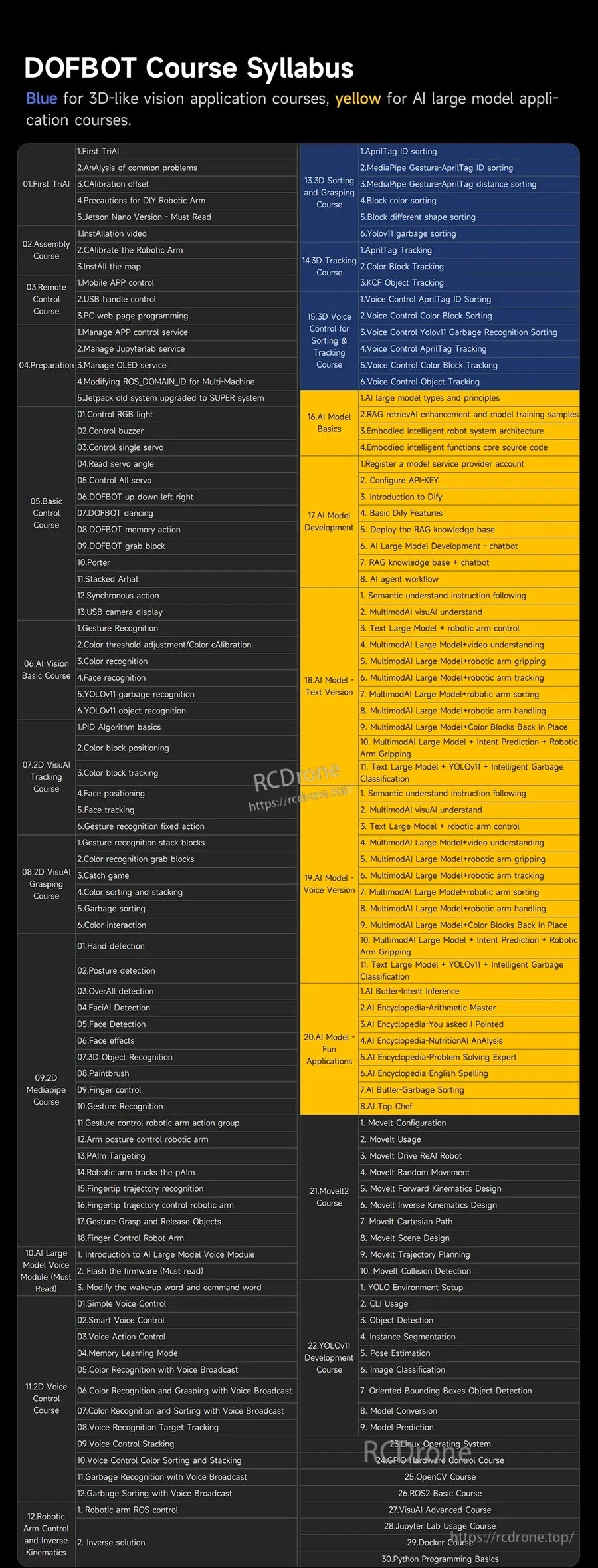
DOFBOT 課程大綱概述了逐步課程,涵蓋 Raspberry Pi 設置、ROS2 Humble、Python 編程和基於攝像頭的視覺項目。
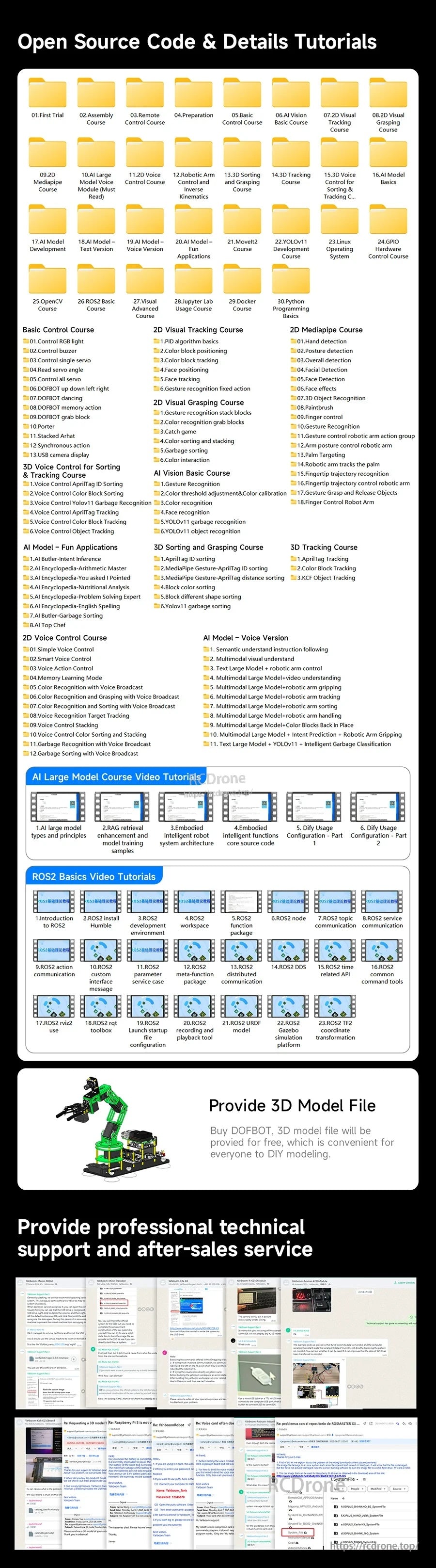
開源代碼文件夾和逐步視頻教程幫助您使用 Python 和 ROS2 設置和編程 DOFBOT 機械臂。
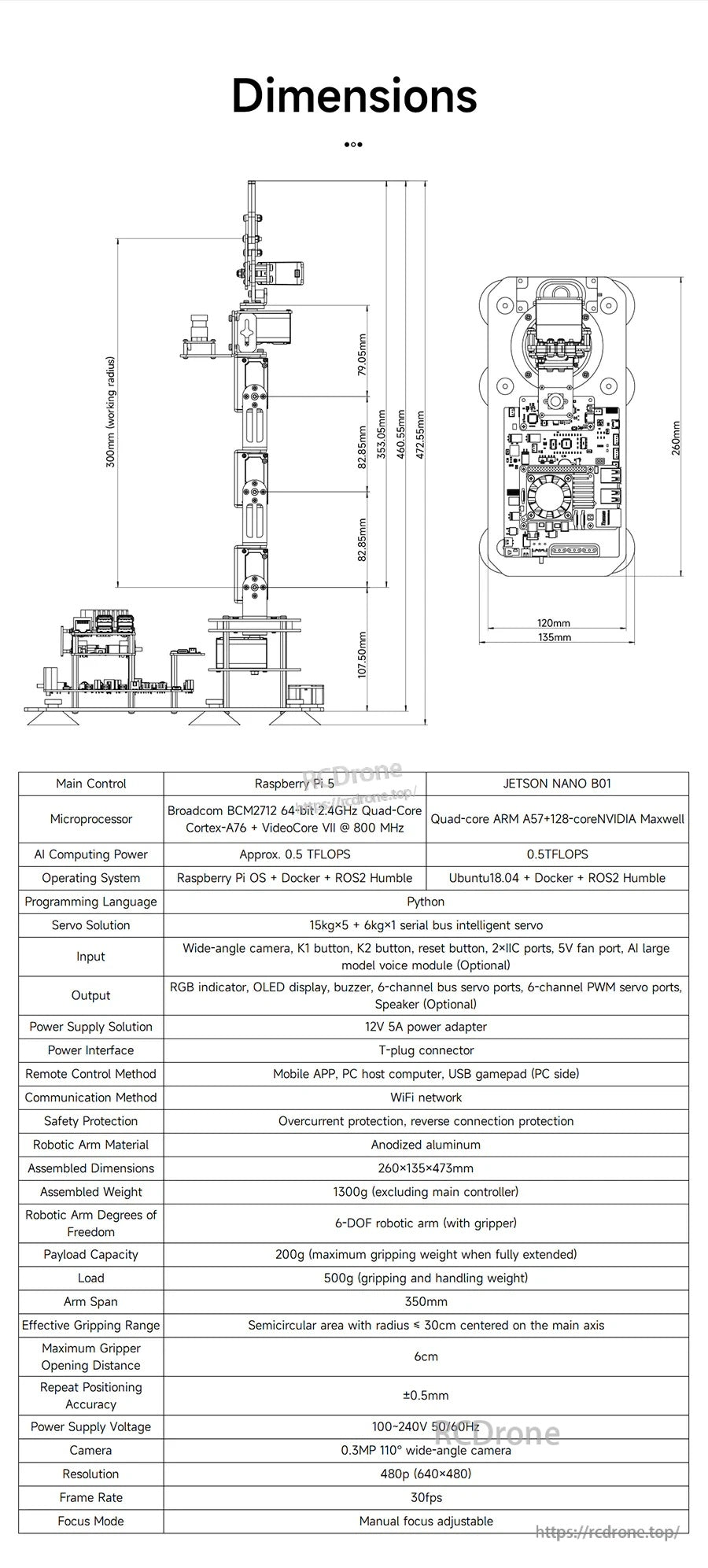
DOFBOT 包含詳細的尺寸佈局和關鍵規格,以幫助規劃安裝空間和系統集成。
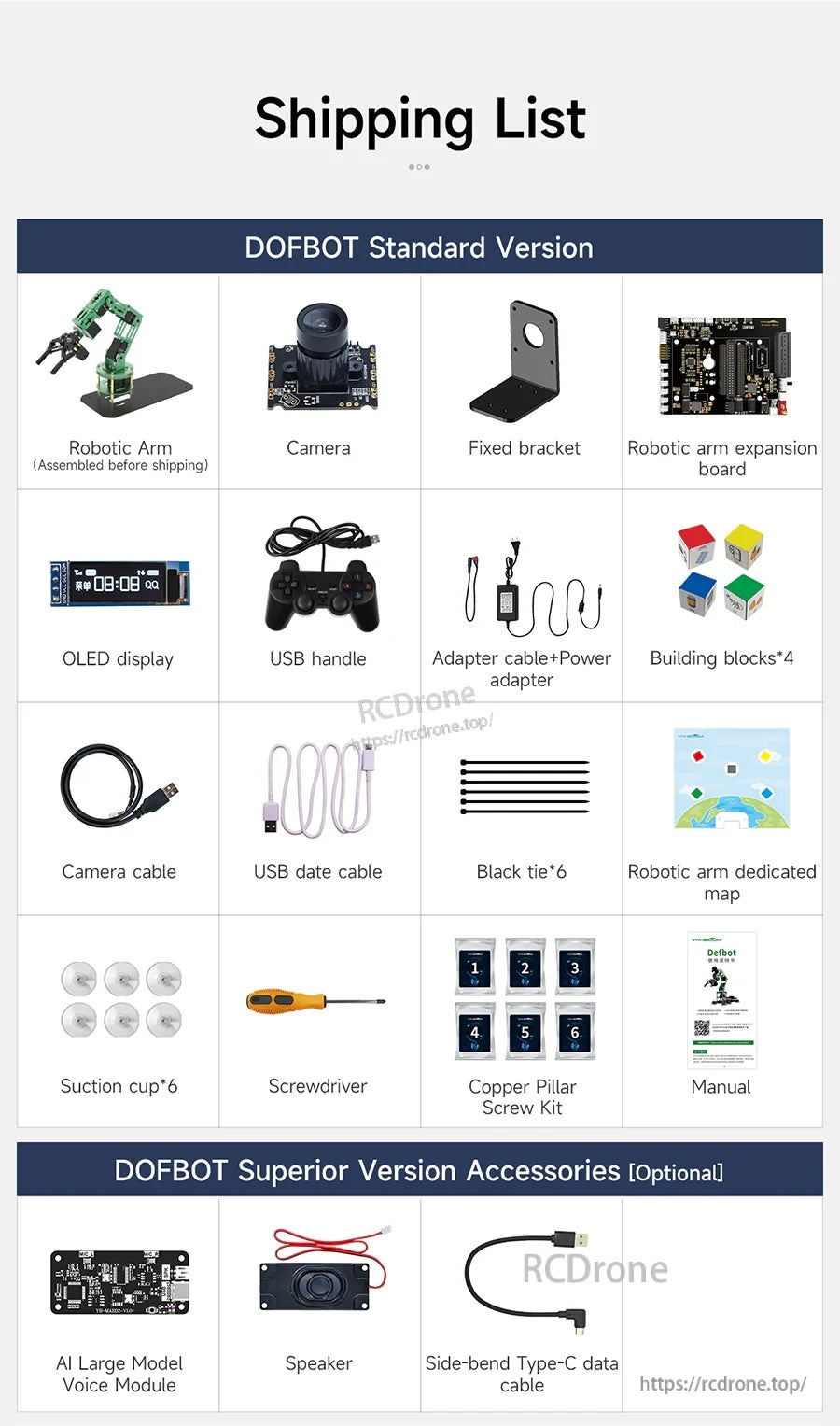
DOFBOT 套件包括組裝好的機械臂、USB 攝像頭、擴展板、OLED 顯示屏、電纜、電源適配器、工具和手冊,選配配件單獨列出。
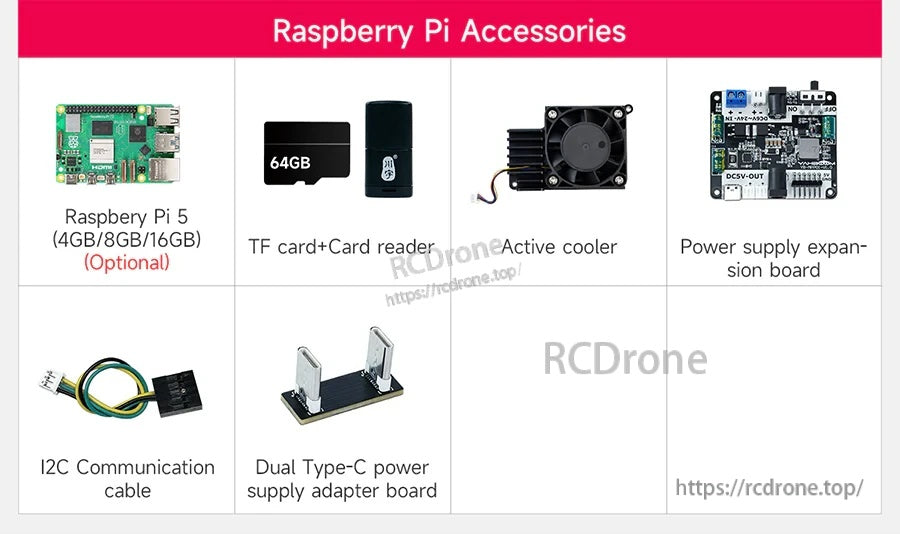
Raspberry Pi 5 配件套裝包括帶讀卡器的 64GB TF 卡、主動冷卻器、電源擴展板、I2C 通訊電纜和雙 Type‑C 電源適配器板。