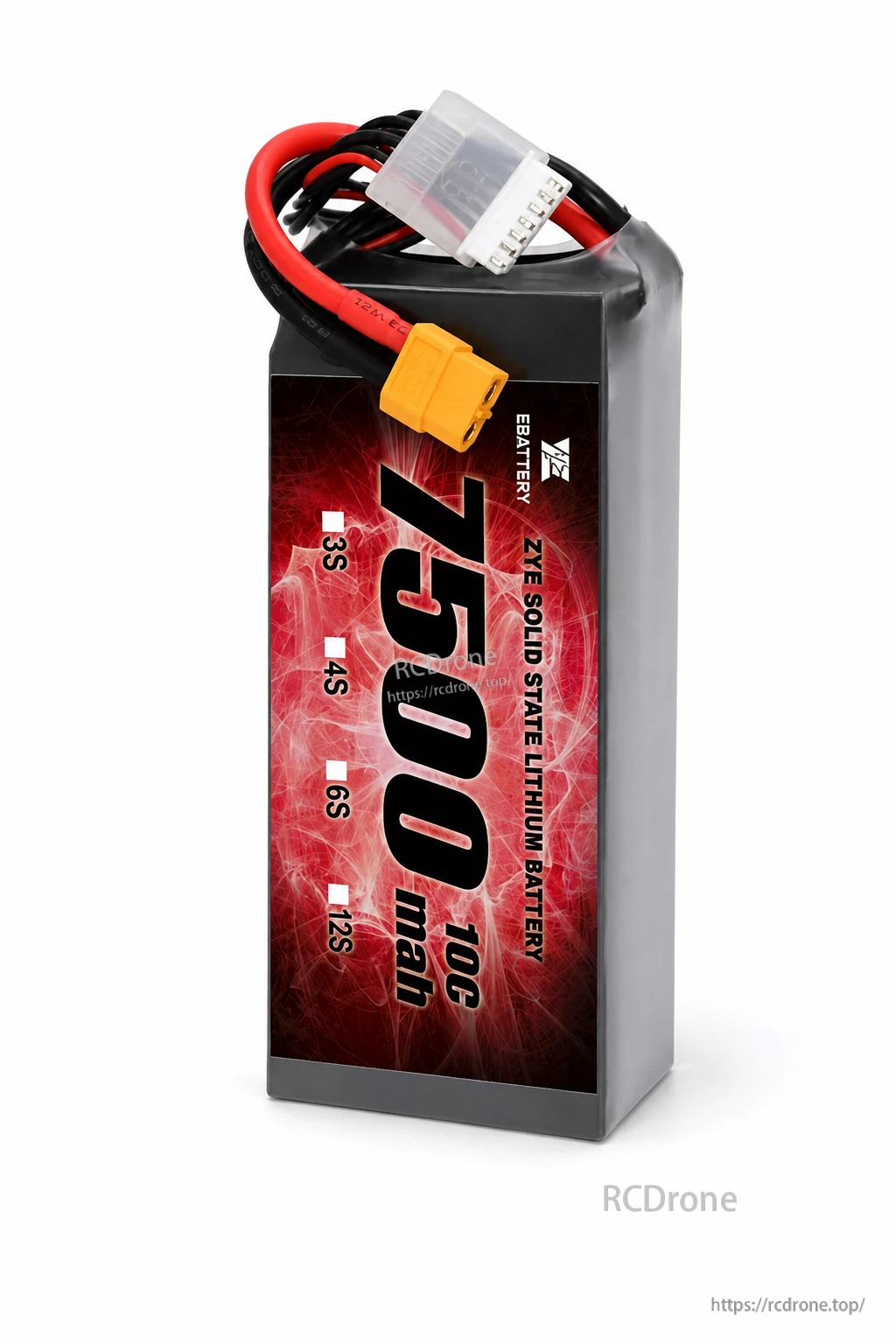
باتری لیتیوم پلیمر حالت جامد ZYE 4S HV 15.8V 7500mAh 10C
باتری لیتیوم پلیمر حالت جامد ZYE 4S HV 15.8V 7500mAh 10C
ZYE
قیمت عادی
$105.00 USD
قیمت عادی
قیمت فروش
$105.00 USD
قیمت واحد
مطابق
Taxes included.
حمل و نقل هنگام تسویه حساب محاسبه می شود.
در دسترس بودن پیکاپ بارگیری نشد


باتری لیتیوم پلیمر حالت جامد ZYE 4S HV 15.8V 7500mAh 10C
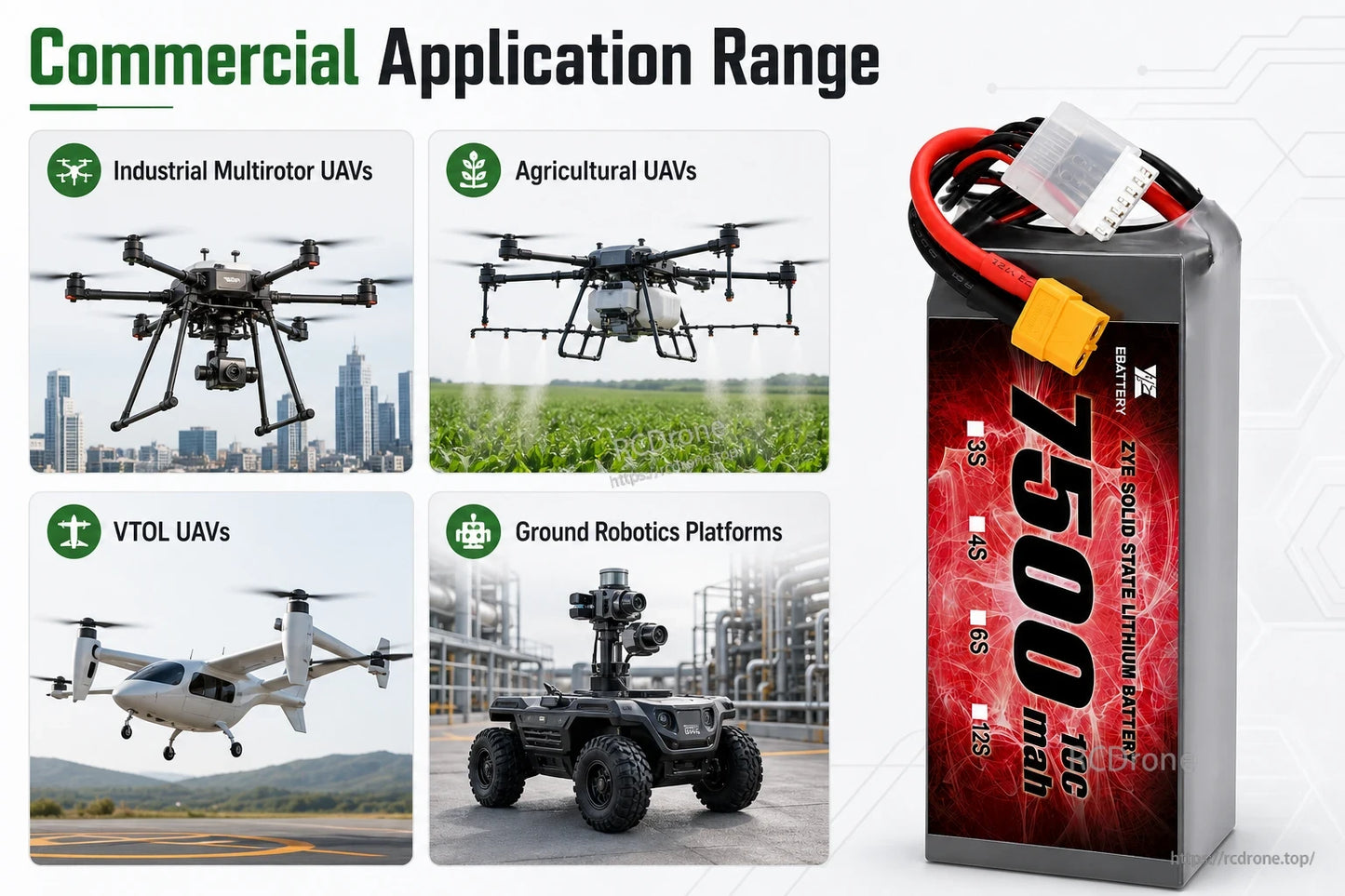
باتری لیتیوم پلیمر حالت جامد ZYE 4S HV 7500mAh 10C یک پک قدرت 15.8V و 118.5Wh برای UAVهای چند روتوره صنعتی، UAVهای کشاورزی، UAVهای VTOL و پلتفرمهای رباتیک زمینی سازگار است.
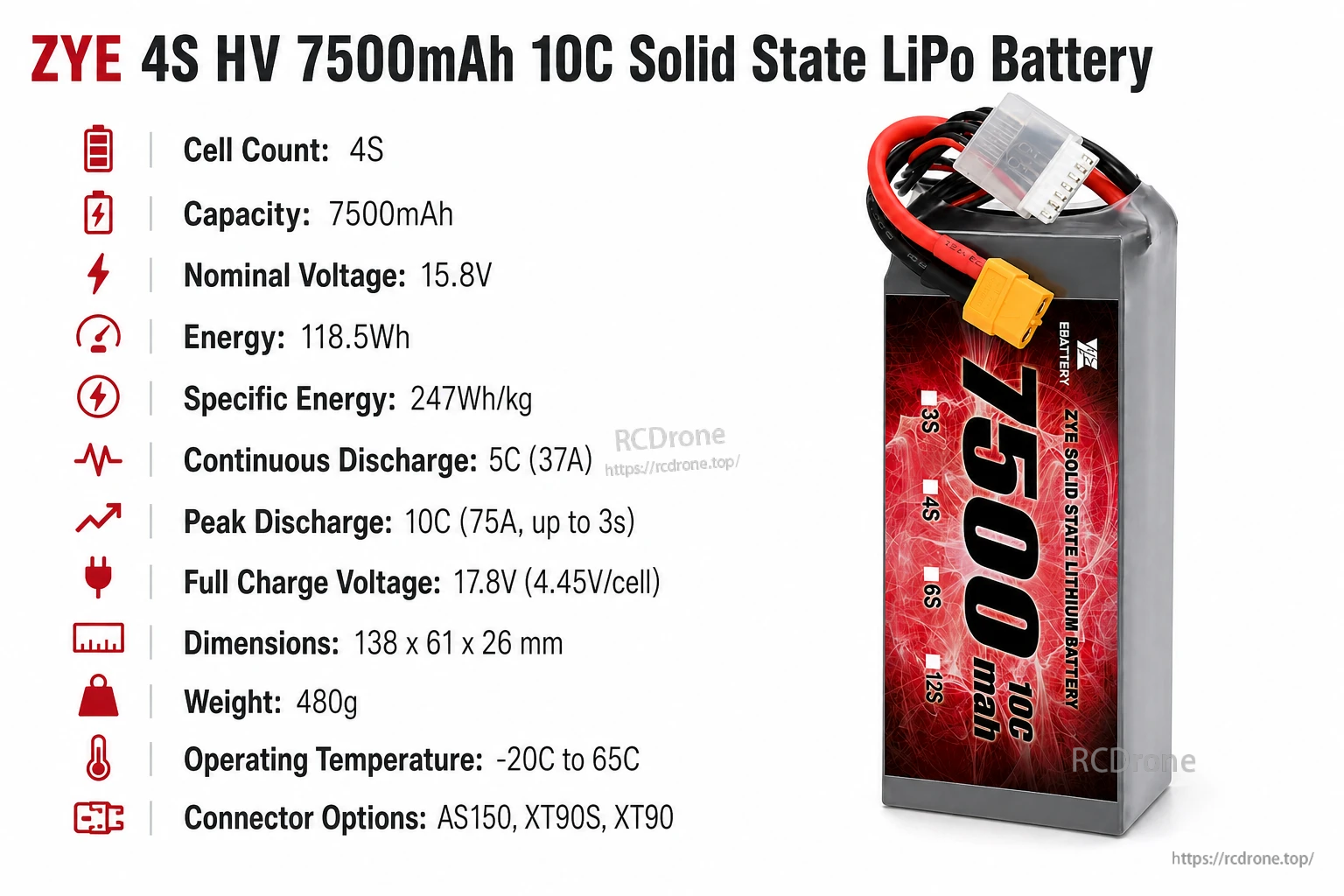
بر اساس دادههای محصول ارائه شده، این باتری 4S HV ابعاد 138 x 61 x 26 میلیمتر و وزن 480 گرم دارد. این باتری دارای رده تخلیه مداوم 5C (37A) و رده اوج 10C (75A) برای حداکثر 3 ثانیه است.
طراحی باتری با چگالی انرژی بالا
جدول مشخصات ارائه شده، انرژی خاص 247Wh/kg را برای این پیکربندی 4S 7500mAh لیست میکند. مواد محصول همچنین ابعاد جمع و جور، وزن کم، قابلیت تخلیه با نرخ بالا و عملکرد در دماهای بین -20C تا 65C را برجسته میکند.
مواد ارائه شده، عمر چرخه طولانی و پشتیبانی از پیکربندی قابل تنظیم را توصیف میکند. قبل از خرید، نیازهای کانکتور، ابعاد و پیکربندی نهایی را تأیید کنید.
مشخصات
| برند | زیی |
|---|---|
| نوع باتری | باتری لیتیوم / حالت جامد HV LiPo |
| تعداد سلول | 4S |
| ظرفیت | 7500mAh |
| ولتاژ اسمی | 15.8V |
| انرژی | 118.5Wh |
| انرژی خاص | 247Wh/kg |
| تخلیه مداوم | 5C (37A) |
| تخلیه اوج | 10C (75A، تا 3 ثانیه) |
| ولتاژ شارژ کامل | 17.8V |
| ولتاژ شارژ کامل سلول | 4.45V/cell |
| دمای عملیاتی | -20C تا 65C |
| اندازه | 138 x 61 x 26 mm |
| وزن | 480g |
| گزینههای اتصال | AS150, XT90S, XT90 |
کاربردها
- هواپیماهای بدون سرنشین چند موتوره صنعتی: پلتفرمهای تجاری سازگار که ولتاژ، اندازه، اتصال و مشخصات جریان مورد نیاز را پشتیبانی میکنند.
- هواپیماهای بدون سرنشین کشاورزی: پلتفرمهای عملیات کشت سازگار با پیکربندی باتری 4S.
- هواپیماهای VTOL: هواپیماهای عمودی که به این ولتاژ و فرمت بسته نیاز دارند.
- پلتفرمهای رباتیک زمینی: تجهیزات بازرسی و رباتیک متحرک چرخدار سازگار.
یادداشتها
- لطفاً گزینه صحیح کانکتور را انتخاب کرده و قبل از خرید، سازگاری دستگاه را تأیید کنید.
- از شارژری مناسب برای باتریهای لیتیوم 4S HV استفاده کنید و از شیوههای ایمن شارژ پیروی کنید.
- از تخلیه بیش از حد، سوراخ کردن، اتصال کوتاه یا شارژ بدون نظارت خودداری کنید.
جزئیات